



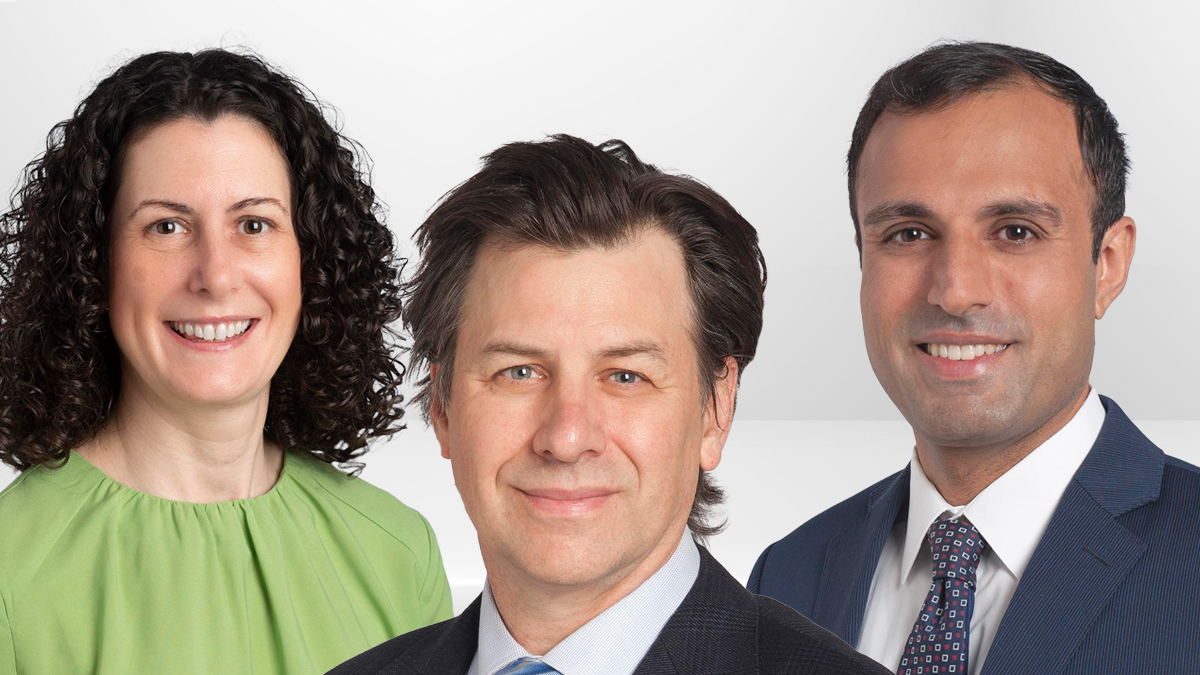
Highlights from the 2026 ATS Conference
Host Daniel Culver, DO, is joined by Cleveland Clinic pulmonologists Rachel Scheraga, MD, and Vickram Tejwani, MD, for a recap of the 2026 American Thoracic Society Conference (ATS). They discuss key scientific and clinical highlights, including support for early-career investigators, ATS NOW, advances in lung microenvironment research, emerging airway disease therapies targeting IL-33, and promising pulmonary fibrosis data. The conversation also explores how collaboration, technology, and team-based science are reshaping respiratory research and what the future of major medical meetings may look like.
Advertisement
Cleveland Clinic is a non-profit academic medical center. Advertising on our site helps support our mission. We do not endorse non-Cleveland Clinic products or services. Policy
Recent Episodes
Recognizing and Managing Telomere Biology Disorders
Telomere biology disorders are increasingly recognized as drivers of pulmonary fibrosis, bone marrow failure, liver disease, and other age-r…
Hypercapnic Respiratory Failure from the Hospitalist Perspective: Recognition, Risk, and Perioperative Insights
In this episode of Respiratory Exchange, Dr. Dan Culver speaks with hospitalist and anesthesia outcomes researcher Dr. Roop Kaw about the pr…
Video content: This video is available to watch online.
View video online (https://cdnapisec.kaltura.com/p/2207941/sp/220794100/playManifest/entryId/1_c9r7beoa/flavorId/1_5f3sgelj/format/url/protocol/https/a.mp4)
Transcript
Dr. Raed Dweik:
Hello and welcome to the Respiratory Exchange Podcast. I'm Raed Dweik, Chief of the Integrated Hospital Care Institute at Cleveland Clinic. This podcast series of short digestible episodes is intended for healthcare providers and covers topics related to respiratory health and disease in the areas of lung health, critical illness, sleep, infectious disease, and related disciplines. We will share with you information that will help you take better care of your patients. I hope you enjoy today's episode.
Advertisement
Cleveland Clinic is a non-profit academic medical center. Advertising on our site helps support our mission. We do not endorse non-Cleveland Clinic products or services. Policy
Dr. Daniel Culver:
Hello everybody and welcome to this edition of Respiratory Exchange. I'm Dr. Daniel Culver. I'm the chair of the Division of Pulmonary Medicine at Cleveland Clinic. This episode will focus on the recently concluded American Thoracic Society Conference, which just wrapped up in Orlando earlier this week. I have with me today two of my colleagues to discuss their impressions and hot takes from the conference. I have Dr. Rachel Scheraga, who is a past program committee chair of ATS and one of our scientists here at Cleveland Clinic. Rachel, welcome.
Dr. Rachel Scheraga:
Thank you for having me.
Dr. Daniel Culver:
And Dr. Vick Tejwani, who's also a member of our group here and who focuses on airways biology.
Dr. Vickram Tejwani:
Thank you, Dr. Culver. Excited for this.
Dr. Daniel Culver:
One of the really exciting things for us this year is that our institute chief, Dr. Raed Dweik, was the president of ATS and this was the conference where he led the conference and there were many highlights of the conference. One of the things that he's emphasized all throughout his tenure has been developing science and especially in this current situation where funding is a bit fragile. Organizations like the American Thoracic Society are really key to maintaining a pipeline of younger investigators and really promoting scientific inquiry that's based on where the most interesting findings are without any particular agendas. So I wonder, Rachel, I'll start with you if you want to comment a little on what you think Dr. Dweik's legacy is in this arena and what you noticed from your perspective.
Advertisement
Dr. Rachel Scheraga:
Yeah. Thank you so much. I'm happy to comment on that. So Dr. Dweik campaign was really focused around donating funds to the ATS research funds for grant funding. Dr. Dweik not only verbally focused on this mission, but also decided he was going to match dollar for dollar all donations that occurred not only during the conference time, but also up until December 31st. So if you haven't yet donated, there's still an opportunity. I think this focus is so key because our early stage investigators have limited opportunities with the current NIH funding environment and these grants can really bridge them from their early stage to more stable funding in the future once things improve. So I think that my colleagues from across the globe were really commenting on how supportive Dr. Dweik is for research and it's really a breath of fresh air in this current environment.
Dr. Daniel Culver:
Yeah, it's very important. I actually had one of those grants when I was just starting out and it certainly made a big difference to my transition. I think that unless we support the next generation of researchers, we're going to not like where we find ourselves in a decade or two here in the US.
Dr. Vickram Tejwani:
Yes. Yeah. I'd certainly echo that and I think it was great to have Dr. Dweik we know locally has been so supportive of this so it's wonderful to have his leadership around science and research more broadly across the society. I think it's just a testament to how committee is in terms of the generosity of matching. I'll say humorously at our assembly leading when the treasurer spoke and was encouraging us to make donations, I think his pitch was to spend riots money by donating to the American Thoracic Society and receiving the dollar-for-dollar match, which is really a generous testament to his commitment to this career.
Dr. Daniel Culver:
Yeah. I think this falls under the category of be careful what you wish for. Hopefully it will be a nice amount of donations. Vic, another thing that I thought was a really important initiative that was launched again by Raed this year was the ATS NOW, which I think he described as Netflix for the American Thoracic Society. Did you have a chance to look at that? What were your impressions of it?
Dr. Vickram Tejwani:
Yes. Yeah, I looked briefly and certainly I know Rachel had mentioned she had as well, but I think this idea that it is education continues to be decentralized in a way and obviously there still remains value as we all know and particularly learned during COVID that getting in a room and face-to-face interaction goes a long way, but there are times where you simply just cannot make it to a session. So briefly going through some of the sessions that were streamed and able to click through was really wonderful. So the idea of you don't feel bad, particularly at the ATS where there are amazing things happening simultaneously. I mean, sometimes you feel like you have to pick and choose. So the ability to go back and watch some of those other sessions that I would've loved to be at, but had another commitment for is really a wonderful resource in addition to the program.
Advertisement
Dr. Daniel Culver:
Yeah. I find the meeting to be kind of like a buffet. You only have one stomach, but there are too many tasty dishes.
Dr. Rachel Scheraga:
Yeah. And I think especially at Orlando when the conference center is extremely spread out, they all are, but this one in particular is. It's hard to get from point A to point B when they're maybe a mile away to get to all the sessions. So I think this was great. You can actually watch sessions while you're at another session or step out and watch a session and go back to the one you were at. So I think it gives a lot of flexibility. It gives a lot of time for idea thinking about what's been presented and how to move things forward. I thought it was great.
Dr. Daniel Culver:
Well, and you didn't have any shortage of getting your steps in at this conference center. I agree. It was a wonderful venue. And one of the other things that I always appreciate about the ATS and that I think is a distinguishing feature of it compared to really all of the other major meetings in our space is the focus on science. I think this is one of the places where you see the highest exposition of original preclinical research, original translational research, and a lot of the ideas that are going to lead to changes in the clinic really are presaged at the ATS meeting if you pay attention. And I wonder, Rachel, if you want to comment on the scientific focus for ATS and how that's changed and evolved
Advertisement
Dr. Rachel Scheraga:
Yeah, great. Thanks so much. So the science core topic this year near, dear to my heart, the lung microenvironment. And so I think that with that overarching theme, the topics were really focused on novel and vivo systems and more translational. So it's really important to study individual molecules to understand individual pathways, but we all know that there's cell, cell interactions, cell environmental interactions and a huge focus at this meeting was to understand those.
Dr. Daniel Culver:
Sorry. When you say lung microenvironment, do you mean what cells are next to each other or what the architecture is around the cells or something about the environment itself, like the inhaled environment? What did you mean by that?
Dr. Rachel Scheraga:
I would say all of those things and all of them are probably operating together in our interactive focus. So designing systems that could study in real time the cell cell, cell matrix, cell soluble factors, inhalation factors is really revolutionary to advancing science. And at the same time, at the single cell level, there were some investigators that were able to even see perturbations of pathways under these microenvironmental systems. So I think this is where we're going and this is really how we can design novel therapies in the future.
Advertisement
Dr. Daniel Culver:
Is it more of the rise of multiomics that lets us take this perspective or is it the ability to image a little bit better in real time or some other factor?
Dr. Rachel Scheraga:
So I think multiomics definitely helps us, but I think in vivo systems you need some engineering focus, really be able to unravel the ribcage. It created like a crystal ribcage where you could see through into the lungs and watch cells interact with each other. But the omics is providing what the cell genomic signatures are. So I would say both, but I think it's really important. Omics is a static measurement so to do biology and watch it in real time I think is really how we're going to maybe move forward for therapeutics.
Dr. Daniel Culver:
So what's the most interesting or sexy real time in vivo or ex vivo system that you noticed at the ATS this year?
Dr. Rachel Scheraga:
Well, I mean the Boston group was all over this crystal ribcage ex vivo lung modeling system. So I think the organoid systems are also really great. So I think there are a lot of amazing advances that could, and tools that can help us study the molecular mechanisms in the future. So I'm pretty excited about what the future brings.
Dr. Daniel Culver:
I want to come back to that, but I'm going to turn to Vic for a second and ask you about preclinical work that you saw at ATS and what got your interest peaked the most.
Dr. Vickram Tejwani:
Yeah. So I think it's really an exciting time in airways disease around airway biology a lot in the pipeline. And I think a lot of what Dr. Scheraga was saying is phenomenal because a lot of our existing literature in the preclinical space focuses on a single cell. So you're isolating macrophages from the longer isolating PBMCs peripherally, but this idea that obviously once you take those ex vivo, you're really not getting the same reaction as opposed to a more organoid or full organ system. So I think that's really exciting. In terms of preclinical or translational space in airways, there's really two big things that are really piquing my interest. One is we are fortunate that we're really identifying a lot of molecular targets in this space alarm and downstream effectors of TH1 or T1, T2 and T17 immunity, but there's becoming increasing interest in continuing to identify alternative pathways, but really can we now design nano antibodies and other complexes that actually can combine and target two to three molecules at once as opposed to having to target a single protein.
So I think that as those move into preclinical and then phase one studies will really open up a whole new kind of option of therapeutics for our patients with airways disease.
Dr. Daniel Culver:
So these are nanoparticles with antibodies conjugated with multiple targets? Targets,
Dr. Vickram Tejwani:
Exactly. So essentially bispecific antibodies. So they're really able to be less specific than a single monoclonal antibody, which is what our current mabs all are.
Dr. Daniel Culver:
Okay, very exciting. So maybe we can stay on that theme for a minute because one of the big clinical advances I think that came out of understanding biology is a focus on something that gets around this problem we've had about non- T2 inflammation in not just asthma but all the airways diseases. And so of course we're talking about IL-33 and that had some pretty major news over at ATS, I think.
Dr. Vickram Tejwani:
Exactly. Yeah. There's a lot of anticipation in the field. So IL-33 is one of three proteins that are in a group of proteins called alarmins. So essentially similar to the theme of the microenvironment when we breathe in, whether it's a virus particulate matter or whatever it may be, our respiratory epithelium releases three proteins, TSLP, thymic terminal lymphoprotein, which is an existing target for medication interleukin-33 and 25. And there's been a lot of provocative preclinical, phase one, and phase two data on interleukin-33 and particularly it's moved into some phase three studies for asthma, but a lot of the focus for it at ATS was in COPD and there are three main mechanisms to target it astegolimab, which targets the interleukin-33 receptor, which is ST2, itepekimab, which targets the protein itself and then tozorakimab, which targets the reduced and oxidized form of interleukin-33. So far for two of those three, we're still kind of dealing with press release level data, but astegolimab was shown and had one positive and one negative phase three study and was simultaneously.
It's always fun to be a part of those sessions where the publication is kind of simultaneously released in the Lancet at the same time.
Dr. Daniel Culver:
Yeah. It always makes you feel like you're part of some historical moment when the paper comes at the same time as the session. And that happens at ATS, I think, more than any other
Dr. Vickram Tejwani:
Meeting. Yes. Yeah. Yeah. I feel that at least two to three major publications are dropped simultaneously in the sessions, which I agree with you. It does kind of create a nice memory and as all the sessions are, you really are on the cutting edge of science and the data that's coming out of all this hard work from people.
Dr. Daniel Culver:
Yeah. I was at the presentation of the TETON data, which of course is the inhaled treprostinil and pulmonary fibrosis and it's quite robust. It's very exciting. It's hard to imagine this won't get approval now.
Dr. Vickram Tejwani:
That's amazing.
Dr. Daniel Culver:
And this is quite probably going to be part of combination therapy with our conventional oral antifibrotic agents and probably agnostic to whether or not there's actually pulmonary hypertension. And so whether or not these patients need a right heart catheterization will be an interesting question as we go down the road here, but certainly in those trials it wasn't a requirement to have pulmonary hypertension and because we think the endothelium is a really important driver of pulmonary fibrosis, not just a bystander and because prostanoids also have effects on epithelium, there may be good biologic plausibility to the findings in both the TETON studies. Rachel, you've thought a little bit about pulmonary fibrosis and endothelium. Do you have any thoughts about it?
Dr. Rachel Scheraga:
I think it's really exciting because actually the Amberson Award winner, Dr. Peters Golden has been studying PGE2 for his whole career. So I think this is just all very exciting bench to bedside is finally really occurring for him and the whole pulmonary fibrosis world. I also think there is a large focus in pulmonary fibrosis this meeting about immune activation, which I think really got pushed away to the wayside for a while.
Dr. Daniel Culver:
Something I know that's been near and dear to your heart for a number of years.
Dr. Rachel Scheraga:
Yes. And so I think that others are also thinking it's important. So we'll see what the ... I know the endothelium's important, but we also have to think about immune activation.
Dr. Daniel Culver:
There's some reason there are inflammatory cells, even in classic UIP, there are inflammatory cells sitting in there.
Dr. Rachel Scheraga:
Yes. Yeah. And maybe it goes back to the microenvironment. So we're looking at that now. So hopefully a future will show targets for immune function as well.
Dr. Daniel Culver:
That's great. So I'll come back to you and ask you the same thing I asked Vic. What story at ATS captivated you the most?
Dr. Rachel Scheraga:
I think that we used to think about individual signals, individual pathways were really how diseases were driven. And I think it's now more, it's actually probably normal responses that are just going awry. And I think it's really honing in on what they are and targeting them and hopefully that leads to new therapy. So I think the bench to bedside piece was really the most exciting part of ATS and a bunch of drugs coming out from people that have been studying these for the last 30, 35 years. So we're really moving science forward and it's really quite exciting and treating our patients, which is our goal.
Dr. Daniel Culver:
It does seem like there is more making its way into late stage clinical trials even than just five years ago. I don't know if this is cyclical or if we're really starting to see some payout from all of the preclinical work that's happened.
Dr. Vickram Tejwani:
Yeah. Yeah. I agree. That was my sense also and I think it's always nice to see the phase three data, but I think to Dr. Scheraga's point, you go back and there's really the seminal preclinical or cell line papers published on it, but some of them are, I mean some of the data we're seeing later, the early work was just done 15, 20 years ago, which in the scheme of science really isn't as long as it has been. So I mean, I don't have a very long lens on all this, but it does seem that pipeline is perhaps accelerating in terms of really translating the discoveries into therapies and moving it through trials. It does feel like there is a little bit of a exponential or exploding pace to it, which is really exciting for our patients ultimately to be able to offer them more.
Dr. Rachel Scheraga:
Yeah. I think just to jump in here, I think the tools that we've made and the training of scientists that have moved into pulmonary biology has just, I think accelerated this field and also technology and informatics and artificial intelligence. I think all of that together has synergistically accelerated our progress.
Dr. Daniel Culver:
I want to ask you a little bit about this and this is not just an ATS issue, but it's a science issue and both of you are funded and successful scientists, but science has really changed, I think, in the last few years and I think it's hard for any scientist to really deeply understand all the facets of the work they're doing and it's really all about the team you can put around you. And I wonder if that's what we're seeing at ATS when you look at some of this research. Do you notice that as a change? I'll start with you.
Dr. Rachel Scheraga:
Yeah, no, I do. I noticed we've always been quite collaborative, but I think people are really diving deep into one discipline informatics or engineering tools or molecular biology and I think that really requires cross-discipline interaction more so than in the past because to get really good at something you have to just train in one area. So I think that that's a shift and I think it's a great and great shift because science is a team sport and I think the more we embrace that, the quicker we're going to get to therapies and treating our patients.
Dr. Daniel Culver:
So how would you suggest to a young person just starting out, Vic, about that they approach the beginning of a research career given that the paradigm now is you're going to be part of a team and you're not going to know everything. Maybe you need to know enough about each of the parts to be dangerous.
Dr. Vickram Tejwani:
Yeah, no, I think it's a great point. I love what Rachel said about it being a team sport. I've used this analogy before. I don't play soccer, but the World Cup is coming in, so it's much more soccer than any type of individual sport. So I think it's a great question and I agree, certainly when I train my mentors really, I think their model was more so they built a lab, they went into the lab with their team and they delivered science from that lab and I don't think that, and they've evolved obviously, of course, to stay successful and really just stay at the cutting edge. So I think early, particularly quite early, there probably is still value to really, to Rachel's point, choosing one method and really trying to establish yourself in that space, recognizing that you're going to hit a ceiling with that method.
I think as you develop that expertise within that, then you start to transition to, I think what you're alluding to, Dan, okay, so I've kind of hit the wall or ceiling of what I could do with proteomics. And even though I really know proteomics and when people have a proteomics question, I can help them. Now I need to learn a little bit more about metabolomics or taking it to an organoid model to really look at a specific candidate protein that I identified in. And I think even just those three, and this is just the tip of the iceberg, it's very hard for one person to do all three of those things very well. So I think starting out with one and then recognizing the strengths and limitations of that methodology before working with great colleagues and collaborators, which we're fortunate to have at the Cleveland Clinic and of course across ATS.
So I think that's really where a lot of these advances are made is with that collaboration.
Dr. Daniel Culver:
That's great. Yeah. I think the evolution of the way we're seeing is not just technical evolution, it's interactions in our teams and how we think about supporting science and the number of co-PI grants, the number of multiple PI grants, all of those things we're seeing really start to explode now.
Dr. Rachel Scheraga:
Yeah. I think with fewer total grants being funded, this is just the way we have to operate to continue to advance science. We have to come together, come up with novel ideas from new disciplines and that'll help really advance the field.
Dr. Daniel Culver:
I want to end with a question to each of you because I think of course there's a lot more topics that were covered at ATS and we're not able to go into all of those, but from a broad strokes perspective over the years that the purpose of these meetings has changed, the content, the structure of them has changed. If you just had to imagine for a minute, what will ATS in 10 years look like? What's going to be some of the major changes in how that kind of interaction happens at something that we call the American Thoracic Society meeting?
Dr. Rachel Scheraga:
Yeah, I can take that first. So I think there'll be a lot more interaction with digital interface I think we could potentially at stations learn, have stations that learn new content. I think that will hopefully help decrease the amount of space we'll have to get from one to another. I think they could also really consider more interaction and I know they have simulations, but maybe we can, if we have these novel technologies and tools maybe for science, they could have some of those hands on learning for those as well in the lab as practice stays, as they have for residents and clinical procedures. So I think maybe we can really utilize the time to learn from each other a little more efficiently. And I
Dr. Daniel Culver:
Thought you were going towards something like more interaction also with the speakers or between the participants in a way that technology might allow you to do instead of saying there's 20 minutes to talk about this particular topic, maybe a way to improve interaction across the entire duration of the meeting between sort of affinity groups or something.
Dr. Rachel Scheraga:
Yeah. So the ATS app does have the opportunity to chat with speakers or to message them later for questions, but I think advertising that more or having more of an interactive chat on the go while they're speaking or during the session might actually help facilitate as well.
Dr. Vickram Tejwani:
Yeah. So it's a very thought provoking question and I like it. I think it really forces us to think through because a lot of this is evolving, not just the technology, but the way we're all interacting with each other and meeting is evolving really rapidly. I love Rachel's comment about having a little bit more of a potentially digital presence and frankly, it's just going to happen the way technology is going. And I think that could potentially, if deployed well could potentially enhance the opportunity to network and collaborate perhaps because I think Dan, to your point, if you're perhaps able to say, "Okay, we're going to come into this room and talk about IL-33 or an organoid model, but all of you as best you can just complete this digital module in the space first." And then that way you're coming in with some similar prerequisite awareness and then the meeting itself could perhaps be an expert led discussion because I think for all of us, I mean the speaking, the talks are so high quality, but a lot of the collaboration and ideas really occurs in between the meetings or speaking to the speaker or moderators after the session.
So I think using technology to perhaps increase, enhance that time is a really, I think, a very realistic possibility.
Dr. Daniel Culver:
Yeah, I agree with you. I think so much of what we really learn is in the questions to the speakers. When there's enough time in the sessions for the questions, we really get into some of the interstitial spaces and in the issues and understand the perspectives more. So I like that idea about some way of discussing the content that doesn't necessarily have to just get fit inside that 20 minutes and using the app is a great idea and I like that a lot too. Well, I want to thank you both for making time in your schedule, still recovering from this meeting to come and meet with me. It's been a pleasure talking to both of you and I hope all of you enjoyed this edition of the Respiratory Exchange. Thank you, Rachel.
Dr. Rachel Scheraga:
Thank you, Dan, for having me. It was so much fun.
Dr. Daniel Culver:
Thank you, Vic.
Dr. Vickram Tejwani:
Yeah, thank you, Dan. Really appreciate the opportunity to talk to you all about this.
Dr. Daniel Culver:
Thank you for joining us and we look forward to the next episode of The Respiratory Exchange.
Dr. Raed Dweik:
Thank you for listening to this episode of the Respiratory Exchange Podcast. You can find additional podcast episodes on our website, clevelandclinic.org/podcasts or wherever you get your podcasts.
Recent Episodes
Recognizing and Managing Telomere Biology Disorders
Telomere biology disorders are increasingly recognized as drivers of pulmonary fibrosis, bone marrow failure, liver disease, and other age-r…
Hypercapnic Respiratory Failure from the Hospitalist Perspective: Recognition, Risk, and Perioperative Insights
In this episode of Respiratory Exchange, Dr. Dan Culver speaks with hospitalist and anesthesia outcomes researcher Dr. Roop Kaw about the pr…
Never miss a moment - subscribe now.
Listen to the Health Essentials Podcast on your favorite streaming platform.
Other Podcasts You May Love
Beyond Leadership
Hosts Jim Pae and Elizabeth Pugel escort you through a network of thought leaders, sharing world-cla…
Beyond the Pages: CCJM Podcast
Beyond the Pages: CCJM Podcast takes the listener more in-depth into Cleveland Clinic Journal of Med…
Butts & Guts
A Cleveland Clinic podcast exploring your digestive and surgical health from end to end. You’ll lear…
Cancer Advances
A Cleveland Clinic podcast for medical professionals exploring the latest innovative research and cl…