



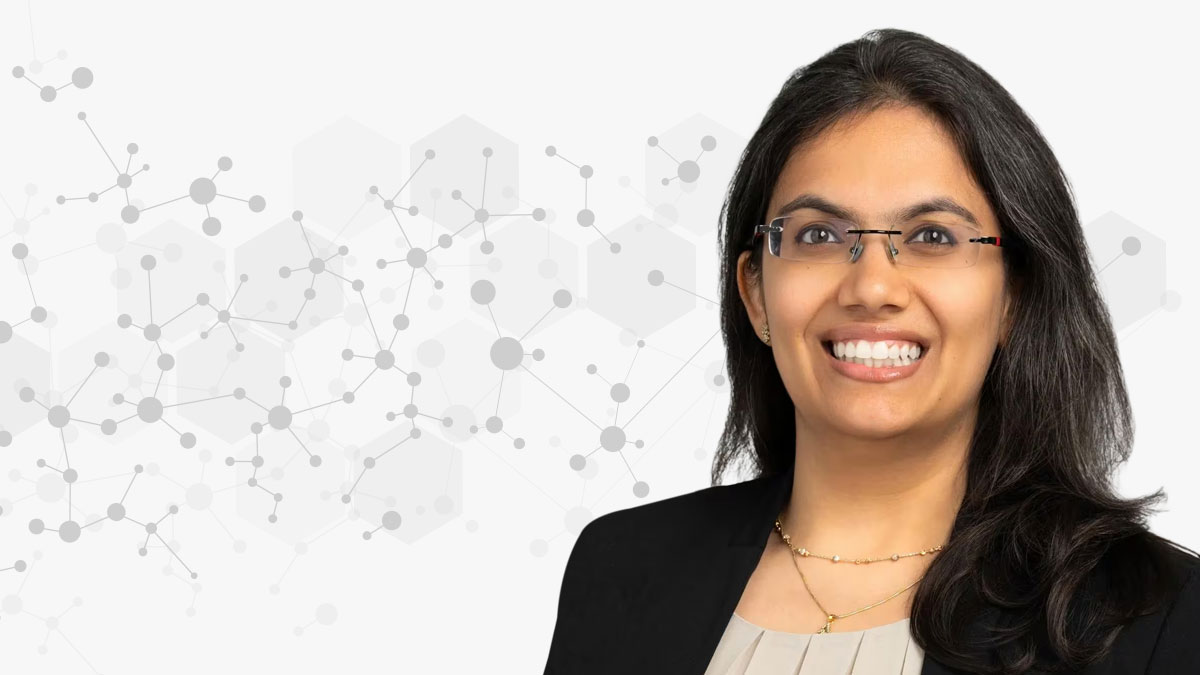
Pediatric Stroke
Kriti Bhayana, MD discusses pediatric stroke, highlighting evidence‑based clinical management and advances improving recognition, treatment, and recovery in children.
Advertisement
Cleveland Clinic is a non-profit academic medical center. Advertising on our site helps support our mission. We do not endorse non-Cleveland Clinic products or services. Policy
Recent Episodes
Transforming Epilepsy Diagnosis and Treatment Through AI-Enabled Infrastructure
Imad Najm, MD, discusses how AI-enabled infrastructure and advanced EEG analysis are transforming epilepsy diagnosis.
Delirium in the Hospital Setting: Recognition, Risks, and Management
Anna Shapiro Krew, MD, and Christopher Strayhan, BSN, RN, explain how multidisciplinary care and environmental design can help reduce deliri…
Lavender Rooms & the Future of Caregiver-Centered Design
Kristen Vargo, DNP, RN, NE-BC, explains how Cleveland Clinic's new Neurological Institute building is enhancing caregiver experience, patien…
Video content: This video is available to watch online.
View video online (https://cdnapisec.kaltura.com/p/2207941/sp/220794100/playManifest/entryId/1_di3met8q/flavorId/1_5f3sgelj/format/url/protocol/https/a.mp4)
Transcript
Neuro Pathways Podcast Series
Advertisement
Cleveland Clinic is a non-profit academic medical center. Advertising on our site helps support our mission. We do not endorse non-Cleveland Clinic products or services. Policy
Release Date: April 1, 2026
Expiration Date: March 31, 2027
Estimated Time of Completion: 30 minutes
Pediatric Stroke
Kriti Bhayana, MD
Description
Each podcast in the Neurological Institute series provides a brief, review of management strategies related to the topic.
Learning Objectives
- Review up-to-date and clinically pertinent topics related to neurological disease
- Discuss advances in the field of neurological diseases
- Describe options for the treatment and care of various neurological disease
Target Audience
Physicians and Advanced Practice providers in Family Practice, Internal Medicine & Subspecialties, Neurology, Nursing, Pediatrics, Psychology/Psychiatry, Radiology as well as Professors, Researchers, and Students.
ACCREDITATION
In support of improving patient care, Cleveland Clinic Center for Continuing Education is jointly accredited by the Accreditation Council for Continuing Medical Education (ACCME), the Accreditation Council for Pharmacy Education (ACPE), and the American Nurses Credentialing Center (ANCC), to provide continuing education for the healthcare team.
CREDIT DESIGNATION
- American Medical Association (AMA)
Cleveland Clinic Center for Continuing Education designates this enduring material for a maximum of 0.50 AMA PRA Category 1 Credits™. Physicians should claim only the credit commensurate with the extent of their participation in the activity.
Participants claiming CME credit from this activity may submit the credit hours to the American Osteopathic Association for Category 2 credit. - American Nurses Credentialing Center (ANCC)
Cleveland Clinic Center for Continuing Education designates this enduring material for a maximum of 0.50 ANCC contact hours. - Certificate of Participation
A certificate of participation will be provided to other health care professionals for requesting credits in accordance with their professional boards and/or associations. - American Board of Surgery (ABS)
Successful completion of this CME activity enables the learner to earn credit toward the CME requirements of the American Board of Surgery’s Continuous Certification program. It is the CME activity provider's responsibility to submit learner completion information to ACCME for the purpose of granting ABS credit.
Credit will be reported within 30 days of claiming credit.
Advertisement
Podcast Series Director
Andreas Alexopoulos, MD, MPH
Epilepsy Center
Additional Planner/Reviewer
Ari Newman, BSN
Faculty
Kriti Bhayana, MD
Neurology
Host
Glen Stevens, DO, PhD
Cleveland Clinic Brain Tumor and Neuro-Oncology Center
Agenda
Pediatric Stroke
Kriti Bhayana, MD
Disclosures
In accordance with the Standards for Integrity and Independence issued by the Accreditation Council for Continuing Medical Education (ACCME), The Cleveland Clinic Center for Continuing Education mitigates all relevant conflicts of interest to ensure CME activities are free of commercial bias.
Glen Stevens, DO, PhD
| Company | Relationship |
|---|---|
| DynaMed | Consulting |
| Company | |
| DynaMed | |
| Relationship | |
| Consulting |
All other individuals have indicated no relationship which, in the context of their involvement, could be perceived as a potential conflict of interest.
CME Disclaimer
The information in this educational activity is provided for general medical education purposes only and is not meant to substitute for the independent medical judgment of a physician relative to diagnostic and treatment options of a specific patient's medical condition. The viewpoints expressed in this CME activity are those of the authors/faculty. They do not represent an endorsement by The Cleveland Clinic Foundation. In no event will The Cleveland Clinic Foundation be liable for any decision made or action taken in reliance upon the information provided through this CME activity.
HOW TO OBTAIN AMA PRA Category 1 Credits™, ANCC Contact Hours, OR CERTIFICATE OF PARTICIPATION:
Go to: Neuro Pathways Podcast April 1, 2026 to log into myCME and begin the activity evaluation and print your certificate If you need assistance, contact the CME office at myCME@ccf.org.
Copyright ©2026 The Cleveland Clinic Foundation. All Rights Reserved.
Introduction:
Neuro Pathways, a Cleveland Clinic podcast exploring the latest research discoveries and clinical advances in the fields of neurology, neurosurgery, neurorehab, and psychiatry.
Glen Stevens, DO, PhD:
Pediatric stroke is a rare but serious condition that demands swift recognition and specialized treatment. Advances in diagnosis and rehabilitation are transforming outcomes for young patients, offering hope were challenges once seemed insurmountable.
In this episode, we'll uncover why pediatric strokes occur, explore the latest innovations in care and recovery, and discuss how collaboration across specialties is shaping a brighter future for children and their families.
I'm your host Glenn Stevens, neurologist neuro-oncologist in Cleveland Clinic's Institute. And joining me for today's conversation is Dr. Kirti Bhayana. Dr. Bhayana is a pediatric neurologist at Cleveland Clinic Children's Hospital. She's fellowship trained in vascular neurology. Kirti, welcome to Neuro Pathways.
Advertisement
Kriti Bhayana, MD, MBBS:
Thank you so much Glen.
Glen Stevens, DO, PhD:
So, start by letting our listeners know you a little bit better. Tell us your background, how you made your way to Cleveland and what you do on a regular basis.
Kriti Bhayana, MD, MBBS:
Absolutely. I was a pediatric neurology trainee here at the Cleveland Clinic, so I was here for five years. I moved to Texas for my vascular neurology fellowship, where I did my adult and pediatric stroke fellowship, and the stroke net research fellowship at the University of Texas in Houston and I just started back in August as staff and program lead for pediatric vascular neurology.
Glen Stevens, DO, PhD:
Excellent. Happy to have you here. So just as an aside, how many pediatric stroke fellowship programs are there in the country? Not many I can imagine.
Kriti Bhayana, MD, MBBS:
You're absolutely right. Dedicated ones are around three or four in the country, and I did have to make my way around trying to find a combined program, because my goal was actually to do both pediatric and adult vascular neurology practice. So that took a little bit digging, but I was very grateful that I found some programs and really good programs and mentors that could train me in both fields.
Glen Stevens, DO, PhD:
So, before we get started, tell us how common or rare pediatric stroke is.
Kriti Bhayana, MD, MBBS:
Pediatric stroke, which is stroke from 28 days of life until 18 years of age, is anywhere around one to six per 50,000 patients. So roughly the similar estimate or a little bit more than brain tumors in the pediatric population. The difference, though, from the adults is that we see 80% ischemic strokes in the adult population, but it's almost 50% that we see ischemic and hemorrhagic strokes in the pediatric subset.
Advertisement
Glen Stevens, DO, PhD:
And what about perinatal strokes?
Kriti Bhayana, MD, MBBS:
Perinatal strokes are anywhere from 28 weeks off gestation until 28 days of life. We typically call neonatal strokes if they're from birth till 28 days of life and then 28 weeks gestation to seven days perinatal. That's actually much more common. The number can be as high as one in 3000 babies.
Glen Stevens, DO, PhD:
I'm not sure if you want to break down the perinatal versus pediatric stroke, but why don't you do that and why don't we go through some of the causes or etiologies behind both?
Kriti Bhayana, MD, MBBS:
Absolutely. And it also becomes essential because the etiologies and the risk for recurrence varies for both of them. So I'll talk about perinatal strokes first.
Maternal conditions, for example, preeclampsia, infections, history of hypercoagulability, issues with the placenta, or chorioamnionitis, these are all common causes that can occur in the perinatal population. Interestingly, nulliparity actually is also a risk factor and a lot of times we don't find a cause for perinatal strokes. On the flip side, for pediatric strokes, the number one cause is cardioembolic sources. A majority could be congenital heart diseases. Other etiologies include hypercoagulability, arteriopathy ... And actually arteriopathy is more common in kids who were previously healthy and now presenting with strokes. Focal cerebral arteriopathy, moyamoya, vasculitis, sickle cell disease, among few of those, and genetic disorders. And around 25 to 30% of the patients we do not find a cause for stroke in this age group.
Advertisement
Glen Stevens, DO, PhD:
And hemorrhagic strokes more common in one group than the other group?
Kriti Bhayana, MD, MBBS:
Hemorrhagic strokes are almost as common as ischemic in the pediatric age group.
Glen Stevens, DO, PhD:
Okay. You mentioned that cardioembolic is the most common type of stroke. If we go back to the perinatal time period, how do we know that there's been a stroke when the child is still in utero?
Kriti Bhayana, MD, MBBS:
So, we now know that the highest chances of having a stroke in that time is around the time the baby's born, around the time of delivery, anywhere from two days before to a day after. If the stroke has occurred in utero, then we start to see some changes in the brain. For example, col-IVA gene mutation can result in brain changes that we're able to visualize before. A lot of the patients, as high as 80% neonates, can present with seizures, which is very different from the adults when we talk about stroke that they rarely present with seizures. And that is one of the most common consults that we get in the neonatal age group, A baby who was born and has now developed seizures, we try to work those up to find out if they've had a stroke. But a lot of these patients can go unrecognized and we only come to note that they presumably had a perinatal stroke when they develop early handedness before a year of their life, or they start developing hypertonia. And these are the things that we look for or developmental delay when we see them in clinic.
Glen Stevens, DO, PhD:
You just answered one of the questions I would always ask the residents on rounds, the adult rounds, and that was the instance of stroke and seizure. And I would ask this question because I would try to get the med students or the residents to think, right? And some residents would go, "Well, it's 60%." And then I would say, "Well, how many strokes have you seen? How many patients have you seen that have had a seizure?" And then they start to realize the number's way too large. It's much less ... Certainly 10% or less.
Kriti Bhayana, MD, MBBS:
Less.
Glen Stevens, DO, PhD:
It's a low number. And I think that I would do that to try to get them to understand that they have the information, they're just not utilizing the information they have and how they should really be thinking about things as they move forward.
Kriti Bhayana, MD, MBBS:
That's true.
Glen Stevens, DO, PhD:
With that. Because when I was doing a little bit of reading, I was actually a little bit surprised because I don't do pediatrics, that seizure was listed as not uncommon. I think I also read that sometimes fever can be associated. I don't know if that's a secondary marker in the perinatal period of inflammatory infectious process. I would suspect.
Kriti Bhayana, MD, MBBS:
I think so. I think fever or presenting as encephalopathy more in the context of inflammation could be presenting.
Glen Stevens, DO, PhD:
So you mentioned a little bit in the perinatal period or early development how handedness could be noted, changes in limb function, that type of thing. What about as children start to get a little bit older, how do the strokes present with them?
Kriti Bhayana, MD, MBBS:
I would say anywhere from toddler age group to above. It's actually possible that they're presenting with similar signs of involvement of vascular territory as adults, but they may be very difficult to recognize. For example, a three-year-old who's presenting who has a stroke and perhaps might have aphasia, might be presenting with persistent crying. And it might be difficult to understand that aphasia is indeed present. Other atypical things are headaches. We almost always train our residents on the adult side saying headaches with strokes, probably not a stroke if that's what they're coming with. But on the pediatric side, not just for hemorrhagic but for unclear reasons, they can also still have headaches and present with ischemic strokes. 40% may also present with acute altered mental status and they might have strokes. So these are situations where it may not be clear-cut presentation pointing to a vascular territory, but more generic symptoms.
Glen Stevens, DO, PhD:
Other unusual things that someone can look for? I think you mentioned several of them, but other things that are different in children presentation that someone would go, "Well, I wouldn't really think of that as a stroke." You mentioned the crying and the headache and seizures.
Kriti Bhayana, MD, MBBS:
In seizures, I actually want to point out Todd's paralysis, and we may see patients who have had history of generalized seizures and sometimes they're coming with new onset focal seizures, and it can be missed or interpreted as another type of seizure. But what I do want to point out is any kid who has had history of general seizures, generalized seizures, but is now coming with new onset focal, strokes should be ruled out. Or even Todd's paralysis, which is the weakness that can follow a seizure and stroke should be ruled out first in those cases.
Glen Stevens, DO, PhD:
So, when I was attending on the inpatient service and you would go see some in the emergency department and they came in and there's suspicion they may have had a stroke, over the long time I've been here, we almost do a complete workup in the ED now. They get an MRI scan in the ED, you look for a diffusion abnormality, you can tell they have an acute stroke. It's a much easier process. Within a full day you can even get a bedside EEG done. You can get the whole thing in a short period of time. A lot more complicated with children in terms of imaging.
So what type of imaging do you do in kids and what are the difficulties associated with the types of tests and imaging you need to do?
Kriti Bhayana, MD, MBBS:
Yeah, so even though I mentioned that there are certain situations where we're not suspecting stroke, we should have that as a differential. I do want to point that there's a fair share of stroke mimics that come in through the ER, and that is why the push is more towards MR based imaging rather than CT scan. We of course want to get a scan done to rule out hemorrhage if we don't have availability of MR, but in situations where we're talking about intervention, especially thrombolysis, we would rather have an MR based imaging looking at the diffusion restriction to make that decision. Also, it becomes important because I will tell you we did have a patient who presented with symptoms very similar to right MCA, but we got the MR and found out there was a tumor recurrence in that patient and that patient was in window. So if this was a CT based only, that patient could have gotten thrombolysis in that case, and that's why MR-based imaging becomes even more important in the pediatric age group.
Another thing I would mention is complex migraines or hemiplegic migraines that they can be presenting with very common mimicker, and that's why we prefer to get MR-based imaging rather than CT. And of course with the higher number of mimics, we also want to decrease the radiation exposure to these kids.
Glen Stevens, DO, PhD:
Sedation for children, at what age can you do an MRI or how do you have to do it if they're younger?
Kriti Bhayana, MD, MBBS:
Yeah. We can do an MRI in a newborn, a pre-term. So pretty much any age group. But of course as you mentioned, sedation becomes a limiting factor sometimes. We try to get limited series or the hyperacute protocol where we have the diffusion restriction, susceptibility weighted images as well as T-two or flare images, and we also try to get an MRA of the circle of villus when we're looking for evidence of vessel occlusion. All this to give us the best answer, but also limit the time amount that the patient spends in the scanner to see if we can do it without sedation. But understandably, we've had situations, or we can foresee situations where sometimes anesthesia team is not available or becomes a limiting factor. We try to keep these imaging sequences faster, as quick as less than 10 minutes, but we prefer to have at least light sedation if possible.
Glen Stevens, DO, PhD:
Age for thrombolysis. How young can you go?
Kriti Bhayana, MD, MBBS:
So, I will quote the thrombolysis in pediatric study trial. The TIPS trial. That was in 2015 for this very purpose, but actually we were not able to recruit patients to find out the results of that. That being said, since then there has been off-label use of that in many centers and knowing that it has better outcomes, we use it, but we use the criteria from that TIPS trial. So that is two years and
Glen Stevens, DO, PhD:
Above. And how common would vessel occlusion be in children? So if you look at children that have strokes, I mean is it 5% of them would have vessel occlusions? 2%, 1%?
Kriti Bhayana, MD, MBBS:
I wouldn't have the number off the top of my mind, but I would say that significant enough because we have cardioembolic as the number one etiology, and initially when the trial came for thrombolysis, the criteria was also a presence of partial or complete occlusion of the vessel before they decided to give thrombolysis.
Glen Stevens, DO, PhD:
So do you do ultrasound in children? Do you do carotid ultrasounds, transcranial dopplers for vascular disease? Is that helpful?
Kriti Bhayana, MD, MBBS:
Absolutely. I think carotid ultrasound is super helpful in situations where we are not able to get CTA or MRA. For example, in patients who have been on ventricular assist devices, getting a scan ... So they're not compatible for MR-based imaging and sometimes we're unable to move them for getting a CTA, and carotid ultrasound is absolutely helpful to give us that information.
TCD imaging also super helpful. I'll give you specific examples. So for sickle cell patients, for example, TCD is one thing that we use for surveillance and monitoring in those patients to understand the flow velocities and actually their preventive strategies. For example, whether or not to do exchange transfusion depends on those values.
In the ICU setting, TCD is also helpful when we're looking for any distal occlusions in these patients. Again, I will quote the vascular assist device patients where we're unable to get intracranial imaging, TCD is able to help us out there.
Glen Stevens, DO, PhD:
So, during COVID, there was an increased incidence of large vessel occlusions in individuals that had infection. Did you see that in children as well or do we have any data or anecdotally did you ...
Kriti Bhayana, MD, MBBS:
Anecdotally, yes, we've seen that. And there have been trials to understand if COVID was causing increased strokes, particularly if it was causing arteriopathy and resulting in embolism, but we couldn't find conclusive results in favor of that.
Glen Stevens, DO, PhD:
Do we put children on anti-lipid drugs?
Kriti Bhayana, MD, MBBS:
I think rare situations where they're presenting with hereditary triglyceridemia or hypercholesterolemia and if they have had any evidence of stroke in that setting and everything else has been negative. But I will say significant, significantly less likely when compared to adults, to the point where routinely that's not what we're checking for them.
Glen Stevens, DO, PhD:
And I do a fair amount of gamma knife and Dr. Rasmussen does gamma knife on Fridays, which is typically the day that I do it, and he does mostly AVMs. And a couple of weeks ago he had two patients under the age of 17 with AVMs that he was treating. Gamma knife for AVMs is an excellent treatment modality. How are those patients presenting? Are they typically presenting with a hemorrhage?
Kriti Bhayana, MD, MBBS:
Yeah, most of those patients are presenting with headaches, and once we find out, we were able to find presence of AVMs. I did have one patient who did present with hemorrhage, so sudden severe headaches. But more often what I did notice were they were presenting with headaches, some confused for migraines. And then on detailed history taking, we found out that the characteristics were a little bit more different, more severe, not really getting better with medications as much got the imaging done and then found out that AVM's were present.
Glen Stevens, DO, PhD:
So, in adults, for the most part, we'd like to believe that we can take a good history. I was always taught take the history and if you don't know what they have, you haven't taken a good enough history, so go back and do more history. I imagine that's much more complicated in younger children, because they can only give you so much information, so there would be a lot of concern you could miss things. Red flags that you're looking for to help you in the, we need to look deeper, and this could be a stroke versus not we're obtaining the history is more complicated or atypical type presentations.
Kriti Bhayana, MD, MBBS:
Yeah, I think in those situations I start off by looking at risk factors. For example, if somebody has a complex cardiac history or an complex cardiac anatomy, history of hypercoagulation, history of recent recovering infection, those are the red flags in my head. And what I try to look for and try to tease out from families are the acuity of onset and what change are they noticing?
I have come to realize that if we're sitting with parents long enough, they will tell you that this is the change that happened with my child. They're not walking, they're refusing to be touched, they're inconsolable, they're suddenly sleeping more. And I just try to tease out. It's difficult sometimes, especially when we're trying to look for a last known well, and unfortunately in very younger patients, we're not able to decipher that very clearly, which leads us to excluding them from thrombolysis because we don't have a real last known available. But I think these are some of the things or some of the red flags that I try to talk about.
I also try to ask very specific questions that the patients. I have seen more, even kids that are around five and above or six and above, they're able to answer me sometimes about, for example, vision changes, what exactly happened. I try to avoid open-ended questions with them and try to explain to them what exactly I'm asking. And to my surprise, they're actually able to tell me that this is exactly what happened.
And during the observation, I try to use their toys in order to see if they're reaching out for it, if they're favoring one or the other arm or how they're reacting or assessing their vision.
Glen Stevens, DO, PhD:
Just to sidebar a little bit. Genetic disorders that can be associated with stroke in children?
Kriti Bhayana, MD, MBBS:
Yeah, there's a lot of genes that we're finding now that can be associated with strokes, both ischemic as well as hemorrhagic. And currently my practice has been until I have completed the full workup, which does include genetic testing, I would not call them cryptogenic or unknown etiology. Because more often than not, we find some answers and it becomes even more important because it can change the trajectory. For example, patients who do have ADA-II mutation, that becomes important to recognize because these are the patients that can get benefited from immunomodulating therapies for prevention of stroke, and these are situations where I would also test their siblings and family and anybody who has that mutation, even if they've not had a stroke, would actually be starting therapies to help prevention of stroke. So I think genetic testing plays a significant role in those situations.
Glen Stevens, DO, PhD:
Do you think genetic testing is being done commonly in stroke children nowadays?
Kriti Bhayana, MD, MBBS:
I think so. I think during my training and in our consortium discussions, we see more commonly whole exome or even whole genome sequences being sent out. We did realize that sometimes when we're doing selective panels, sometimes there are certain genes that can get missed and if you are trying to test a panel, for example, connective tissue or a vascular panel, and if your suspicion is still high, I would encourage to do whole exome or whole genome before concluding that there's not an etiology.
Glen Stevens, DO, PhD:
So, as a transition, your standard workup is what for a stroke patient?
Kriti Bhayana, MD, MBBS:
As a standard, I do start off with MRI brain without and vessel imaging carotids as well as the brain, depending on if there's history for trauma, I will decide if I want fat sad sequences if I'm looking for dissection. For arteriopathy, I have had done vessel wall imaging more recently that has really helped me find answers, especially when I'm looking at certain areas of involvement where I'm suspecting inflammation might be the cause. In terms of lab testing, I do do a hypercoagulable panel. I do include inflammatory labs, depending on involvement of small medium or small vessel disease if I'm concerned about vasculitis.
For cardiac workup, I do start off with a TTE. I try to do a bubble study, but keeping in mind that kids, very younger kids can have a PFO present, which may not be significant. So just having that thing in mind. But let's say we have patients who have a complex cardiac history and let's say a PFO is present with the shunting from right to left side, I also try to do all for limb DBT ultrasounds to look for that.
Some situations where the suspicion is cardiac and a TTE has been negative, we also try to do a TEE in those patients. Rarely we have done DSA for patients if we are suspicious, but we're not finding great answers on our MR-based imaging. And then if all of this workup has been negative, I do go on to do genetic testing for these patients.
Glen Stevens, DO, PhD:
And lumbar punctures are really just for vasculitic patients or concern of infection?
Kriti Bhayana, MD, MBBS:
Yes. Thank you for bringing that up. We routinely not doing lumbar puncture, but if there is concern for vasculitic process or yes, infection, inflammation, those are the situations where we're doing a lumbar puncture.
Glen Stevens, DO, PhD:
And genetic syndromes that are a little more risk for stroke in children. I used to look after a lot of neurofibromatosis patients, and as you know, they have a little more risk of Moya-Moya, the puff of smoke.
Kriti Bhayana, MD, MBBS:
Absolutely.
Glen Stevens, DO, PhD:
As they called it. So other populations, Down's children?
Kriti Bhayana, MD, MBBS:
That's true. Down's Children Trisomy 21, neurofibromatosis, sickle cell disease who can develop moyamoya. PHACE syndrome, where they basically have malformations that are occurring that can result in stenosis of the vessels or occlusion of the vessels. These are some of the other cases.
Glen Stevens, DO, PhD:
And you mentioned it a little bit, but talk just a little bit about sickle cell disease.
Kriti Bhayana, MD, MBBS:
Yeah, sickle cell disease is an important group, especially in the pediatric age group because kids less than 18 years of age who are presenting with acute neurodeficits or even if they have evidence of strokes, the first line of treatment is not thrombolysis for them. It is in fact exchange transfusion or simple transfusion, depending on their hemoglobin level. For more than 18 years of age. It is a case-by-case discussion, but that becomes very significant because time is brain, and in these patients who are less than 18, if they're presenting at, let's say, standalone emergency centers where they don't have the capabilities to exchange transfusion, early transport becomes essential so we can assess their hemoglobin S levels and then get the process started.
Glen Stevens, DO, PhD:
Biggest unanswered questions in the pediatric stroke world?
Kriti Bhayana, MD, MBBS:
Pediatric stroke world is up and going, and there are so many things that we're working on right now, from imaging deciding what is the best imaging modality and is it enough to count cutoffs that we use for the adult side, on the pediatric side as well, or we're going to do something different, rehab studies, discussing about long-term outcomes of these patients and effect of early intervention, and then cardiac patients or ventricular assist device patients, how we can improve management of these patients are just to name a few.
Glen Stevens, DO, PhD:
We didn't even really get into neuroplasticity, but my perception is always that children have better ability to recover than someone my age.
Kriti Bhayana, MD, MBBS:
It is true, but we do have studies that now found out that children who did undergo thrombectomy, in fact did much better as compared to children who did not. And even though we were more reliant on neuroplasticity for this age group, we are now more motivated-
Glen Stevens, DO, PhD:
To be more aggressive.
Kriti Bhayana, MD, MBBS : More aggressive for thrombectomy.
Glen Stevens, DO, PhD:
Well, very good. Anything on the horizon that you're excited about?
Kriti Bhayana, MD, MBBS:
Absolutely. In my fellowship and right now, I'm working on the utilization of artificial intelligence in the field for pediatric stroke. We're trying to develop a more reliable framework and workflow models that we can integrate for the studies of pediatric stroke, and even so that we can help with better diagnostics as well as providing targeted therapies.
Glen Stevens, DO, PhD:
I think if we don't use the term AI in each podcast, they won't air the podcast.
Kriti Bhayana, MD, MBBS:
That is how it is.
Glen Stevens, DO, PhD:
Final takeaways?
Kriti Bhayana, MD, MBBS:
Pediatric stroke, even though less common as compared to adults, does occur, can occur, and early intervention/recognition can change the trajectory for these patients.
Glen Stevens, DO, PhD:
Well, Kirti, happy to have you here and pleased with all the great work that you're doing and look forward to having you back at some point to tell us all the exciting things that you're doing.
Kriti Bhayana, MD, MBBS : Sounds great. Thank you so much
Closing:
This concludes this episode of Neuro Pathways. You can find additional podcast episodes on our website, clevelandclinic.org/neuropodcast, or subscribe to the podcast on iTunes, Google Play, Spotify, or wherever you get your podcasts. And don't forget, you can access real-time updates from experts in Cleveland Clinic's Neurological Institute on our Consult QD website. That's consultqd.clevelandclinic.org/neuro, or follow us on Twitter @CleClinicMD , all one word. And thank you for listening.
Recent Episodes
Transforming Epilepsy Diagnosis and Treatment Through AI-Enabled Infrastructure
Imad Najm, MD, discusses how AI-enabled infrastructure and advanced EEG analysis are transforming epilepsy diagnosis.
Delirium in the Hospital Setting: Recognition, Risks, and Management
Anna Shapiro Krew, MD, and Christopher Strayhan, BSN, RN, explain how multidisciplinary care and environmental design can help reduce deliri…
Lavender Rooms & the Future of Caregiver-Centered Design
Kristen Vargo, DNP, RN, NE-BC, explains how Cleveland Clinic's new Neurological Institute building is enhancing caregiver experience, patien…
Never miss a moment - subscribe now.
Listen to the Health Essentials Podcast on your favorite streaming platform.
Other Podcasts You May Love
Beyond Leadership
Hosts Jim Pae and Elizabeth Pugel escort you through a network of thought leaders, sharing world-cla…
Beyond the Pages: CCJM Podcast
Beyond the Pages: CCJM Podcast takes the listener more in-depth into Cleveland Clinic Journal of Med…
Butts & Guts
A Cleveland Clinic podcast exploring your digestive and surgical health from end to end. You’ll lear…
Cancer Advances
A Cleveland Clinic podcast for medical professionals exploring the latest innovative research and cl…