



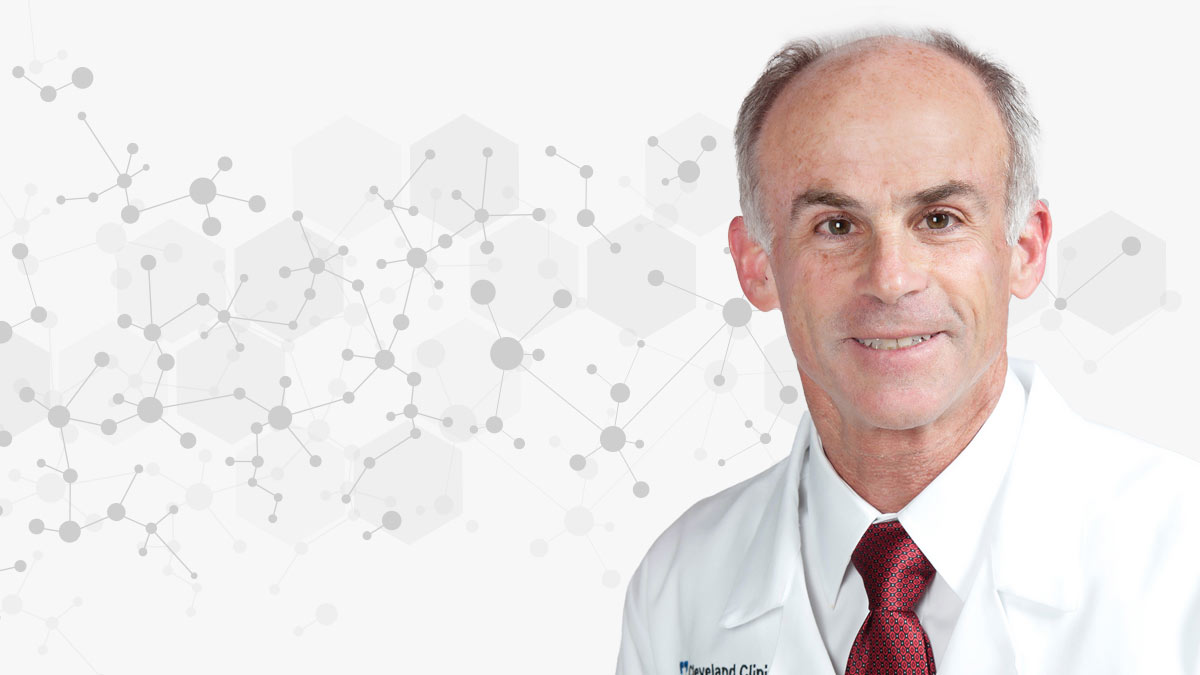
Alzheimer’s Disease in Adults with Down Syndrome
Charles Bernick, MD, MPH explores the strong link between Down syndrome and Alzheimer’s disease.
Advertisement
Cleveland Clinic is a non-profit academic medical center. Advertising on our site helps support our mission. We do not endorse non-Cleveland Clinic products or services. Policy
Recent Episodes
Lavender Rooms & the Future of Caregiver-Centered Design
Kristen Vargo, DNP, RN, NE-BC, explains how Cleveland Clinic's new Neurological Institute building is enhancing caregiver experience, patien…
Understanding the Research Impact of the Digital Assessment Center
Jay Alberts, PhD, shares how Cleveland Clinic’s Digital Assessment Center is accelerating neurological research and advancing patient care.
Clinical Impacts of the Digital Assessment Center
Robert Bermel, MD, highlights the role of Cleveland Clinic’s Digital Assessment Center in advancing data-driven neurological care.
Video content: This video is available to watch online.
View video online (https://cdnapisec.kaltura.com/p/2207941/sp/220794100/playManifest/entryId/1_qmwuukdw/flavorId/1_5f3sgelj/format/url/protocol/https/a.mp4)
Transcript
Neuro Pathways Podcast Series
Advertisement
Cleveland Clinic is a non-profit academic medical center. Advertising on our site helps support our mission. We do not endorse non-Cleveland Clinic products or services. Policy
Release Date: May 15, 2026 Expiration Date: May 14, 2027
Estimated Time of Completion: 30 minutes
Alzheimer’s Disease in Adults with Down Syndrome
Charles Bernick, MD, MPH
Description
Each podcast in the Neurological Institute series provides a brief, review of management strategies related to the topic.
Learning Objectives
- Review up to date and clinically pertinent topics related to neurological disease
- Discuss advances in the field of neurological diseases
- Describe options for the treatment and care of various neurological disease
Target Audience
Physicians and Advanced Practice providers in Family Practice, Internal Medicine & Subspecialties, Neurology, Nursing, Pediatrics, Psychology/Psychiatry, Radiology as well as Professors, Researchers, and Students.
ACCREDITATION
In support of improving patient care, Cleveland Clinic Center for Continuing Education is jointly accredited by the Accreditation Council for Continuing Medical Education (ACCME), the Accreditation Council for Pharmacy Education (ACPE), and the American Nurses Credentialing Center (ANCC), to provide continuing education for the healthcare team.
CREDIT DESIGNATION
- American Medical Association (AMA)
Cleveland Clinic Center for Continuing Education designates this enduring material for a maximum of 0.50 AMA PRA Category 1 Credits™. Physicians should claim only the credit commensurate with the extent of their participation in the activity.
Participants claiming CME credit from this activity may submit the credit hours to the American Osteopathic Association for Category 2 credit. - American Nurses Credentialing Center (ANCC)
Cleveland Clinic Center for Continuing Education designates this enduring material for a maximum of 0.50 ANCC contact hours. - Certificate of Participation
A certificate of participation will be provided to other health care professionals for requesting credits in accordance with their professional boards and/or associations. - American Board of Surgery (ABS)
Successful completion of this CME activity enables the learner to earn credit toward the CME requirements of the American Board of Surgery’s Continuous Certification program. It is the CME activity provider's responsibility to submit learner completion information to ACCME for the purpose of granting ABS credit.
Advertisement
Credit will be reported within 30 days of claiming credit.
Podcast Series Director
Andreas Alexopoulos, MD, MPH
Epilepsy Center
Additional Planner/Reviewer
Ari Newman, BSN
Faculty
Charles Bernick, MD, MPH
Lou Ruvo Center for Brain Health
Host
Glen Stevens, DO, PhD
Cleveland Clinic Brain Tumor and Neuro-Oncology Center
Agenda
Alzheimer’s Disease in Adults with Down Syndrome
Charles Bernick, MD, MPH
Disclosures
In accordance with the Standards for Integrity and Independence issued by the Accreditation Council for Continuing Medical Education (ACCME), The Cleveland Clinic Center for Continuing Education mitigates all relevant conflicts of interest to ensure CME activities are free of commercial bias.
The following faculty have indicated that they may have a relationship, which in the context of their presentation(s), could be perceived as a potential conflict of interest:
Glen Stevens, DO, PhD
| Relationship | |
|---|---|
| DynaMed | Consulting |
| IQVIA | Consulting (Ended: 01/01/2026) |
| Relationship | |
| DynaMed | |
| Consulting | |
| IQVIA | |
| Consulting (Ended: 01/01/2026) |
All other individuals have indicated no relationship which, in the context of their involvement, could be perceived as a potential conflict of interest.
CME Disclaimer
The information in this educational activity is provided for general medical education purposes only and is not meant to substitute for the independent medical judgment of a physician relative to diagnostic and treatment options of a specific patient's medical condition. The viewpoints expressed in this CME activity are those of the authors/faculty. They do not represent an endorsement by The Cleveland Clinic Foundation. In no event will The Cleveland Clinic Foundation be liable for any decision made or action taken in reliance upon the information provided through this CME activity.
HOW TO OBTAIN AMA PRA Category 1 Credits™, ANCC Contact Hours, OR CERTIFICATE OF PARTICIPATION:
Go to: Neuro Pathways Podcast May 15, 2026 to log into myCME and begin the activity evaluation and print your certificate If you need assistance, contact the CME office at myCME@ccf.org.
Copyright ©2026 The Cleveland Clinic Foundation. All Rights Reserved.
Introduction:
Neuro Pathways, a Cleveland Clinic podcast exploring the latest research discoveries and clinical advances in the fields of neurology, neurosurgery, neurorehab, and psychiatry.
Glen Stevens, DO, PhD:
Down syndrome is associated with a significantly increased risk of Alzheimer's disease, yet recognizing, diagnosing, and managing cognitive decline in this population presents unique clinical and research challenges.
In this episode of Neuro Pathways, we explore the connection between Down Syndrome and Alzheimer's disease, including what clinicians need to know about risk, early detection, and emerging research shaping care.
I'm your host, Glen Stevens, neurologist, neuro-oncologist in Cleveland Clinic's Neurological Institute. And joining me for today's conversation is Dr. Charles Bernick. Dr. Bernick is a neurologist and researcher in Cleveland Clinic's Lou Ruvo Center for Brain Health. Charles, welcome to Neuro Pathways.
Charles Bernick, MD, MPH:
Well, Glenn, thanks so much. It's an honor to be here with you.
Advertisement
Glen Stevens, DO, PhD:
So it's always great to see you, but for those that don't know you, why don't you tell us a little bit about yourself, your background, training, and how you made it out to Vegas?
Charles Bernick, MD, MPH:
Yeah, good question. I'm a neurologist as yourself. I did my medical school education at the University of Texas Southwestern, then did neurology residency at the University of Miami. Did some fellowship training at the University of Arizona, which got me back out to the West and then have been actually in Las Vegas practicing for over 30 years.
Glen Stevens, DO, PhD:
Well, we appreciate all you do. So why is Alzheimer's disease considered inevitable in individuals with Down's syndrome?
Charles Bernick, MD, MPH:
Well, Glenn, one of the fundamental pathological processes in Alzheimer's disease is this accumulation of amyloid protein in the brain. That's actually one of the earliest things we can identify. Turns out the amyloid protein is a small fragment of a larger protein, the amyloid precursor protein, which we all have. It's a normal protein, but gets cleaved in a certain way where you produce these smaller fragments that aggregate. Down syndrome is defined by trisomy 21, that is having three copies of chromosome 21. And it turns out that the gene for the amyloid precursor protein is on chromosome 21. In other words, you're getting an extra load of this precursor protein that's overproducing it and leading to its accumulation in Down syndrome.
Advertisement
Glen Stevens, DO, PhD:
Yeah, it's unfortunately a double whammy.
Charles Bernick, MD, MPH:
For sure. In some sense in Down's syndrome, we know that it's a leading cause of death in people over the age of 35. If you have Down syndrome, your lifetime risk of Alzheimer's disease is close to 90 to 95%. So, it is a predictable fact of that disease.
Glen Stevens, DO, PhD: So how does Alzheimer's disease typically present differently versus people with Down's syndrome?
Charles Bernick, MD, MPH:
Well, it actually doesn't present that much differently than in sporadic Alzheimer's disease. That is often the initial symptom is forgetfulness, memory problems. The difficulty is sometimes trying to differentiate these changes that are due to Alzheimer's disease from a person's baseline function. And so, the other features that we kind of look for is change in function. So, if somebody with Down syndrome is operating at a certain level and then starts to decline or lose abilities, that can be a feature of it. Behavioral changes are often an early feature of the disease in Down syndrome. So could be social withdrawal, irritability, even depression. And then other features can be like a seizure. Seizures occur at a higher rate in people who have Alzheimer's disease in Down syndrome. So, a Down syndrome patient who's in their 40s or 50s, they have a seizure. It's very likely they have underlying Alzheimer's disease.
Advertisement
So those are the things people pay attention to or look for. Again, I think the big signal is this just change in function, this decline in the person's baseline status.
Glen Stevens, DO, PhD: What about between the two and the general population versus Downs in terms of self-awareness? Is it different or are both groups not very self-aware of the decline or is one more than the other?
Charles Bernick, MD, MPH:
Yeah, that's a good question. I don't know if there's a lot of literature on that. Certainly, in sporadical Alzheimer's disease, there's a relatively high rate of individuals who have neglective illness. They don't recognize their changes. And Down syndrome, I suspect it's probably more just because of the baseline intellectual developmental disability, but I'm not sure we really know that.
Glen Stevens, DO, PhD:
And in the Down syndrome population, do we see a lot of sleep irregularity as it develops or not necessarily?
Charles Bernick, MD, MPH:
Yes, you can. So, sleep changes in Down syndrome can also be a signal that is sleeping more or sleeping less. You know that Down syndrome is a high rate of sleep apnea, but even apart from that, sleep changes can be a signal as is weight changes. So not just weight gain, but also weight loss in that population. So, some of these symptoms are non-specific, certainly can be due to other things. And I think for clinicians, as we always do, when a person starts to have new symptoms or change, you have to think about the whole differential diagnosis. Yes, it could be Alzheimer's disease, but it could be thyroid problems, it could be sleep apnea, it could be other metabolic issues, vascular disease, just simply because the Down syndrome population are at higher risk of some of these features.
Glen Stevens, DO, PhD:
So, are there modifiers in the population that would affect the age at onset or the progression of the disorder for those that have Down's syndrome and are going to develop Alzheimer's disease?
Charles Bernick, MD, MPH:
Yes, there probably are, but on the flip side, there's a certain predictability, at least biologically and the progression of the amyloid deposition. So, we know by the age of 40, probably starting closer to 35, but certainly by the age of 40, accumulation of amyloid is almost inevitable. So, you can measure that. And symptoms often will start five, 10 years, maybe later. So, the onset of symptoms is somewhere in the mid 40s to mid 50s. However, having said that, it just says in sporadic Alzheimer's disease, there are some individuals who have amyloid present, but seem resilient, at least resilient to developing some of the symptoms or decline that we see clinically. Why that happens, I'm not sure we really understand that. It probably is multifactorial, but certainly there is some heterogeneity in the symptom progression, but certainly biologically, it's a very predictable disease.
Glen Stevens, DO, PhD: Yeah . I guess then the question is, is it underrecognized or undertreated in the population, which you shouldn't think it would if it's inevitable, but is it underrecognized?
Charles Bernick, MD, MPH:
Yeah, I think it is. I think for a lot of different reasons. One is in the past Down syndrome patients, the longevity wasn't, as it is now. In other words, there weren't as many people living into their 50s or 60s, so that people really didn't pay attention because it wasn't that common. Now it's different. So, it's much more likely that an individual with Down syndrome that has control over their other medical issues will make it into their 60s. So one is just this change in frequency of the disease. And the other is I think just this whole sense of you have individuals who already have intellectual developmental disability of various levels, and I think it gets sometimes just washed out. If people get older, they figure out they're just getting older, and they don't really think about a secondary process that may be going on. And hopefully podcasts like yours will bring some awareness to this.
Glen Stevens, DO, PhD:
Well, so on the next point then, let's say I'm a primary care physician, and I have some patients in my practice that have Down syndrome. Should I start doing screening cognitive testing on these patients? Is there recommendations, guidelines?
Charles Bernick, MD, MPH:
Yes. I think there are some, I think, general guidelines. So one is probably at least by the age of 40, the person should have some baseline assessment, assessment of their functional capacity, maybe even cognitive. There are some batteries that are available for this population, but to get a sense of where they are, start at about 40, and then subsequently have some type of annual examination. And if there is a change, then that should lead to further workup that we do for cognitive impairment. Again, looking for other comorbidities that could cause the problem. And then also now that we have these tools available for diagnosis of Alzheimer's disease, they can be applied to this population as well.
Glen Stevens, DO, PhD:
But for routine screening for primary care, any specific type of cognitive tests better than the other for this population or that do the standard?
Charles Bernick, MD, MPH:
No, there are some that are really more customized to this population. I don't know if a primary care physician has to get into that as much. I think just being able to do assessment of a functional capacity and there are these functional capacity questionnaires that are appropriate to Alzheimer's disease just in general probably is adequate, but you want to get some sense of where that person is, at least at the age of 40, so you can recognize if there's decline. Because remember, not all of these patients are cared for by their family who would of course know. Sometimes it's caregivers, residential care staff, and so on.
Glen Stevens, DO, PhD:
So I'm looking after some patients that have Down syndrome, and I'm a little bit concerned on my testing that there's a bit more cognitive decline than I would think that they should have. So, I'm concerned that they have Alzheimer's disease. Obviously, there's a lot of tests that can be done. What are reasonable tests that we should consider doing? Blood biomarkers? Should we image them? CSF? What should we do?
Charles Bernick, MD, MPH:
Yeah. Well, again, I think it will depend on the situation. The blood biomarkers that are now becoming common in practice, which is this PTAO 217 is actually a good screen in Down syndrome. I mean, they perform the same as they would in sporadic Alzheimer's disease. So they will give you a sense of whether there's amyloid present, but they should also have, again, this evaluation to be sure nothing else is going on too. So, some type of brain imaging that can be tolerated by the patient and then the routine blood test. So those would be kind of the basic evaluation. But I think now that we have these blood biomarkers, they certainly are very useful in this population.
Glen Stevens, DO, PhD:
And is it just tell you it's present or not present, or does it give you an actual value that you can then sort of go to a graph and say, "Boy, there's way too much here. It's at this level," or does it not work that way?
Charles Bernick, MD, MPH:
The blood biomarkers don't work that way at the moment. So in other words, they don't really correlate strongly with severity of disease and so are not that useful for precise tracking of change over time. So, it's really, you're right, it's a diagnostic test. It's, do you have it or you don't? And then I think all the other decisions become clinical decisions once you've asserted that there's no other factors that may be compounding the symptoms or attributable to the symptoms.
Glen Stevens, DO, PhD:
So if you have Alzheimer's in the general population, you have a Downs patient that you think has Alzheimer's, when you look at the diagnostic tests that are available, are the results of those tests comparable for the group or do you have to take something into account for one versus another or apples or apples?
Charles Bernick, MD, MPH:
Yeah, apples are apples. The tests should perform the same, whether it's sporadic Alzheimer's disease or Down syndrome. We're fortunate that we don't have to make any adjustments that it'll be accurate either way.
Glen Stevens, DO, PhD:
So, you have a patient in your practice that has Down syndrome, you do the testing, it looks like they have Alzheimer's disease. Treatment options for them versus the general population, do you start the same way? Do you look at it a little differently?
Charles Bernick, MD, MPH:
Well, it's kind of interesting, Glenn. I mean, people with Down syndrome, at least pathologically, have eventually the same cholinergic deficit that we see in sporadic Alzheimer's disease, which is the reason we use these cholinergic drugs as part of treatment. It's just that it's been found in Down syndrome that these cholinergic agents don't have the consistency of benefit. So, I guess it could be tried. I mean, that becomes, again, a clinical decision, but they don't seem to have the same benefit that we can measure as in the general Alzheimer's population. The other drug that is commonly used for moderate to severe Alzheimer's disease, Memantine also has not shown any benefit in Down syndrome. So drug-wise, we're somewhat limited, but there still can be this push toward lifestyle interventions. So getting that person to exercise, treating their comorbidities, trying to adjust their diet, I mean, as best you can with these things, because they probably do have an effect, even if it's small, a positive effect.
Glen Stevens, DO, PhD: Yeah . I mean, people will sometimes ask me, even though it's not my area, I'm worried I have Alzheimer's in my family, what should I do? I almost always tell people exercise. That's always my go- to. And I'm just wondering, as you mentioned it in this population, maybe that's something that should be initiated much earlier because weight problems can be difficult in this population as well. And as you say, it's inevitable, so they're going to get it. So maybe there needs to be a stronger push to get people into programs for STEPS program or something when they're younger. I don't know if it'll actually make a difference. I'm curious to hear your thoughts.
Charles Bernick, MD, MPH:
No, I agree 100% with you. I think these lifestyle interventions, in fact, they may have more of an effect in Down syndrome. We don't know that. It's interesting. Clinical trials in Down syndromes have been somewhat scarce until really more recently where there has been actually an interest in interventional trials and drug trials. So I think a next step would be one of these multi-lifestyle interventional studies to see if it has an effect in what degree. Doing studies with down syndrome are a little more difficult because it's not as common. I mean, just in general than Alzheimer's disease where you can recruit a lot of people for these studies and you need big numbers, but this information needs to be developed. And I think at some point we're ready to do that.
Glen Stevens, DO, PhD:
Any sex difference, males to females?
Charles Bernick, MD, MPH:
No, it doesn't seem, or at least I'm not aware of in terms of development of Alzheimer's pathology and Down syndrome.
Glen Stevens, DO, PhD:
Use of drugs that will decrease the amount of amyloid in the brain, their use in Down's patients, because it would seem like it would make sense to me that they've got this trisomy, so they got too much of this precursor, so they got lots of amyloid that's there. It would seem like it would be a good group to give those drugs to. What do we know about that?
Charles Bernick, MD, MPH:
Yeah, this is what gets tricky, Glenn, because everything you said is true. They accumulate amyloid faster. It's predictable when they're going to accumulate amyloid. So, you think, okay, you can maybe even prevent it, remove it early before people become symptomatic. The flip side of it is they're at a high risk of amyloid angiopathy. So, by a person's 50s with Down syndrome, they often have extensive amyloid angiopathy. One of the side effects of these antiamyloid drugs is what we call ARIA, which is amyloid related imaging abnormalities. But this is really in a sense where blood vessels become leaky when you start pulling out amyloid, particularly if you have amyloid in the blood vessel. So the concern is this group may be at a higher risk of developing the side effects of antiamyloid drugs, which is why, fortunately, the first study of one of the antiamyloid drugs, Danavanab will likely begin this summer to answer this very question of what's the safety, what's the efficacy of giving the standard of care that we do with sporadic Alzheimer's disease to patients with Down syndrome.
Charles Bernick, MD, MPH:
And there's other drugs that are also planned to be tested, vaccinations, for example, that may prevent accumulation of amyloid in this population. And so this really ... Down syndrome has been, even in the past, a group where we've actually learned quite a bit about the progression, at least the biomarker progression, the physiologic progression of Alzheimer's disease, because it is so predictable in that disease.
Glen Stevens, DO, PhD:
Yeah. What you say makes sense. I haven't really thought about it a lot, but certainly the risk of hemorrhage would certainly be concerning in this group. So, the trial will be very helpful in that regard. I wonder, of course, the younger you would start them on it, is their bleeding risk less? I mean, obviously these questions will be looked at probably somewhere down the line, but as they have fewer risk factors, less amyloid angiopathy, maybe their risk is less and using those drugs may be different if you're using them at 40 versus you're using at 55.
Charles Bernick, MD, MPH:
Absolutely. And I think this is, again, a group of patients where thinking about prevention studies is really the most exciting because you know when they're going to be developing amyloid or accumulating amyloid. And just for all the reasons you said, they may be at lower risk if you do these interventions earlier.
Glen Stevens, DO, PhD:
Anything specific that we've learned from the Downs Alzheimer's that we didn't really know before that's helped us with the general population?
Charles Bernick, MD, MPH:
Well, I think it's led to a number of findings. Of course, one is this idea, the Trisomy 21 and identifying the amyloid precursor chromosome 21 and understanding the biomarker progression, even in sporadic Alzheimer's disease and how things that, even though the rate is faster in Down syndrome, it's still the progression of biomarker changes is the same. And I think the hope is we'll learn also maybe about resiliency because even though by 40 or 45, all patients with Down syndrome will have amyloid present, again, some do not become symptomatic for a while or maybe through the rest of their life. And the question is, why is that? And if we could figure that out, this may be a population where we could explore those issues of resiliency.
Glen Stevens, DO, PhD:
What are the biggest unanswered questions currently in this field with the Downs patients?
Charles Bernick, MD, MPH:
Well, I think it has to do with treatment and the safety of administering drugs that we're using for sporadic Alzheimer's disease. Does that apply or can they be used in Down syndrome? And probably the other big question is understanding what other factors confer this resiliency for some patients and not others. I'm sure there's a lot of questions to be answered anyway, but I think some of the bigger ones have to do with the whole idea of therapeutics and what can be done.
Glen Stevens, DO, PhD:
Yeah. I guess the bottom line for me with this is awareness so that physicians, when they're looking after these patients are aware of what their risk is, there's some forethought in terms of how do we want to look at this? Do we want to look at it? Then they can get into what the treatment options are, but I think awareness is the most important because I don't see very many patients with Down syndrome in my brain tumor practice, but I do see a few and it usually comes up with patients that require radiation therapy.
And of course, we know that the brain is going to be affected negatively from the amyloid that's there. And we actually have this discussion quite a bit in terms of how big is the field, what can we do to delay radiation? Is it going to augment significantly the process? And sometimes you don't have a lot of option to go forward, but I don't personally see a lot of these patients, but I think that's the problem. If you're not seeing a lot of the patients, it's maybe not on top of mind and they're just functioning a little bit worse. Oh, it's just their disease and they're getting older as opposed to there's actually a true neurodegenerative process going on that at least could have a name put to it. And as you say, trials are starting and we'll start to understand. And I think the answer as it always is, is we need clinical trials.
Charles Bernick, MD, MPH:
Absolutely.
Glen Stevens, DO, PhD:
And patients won't get into trials unless we identify them.
Charles Bernick, MD, MPH:
Yes, I agree completely. And the awareness too, I think is the key because none of us see a lot of Down syndrome patients, I guess, unless you have a specific center. In my practice with the Cleveland Clinic over the last 15 years, I've probably seen a handful, yet they all have Alzheimer's disease. And I think it's awareness among us in the medical community, as well as educating caregivers and other support staff that work with these individuals. But I guess you could say just as we have in Alzheimer's disease, well, if you miss a diagnosis, does that really matter? Well, it's going to matter. I mean, if some of these drugs can be successfully administered, it's going to matter. And these individuals should have the options that anybody else would have as far as treatment.
Glen Stevens, DO, PhD:
Yeah. And I think your early point was well taken, and that is that if Down's children were dying in their 30s from cardiac disease and now they're not, then this is going to be really the endpoint for the vast majority of patients. So we need to look for better options for this patient population. No question.
Charles Bernick, MD, MPH:
Absolutely.
Glen Stevens, DO, PhD:
Well, any final takeaways for our listeners?
Charles Bernick, MD, MPH:
Don't have anything else to add, Glenn. I think as you always do, covered the field very well, but I appreciate the opportunity to talk about this because even though it's not, again, a common situation for most of us in practice, and I think just being aware of the opportunities and what you might be on the lookout for, that's the key.
Glen Stevens, DO, PhD:
Yeah. No, I appreciate the opportunity to discuss this with you today, and it will certainly formulate how I will approach these patients. And again, it's a small number, but it will change how I approach these patients and their families and discussions about things they should think about.
Charles Bernick, MD, MPH:
Absolutely.
Glen Stevens, DO, PhD:
Very informative. Well, thank you very much and wish you well and keep doing what you're doing.
Charles Bernick, MD, MPH:
Thanks so much, Glenn. I appreciate being on with you.
Closing:
This concludes this episode of Neuro Pathways. You can find additional podcast episodes on our website, clevelandclinic.org/neuropodcast, or subscribe to the podcast on iTunes, Google Play, Spotify, or wherever you get your podcasts. And don't forget, you can access real-time updates from experts in Cleveland Clinic's Neurological Institute on our Consult QD website. That's consultqd.clevelandclinic.org/neuro, or follow us on Twitter @CleClinicMD , all one word. And thank you for listening.
Recent Episodes
Lavender Rooms & the Future of Caregiver-Centered Design
Kristen Vargo, DNP, RN, NE-BC, explains how Cleveland Clinic's new Neurological Institute building is enhancing caregiver experience, patien…
Understanding the Research Impact of the Digital Assessment Center
Jay Alberts, PhD, shares how Cleveland Clinic’s Digital Assessment Center is accelerating neurological research and advancing patient care.
Clinical Impacts of the Digital Assessment Center
Robert Bermel, MD, highlights the role of Cleveland Clinic’s Digital Assessment Center in advancing data-driven neurological care.
Never miss a moment - subscribe now.
Listen to the Health Essentials Podcast on your favorite streaming platform.
Other Podcasts You May Love
Beyond Leadership
Hosts Jim Pae and Elizabeth Pugel escort you through a network of thought leaders, sharing world-cla…
Beyond the Pages: CCJM Podcast
Beyond the Pages: CCJM Podcast takes the listener more in-depth into Cleveland Clinic Journal of Med…
Butts & Guts
A Cleveland Clinic podcast exploring your digestive and surgical health from end to end. You’ll lear…
Cancer Advances
A Cleveland Clinic podcast for medical professionals exploring the latest innovative research and cl…