



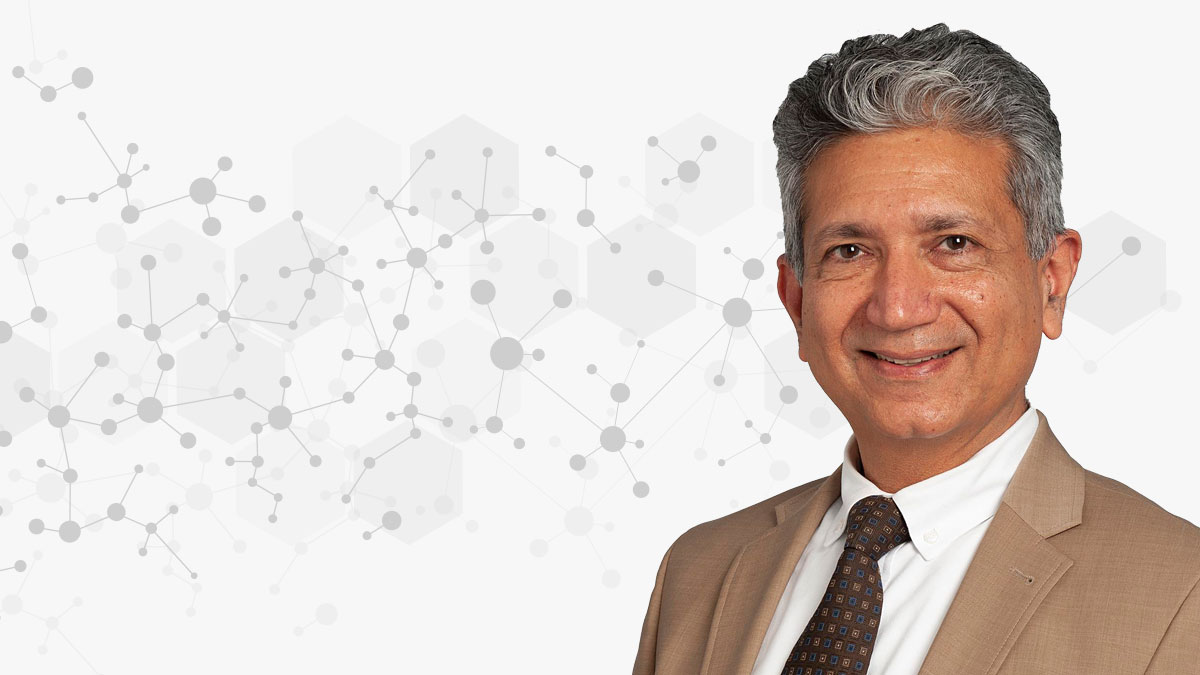
Lifespan Epilepsy Management: Age‑Specific Protocols and Practice
Deepak Lachhwani, MD outlines age‑specific epilepsy care pathways that streamline diagnosis, tailor therapy through key life stages.
Advertisement
Cleveland Clinic is a non-profit academic medical center. Advertising on our site helps support our mission. We do not endorse non-Cleveland Clinic products or services. Policy
Recent Episodes
Behavioral Health Protocols for Suicidal Ideation
Brianne Markley, PhD, explains how screening tools, risk assessment and safety planning can help clinicians recognize and respond to suicida…
Transforming Epilepsy Diagnosis and Treatment Through AI-Enabled Infrastructure
Imad Najm, MD, discusses how AI-enabled infrastructure and advanced EEG analysis are transforming epilepsy diagnosis.
Delirium in the Hospital Setting: Recognition, Risks, and Management
Anna Shapiro Krew, MD, and Christopher Strayhan, BSN, RN, explain how multidisciplinary care and environmental design can help reduce deliri…
Video content: This video is available to watch online.
View video online (https://cdnapisec.kaltura.com/p/2207941/sp/220794100/playManifest/entryId/1_t28fkt6g/flavorId/1_5f3sgelj/format/url/protocol/https/a.mp4)
Transcript
Neuro Pathways Podcast Series
Release Date: January 15, 2026
Expiration Date: January 14, 2027
Advertisement
Cleveland Clinic is a non-profit academic medical center. Advertising on our site helps support our mission. We do not endorse non-Cleveland Clinic products or services. Policy
Estimated Time of Completion: 30 minutes
Lifespan Epilepsy Management: Age‑Specific Protocols and Practice
Deepak Lachhwani, MD
Description
Each podcast in the Neurological Institute series provides a brief, review of management strategies related to the topic.
Learning Objectives
- Review up to date and clinically pertinent topics related to neurological disease
- Discuss advances in the field of neurological diseases
- Describe options for the treatment and care of various neurological disease
Target Audience
Physicians and Advanced Practice providers in Family Practice, Internal Medicine & Subspecialties, Neurology, Nursing, Pediatrics, Psychology/Psychiatry, Radiology as well as Professors, Researchers, and Students.
ACCREDITATION
In support of improving patient care, Cleveland Clinic Center for Continuing Education is jointly accredited by the Accreditation Council for Continuing Medical Education (ACCME), the Accreditation Council for Pharmacy Education (ACPE), and the American Nurses Credentialing Center (ANCC), to provide continuing education for the healthcare team.
CREDIT DESIGNATION
- American Medical Association (AMA)
Cleveland Clinic Center for Continuing Education designates this enduring material for a maximum of 0.50 AMA PRA Category 1 Credits™. Physicians should claim only the credit commensurate with the extent of their participation in the activity.
Participants claiming CME credit from this activity may submit the credit hours to the American Osteopathic Association for Category 2 credit. - American Nurses Credentialing Center (ANCC)
Cleveland Clinic Center for Continuing Education designates this enduring material for a maximum of 0.50 ANCC contact hours. - Certificate of Participation
A certificate of participation will be provided to other health care professionals for requesting credits in accordance with their professional boards and/or associations. - American Board of Surgery (ABS)
Successful completion of this CME activity enables the learner to earn credit toward the CME requirements of the American Board of Surgery’s Continuous Certification program. It is the CME activity provider's responsibility to submit learner completion information to ACCME for the purpose of granting ABS credit.
Advertisement
Credit will be reported within 30 days of claiming credit.
Podcast Series Director
Andreas Alexopoulos, MD, MPH
Epilepsy Center
Additional Planner/Reviewer
Ari Newman, BSN
Faculty
Deepak Lachhwani, MD
Epilepsy Center
Host
Glen Stevens, DO, PhD
Cleveland Clinic Brain Tumor and Neuro-Oncology Center
Agenda
Lifespan Epilepsy Management: Age‑Specific Protocols and Practice
Deepak Lachhwani, MD
Disclosures
In accordance with the Standards for Integrity and Independence issued by the Accreditation Council for Continuing Medical Education (ACCME), The Cleveland Clinic Center for Continuing Education mitigates all relevant conflicts of interest to ensure CME activities are free of commercial bias.
The following faculty have indicated that they may have a relationship, which in the context of their presentation(s), could be perceived as a potential conflict of interest:
| Glen Stevens, DO, PhD | DynaMed | Consulting |
|---|---|---|
| Glen Stevens, DO, PhD |
All other individuals have indicated no relationship which, in the context of their involvement, could be perceived as a potential conflict of interest.
CME Disclaimer
The information in this educational activity is provided for general medical education purposes only and is not meant to substitute for the independent medical judgment of a physician relative to diagnostic and treatment options of a specific patient's medical condition. The viewpoints expressed in this CME activity are those of the authors/faculty. They do not represent an endorsement by The Cleveland Clinic Foundation. In no event will The Cleveland Clinic Foundation be liable for any decision made or action taken in reliance upon the information provided through this CME activity.
HOW TO OBTAIN AMA PRA Category 1 Credits™, ANCC Contact Hours, OR CERTIFICATE OF PARTICIPATION:
Go to: Neuro Pathways Podcast January 15, 2026 to log into myCME and begin the activity evaluation and print your certificate If you need assistance, contact the CME office at myCME@ccf.org.
Copyright ©2026 The Cleveland Clinic Foundation. All Rights Reserved.
Introduction:
Neuro Pathways, a Cleveland Clinic podcast exploring the latest research discoveries and clinical advances in the fields of neurology, neurosurgery, neuro rehab, and psychiatry.
Glen Stevens, DO, PhD:
Epilepsy is a complex neurologic condition that can affect individuals at any age, but the challenges and care required change dramatically as patients grow.
In this episode, we'll break down what clinicians should be looking for at every stage of life and explore how a multidisciplinary approach can improve outcomes for individuals living with epilepsy and their families. I'm your host Glenn Stevens, neurologist neuro oncologist at Cleveland Clinic's Neurological Institute. And joining me for today's conversation is Dr. Deepak Lachhwani. Dr. Lachhwani is a pediatric epileptologist in the Epilepsy Center at Cleveland Clinic. Deepak, welcome to Neuro Pathways.
Deepak Lachhwani, MD:
Thank you, Dr. Stevens. Happy to be here.
Glen Stevens, DO, PhD:
So, we've known each other for a long time, but for those that aren't familiar with you, tell us how you found your way to the Cleveland Clinic and your travels over the years and what you do here on a regular basis.
Advertisement
Deepak Lachhwani, MD:
Well, thank you for asking me. It has been a beautiful journey. I think that Cleveland Clinic was originally a one year stop for me when I came to train at the best epilepsy training program. And of course, one thing led to the next, and here I am more than 20 years later during the course of being here. It's been a journey with a lot of blessings and a lot of good opportunities and challenges. The journey took me for a nice little side trip to Cleveland Clinic Abu Dhabi when it was being launched, and I was fortunate to be part of the team that launched the neurological services, including the first international remote epilepsy monitoring unit. So happy to be here and happy to have had all the opportunities that Cleveland Clinic had to offer.
Glen Stevens, DO, PhD:
Well, great. Well, we appreciate your service. That's for sure. So they say that all that shakes is not epilepsy, but just tell our, I'm sure people are very familiar, but tell us what epilepsy is.
Deepak Lachhwani, MD:
So, epilepsy is two or more unprovoked seizures, which have their origin because of rogue or bad electricity originating from the brain. A seizure can be a final common pathway of the brain to show that it is suffering because of a variety of reasons. Like somebody with hypoglycemia can have a seizure, somebody with dehydration, somebody with concussion can have a seizure. All of those seizures are called symptomatic seizures. There's an obvious precipitating cause, but when we can understand that the seizure is as a result of rogue electrical storms from the brain, that is when we think that a person has epilepsy. And that is done after careful clinical evaluation with some complimentary tests including an EEG.
Advertisement
Glen Stevens, DO, PhD:
If I remember back correctly, and you'll be able to tell me if I'm wrong here, I thought that your lifetime risk of having a seizure, not epilepsy, but a seizure approaches almost 10% for an individual. Is that correct? Am I remembering correctly?
Deepak Lachhwani, MD:
That is correct.
Glen Stevens, DO, PhD:
Which sounds like an astronomically high number.
Deepak Lachhwani, MD:
Unfortunately, most of those are probably a one-off symptomatic seizure event for reasons that might be
Glen Stevens, DO, PhD:
Maybe a little misadventure in college?
Deepak Lachhwani, MD:
That’s right. Misadventure in college in teenage years or an accident here and there.
Glen Stevens, DO, PhD:
So, you're a pediatric epileptologist. Do you look after adults as well?
Deepak Lachhwani, MD:
So, our training is good for pediatrics and adults, but pediatrics was the passion that took me into medicine. And over the years I've been involved with taking care of young adults that have epilepsy, but mostly my focus is on children, toddlers, teenagers, and young adults.
Glen Stevens, DO, PhD:
So, this is a very difficult question and could probably take us a month to answer, but how does epilepsy management change as a patient ages?
Deepak Lachhwani, MD:
In a variety of ways. Dr. Stevens, I think that between being a newborn to an infant, to a toddler young child, there are aspects of epilepsy from looking at how seizures evolve, how do we respond to those seizures with medicines they change. And as a young child becomes a teenager, certainly as their brain and body matures, there are more medicines that are easily available for us. As you know, most medicines are approved initially in adult population. So those aspects change and all the way to adolescents and young adulthood. I think that we have a variety of options that are open for us now as a young adult enters into more mature adulthood or older age group. Then there are aspects of their health that change as well. For instance, things to do with cardiovascular morbidities, things to do with sleep related comorbidities, psychiatric comorbidities. These are all aspects of adult medicine that are unique and different from what a child or an adolescent might be experiencing. So we have to really be mindful of those aspects as we think about treating young patients that become older during the course of their epilepsy.
Advertisement
Glen Stevens, DO, PhD:
So, I'm a child and I'm your patient and you've looked after me for quite some period of time, am 17 years old, and I go, I still want you to be my doctor because I've been with you forever. I imagine there's a lot of separation anxiety. Right?
Deepak Lachhwani, MD:
Definitely. And I think that is one of the main things that we talk about and we prepare patients because I think the care for children is more family centric, not just the patient, but the family unit around them, more of a team-based decision as opposed to becoming a 17 or 18 and certainly an older adult where the patient is really taking care of one-on-one as an individual rather than a family-centric care. So that aspect causes a lot of apprehension and to some degree anxiety for them to move on from a comfort of what was their home to now being more independent, more autonomous, making decisions. So it is not something that happens overnight or just very quickly. This is something that we talk and prepare them as they start entering their late teens, if not even early teens.
Glen Stevens, DO, PhD:
So, a provider seeing infant, a newborn infant, very young, what are they looking for to be concerned that things aren't developing properly and they might be having seizures because seizures may not look the same in a child versus an adult.
Deepak Lachhwani, MD:
Correct? Absolutely correct. And I think that is where the training in pediatric epilepsy comes in very handy because we are more in tune to watch for changes in behavior and expression, asking for cues from the family, especially the mother who would often be able to tell you that my child doesn't look right. And sometimes that's the only thing that will come together with a child that is having an occasional jerk or a twitching movement. And if you can elaborate on that, it might turn out to be a child or an infant who's having epileptic spasms where the burden is not only just the spasms, which can be few far in between, but also the fact that they don't look developmentally the same, they don't have the same spark in their eyes. So that is how we start teasing and peeling off layers. And then of course, these days really, really useful and handy is a home video of whatever a family sees as a symptom of concern. We can receive that on a very secure email server actually, and we can quickly look at what the family is looking at and then appropriate tests to establish a diagnosis.
Glen Stevens, DO, PhD:
Yeah, I was going to mention that you probably look at a lot of home videos.
Deepak Lachhwani, MD:
Absolutely.
Glen Stevens, DO, PhD:
My child did this. What do you think it is? My child did that what do you think?
Deepak Lachhwani, MD:
Absolutely. At the end of the day for us in electronic medical record is not just messages from nurses, but also the accompanying videos that families have sent to make a quick diagnosis and generate an action plan.
Glen Stevens, DO, PhD:
So, mother brings the child in young child and concerned that they may be having some seizures. You evaluate the child and your concern, you have suspicion as well. Talk about imaging in a young child, more complicated obviously than an adult. When do you decide who needs brain imaging? Who doesn't? Do you just start with an EEG first? How complicated is that even with a young child?
Deepak Lachhwani, MD:
Yeah, thank you for those questions because they really are the cornerstone making an accurate diagnosis and initiating on a correct treatment path quickly. So when we talk about epilepsy, there is two major buckets that we can think of. Focal epilepsy or generalized epilepsy whenever we are suspecting focal or multifocal epilepsy where we think that there is a part of the brain that generates the rogue electricity, MRI becomes the very natural second investigation of choice after taking a history and doing an EEG. Now, the MRI in a baby can be quite different over the course of the first couple of years because of the maturation changes. So we are actually very mindful of that and we work with our neuroradiologist who are experts at looking at the developmental changes. And often as epileptologists, we might actually repeat an MRI. What seems to be very apparent at birth may look a little bit less apparent as the brain goes through the maturation in the first two years.
So often we might wait until two to two and a half years of age to repeat an MRI if we are suspecting something might be focal as a birth defect in the brain, but we are not able to appreciate it. And then of course, beyond two and a half, three years of age, it is a little bit more predictable what we can see on the MRI scan. It's more in tune with how maybe a more mature brain or a young mature brain might look like. So the MRI has a nuance, which is very important and we have to be mindful of the developmental changes.
Glen Stevens, DO, PhD:
Do you have to do them all under Anesthesia in children?
Deepak Lachhwani, MD:
Yes, because MRI is akin to taking a very high resolution picture of the brain, which can be easily distorted because of the subtlest of movements. And so not only the movements can happen because of the seizure, which is unpredictable, but also because of the young and immature patient, which it's really hard for them to be still. So often we would think about doing an MRI under anesthesia for epilepsy purposes all the way until even 7, 8, 10 years of age when depending upon the maturity of the child, we may elect not to use anesthesia, but otherwise we do.
Glen Stevens, DO, PhD:
And do you give contrast?
Deepak Lachhwani, MD:
Usually in epilepsy, we are not thinking about an MRI. With contrast, it is in your field where we are suspecting either something that is neoplastic or inflammatory where we might think about or if we are suspecting a vascular malformation. Those are the kind of reasons for epilepsy which would necessitate using contrast
Glen Stevens, DO, PhD:
And the strength of a magnet. I know they have a 7T on campus here, but are you doing 3T mostly?
Deepak Lachhwani, MD:
Yeah, mostly we do a 3T. We do have an epilepsy protocol, which is a certain way of capturing the most detailed information, but now that we have a 7T, we are utilizing 7T under appropriate circumstances, but with some logistical limitations that might preclude because we don't have anesthesia facilities together with the 7T yet. But that's a process of just evolving into the newer technology.
Glen Stevens, DO, PhD:
And the drugs, the anti-seizure medications used for young children versus adults? Same drugs, different drugs depends on the specific type of seizure they're having.
Deepak Lachhwani, MD:
We are lucky now that there's a lot of medicines that actually have FDA approval for using in young children as young as two years old even. But many times we end up using medicines that are available for use in epilepsy even if they have not been specifically approved in children because it is difficult to get studies done in children. So we do end up using medicines as needed just because epilepsy can sometimes be very difficult to control. But we often look for the indications by FDA on which medications are approved versus ones that are not.
Glen Stevens, DO, PhD:
And I assume most of those would be a syrup or something that they would take.
Deepak Lachhwani, MD:
So yes, the pharmaceutical companies are very mindful that as they get approval for younger and younger patients, they make their formulations available for either in a setup form or a dissolvable form. And that really comes in very handy.
Glen Stevens, DO, PhD:
Do the medications affect the growth of the child, especially if they start young or is it whatever the process that they're having that's affecting their growth and development?
Deepak Lachhwani, MD:
So, our newer medications are much, much better and favorable in their adverse effect profile. So we don't really think that medications cause any irreversible change in their growth trajectory, but if you are implying their neurodevelopmental growth, we worry about that not on account of the medicines as much because the newer medicines are really very safe, but on account of the primary process that causes the seizures or if the seizures are very difficult to control or if the child needs lots of medications which keep them either partially sedated or start having adverse effects. So we are mindful of those things, but again, those are reversible. If you can get rid of the medicines or reduce the medicines or streamline the doses so that you don't use too much, then you can avoid some of those side effects. But ultimately the primary process that causes the epilepsy is the biggest concern in our mind.
Glen Stevens, DO, PhD:
Are you a believer in kindling theory?
Deepak Lachhwani, MD:
Yes, I do think that there is an effect of ongoing seizures on the relatively preserved areas of the brain. Not only that, the effect of ongoing seizures on neurodevelopment is in a negative way. So we try to see if we can solve seizures for a given child as early as possible.
Glen Stevens, DO, PhD:
Yeah, I mean that would be the problem, right? Is that you can only see them when you see them and if the parents or the pediatrician haven't been aware of it, the longer it goes on, if you're a kindling theorist, the greater your risk of additional seizures later in your life. So yes. So your general approach is zero, right, to try and get rid of them completely? Of course.
Deepak Lachhwani, MD:
Absolutely. That is the best situation to be. And if the seizures are completely controlled at a very small or modest dose of medication or any means that are available to us, if medications don't work, like for instance epilepsy surgery, we try to aim for that.
Glen Stevens, DO, PhD:
So, I know as adults we're not very good at taking medications. I guess one of the benefits of a child is the parent can then force the child to take the medication. I'm just curious, do you think adherence is better in children than adults? I would think it is.
Deepak Lachhwani, MD:
But well, there is a phase. I think when the children are very young, often we are more able to relax that there is a very controlled way that the family can provide them the medications and make sure that they take it. The issue of non-compliance is also quite real. Sometimes the children don't like the taste or just the concept of taking medicine. You may be surprised it's not that uncommon for a child to turn around and just spit the medicine without their parent even recognizing. But as part of becoming an older child or a youth, I think the problem of non-compliance becomes more because then the idea of autonomy, of independence of maybe I don't need to take medicine, kind of a thought process becomes a little more common. And so we are often worried about teenagers that may or may not be as compliant as the parent thinks that they are. But I think that is the entire process of talking and educating them and providing them the incentive of remaining seizure-free, which is to get to the milestones of driving.
Glen Stevens, DO, PhD:
Yeah, that's always the big one,
Deepak Lachhwani, MD:
Right? Keeping summer jobs, doing things that their other friends are doing sleepovers at night, going out on trips. So we try to see if we can offer them a positive reinforcement on why they should continue taking medicines. But these are the aspects of transitioning from young child to pre-teen or a teenager and certainly a youth that can become challenging. And once they are out of the home in college or just living independently in their late teens or early twenties, that's when I think a good transition allowing them to be in the care of an adult epilepsy team that can keep reinforcing the reason to take medicine is really, really important.
Glen Stevens, DO, PhD:
Are there other modes of medication? Are there patches or anything that you can give or developments really not there where the drug would seep in, but…
Deepak Lachhwani, MD:
No, we don't have depot preparations for medications like some of the other hormonal preparations are available. And often seizures can be somewhat unpredictable. So we do need to try and change or modify doses. So the deeper preparations don't lend themselves to epilepsy management as well as they do in some other medical conditions.
Glen Stevens, DO, PhD:
I remember many years ago and times change, but many years ago you would see developmentally delayed individuals that are now adults and they were on phenytoin for a long time and then the family doesn't want to change because they kind of know what's going on. But then you see the side effects and the negative things. How difficult is it for you to take people off medications? They've been on for a long time. A lot of resistance.
Deepak Lachhwani, MD:
Yes and no. I think that now patients, families, especially of younger patients are a lot more medically informed and I think that educating them over a period of a few visits certainly can make them start seeing the reason behind a certain medical recommendation, which may involve avoiding side effects of something that they've been on for some time. But you are right, the apprehension of why fix something that's not broken is quite heavy in their mind. And when we talk about the side effects that we can show them, it is easier to dissuade them. But I would tell you that fortunately the medicines like phenytoin or phenobarbital or like carbamazepine, which used to be the mainstay up until 20 years ago, those are medicines that we don't usually gravitate to as our first choice. So it is not in pediatrics as much as I think it might be in the practice of adult epilepsy where somebody might be in the practice that has been on medicines for 10, 20, 30 years. And that is something that my adult colleagues can better speak to.
Glen Stevens, DO, PhD:
What are the key considerations when adjusting anti-seizure medication, drug regimens as patients are going through puberty?
Deepak Lachhwani, MD:
So, one of the things is their body size changes because they hit a growth spurt. We don't usually try to hit a certain number for a serum level of the medicine that they're on because most of the medicines have a very wide therapeutic index. So the small fluctuations because of weight can usually be compensated for if they have been in a mid-therapeutic range. But the additional thing that happens in their adolescent years is the young ladies might be on hormonal contraception. So we are often very mindful of what interaction may happen between the hormonal contraception and the anti-seizure medication that they may be on. It might work in both directions. So we counsel them about that. We try to make sure that their serum levels can be checked. Once they initiate, we counsel them about the effectiveness of the hormonal contraception because that fluctuates - the hormone levels can fluctuate. And then of course it is not as relevant in early teens, but it can happen every so often pregnancy in young patients, young females who may not be planning for it. But if they are inadvertently finding themselves pregnant, then of course the medication levels can fluctuate a lot. So we try to counsel them a lot about pregnancy or practicing birth control if that is not something that they are looking for. And also making sure that they are on compliment of folic acid. All young women of childbearing age should be on it, but that's how we anticipate fluctuation in medication levels and try to preemptively work on it before the medication level goes low and exposes them to risk for breakthrough seizure.
Glen Stevens, DO, PhD:
I hate to ask a number, but what's your number for folic acid?
Deepak Lachhwani, MD:
So, anything more than 0.4 milligrams is supposed to be okay. I think we stick with one milligram because I do realize that some of the synthetic preparations of folic acid have maybe some nuances to them that are not necessarily very healthy. But yeah, we try to use folic acid 0.4 milligrams or one milligram as a routine.
Glen Stevens, DO, PhD:
So, you mentioned in adults that we have more cardiovascular disease and not so much in adolescents and children, but what medical comorbidities do you screen for in the pediatric population?
Deepak Lachhwani, MD:
Medical comorbidities in the pediatric population, most importantly, we think about behavior, psychological comorbidities, attention deficit related comorbidities because there's a lot of apprehension. And again, I think understanding it is going to be very key. Sometimes children with subtle quick seizures that make them look like they're staring off might be felt to have attention problems when actually it might be their seizures. We also know that children with epilepsy have a predisposition for comorbid attention deficit disorder in any case. And then the whole aspect of treating their ADHD there has been apprehension in the past and still is to some degree that stimulant medications can make their seizures worse. And in fact, carefully chosen stimulant medications in appropriate doses with gradual introduction of medicine is not only safe, it can actually help maintain their seizure control better. So not only is it I would say safe, it actually helps maintaining seizure control.
So, we try to make sure that the family as well as the medical care providers feel empowered and educated about the fact that treating ADHD is actually good for their seizure control. So those are some of the things that we think about. Of course, in young women, we think about bone health. We are trying to make sure that their vitamin D and calcium levels are appropriate and they're getting supplements because some of the older medicines, which as I mentioned earlier, are not commonly used, but in general, anti-seizure medications and epilepsy patients can have a detrimental effect on bone health. So we try to monitor and stay ahead of that aspect. But those are really the main comorbidities that we think about in pediatric age group. Now it's a whole different thing in the adult epilepsy patient population.
Glen Stevens, DO, PhD:
Incidences of psychiatric comorbidities with epilepsy in adolescents and teens?
Deepak Lachhwani, MD:
It is there of course anxiety, depression as you can imagine, not knowing when the next seizure happens or feeling like you are different from other people. But these things actually become more complex and more prevalent as the adolescent patient goes through late adolescence and young adulthood. So we are very mindful of that aspect of their comorbid conditions as we think about transitioning them to the adult epilepsy care providers.
Glen Stevens, DO, PhD:
So unfortunately, teens are teens. So, alcohol use. Comment on that, do you counsel everybody about that? No drinking?
Deepak Lachhwani, MD:
Yes, absolutely. We spend actually a lot of time. I would often tell them that medicines are important, but they're probably half of the solution. The other half of the solution is their choice of lifestyle, which can be from something as simple and easily overlooked as sleep deprivation because of home assignments, schoolwork, projects, lifestyle, late nights, parties to things like energy drinks, which are quite the norm. And we try to advise them on not getting too hung up with boatloads of energy drinks. With substances, smoking, vaping, weed, other substances, alcohol, binges. These are all aspects of lifestyle that are to some degree under their control. And with proper education, they can actually make wise choices because they are easily implicated in lots of breakthrough seizures in young patients who are otherwise well controlled.
Glen Stevens, DO, PhD:
And do the teens complain much of cognitive effects of the medications they just don't feel right or they're not doing as well in school? Or is it not?
Deepak Lachhwani, MD:
They do. I must say they do. Some of it may be genuinely ascribed to their epilepsy or the seizure medication, but often it is a matter of educating them that whatever they have for a new medicine, we are actually introducing it very gradually. But despite that individual constitutions are unique and if somebody feels that a certain medication is causing them to feel more tired or function less alertly in their school life, we try to veer away from that medication and switch it to something that is less sedating.
Glen Stevens, DO, PhD:
How do you foster the transition pediatric epileptologist to adult?
Deepak Lachhwani, MD:
With a lot of preparation there is, from the time that they're maybe in their mid-teens, we start educating them about the fact that they will start driving. They will become independent. So we start engaging them in the conversations in a way that they can actually participate first with awareness of what their diagnosis is, then with the awareness of which medicines are they on, and then as time goes on in their late teen years about who their doctor is, how to access them. So we are trying to explain and understand what their level of understanding is for making a transition to independent decision making, appointment making, seeking out insurance details. So it is a lot of talking that happens during their mid to late teen years. Now transitioning to adult medicine is not like fortunately because we are a continuum of pediatric and adult providers, we are lucky in our institution that we don't have to say tomorrow you'll not be able to enter the doors because you're 18 or older. But we do try to explain to them that at some point beyond 18, they will establish care with one of our adult epilepsy providers. And it is a partnership of decision making between initially the family and a pre-team to the family and a teenager or young adult to finally letting the young adult take charge of not only in their medications but their appointments and their choice of an adult provider as time goes on.
Glen Stevens, DO, PhD : Let's just end sort of on reproductive health. Talk about how these conversations go, how receptive individuals are. And again, I'm sure this is the type of thing that you talked about it over time, but tell us a little bit about how that goes.
Deepak Lachhwani, MD:
So, every family is unique. We really cannot say one size fits all, but we can be very transparent about information that is digestible as early as teenage years when they start menstrual periods, because we take care of families that come from various backgrounds and cultures and nationalities and some, it is more sensitive than others. But having a conversation to say that every young girl of childbearing age must be aware that there is a small chance that they can get pregnant. Hopefully they're making lifestyle choices that prevent this from happening before they choose to. But because of the fact that seizure medications can have a detrimental effect during the course of a pregnancy, we try to choose medicines that are safer from that standpoint. And we always counsel them about keeping not only the medicine compliance, but also making sure that they are on a dose folic acid that can allow for a healthy fetal growth early during the course of pregnancy when they might not even realize that they're pregnant.
Glen Stevens, DO, PhD:
Well, we appreciate you coming to any final takeaway points for our listeners?
Deepak Lachhwani, MD:
Well, epilepsy is more easily treatable now than ever before. Not only because we have lots of different medicines, but we also have non-medical treatment options, including brain surgery under appropriate circumstances, neurostimulation, which is a whole different sphere that can be discussed. But I want patients with epilepsy and families and care providers of patients with epilepsy to feel optimistic that there is a lot of things that can be done, and epilepsy care is a continuum from whenever epilepsy starts. It might be neonatal age all the way to childhood and young adulthood, but it is a continuum of care. And at Cleveland Clinic, we are really well positioned to be able to take care of them through the course of their lifetime.
Glen Stevens, DO, PhD:
Well, Deepak, I want to thank you for joining us today and wish you well in your continued career at the clinic.
Deepak Lachhwani, MD:
Thank you, Glenn. I really appreciate this. I always welcome this opportunity to talk and it's been a pleasure.
Closing:
This concludes this episode of Neuro Pathways. You can find additional podcast episodes on our website, clevelandclinic.org/neuropodcast, or subscribe to the podcast on iTunes, Google Play, Spotify, or wherever you get your podcasts. And don't forget, you can access real-time updates from experts in Cleveland Clinic's Neurological Institute on our Consult QD website. That's consultqd.clevelandclinic.org/neuro, or follow us on Twitter @CleClinicMD , all one word. And thank you for listening.
Recent Episodes
Behavioral Health Protocols for Suicidal Ideation
Brianne Markley, PhD, explains how screening tools, risk assessment and safety planning can help clinicians recognize and respond to suicida…
Transforming Epilepsy Diagnosis and Treatment Through AI-Enabled Infrastructure
Imad Najm, MD, discusses how AI-enabled infrastructure and advanced EEG analysis are transforming epilepsy diagnosis.
Delirium in the Hospital Setting: Recognition, Risks, and Management
Anna Shapiro Krew, MD, and Christopher Strayhan, BSN, RN, explain how multidisciplinary care and environmental design can help reduce deliri…
Never miss a moment - subscribe now.
Listen to the Health Essentials Podcast on your favorite streaming platform.
Other Podcasts You May Love
Beyond Leadership
Hosts Jim Pae and Elizabeth Pugel escort you through a network of thought leaders, sharing world-cla…
Beyond the Pages: CCJM Podcast
Beyond the Pages: CCJM Podcast takes the listener more in-depth into Cleveland Clinic Journal of Med…
Butts & Guts
A Cleveland Clinic podcast exploring your digestive and surgical health from end to end. You’ll lear…
Cancer Advances
A Cleveland Clinic podcast for medical professionals exploring the latest innovative research and cl…