Cleveland Clinic Sleep App
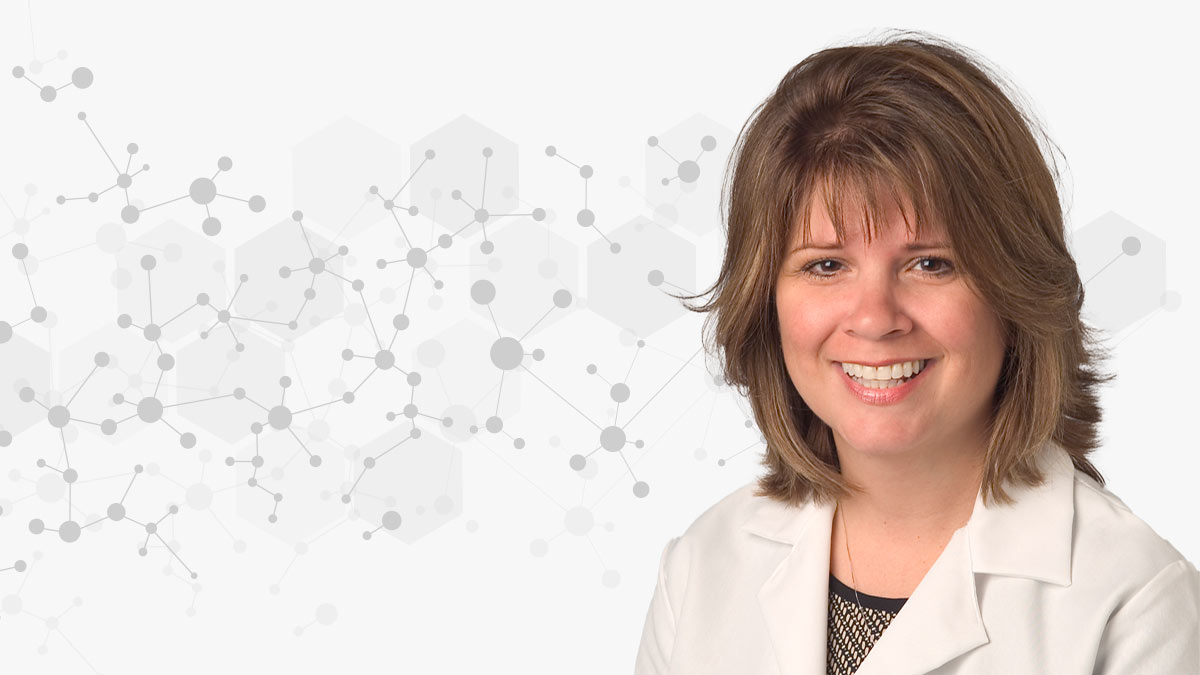
Nancy Foldvary-Schaefer, DO, discusses how the Sleep by Cleveland Clinic app leverages validated screening tools and digital innovation to make sleep disorder assessment more accessible for patients and providers.
Subscribe: Apple Podcasts | Spotify
Cleveland Clinic Sleep App
Podcast Transcript
Neuro Pathways Podcast Series
Release Date: January 1, 2026
Expiration Date: December 31, 2026
Estimated Time of Completion: 30 minutes
Cleveland Clinic Sleep App
Nancy Foldvary, DO
Description
Each podcast in the Neurological Institute series provides a brief, review of management strategies related to the topic.
Learning Objectives
- Review up to date and clinically pertinent topics related to neurological disease
- Discuss advances in the field of neurological diseases
- Describe options for the treatment and care of various neurological disease
Target Audience
Physicians and Advanced Practice providers in Family Practice, Internal Medicine & Subspecialties, Neurology, Nursing, Pediatrics, Psychology/Psychiatry, Radiology as well as Professors, Researchers, and Students.
ACCREDITATION
In support of improving patient care, Cleveland Clinic Center for Continuing Education is jointly accredited by the Accreditation Council for Continuing Medical Education (ACCME), the Accreditation Council for Pharmacy Education (ACPE), and the American Nurses Credentialing Center (ANCC), to provide continuing education for the healthcare team.
CREDIT DESIGNATION
- American Medical Association (AMA)
Cleveland Clinic Center for Continuing Education designates this enduring material for a maximum of 0.50 AMA PRA Category 1 Credits™. Physicians should claim only the credit commensurate with the extent of their participation in the activity.
Participants claiming CME credit from this activity may submit the credit hours to the American Osteopathic Association for Category 2 credit.
- American Nurses Credentialing Center (ANCC)
Cleveland Clinic Center for Continuing Education designates this enduring material for a maximum of 0.50 ANCC contact hours.
- Certificate of Participation
A certificate of participation will be provided to other health care professionals for requesting credits in accordance with their professional boards and/or associations.
- American Board of Surgery (ABS)
Successful completion of this CME activity enables the learner to earn credit toward the CME requirements of the American Board of Surgery’s Continuous Certification program. It is the CME activity provider's responsibility to submit learner completion information to ACCME for the purpose of granting ABS credit.
Credit will be reported within 30 days of claiming credit.
Podcast Series Director
Andreas Alexopoulos, MD, MPH
Epilepsy Center
Additional Planner/Reviewer
Ari Newman, BSN
Faculty
Nancy Foldvary-Schaefer, DO
Sleep Center
Host
Glen Stevens, DO, PhD
Cleveland Clinic Brain Tumor and Neuro-Oncology Center
Agenda
Cleveland Clinic Sleep App
Nancy Foldvary-Schaefer, DO
Disclosures
In accordance with the Standards for Integrity and Independence issued by the Accreditation Council for Continuing Medical Education (ACCME), The Cleveland Clinic Center for Continuing Education mitigates all relevant conflicts of interest to ensure CME activities are free of commercial bias.
The following faculty have indicated that they may have a relationship, which in the context of their presentation(s), could be perceived as a potential conflict of interest:
| Nancy Foldvary, DO |
|
||||||||||||||||
|
Glen Stevens, DO, PhD |
|
All other individuals have indicated no relationship which, in the context of their involvement, could be perceived as a potential conflict of interest.
CME Disclaimer
The information in this educational activity is provided for general medical education purposes only and is not meant to substitute for the independent medical judgment of a physician relative to diagnostic and treatment options of a specific patient's medical condition. The viewpoints expressed in this CME activity are those of the authors/faculty. They do not represent an endorsement by The Cleveland Clinic Foundation. In no event will The Cleveland Clinic Foundation be liable for any decision made or action taken in reliance upon the information provided through this CME activity.
HOW TO OBTAIN AMA PRA Category 1 Credits™, ANCC Contact Hours, OR CERTIFICATE OF PARTICIPATION:
Go to: Neuro Pathways Podcast January 1, 2026 to log into myCME and begin the activity evaluation and print your certificate If you need assistance, contact the CME office at myCME@ccf.org.
Copyright ©2026 The Cleveland Clinic Foundation. All Rights Reserved.
Introduction: Neuro Pathways, a Cleveland Clinic podcast exploring the latest research discoveries and clinical advances in the fields of neurology, neurosurgery, neuro rehab, and psychiatry.
Glen Stevens, DO, PhD: Sleep disorders are common, yet often underdiagnosed. The Sleep by Cleveland Clinic app offers a new way to screen for sleep issues right from a smartphone with validated tools. It's designed to support both patients and physicians.
In this episode, we'll explore how the app works, how it fits into clinical workflows, and what it means for the future of sleep medicine.
I'm your host Glenn Stevens, neurologist neuro oncologist in Cleveland Clinic's Neurological Institute. And joining me for today's conversation is Dr. Foldvary-Schaefer. Dr. Foldvary-Schaefer is Director Emeritus of the Sleep Disorder Center at Cleveland Clinic and staff in the Epilepsy Center. Nancy, welcome to Neural Pathways.
Nancy Foldvary-Schaefer, DO: Thank you. It's great to be here.
Glen Stevens, DO, PhD: So, Nancy, it's great that you're here today because I was just in Europe. I got back from Europe and I was up at about three o'clock this morning. I ran, I ate, and I was at my desk at five 30. So I'm hoping you're going to tell me that the app can help me with my jet lag.
Nancy Foldvary-Schaefer, DO: I don't know about that.
Glen Stevens, DO, PhD: Okay, well maybe something to do in the future.
Nancy Foldvary-Schaefer, DO: Right.
Glen Stevens, DO, PhD: Alright, so let's start by having you introduce yourself to the listeners. Where did you train? What do you do At the Cleveland Clinic?
Nancy Foldvary-Schaefer, DO: Yes. I'm a neurologist and I trained in neurology at Loyola in Chicago, and then I trained at Duke for two years in neurophysiology. So I'm board certified in neurology as well as in clinical neurophysiology, sleep medicine and epilepsy medicine.
Glen Stevens, DO, PhD: So, the more I read, it seems like everybody's got a sleep problem.
Nancy Foldvary-Schaefer, DO: Sleep problems are very common.
Glen Stevens, DO, PhD: So, I think that it's very apropos. We discussed this today. Can you share a little background on the app, how this was developed, why it was developed?
Nancy Foldvary-Schaefer, DO: Yes. So we created the app actually in partnership with a woman who donated resources to support it. And her story is that her husband died in his sleep allegedly from complications of sleep apnea. And he's believed to be the first person in the United States with sleep apnea as the cause of death on his death certificate. And so she became very passionate about the fact that these disorders, specifically sleep apnea, but others too are very common, that sleep doctors are still relatively not available everywhere. So there are many communities in the United States still where there isn't a sleep doctor or they may be too few sleep doctors and people in some parts of the country still are waiting weeks and if not months, to get into a sleep lab. And so we created this app to screen for the four most common sleep problems in adults really worldwide, but certainly in the United States to help people be able to screen themselves and perhaps share that information with their healthcare provider who might not otherwise really have been trained to even treat sleep disorders or screened for sleep disorders.
Glen Stevens, DO, PhD: So, the most important question is, is there a charge for the app?
Nancy Foldvary-Schaefer, DO: No, there's no charge for the app.
Glen Stevens, DO, PhD: Everybody loves to hear that.
Nancy Foldvary-Schaefer, DO: No charge for the app. We initially rolled it out on the iOS platform and last year on Android, and now we're thinking about a web version which might be more appealing to folks, but we've had thousands and thousands of people download the app and get their sleep scores. So it's kind of about getting your risk for sleep apnea and your risk for three other problems, and then being able to share that information with your healthcare provider.
Glen Stevens, DO, PhD: So, you have validated tools embedded in the app. Won't you discuss those a little bit?
Nancy Foldvary-Schaefer, DO: Yes, yes. So at Cleveland Clinic we actually created the sleep apnea score, so we call it the Cleveland Clinic Sleep Apnea Score. Irene Katzen in the knowledge program work initially created this and modified it from standard sleep apnea instruments and it performs better than standard instruments because it allows us to use age and BMI as a continuous variable instead of dichotomous, which is how most instruments are. And so this was validated in a stroke population and we've also demonstrated it to be superior in an epilepsy population.
For insomnia, we're using something called the Insomnia Severity Index, which is the most common instrument used to measure insomnia symptoms. And it's also very responsive to treatment. And so we have permission to use the ISI. We also have permission to use a sleep shift work disorder instrument. So for the subset of folks who might be doing shift work, shift work disorder is a disorder where the change in sleep timing as a result of work leads to significant daytime consequences or consequences during your wake hours. And so this instrument allows us to identify those at risk for shift work disorder.
And then finally, we use a number of questions, bedtimes, wake times naps to estimate total sleep duration and that one number of the number of hours we sleep per hour turns out to be incredibly important. Adults who are sleeping less than seven hours on average during their middle age years are significantly more likely to develop cardiovascular disease and dementia. So there's now a direct link really between sleep apnea and dementia risk as well as sleep duration and dementia risk.
Glen Stevens, DO, PhD: So maybe I need to do the insomnia score index and
Nancy Foldvary-Schaefer, DO: The total sleep duration
Glen Stevens, DO, PhD: And the total sleep duration. So if a patient decides to do this, how long do they need to record data for to have a realistic average of how they're doing?
Nancy Foldvary-Schaefer, DO: Well, you really only enter data once.
And so, the probability score for sleep apnea asks things about hypertension, snoring, stopping breathing, things that are common drivers of obstructive sleep apnea. The Insomnia Severity Index instrument asks about the previous seven to 14 days. So it's asking people to sort of retrospectively enter that data in. And so these scores getting to that point, Glenn, these scores are probability scores for a sleep disorder. They're not diagnostic, the app is not diagnostic, obviously an app can't make a medical diagnosis. And so we stress that point that these are scores they may need to be reinterpreted, they may or may not have relevance for your healthcare and share them with your healthcare provider who can help decide if further evaluation is warranted.
Glen Stevens, DO, PhD: And are people sort of self-managing themselves or are they actually talking to their health care primary care family physician?
Nancy Foldvary-Schaefer, DO: Yeah, so we've had maybe 9,000 or 10,000 people who downloaded the app and did all the instruments. There is tens of thousands of people who've actually downloaded the app but don't necessarily complete all the instruments and we really don't know. So this is an app that's publicly available. It is under an IRB, but the users, by the way, Cleveland Clinic patients can be invited to use it through MyChart. And so the scores can get into MyChart for Cleveland Clinic patients, but we don't see that identifiable data. So we don't know a lot about what happens downstream yet from people using the app. But we're creating a mechanism that we're going to be sharing with providers at the Cleveland Clinic on how you can see the scores of your patients. If your patients are completing the app.
Glen Stevens, DO, PhD: And does something pop up, if they have certain scores that says you should see your
Nancy Foldvary-Schaefer, DO: Yes physician, there's a dashboard, there's four scores on the dashboard, and when you click on each one, it allows you to read more about what it means and then it takes you to a library of one paragraph long little digestible articles to help people know a little bit more about what they might be at risk for as well as know their next steps.
Glen Stevens, DO, PhD: So, a patient comes to see me, they've been using the app, I'm a primary care physician, am I going to have enough knowledge to help, or do I just say, boy, you need to go to the sleep center, or how am I going to help patients?
Nancy Foldvary-Schaefer, DO: Well, if the patient's a MyChart user and happen to do the app through MyChart, a Cleveland Clinic provider can phrase sleep app into their epic note and they'll see the results come in with a little bit of interpretation.
Glen Stevens, DO, PhD: Okay.
Nancy Foldvary-Schaefer, DO: Many providers, nurse practitioners, specialists and general medicine doctors around the Cleveland Clinic really know how to screen for sleep apnea. It's just that they don't have the time. So certainly for the sleep apnea instruments, I think that reduces the need for them to go through those questions with the patient and it will give them a probability score of having sleep. So instead of getting a high risk, low risk, there's a probability and you can interpret that probability in the context of the patient's health. And so it's meant to really be an extender for healthcare providers who don't have the time and maybe don't have the training to screen for these common disorders.
Glen Stevens, DO, PhD: And tell me, what was it that you spoke about here, the shift work disorders? What does it do there? What are they looking at?
Nancy Foldvary-Schaefer, DO: Yeah, so shift work is obviously very common. There's an international classification of sleep disorders, diagnosis of shift work disorder. So these are people who work either a third shift or alternating shifts and have functional impairment as a result of their sleep. So either they don't sleep enough or sleep timing is such that they don't get refreshing sleep. So we diagnose these people with shift work disorder, and there are actually a couple of medications, FDA approved to treat the sleepiness associated with shift work disorder. And so we added the shift work instrument to the sleep duration, which estimates insufficient sleep. Another sleep disorder, 50% of adult Americans have insufficient sleep, sleep apnea and insomnia because these are all four highly prevalent disorders in the community. And unless if you have a provider who is really well-educated and sleep, probably you haven't been screened for these in your usual healthcare assessments and they're treatable.
Glen Stevens, DO, PhD: Right? So I get the app, I fill out the initial, and then I go, boy, something pops up and says I may have an issue with something. I have a Cleveland Clinic physician. So I let them know they download it and look at it and they do some sort of intervention. And then do I go back as a patient on the app again sometime later and redo those same scores to sort of see what's changed or not changed?
Nancy Foldvary-Schaefer, DO: Yeah, that's a great question. So not necessarily. The sleep apnea instrument is meant to identify people who are high risk, who should need a sleep study. And so those folks really need to be tested and then they'd be in a different kind of follow-up arm. The Insomnia Severity Index is an instrument that could be done repeatedly, but we didn't design the app to be using it multiple times. We really designed it for a one-time download, get your sleep snapshot, so to speak, or your sleep scores. We have had people do it multiple times, but the point is to do it, understand if you're at risk, and then take the next steps. One additional feature that we added was that we were able to link up the app to the American Academy of Sleep Medicine directory of board certified physicians and accredited centers. So you can put your zip code in a field and it will drive you to the closest providers. So the idea was that through Cleveland Clinic, we're helping to facilitate raising awareness about these common disorders across the whole country, recognizing that we've got colleagues around the country and sleep centers that can take care of these patients.
Glen Stevens, DO, PhD: Can you download it onto your watch or no?
Nancy Foldvary-Schaefer, DO: No.
Glen Stevens, DO, PhD: Okay. So you can't do any other biometrics. You can't do O2 SAT or heart rate or those types of things, or you can?
Nancy Foldvary-Schaefer, DO: It does pull in, the app does pull in steps, so it pulls in some information, but only through your phone.
Glen Stevens, DO, PhD: I mean, we've discussed a little bit, but limitations of the app. I guess one limitation is that it's a one and done in a lot of ways, right?
Nancy Foldvary-Schaefer, DO: Yeah, it's a one and done. And the other is that it's a risk assessment tool.
Nancy Foldvary-Schaefer, DO: So we've had some users reach out to us saying, well, I know I don't have sleep apnea, but the instrument says I'm at high risk for sleep apnea. So a lot of times there's variation in the presentation of sleep apnea, and so this is a risk assessment tool. Maybe the app was correct in driving toward a sleep study, maybe using those standard questions, it missed it with a given person. So again, it's not substituting for a medical evaluation, but it is meant to give people, sort of empower people to measure their own sleeps and sleep is so important for our health. And then it should drive care to more general practitioners who hopefully feel that this is a good assistant so that they can save some time and not have to screen by asking questions themselves.
Glen Stevens, DO, PhD: So, this would be difficult to know, I guess. But let's say I filled out all the questionnaires and it tagged some things that were a concern, any way of knowing what percentage of people act on something that's been tagged as a problem.
Nancy Foldvary-Schaefer, DO: We did a pilot years ago before we launched the app in the employee health plan here, and we did exactly that. We asked people after the fact if they acted on scores, and if I remember correctly, maybe we had a thousand people in the employee health plan and maybe about 30% of them had remembered to bring the scores up to their primary care provider. But we don't have the tools right now to track all the people that are using it since it's being used actually worldwide.
Glen Stevens, DO, PhD: And is there any an alarm system on it that if it tags something is abnormal, will it give me a notification and five days later, a week later saying, FYI, I, you've got this,
Nancy Foldvary-Schaefer, DO: Wow, Glenn. You're so innovative. We've actually thought of this as a reminder that your scores were high.
Glen Stevens, DO, PhD: Well, the memory's not so good.
Nancy Foldvary-Schaefer, DO: Yeah, that's actually a great potential tool and we are thinking about that. I think that would be a great addition.
Glen Stevens, DO, PhD: So now I'm the PCP, and somebody said to me that they downloaded, I go to Epic, I do the dot phrase, it comes up there, how do I interpret it? Or are there specific caveats about it or is it very explanatory?
Nancy Foldvary-Schaefer, DO: Well, each category is pretty self-explanatory. And then it's got little articles that help you understand what the risk means, what the disorder is, how would you get it formally diagnosed, and what are some ways to treat it. So it's really meant to be an initial launching pad for people who want to know a little bit more about their sleep and feel that they're at risk for sleep disorders.
Glen Stevens, DO, PhD: So, there's not always a teenager around, and some people are a little less comfortable with electronics. How do patients find the application of the app? Pretty self-explanatory. Pretty easy to do. What are you hearing?
Nancy Foldvary-Schaefer, DO: Most people find it easy to do, but we've certainly heard that now that there's so many different sizes of smartphones, sometimes the font looks different in different sizes of smartphones. And so we've tried to work with that as much as possible. But as I mentioned, I think we're going to try to create a web version for people who just want to use it on maybe a laptop and not download it. Not everyone wants endless apps on their smartphones either. And so we have some ideas on how to make it a little bit more broadly applicable. It's also only in English right now we've gotten some requests for a Spanish version, and it's not for children. Children have different cutoffs for diagnosis of sleep disorders, and it's really not even for teens. So we've thought a little bit also about the relative value of maybe making a different kind of app or a different kind of screening interface for teenagers who are very high risk for these disorders as well.
Glen Stevens, DO, PhD: Are you tracking at the sleep center any way of patients coming in specifically because they use the app?
Nancy Foldvary-Schaefer, DO: We track use, and we can't necessarily track that completely, but for example, we're piloting it in Cleveland Fire right now. So about a year ago, the fire chief approached me and asked us to give some professional advice about sleeping in their dormitories and just the environment as well as the risk firefighters are of course their shift workers, and they're very high risk for some of the chronic diseases associated with shift work, including cancer, which we know now is an associated factor of shift work. So we have a pilot going now where we're inviting Cleveland firefighters to do the app and then we're facilitating a mechanism for them to come to see us. So I think as we get more and more groups interested in this, we'll be able to collect some of the data, the follow-up data that you're alluding to.
Glen Stevens, DO, PhD: And just to sort of go back sleep disorders in kids and teens, how prevalent is it?
Nancy Foldvary-Schaefer, DO: They are also very prevalent. However, the instruments are different and the presentations are different.
Glen Stevens, DO, PhD: Question, right, sleep apnea would be much less common. I would imagine
Nancy Foldvary-Schaefer, DO: It would be much less common, but we've got an obesity epidemic of teens. And so the way we do sleep studies only in the lab, not at home, the way we score sleep studies and interpret the duration of events different than in adults. And so the screening tools are also different in pediatric age ranges.
Glen Stevens, DO, PhD: And sorry, maybe you mentioned this, but are you developing one for children and teens are not at this point?
Nancy Foldvary-Schaefer, DO: Not at this point, but we've got a number of questions that people have posed to us that are potential opportunities for the future. I think we're going to continue to figure out which are the most high impact for us for the future. I mean, we definitely have a lot of interest in a Spanish version of the app. We are getting hopefully soon approval to have international access in English for the app. So there are various things that we're working on to help further leverage it as a tool to raise awareness about sleep disorders.
Glen Stevens, DO, PhD: And I should have asked you this earlier, but if I download the app and I go through it, how long does approximately does it take me to complete?
Nancy Foldvary-Schaefer, DO: It's probably about 10 minutes. There is optional medical history in the end, and so for people who provide a little bit more medical history, we'll be able to do a little bit more maybe investigation like research related to it. But again, we're not linking the app to Epic. To do so we would've had to have a formal informed consent process to do the app, which really would've undermined what we're aiming for, which is simply to raise awareness and get people interested in looking at their scores.
Glen Stevens, DO, PhD: Now, this seems a fairly obvious question, but speak to how the app will help underserved populations or people that are distant and have difficulty accessing medical care.
Nancy Foldvary-Schaefer, DO: Yeah, actually, this is how it all started. A patient who was about two weeks away from a sleep study who had all of the cardiovascular risk factors of sleep apnea who talked to his physician for years and years and years, and the bells just didn't go off. He just didn't appear to be at risk for sleep apnea, and he was never referred for a study. And it took a long time to get in and a small community lab. And so I think this is ideal for people who aren't really close to a center that has a lab. Many people also in underserved areas have smartphones and can do this. Now that we have virtual care, we see a lot of patients in Ohio and the surrounding states who can see us almost entirely remotely for the care of insomnia and sleep apnea and other common disorders.
Glen Stevens, DO, PhD: And if I wanted to download the app?
Nancy Foldvary-Schaefer, DO: Yeah, it's called Sleep by Cleveland Clinic,
Glen Stevens, DO, PhD: Sleep by Cleveland Clinic. So if we talk about physician engagement, what are you hearing on the street? People like it with their patients. They're utilizing it. It's helpful.
Nancy Foldvary-Schaefer, DO: Well, very important to emphasize for your listeners that we haven't yet launched an educational program for providers to know how to leverage this. So we've worked with some individual providers. We're going to do a little pilot coming up soon, but most Cleveland Clinic providers will not have heard about this app before. Many in the NI have heard about it. But what we'll be doing in the coming months here is developing some materials on the intranet and make that information available so providers know how to make the most of it and how to use it.
Glen Stevens, DO, PhD: Unfortunately, we have millions of listeners, so I think you're going to get a flood.
Nancy Foldvary-Schaefer, DO: Good
Glen Stevens, DO, PhD: As it goes through there. Are there other apps out there like this?
Nancy Foldvary-Schaefer, DO: Well, there are many apps, and when we started doing this, I was a little skeptical thinking, gosh, there must be so many apps. But really the instruments that are on almost every sleep center website worldwide and the instruments that are in apps, including some of the most reputable organizations in the United States are really symptom-based instruments. And we specifically one to choose instruments that are reasonable surrogates for disorders. So it gets people a little bit further. So for example, many people are screening with a sleepiness scale, like the upward sleepiness scale. That's a useful instrument, but it's very nonspecific and we want it to be able to direct people in a certain type of sleep disorder to the right kind of next step. And so we chose not to include common symptom-based instruments and rather developed or included instruments that were highly predictive of an actual disorder that somebody can act on.
Glen Stevens, DO, PhD: Any interest down the line with linking this with some other type of technology.
Nancy Foldvary-Schaefer, DO: Well, one idea that we've had that we're really going to try doing in some of these pilots I mentioned is to develop, you can call it a direct to employer, like a large population of people, whether they're employed in a certain place or even in a school, that kind of thing. A mechanism for screening through the app for identifying insomnia and connecting them to a behavioral sleep medicine, cognitive behavioral therapy program for connecting them to a home sleep apnea test if they're eligible. And then connecting them with sleep center follow-up, including perhaps with a nurse practitioner. So you've got a very seamless, potentially low cost way to screen large numbers of patients for four common disorders. And that's something that we've been working on developing pilots.
Glen Stevens, DO, PhD: Can the patients ask a question on the app or no?
Nancy Foldvary-Schaefer, DO: The patients can message us through a specific email or call a certain number and give us feedback so they can give us feedback through the app or they can message us directly. And when they message us directly, it goes to a specific email and phone number in the sleep center. And so if they're interested in being seen or they have questions, we can let them know what the next step would be.
Glen Stevens, DO, PhD: Okay. Well, it's great that we can help pre-launch. I guess we can say that, right? We're pre-launching your app here. Final takeaways for our listeners?
Nancy Foldvary-Schaefer, DO: Well, I think the app has been out there since like 2022. It's just that the physician piece, the Epic integration piece took a while to develop. So that's the piece that we will be launching soon.
I think everyone should know if they don't already, that sleep is foundational to health and wellness. Sleep, diet and exercise are three critical components of health and wellness. And when you have two but not the third, it's just not optimal. And so we're working to promote sleep, which is probably the least recognized of those three. We spend billions of dollars a year on the United States on diet and exercise. How much do we invest in our own sleep? Relatively much less. And actually for all populations as well. We recently published a paper that was based on six centers in the Neurological Institute, including the Brain Tumor Institute, and we reported the prevalence of sleep apnea using part of this instrument that we're using here, prevalence of insomnia using the instrument we're using in the app, and then presence of the comorbidity, which was exceptionally high, not only across all the centers we tested, but also the scores correlated with the disease severity of their primary neurological condition, which suggests that sleep problems track with morbidity of neurological disease and therefore one can extrapolate, and we've proven this in several examples, that treating the sleep problem may have widespread benefits on health, including neurological outcomes.
Glen Stevens, DO, PhD: Well, I'm glad you said that because we certainly recognize this in our brain tumor population, and this is something that we could, with the information that we give people, we could include the app information as well and help them in that aspect of their care.
Nancy Foldvary-Schaefer, DO: Yes, yes, yes. So cardiology here has added an instrument in their patient enter data. Most centers and departments are really already maximized in terms of what they feel their patients can do before visits. But we certainly have also given that option to many departments taking part of the app or all of the instruments in the app and putting it into the patient, enter data is another easy way to get this information without having the patient download an app. For sure.
Glen Stevens, DO, PhD: So, Nancy, thank you very much for joining me today. As always, it's been a pleasure and we look forward to the use of the app in our center. Thank you.
Nancy Foldvary-Schaefer, DO: Thank you, Glenn.
Closing: This concludes this episode of Neuro Pathways. You can find additional podcast episodes on our website, clevelandclinic.org/neuropodcast, or subscribe to the podcast on iTunes, Google Play, Spotify, or wherever you get your podcasts. And don't forget, you can access real-time updates from experts in Cleveland Clinic's Neurological Institute on our Consult QD website. That's @CleClinicMD, all one word. And thank you for listening.
Neuro Pathways
A Cleveland Clinic podcast for medical professionals exploring the latest research discoveries and clinical advances in the fields of neurology, neurosurgery, neurorehab and psychiatry. Learn how the landscape for treating conditions of the brain, spine and nervous system is changing from experts in Cleveland Clinic's Neurological Institute.
These activities have been approved for AMA PRA Category 1 Credits™ and ANCC contact hours.