



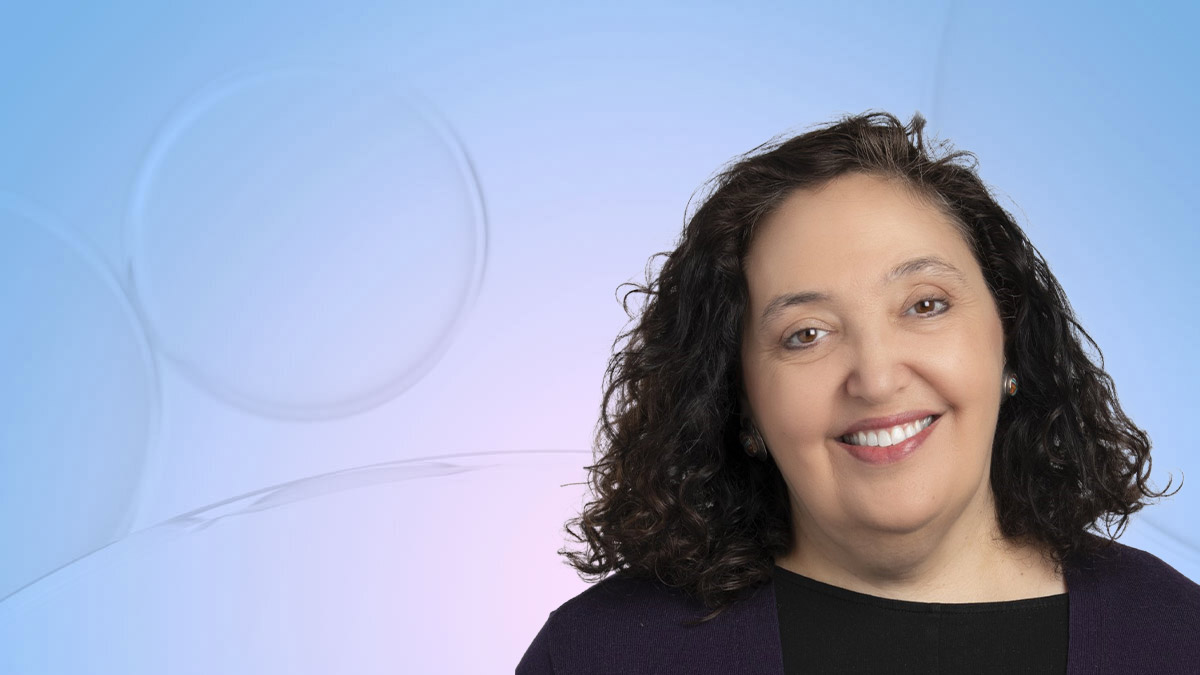
Transforming Conflict: Building Stronger Teams Through Perspective and Dialogue
In this episode of MedEd Thread, we talk with Rachel King, J.D., Cleveland Clinic’s Director for Educational Integrity and Assistant Dean of Students for the School of Health Professions, about how conflict transformation can turn workplace tension into an opportunity for growth. Rachel shares why addressing conflict isn’t just about resolution—it’s about reshaping relationships, fostering understanding, and creating healthier team dynamics. They discuss the difference between resolution and transformation, how restorative practices and perspective-taking can reset strained interactions and why these skills are essential for leaders and educators. Tune in to learn how intentional strategies can make conflict a productive tool for collaboration and long term success.
Advertisement
Cleveland Clinic is a non-profit academic medical center. Advertising on our site helps support our mission. We do not endorse non-Cleveland Clinic products or services. Policy
Recent Episodes
Focused Cardiac Ultrasound Training: Building Competency Through a Multimodal Curriculum
In this episode of MedEd Thread, we talk with Dr. Zenab Laiq, cardiologist and cardiac imaging specialist at Cleveland Clinic's Akron Genera…
Launchpad to Nursing: Inspiring the Next Generation of Nurses
In this episode of MedEd Thread, we talk with Dr. Linda Gardner, Senior Director of Nursing Education and Professional Development at Clevel…
Book Club Series: Already Toast: Caregiving and Burnout in America by Kate Washington
In this episode of MedEd Thread, we talk with Loren Hackett, Medical Librarian at Cleveland Clinic Hillcrest Hospital, and Michelle Kraft, D…
Video content: This video is available to watch online.
View video online (https://cdnapisec.kaltura.com/p/2207941/sp/220794100/playManifest/entryId/1_07rz9wqh/flavorId/1_5f3sgelj/format/url/protocol/https/a.mp4)
Transcript
Dr. James K. Stoller:
Hello and welcome to MedEd Thread, a Cleveland Clinic education podcast that explores the latest innovations in medical education and amplifies the tremendous work of our educators across the enterprise.
Advertisement
Cleveland Clinic is a non-profit academic medical center. Advertising on our site helps support our mission. We do not endorse non-Cleveland Clinic products or services. Policy
Dr. Tony Tizanno:
Hello, welcome to today's episode of MedEd Thread, an education podcast exploring how conflict transformation is a valuable skill for individuals and teams across all aspects of medical education. I'm your host, Dr. Tony Tizzano, director of Student and Learner Health, here at Cleveland Clinic in Cleveland, Ohio. Today I'm very pleased to have with us once again, Rachel King Cleveland Clinic's Director for Educational Integrity, here to join us. Rachel, welcome to today's podcast.
Rachel King:
Thank you for having me.
Dr. Tony Tizanno:
So Rachel, to get us started, could you tell us a little bit about yourself, your educational background, what brought you to Cleveland and your roles here at Cleveland Clinic?
Rachel King:
Sure. I'm trained as a lawyer and I've had a pretty broad career as a lawyer. I started out in the government, I worked for a long time in higher education representing colleges and universities, and that's really the piece that brought me here. I started at the Clinic and still hold the titles of being the Title IX coordinator and the Section 504 coordinator, which is basically the ADA coordinator. And I've since added other roles like Director of Educational Integrity, and most recently I'm the assistant dean of students for our newly created School of Health Professions.
Advertisement
Dr. Tony Tizanno:
Perfect. And I would almost add that you're director of the 'action with reason' <laugh> and I, we, we, the voice of reason, we go to you all the time. So in today's segment we'll explore how, not just resolving but rather transforming interpersonal conflict impacts perspective serves as a driver for positive change and presents an opportunity for growth that ultimately enhances the performance of teams in a workplace. So if you could help, Rachel, frame this topic and provide our listeners with some context around the importance of this and the impetus for creating a team of facilitators that might help other teams and individuals with some assistance in transforming conflict.
Rachel King:
Yeah, so I think everyone has been involved in a conflict in the workplace, and I think many of us, unfortunately have been in pretty toxic workplaces and everybody understands that when there is, you know, continuous conflict, you get less done. It costs the organization. I mean, those are the big picture, you know, reasons that you wanna address conflict. The impetus for me in putting our little conflict transformation team together was that in my role as director of educational integrity, I am the person that you come to if you think you've been discriminated against or harassed in the workplace in education. And so I've had a couple of situations where someone has come to me and they've said, you know, my program director is discriminating against me. And in talking to them, it was clear that the conduct really wasn't discrimination, but these two people had gotten themselves into kind of this downward conflict spiral where everything the other person did caused them to be suspicious.
With some reason, the program director thought that the, in one case resident, was unprofessional because some of the things that they had done were a bit unprofessional. At the same time, you know, the resident thought that they were being treated differently than the other residents because the program director had this like we're following their every move, so to speak. And so both people were right, both people were wrong, but they also still had months to work together.
And so we needed something, you know, I knew that whatever investigation I did, however it came out, it wasn't gonna put this relationship back together and we needed something that could help people put the relationship back together. So that was when sort of the idea of developing a resource within the Clinic who could come in in these situations and talk to the parties and try to, you know, put back their relationship. That's where the idea kind of came from.
Dr. Tony Tizanno:
So when you engage with these individuals, what does that facilitation look like?
Rachel King:
So the way we have it set up, we've trained a team of people who are able to do this and they go in in pairs and they talk to both people in the conflict individually so they can get their perspective, they can understand better what's happened and really see if they are gonna be willing to hear the other person's perspective.
Advertisement
Because that's the key to sort of transforming a conflict is that, you know, you may not agree with the other person, but you kind of understand that they have a legitimate story to tell. And so the team will talk separately to each person, make sure that they're in a place where they can hear the perspective of the other, and assuming that that's the case, then they'll bring the two people to together. And the goal of that discussion is for each participant to be heard.
So you each get to say, you know, how the conflict has impacted you or what is the particular concern that you have in the conflict. You get to take responsibility for things that you may have done that have contributed to the conflict. And that can be difficult for people, but that's part of the process. And then if necessary, or you know, if it's useful, the two people together might come up with some steps they can take going forward so they avoid conflict.
A lot of times conflicts are because of communication styles or communication issues. And so if the two people can work out a method to communicate that they can both accept and live with, you know, that's sort of the ideal outcome for having taken a difficult situation. And hopefully, you know, you don't have to be friends <laugh>, but you at least have to be able to communicate and work together, you know, for as long as that happens.
Advertisement
And I think when I was thinking about this, I was thinking about training programs and students, but really at the Clinic we have so many small teams that work together for long periods of time that if you end up in a conflict situation with one of your colleagues, you may be working together for more than months, it might be years. And so to be able to reset a relationship, I think is vital.
Dr. Tony Tizanno:
Yeah. And at the outset you said, we've all been there and you're right, we've all been there one way or another at some point to some degree. And I can see where, you know, as we listen to someone and we're having a problem, we're so busy thinking about how we're going to respond, what they're saying, that we're probably not really listening to what they have to say.
So when I first looked at this, I thought to myself, okay, conflict transformation now, and you start to Google a little bit and you see conflict resolution. Help parse out the difference between conflict resolution and transformation because I think it's an important distinction.
Rachel King:
Yeah. So when you engage in conflict resolution, you're really solving a particular problem, whatever the sort of fight is about right in front of you. The particular issue, when you do conflict transformation, you obviously want to address the immediate issue, but what you really wanna do is try to transform the relationship so you won't be constantly getting into conflict.
Advertisement
Dr. Tony Tizanno:
It sounds like there's maybe a time course too that the resolution might be more of a short term?
Rachel King:
If you're doing conflict resolution, you are, as I said, working on something more immediately. The goal is to deescalate the situation. The goal is to figure out what you're gonna do about this one particular issue that you have, and then you move on from there.
If you're talking about conflict transformation, you know you want to solve the immediate problem of course, but you also wanna set up a relationship so that you can address things that happen going forward because you know, while we talk about conflict in a negative way, there's an aspect of conflict that's healthy and positive. It's important to be able to say, you know, I don't look at this the way you do. Let's, you know, talk it out. Let's figure out together collaboratively how we wanna move forward.
You know, if you are in this kind of butting head situation, you're not going to be able to have those conversations. So a perfect world conflict transformation would set the two people up to address conflicts in a healthy way when they occur, and in a way that makes us more productive and doesn't kind of end up in that downward spiral.
Dr. Tony Tizanno:
Yeah, conflict is a more powerful word if you use the word disagreement, there's lots of things that we could discuss and I would disagree, but it's having some discourse around that disagreement that you come to a new mutually acceptable position. So that ability to grow and and move on seems like more likely in this transformative sort of process.
Rachel King:
Right.
Dr. Tony Tizanno:
So as you developed this workshop, what do the steps look like for a facilitator to assist teams in this process? What are the basic components?
Rachel King:
So we talked a little bit about the process that they use. When we thought about putting together a training for this team, we actually interviewed leaders across the Clinic to see what skills they thought this team should have. And it's probably what you imagine, you know, they should be able to actively listen, they should develop empathy, they should be able to take perspectives.
One of the foundational pieces of the team and of just the work in this area is, we use what we refer to as restorative practices, which are often called restorative justice in different contexts. And it's really a way of asking questions of the participants so that they can see the perspective of others. And as I mentioned before, so that they can be in a place to not only explain in a kind of, I don't wanna say rational, but explain in an understandable way how the situation has impacted them, but then also be accountable and take responsibility for the things that they have done.
And so the idea of restorative justice is used often in a criminal context for perpetrators and victims of crime to be able to kind of have that dialogue. And the idea is that you, again, you don't have a, in that situation, you don't have a long lasting relationship that you're preserving, but people tend to get more out of it because it's a way for them to heal, I guess. And in the workplace situation, we refer to it as restorative practices. And it's a way to again, strengthen the relationship that you have with the other person by perspective taking and understanding that, while you would not see the world the way they see the world, that they have a perspective that is legitimate and that there may have been things that you have done that have contributed to the conflict as well.
Dr. Tony Tizanno:
So it sounds like you're really setting in motion, a longstanding change in perspective in the way you look at the other person. And that's the hope,
Rachel King:
That's the goal, right?
Dr. Tony Tizanno:
<laugh>, that's the hope. <laugh>. So how might the way one views conflict impact the transformation process?
Rachel King:
This goes back a little bit to what we were saying earlier, which is, you know, conflict can be healthy. If you look at conflict as like a battle to be won, then you're not gonna get to a place where you can have disagreement and move forward in a productive way. But if you look at it as something that kind of feeds growth, you know, we all know the dangers of group think. If you never had a conflict in the workplace, you would always just be agreeing on everything. You'd never get everybody's perspective, decisions you make would never be challenged. The ultimate decision is not going to be strong because you know, you can think of sort of major concepts of groupthink that have occurred where really bad things happen when everybody's afraid to question the status quo. So you never want a workplace where everybody's in agreement all the time.
That is not a productive workplace. So if you look at conflict as a tool that helps us take perspectives, recognize that our view is not always the only view, ultimately the decision that happens in the end, it takes a little bit, you have to be a little humble as you go into these kinds of conversations are a little bit vulnerable, but ultimately what comes out the other end is going to be a much better product than if everybody, you know, somebody says A and everybody's like, oh yes, yes, A and no one even questions it. And you, you know, end up in a situation where your decision is not as strong.
Dr. Tony Tizanno:
I can see that. Have you had occasion to use this process?
Rachel King:
We have. I've actually had many more discussions about potentially using the process then we've actually used the process. And I think because it obviously has to be voluntary, people cannot be forced to share their perspectives. And it's a difficult thing to do if you're in conflict, to think about, you know, essentially being vulnerable in a situation with the person that you are in conflict with.
So we have not had many people willing to take that leap, but to some extent the people who come in and help, even though they are not taking either person's side, can be seen as objective in the situation. And so we have had at least one situation where I think just having the team members there allowed both parties to feel comfortable sharing. And that particular situation was a fellow going into their final year of fellowship and they were able to have a kind of a difficult conversation about how that was gonna work going forward that I think, you know, was a hundred percent attributed to their ability to talk. [Sure.] But I think the team helped facilitate that.
Dr. Tony Tizanno:
Do you think an angle perhaps for the future might be to train leaders with these tools and these points that you make so that they might, in the background, help people move in this direction?
Rachel King:
Yeah, that's actually one of the things we're working on as a workshop for people who might be managing conflicts to use some of these tools. And one aspect of it is to have these questions that you can ask of each person in the conflict. You wanna get the side of what happened, what were you thinking at the time, what is the impact had on you? And then one question I always like to ask people is, what would the other person say about what's going on? Because most people will know how the other person sees it, it's just they won't necessarily credit that perspective unless you really ask them to kind of think about how might they be feeling in this situation. And those are the kinds of questions that anybody who's managing a conflict could use to try to get the two people in conflict to have a little bit of a better understanding of how the other person is feeling.
Dr. Tony Tizanno:
Yeah, I could see this being part and parcel, even MBA program, this is kind of one of those psychosocial skill that one might have that could make managing people and business management go more smoothly.
Rachel King:
One thing I was gonna say that the team members who did this training have said is that it has made them so much more comfortable with the idea that a conflict might come up in their workplace. You know, lots of us avoid conflict and we, if we know that people we work with may be having some disagreement, you know, oftentimes we just think, well, hopefully they'll figure it out on their own. I think having these kinds of tools makes it easier for managers or leaders to actually engage and hopefully move the parties away from the conflict as opposed to thinking, I'm not really sure how to handle this, I don't wanna make it worse, I'm just gonna let them sort it out amongst themselves
Dr. Tony Tizanno:
So it continues. Yeah. So Rachel, as you look at the horizon and you have the ability to just wave and have something happen, what, what's there <laugh>, what would you like to see next?
Rachel King:
In terms of this? I do think it would be great to see a lot of leaders trained in how to make conflict a productive tool and not always a negative thing. I think the work that we do here is so intense often, and it is easy for people to get stuck in their sort of toxic relationships. I think having a tool that helps them dig out from that is not only useful, but sort of imperative. And so ideally, I think we are starting to add an aspect of this to more of the leadership training that's happening, and I think ideally all leaders would be trained in this kind of perspective taking and helping people get out of the spirals that they may find themselves in.
Dr. Tony Tizanno:
I like listening to this and I think, yeah, this is great for the workplace and our teams, but I also think in our personal lives we could take something away from this and you know, accepting feedback, the manner in which we do it, taking time and sometimes a lot of time before we respond to really think about what the other person said and maybe not even have a response to the next day. There must be some value in all of that.
So is there anything that I should have asked that I didn't, that you think is important for our listeners to know Rachel?
Rachel King:
I don't think so. I think we've covered the topic pretty well.
Dr. Tony Tizanno:
Excellent. Well, thank you so much Rachel. This has been a very thought provoking and wonderfully insightful podcast. To our listeners, if you would like to suggest a medical education topic to us or comment on an episode, please email us at education@ccf.org.
Thank you very much for joining and I look forward to seeing you on our next podcast. Have a wonderful day.
Dr. James K. Stoller:
This concludes this episode of MedEd Thread, a Cleveland Clinic education podcast. Be sure to subscribe to hear new episodes via iTunes, Google Play, Stitcher, Spotify, or wherever you get your podcasts. Until next time, thanks for listening to MedEd Thread and please join us again soon.
Recent Episodes
Focused Cardiac Ultrasound Training: Building Competency Through a Multimodal Curriculum
In this episode of MedEd Thread, we talk with Dr. Zenab Laiq, cardiologist and cardiac imaging specialist at Cleveland Clinic's Akron Genera…
Launchpad to Nursing: Inspiring the Next Generation of Nurses
In this episode of MedEd Thread, we talk with Dr. Linda Gardner, Senior Director of Nursing Education and Professional Development at Clevel…
Book Club Series: Already Toast: Caregiving and Burnout in America by Kate Washington
In this episode of MedEd Thread, we talk with Loren Hackett, Medical Librarian at Cleveland Clinic Hillcrest Hospital, and Michelle Kraft, D…
Never miss a moment - subscribe now.
Listen to the Health Essentials Podcast on your favorite streaming platform.
Other Podcasts You May Love
Beyond Leadership
Hosts Jim Pae and Elizabeth Pugel escort you through a network of thought leaders, sharing world-cla…
Health Essentials
Tune in for practical health advice from Cleveland Clinic experts. What's really the healthiest diet…
Studies in Empathy
Join Cleveland Clinic Patient Experience leaders and a group of guests with a wide range of experien…
Nutrition Essentials
Tune in for practical health advice from Cleveland Clinic experts. What's really the healthiest diet…