



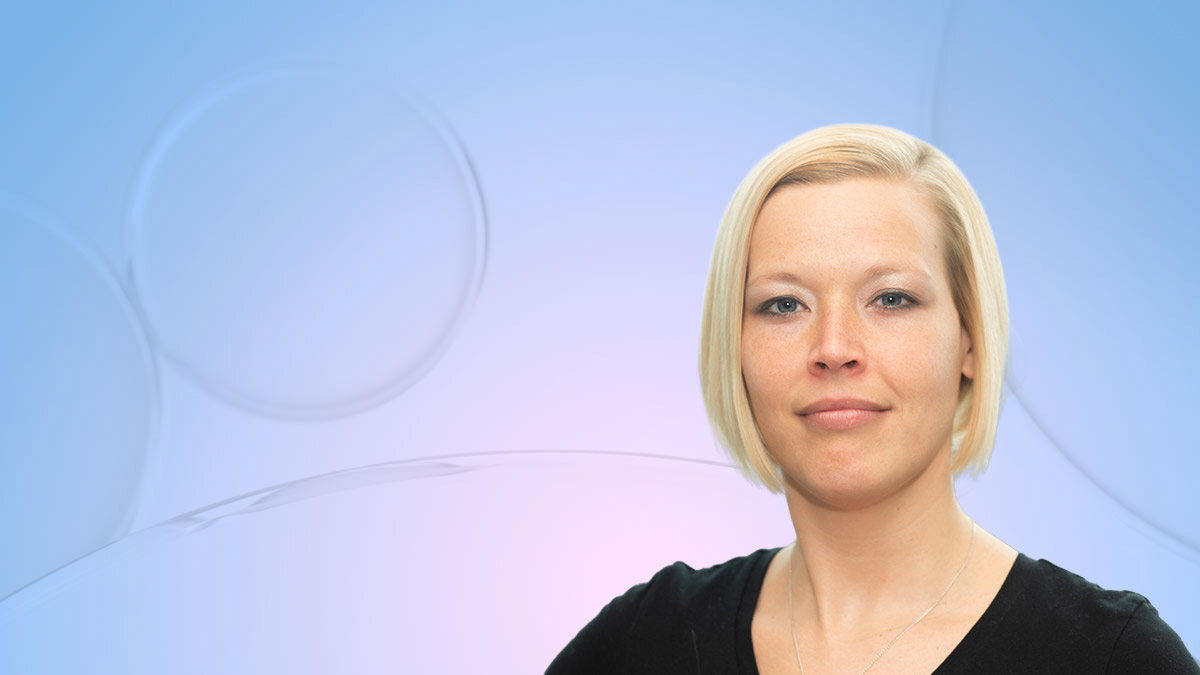
Strategies for a Smooth Transition to Medical School
In this episode of MedEd Thread, we talk with Dr. Ashley Reed, Assistant Director of Curriculum Services at the University of Michigan Medical School, about strategies that help students navigate the critical transition to medical school. Dr. Reed shares how her program leverages learning science, evidence-based study techniques, and even generative AI to empower students, normalize challenges, and foster resilience. We discuss why structured support matters, how peer collaboration and reflective frameworks can boost confidence, and why these efforts are essential for long-term success in medical education. Tune in to learn how intentional programming can transform the way students adapt and thrive during one of the most demanding phases of their training.
Advertisement
Cleveland Clinic is a non-profit academic medical center. Advertising on our site helps support our mission. We do not endorse non-Cleveland Clinic products or services. Policy
Recent Episodes
The Future of Simulation Education: Harnessing Generative AI
In this episode of MedEd Thread, we talk with Stormy Sweitzer, PhD, MBA, MPH, PCC, Senior Program Manager in Cleveland Clinic's Office of In…
Rethinking the Anatomy Educator Pipeline: A Competency-Based Fellowship
In this episode of MedEd Thread, we talk with Dr. William Albabish, Director of Anatomy, and Dr. Andrea Di Sebastiano, Associate Director of…
Focused Cardiac Ultrasound Training: Building Competency Through a Multimodal Curriculum
In this episode of MedEd Thread, we talk with Dr. Zenab Laiq, cardiologist and cardiac imaging specialist at Cleveland Clinic's Akron Genera…
Video content: This video is available to watch online.
View video online (https://cdnapisec.kaltura.com/p/2207941/sp/220794100/playManifest/entryId/1_vyrqprxc/flavorId/1_5f3sgelj/format/url/protocol/https/a.mp4)
Transcript
Dr. James K. Stoller:
Hello and welcome to MedEd Thread, a Cleveland Clinic education podcast that explores the latest innovations in medical education and amplifies the tremendous work of our educators across the enterprise.
Advertisement
Cleveland Clinic is a non-profit academic medical center. Advertising on our site helps support our mission. We do not endorse non-Cleveland Clinic products or services. Policy
Dr. Tony Tizzano:
Hello, welcome to today's episode of MedEd Thread, an education podcast exploring how strategies for transitioning to medical school are an essential element to a medical student success. I'm your host, Dr. Tony Tizzano, director of Student and Learner Health, here at Cleveland Clinic in Cleveland, Ohio. Today I am very pleased to have Dr. Ashley Reed, assistant director of Curriculum services at the University of Michigan Medical School here to join us. Ashley, welcome to the podcast.
Dr. Ashley Reed:
Thanks, Tony, so much for having me. It's great to be here.
Dr. Tony Tizzano:
Perfect. Ashley, to get us started, can you please tell us a little bit about yourself, your educational background, your role at the University of Michigan Medical School and how you became connected with today's podcast?
Dr. Ashley Reed:
Yeah, happy to do so. So, as you stated, I serve as Assistant Director of Curriculum Services at the University of Michigan Medical School, and I oversee primarily the preclinical phase of the curriculum known as the Scientific Trunk. A little bit about me, I've spent 15 years in higher education and have probably pretty much had every role you can think of, clinician, preceptor, faculty, administrator. So my background spans quite a bit, but I'd say that my main focus is on curriculum design, education, innovation, especially with emphasis on digital transformation, accreditation and compliance and leading large academic initiatives. And then this past spring I was actually at the CGA conference and I was presenting on my student support for learning program. And shortly after that your team reached out to me because they thought this might be a fun topic to discuss on the podcast. And so here we are today.
Advertisement
Dr. Tony Tizzano:
Very good. Well, thank you, Laura Greenwald, you're always bringing great talent to the uh, podcasts. In today's segment, we'll explore how a students transition to medical school is receiving greater attention to optimize educational efforts and ultimately foster academic success and professional growth.
Ashley, please help us frame this topic by providing our listeners with some context around the importance of programmatic efforts to support students transition to medical school and the impetus for its inclusion in your school's formal curriculum.
Dr. Ashley Reed:
So first off, I, I think we all know that the transition to medical school is one of the most significant academic and personal shifts that a learner or really anyone would ever experience. Students are not only adapting to an intense curriculum, but they're also redefining how they learn, how they manage time, and even how they take care of themselves. So it really is this huge monumental shift that's gonna set the tone for the rest of their life as physicians.
So when I started back at Michigan, which is just nearly two years, it's only my two year anniversary coming up, I was overwhelmed by all of the support systems and resources we had for students in medical school. I mean, you name it, we have it - learning accessibility specialists, counselors, advisors, tutors, peer collaborations, support groups, whole entire communities to support students in medical school. But I'll be honest, I was a little bit surprised to see that there wasn't, you know, a formal curriculum to really support students through the transition of how their learning's gonna change and shift.
And so given how central this moment is and how drastically students kind of needed that change, I really thought that there was a gap there. And also a little bit about me in my past when I was a faculty member, I've taught in higher education for over a decade and I taught healthcare professional students. I was always really passionate about helping them learn how to learn. And so that's always been a core component of my curriculum design. So coming into this role, I kind of had that background knowledge, saw the gap that was there, and so I thought this is a real opportunity to kind of create something intentionally and build it that's based in learning science and really with helping the goal of students develop sustainable evidence-based habits early on.
Dr. Tony Tizzano:
You know, it's clear to me that looking back, I had the benefit of none of what you do, I don't think, when I was in medical school. [Oh, totally.] And I'm just beginning to have the sense of how important it really is. What are some of the innovations and, and educational theories and science that are being incorporated in these transitioning to medical school sessions.
Dr. Ashley Reed:
So I would say a core innovation of the program, and maybe I'll, I'll pause here for a second and say, you know, innovation, what is innovation? I think sometimes we get stuck in the idea that this innovation has to be this like bright shiny thing, right? That's new. You know, right now it's, it's all about AI and all those things. And so innovation really doesn't have to be that innovation can just be a new way of thinking about things or organizing information. And so I think that's really what the program brings when we think about innovation.
Advertisement
So, so back to the program, I think the core innovation of the program is that we just don't tell students what to study. We teach them how to learn using foundational theories based in learning science and educational philosophy. And so the educational theories and concepts are deeply embedded and those that are within the sessions are Bloom's taxonomy, active learning, clinical decision making, information processing theory and cognitive load theory.
And if you're familiar with education, these are very, very foundational and education theory and they're all separate ideas, but the way we connect them in the program helps them make sense to students. And so we kind of start off with Bloom's Taxonomy helps students understand that success in medical school is gonna be more than memorizing facts. The curriculum and their future career as a clinician is really gonna demand that higher order thinking skills. They have to find knowledge, analyze information, make connections, synthesize information, do all of those things. So we help students identify where their current study strategies fall on that Bloom's taxonomy.
And then we teach them how to level up. To reach those kinds of cognitive paths that they're gonna be expected in exams and in patient care when they're treating their patients. And that's when active learning comes in. So we emphasize that those higher levels of Bloom's taxonomy, application analysis, evaluation, those are active learning.
Advertisement
So the strategies like self explanation, elaborate interrogation, inner leaving space, repetition, retrieval practice, those good techniques, those evidence-based techniques that we know work, there are a way to get your brain working at those higher levels. And then we add in that clinical decision making and say, Hey, when you're doing that active learning, that's making you having to actually think like a clinician. Because as a clinician you're gonna have to do those same things, analyze patterns, apply concepts, reason through uncertainty. And so those are the exact same things. So we draw a direct line from how students are gonna have to study how they're actually gonna have to think as physicians so they kind of really understand the importance and why their learning has to shift.
Dr. Tony Tizzano:
Boy, that is just great. I, again, I, I just have to reminisce and I look back and I, the only thing I remember is being told, once you've heard it in the lecture, if you can review it again within two to four hours, you'll have greater retention. That's the only pearl that I ever remember. And then in clinics, the one thing that I took away was never be afraid to ask questions, but remember it's a sign of weakness. So, you know, it's was a sad state of affairs, but I mean there was some of that. So when you look at all of what you're bringing to the table, what are the ultimate objectives of these efforts?
Advertisement
Dr. Ashley Reed:
You know, I think it's, the goal of the program is twofold. One, the first goal is to really help students navigate, you know, the emotional and cognitive challenges of starting medical school. It is monumental to say the least, but we really wanna also normalize adjustment process, you know, and help them understand that they can personalize their learning experience and really give them some confidence that they have that ability to adapt. 'cause their learning is gonna adapt, you know, throughout medical school residency and far beyond, right?
And so students have reported, you know, saying that they've attended the sessions, that they, you know, they feel more prepared, more empowered, maybe they're able to manage their time a little bit better. But I think for me, and this is probably the twofold, the second part is students, I've reported actually feeling seen that they get a sense that their struggles are normal and that there's structured support to help them succeed.
You know, at the University of Michigan, our scientific chunk, the preclinical curriculum is condensed into one year. So it's very compressed. And so I think students are thinking, I need to find out what works now. Because if I don't find out what works now I'm gonna be behind. And so they're looking to their peers, what should I be doing? What should I be doing now watch the lectures, do the Anki, right? They're looking all these things and they're so overwhelmed with all these options that they sometimes feel like, you know, they're, they're missing out.
And so the program helps normalize that and say, this is gonna be painful, this is gonna be difficult, this transition's gonna be hard. And you having this uncertainty is really what it's all about. And it's also to give them the tools that say you don't have to do what's everyone else is doing. How many times has a student come up to me and said, it's so great to have this? 'cause now I feel like I have options instead of just doing Anki 'cause everyone tells me to do Anki and I don't resonate with that. Or I don't have the ability to do, you know, this X, Y, and Z and everyone tells me to do that. So it's nice that they can have that normalized in that process and feel like they're not alone.
Dr. Tony Tizzano:
Yeah. Just for our listeners and me, what is Anki
Dr. Ashley Reed:
Anki is a virtual platform, but they're flashcards and they're like, well you can make like flashcards. And so they also do space repetition. There's a significant algorithm behind it on you know, how to organize the cards and when to do them and stuff. So you can, it actually supports best practices in learning. But there's this huge pressure that they need to be doing their Anki decks.
Dr. Tony Tizzano:
We definitely made flashcards, but I wish I had had someone making them for me. You know, this is fabulous. So you've described this program and it suggests that this transition to medical school is, is critical. Can you tell us more about what the program actually looks like and how it works in practice?
Dr. Ashley Reed:
Yeah, so the program which we've titled of a student support for learning program, it's three series session and it's embedded in the first eight weeks of medical school with each session building intentionally upon the previous one. The first session is titled How Does Learning Occur? It's actually asynchronous, we've done it in person, but this year we did it asynchronously. We got a lot of feedback from students 'cause some had kind of had this information before and some hadn't. So we made it asynchronous so they could kind of watch it whenever they wanted. And so for this session it really focuses on memory and learning. So students explore how learning occurs and understanding why cognitive processes are important, understanding the role that Cognitive Load Theory has and the influence it has on their ability to absorb and retain information. And this is when we introduce those foundational educational learning theories and concepts.
So this is when we introduced the Bloom's Taxonomy, the active learning, clinical decision making and the information processing theory. And so it really demonstrates how each of those theories plays a role in memory formation and effective learning.And then the second session is titled, how Do I Learn Effectively? It's in person, not surprisingly, it's about how to learn effectively. And so we focus really heavily on evidence-based study strategies. We also do some time management practices and then the use of external resources like Anki because they're so widely used in medical education. And this session really emphasizes collaboration and a shared reflection with the students as they begin applying what they've learned to their own study plans and kind of put things in practice within their transition to medical school.
The third session is titled, how Do I Assess My Learning? And this introduces a reflective framework. And so as four steps, the first is recognized, the second is analyzed, the third is plan, and the fourth is apply. And this is where students use the structure along with generative AI tools to evaluate their academic performance, identify learning gaps, and really create a personalized improvement plan.
And so the whole entire program, the whole series is really grounded in learning science frameworks. But we've also aligned it with the AMAs recommendation on facilitating effective transitions. So the goal is to really provide students with some actionable strategies to manage academic demands and really normalize the learning curve that's gonna happen with this transition. And so that's kind of the overview, but I thought it'd be nice to kind of maybe talk about a couple features that I think really stand out with the program that make it kind of unique. Yeah. The ones that I found have have brought True value or, or I see students kind of have like, oh, the aha moment.
So the first would be in the second session, how do I learn effectively I collaborate with arising M2s. So students that have just finished that first year curriculum, we have a peer collaboration and we bring them into the session and they do time managements, how they prioritize things, how they schedule things. And they kind of talk about balance and life and that type of stuff. And they also do external resources and touch on those when to use these, when to not use these, the biggest bang for your buck. So they actually get to hear from their peers. And so this has been extremely valuable because I can sit up there and talk about educational theory all day long, right? But the students, do they wanna hear that? I mean they do, but to hear it coming from their peers means so much more.
And what's great is what the peers are sharing is really reinforcing what I said. But we also have peers that have had very different experiences. We've had peers that they're on the Anki, you know, ship and they did it day in and day out. And then we have students who say, Hey, I didn't identify with that at all and this is what I did. So that students can kind of see, hey, there's multiple ways to go about this. So that's one feature. The second feature I think is interesting is that use of generative AI. And so in that third session where they're learning how to assess their learning, they're using the AI to analyze their own learning data, qualitative and quantitative and identifying areas of improvements. And that AI is helping them with their judgment. It's not replacing them, but it's really augmenting that self-awareness. And the really cool thing about that is I've had students like analyze their learning data on their own.
Like just look at it, what do you think? And be reflective. And then I have them use the generative AI and it's kind of like a light bulb. They're just like, man, I was, I was being so hard on myself, I'm actually doing a pretty good job. And you know, things aren't so bad. So, so it's nice to kind of see that. And then with having that AI kind of in their back pocket, you know, they can kind of start to put things together and create goals and put together a plan. And they feel like they have a little bit control in their actually going somewhere.
Dr. Tony Tizzano:
Well I love hearing this and I'll tell you the enthusiasm you have for this is absolutely contagious. I mean, it makes me, I don't know that I'd ever wanna go back, but if I had to go back, I would hope that I would encounter something like what you're talking about. And a little bit off topic, but you know, I look at where I was and I think of my education and I feel like there's so much more to learn. You know, they talk about the doubling time of the medical lexicon and it, it used to be a long time and things were in books and now it's not even books because they're not up to date. And the doubling time is said to be in the neighborhood of like 40 days that everything ever written in medicine is doubling within 40 days.
How does one tease out and keep up to speed with what they need to? It seems like you have found a way to stay at that cutting edge and bring relevance to the way they're learning in ways that didn't exist when I was in school way back when. Is that a fair assessment? I mean, this is some new stuff.
Dr. Ashley Reed:
I would hope to say that that's, yeah, that's what I'm hoping to achieve. Um, I'm hoping to kind of hold back the curtains, see the forest through the trees, right? Help them focus on something and, and keep their goal on something and move forward with that. And not getting bogged down by everything that's surrounding them, right? And that if they can put together a plan and they can do that and they can learn to adapt that they're gonna find their way and navigate that through. So, so yeah, I, hope that that's what they're getting. I hope that's the goal. I guess I'd have to ask them more to see if that's really what they're, what they're feeling.
Dr. Tony Tizzano:
Well, it sounds like you do many things in real time. Well I, you know, I have to ask, so you know, our leader in education is Dr. Stoller and he loves to say, if you had a magic wand, what would you wish for? What do you see Ashley lying on the horizon for this area of endeavor?
Dr. Ashley Reed:
I think it could go in a lot of directions. My initial thought is to kind of just keep doing the program 'cause I've only been here two years, right? And really start to gather some kind of data to kind of see outcomes and see if it's having any type of impact.
Another idea is to kind of carry the support for learning into transition spaces. So in the transition to clerkships for us there's a branch launch, which is the third phase of the curriculum, possibly transition to residency, maybe offering some similar support, raise our sessions in those space, 'cause our learning is going to shift and change throughout our whole entire education.
Another idea would be taking this and maybe doing some type of pre-orientation experience, maybe like a camp or a retreat-like experience where students could be a part of it, help build community or it could even be creating something asynchronously they can engage in with before they even come to medical school. So really there's no path forward. I guess there's a lot of potential ideas to scale. All I just know is that like I really enjoy this type of work because transitioning to medical school and along that continuum is so challenging and I just feel we need to normalize it.
Dr. Tony Tizzano:
Yeah. You know, what you say reminds me of a podcast we did a bit ago on not all gap years are, are created equal. And where some individuals have put together a structured program that's 12 months and that includes didactics, but actually work, in this case, in a dermatology office. I wonder if there isn't a place where we look at that gap year to prime, to do what you're doing to set these kind of foundational aspects of learning that I have never heard of and you're telling me about. I could see where there could be some value in that. Could you see such a thing?
Dr. Ashley Reed:
Yeah, I think the one thing that I've learned is as an educator, 'cause I taught for a significant time before I came into my role at Michigan, you know, 14 years in higher education. I think as you see the change in generations and learners, right? These generations, they wanna know what's coming and they wanna have an idea of what's gonna be hard and what's gonna be challenging. Because when they know that it makes it a lot better and they can weather the storm and they can have that resilience. So I think integrating some of that, like you said, into that gap year so they can know what to expect, they can frame it around them and when those times they face this to face this, they just feel like they can receive it more. So I definitely could see that integrated there.
Dr. Tony Tizzano:
The other point you bring up is the asynchronous learning and you know, podcasts I guess could fall into that category. And I've been doing a little homework now that I've been doing this for a little while about why are they important. And I was astonished at the number of people who listen to podcasts and they do so because they get to listen when they want to listen and they can actually double task. They can be driving in their car listening and they're so often people want to do that. It, it's not what I have learned to do. I, I do it differently, but I can see where there's great value in that. People learn differently. It's just another way, another tool for them.
Well, this has been fabulous. So, is there anything that I did not ask that you feel is important for our listeners to know?
Dr. Ashley Reed:
I really just think, you know, the most important thing to emphasize is that we needed to kind of just stop assuming that students already know how to manage this transition. Just because they got into medical school, I feel like sometimes there's this unspoken belief that they've made it this far. So you know, they are already operating at this higher level, so they don't need structured support. And the reality is they do need it. They probably need it more so than they ever did before. Because we also know that students that tend to be high achieving environments really are less likely to ask for help. So having something that's kind of in the formal curriculum where it's you can come and learn, provides that kind of that nice safe environment.
And I also think that from what we know from research and just working closely with students and just as humans, we all just have a deep connection and need to feel seen and heard and understood. And I really think that these sessions are designed to meet that validate the struggle. They normalize the uncertainty, they remind students that they're not alone. And in that itself, I just think that that's extremely powerful.
So it's not just about the learning practices or performance, it's really creating that safe space. And I know we focus lot about content delivery and medical education, but I think it's programming like this that reminds us how students learn and how we support that learning that really matters just as much as how we teach them.
Dr. Tony Tizzano:
Well, I have to applaud the work you do. I can see where you validate the things that students have as concerns and you make them feel relevant at the same time. It isn't that what we all want at the end of the day? Dale Carnegie said it decades and decades ago and it's just as true today.
Well, thank you so much, Ashley. This has been a very thought provoking and wonderfully insightful podcast
To our listeners, if you would like to suggest a medical education topic to us or comment on an episode, please email us at education@ccf.org. Thank you very much for joining and we look forward to seeing you on our next podcast. Have a wonderful day.
Dr. James K. Stoller:
This concludes this episode of MedEd Thread, a Cleveland Clinic education podcast. Be sure to subscribe to hear new episodes via iTunes, Google Play, Stitcher, Spotify or wherever you get your podcasts. Until next time, thanks for listening to MedEd Thread and please join us again soon.
Recent Episodes
The Future of Simulation Education: Harnessing Generative AI
In this episode of MedEd Thread, we talk with Stormy Sweitzer, PhD, MBA, MPH, PCC, Senior Program Manager in Cleveland Clinic's Office of In…
Rethinking the Anatomy Educator Pipeline: A Competency-Based Fellowship
In this episode of MedEd Thread, we talk with Dr. William Albabish, Director of Anatomy, and Dr. Andrea Di Sebastiano, Associate Director of…
Focused Cardiac Ultrasound Training: Building Competency Through a Multimodal Curriculum
In this episode of MedEd Thread, we talk with Dr. Zenab Laiq, cardiologist and cardiac imaging specialist at Cleveland Clinic's Akron Genera…
Never miss a moment - subscribe now.
Listen to the Health Essentials Podcast on your favorite streaming platform.
Other Podcasts You May Love
Beyond Leadership
Hosts Jim Pae and Elizabeth Pugel escort you through a network of thought leaders, sharing world-cla…
Health Essentials
Tune in for practical health advice from Cleveland Clinic experts. What's really the healthiest diet…
Studies in Empathy
Join Cleveland Clinic Patient Experience leaders and a group of guests with a wide range of experien…
The Medicine Grand Rounders
A Cleveland Clinic podcast for medical professionals exploring important and high impact clinical qu…