



Why Appropriate Follow-Up Is Key to Successful Aortic Valve Replacement
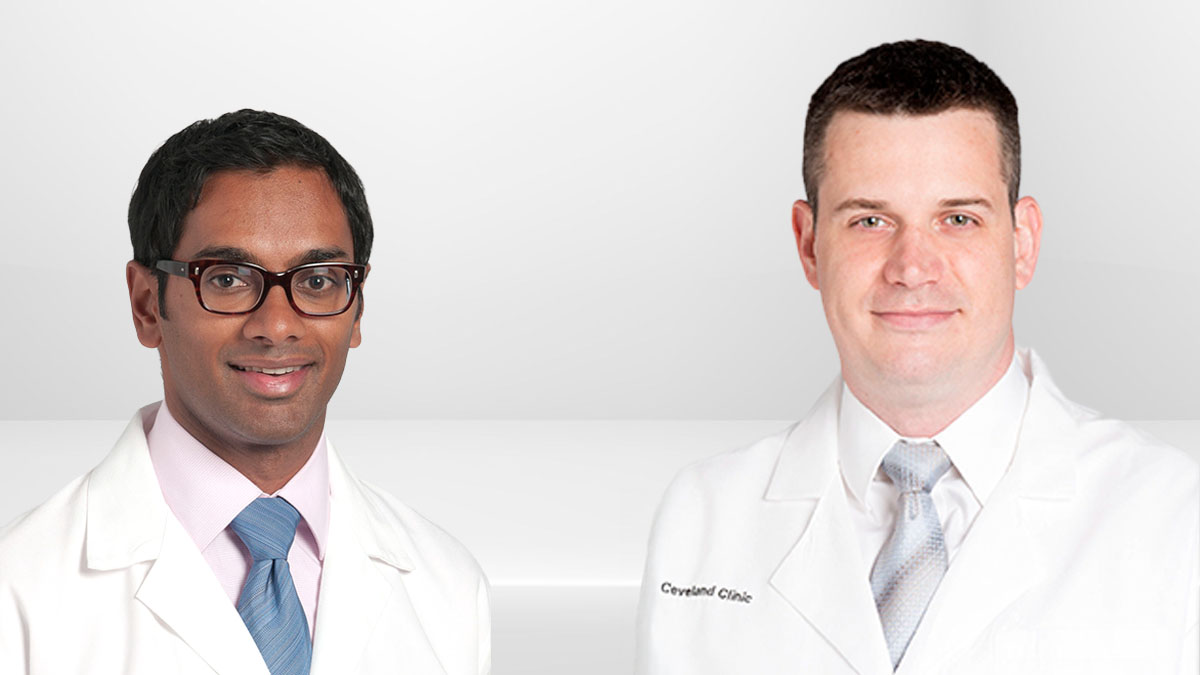
Join Amar Krishnaswamy, MD, Head of Interventional Cardiology, and Marijan Koprivanac, MD, Cardiac Surgeon at Cleveland Clinic, as they discuss what patients can expect after aortic valve replacement, whether surgical or transcatheter. Learn about minimally invasive techniques, recovery timelines and the critical role of cardiac rehab and follow-up care to ensure long-term heart health.
Advertisement
Cleveland Clinic is a non-profit academic medical center. Advertising on our site helps support our mission. We do not endorse non-Cleveland Clinic products or services. Policy
Recent Episodes
Choosing the Right Treatment for Blocked Coronary Arteries
Faisal Bakaeen, MD, and Grant Reed, MD, explain what blocked coronary arteries mean and the risk factors that can lead to coronary artery di…
Robotic Lung Transplantation Explained
Kenneth McCurry, MD, and Gregory Jones, MD, discuss who may need a lung transplant, how patients are evaluated and how transplantation can i…
Recognizing the Warning Signs of Limb Loss
Courtney Hanak, MD, and Ravi Ambani, MD, discuss the most common causes of amputation, including diabetes, poor circulation and severe infec…
Video content: This video is available to watch online.
View video online (https://cdnapisec.kaltura.com/p/2207941/sp/220794100/playManifest/entryId/1_bes63eri/flavorId/1_5f3sgelj/format/url/protocol/https/a.mp4)
Transcript
Announcer:
Welcome to Love Your Heart, brought to you by Cleveland Clinic's Sydell and Arnold Miller Family Heart, Vascular and Thoracic Institute. This podcast will explore disease prevention, testing, medical and surgical treatments, new innovations and more. Enjoy.
Advertisement
Cleveland Clinic is a non-profit academic medical center. Advertising on our site helps support our mission. We do not endorse non-Cleveland Clinic products or services. Policy
Amar Krishnaswamy, MD:
Welcome. Thanks for tuning in. My name is Amar Krishnaswamy. I'm the head of interventional cardiology here at Cleveland Clinic.
Marijan Koprivanac, MD:
My name is Marijan Koprivanac. I'm a cardiac surgeon attending here at Cleveland Clinic.
Amar Krishnaswamy, MD:
It’s our pleasure to be with you today and discuss some particulars surrounding follow-up after aortic valve replacement, both transcatheter aortic valve replacement, or TAVR, and surgical aortic valve replacement, or SAVR. To start out, I'd like to turn to Marijan and ask, patients often think about when they need an open heart surgery, that they have to have the entire breastbone opened. But that's not really how we do things generally nowadays. Can you help understand?
Marijan Koprivanac, MD:
Correct, not really. That is the traditional way, and certainly some centers still do that. But primarily, our approach is that, if you have isolated aortic valve disease, then a minimal invasive approach is taken. Very rarely, we do complete sternotomy or normal incision for patients with isolated aortic valve disease.
There was evolution of this through time, and it started in the 90s with partial sternotomies and mini thoracotomies. Pretty much today, you have very well-established partial sternotomy, which is a partial incision through the midline of your breastbone. Then, a mini thoracotomy, where you go between the ribs, cutting just one rib, and then doing the whole surgery, which enhances the recovery significantly.
Advertisement
Something that we started more recently is the introduction of robotic surgery for the aortic valve. We actually go through the lower part of the neck incision. We are still perfecting this approach where we actually don't make any major cuts on the sternum whatsoever or on the chest. This way, we actually almost remove the pain with deep breathing and coughing, which is a big problem after open heart surgery. It enhances recovery significantly for the patients, pretty much not even requiring any narcotics in a postoperative recovery. This is how evolution is going and it's going to keep pushing as the innovation in surgery gets more and more advanced.
Amar Krishnaswamy, MD:
Wonderful. That's a pretty significant benefit in terms of the patient and their recovery for pain, and also, I imagine, getting back to usual activity sooner.
After a surgical aortic valve replacement for the typical patient here in Cleveland Clinic, can you help us understand how long are they in an intensive care unit? How long are they in the hospital before they get back home? Then, what's their rehabilitation course like?
Marijan Koprivanac, MD:
We always go back to these approaches, minimal invasiveness and so on. When you have a complete sternotomy, traditionally you're about five to seven days in a hospital at the minimum, just recovering from the trauma of the surgery. But when you do partial sternotomy or mini thoracotomy, the length of stay in the hospital goes to about three to four days with less narcotic pain medication. Then of course, the latest thing that we started to do with this robotic transcervical, we actually can send patients [home] even the second day after surgery with pretty much no narcotics at all during the whole hospital stay with no chest restriction afterwards, and actually return to usual activities pretty much the next week, which is a huge step in all of that. But as I said, even with the traditional minimal invasive approaches, which should be the standard, by our opinion, for all of the patients with isolated aortic valve disease, we got significantly better than what historically was done for that.
Amar Krishnaswamy, MD:
Amazing. So, a really substantial improvement and evolution in what the patient experience is like after a typical cardiac surgery. From a transcatheter valve or a TAVR perspective, for the most part, these are procedures that are performed under what we call conscious sedation or monitored anesthesia care. So, no breathing tubes or general anesthesia. We place the valve from the artery at the top of the leg. We give a lot of local anesthetic there for patient comfort. Usually, the patients in our hospital, the majority go home on the same day. Sometimes we keep patients overnight, either if there's some need for observation or if they don't have a robust support network at home to take care of them that first night or the first couple of nights. In that regard, the recovery is relatively brief. Patients are usually up and walking around, of course, by the same evening before they leave, and then getting back to usual activity over the next few days.
Now, Marijan, it's usually not just the pain and discomfort of recovery, but we do need to think about the physical rehabilitation for these patients after a TAVR or a surgical valve, because often these are patients who have declined over some period of time, gotten weaker, not only from a heart perspective, but also just overall functional capacity, sometimes even things like balance and the ability to walk well. What are your recommendations to your patients for physical rehab?
Advertisement
Marijan Koprivanac, MD:
This is a big, important question. The thing is, now with the SAVR surgical valve and the TAVR transcatheter that you mentioned, the physical activity is very important before the surgery. Open heart surgery, even minimal invasive, requires certain physical strength, ability to ambulate before and then especially after the surgery, because there's always a certain level of trauma. The trauma is minimal or the smallest with the TAVR, of course. With patients who have low physical abilities, let's say wheelchair-bound or walking with a walker and things like that, very friable, TAVR potentially is the best option because minimal trauma will allow rehabilitation after the surgery to be the best with minimal recovery.
The recovery from open heart surgery standpoint, again, depends on how invasive you are. There is a fair amount of chest wall healing, which is really what pushes the patients the most backwards. It's like a trauma. With a conventional surgery, when you do open chest with a maximal incision, we say you're going to feel like you've been hit by a car. So how much do you need to recover when you're hit by a car? You're in a trauma center for a while and so on, and then working on your physical activity up and everything seems hard. For those patients, rehab is critical, very important. If you're younger and stronger, it might be easier for you, but as you get older and weaker and on a lower strength level of your physical abilities, then you have to have longer rehab. So, it's all individual. We have to tailor each intervention in this case and the approach to the patient, what he can tolerate and what's best for him short and long term.
Advertisement
Amar Krishnaswamy, MD:
Perfect. I think the role of physical rehab is something to really focus on. We know in patients with coronary disease, with heart failure, with valvular heart disease, having had valve replacement, that there's great data to demonstrate that patients do better after they've been engaged in a formal physical rehab program. Every one of our patients, whether it's a surgical valve patient or a transcatheter valve patient, is going to get a referral to our cardiac rehab program. Now, of course, we have a lot of patients who travel from elsewhere, so we're happy to provide that referral and engage with the local healthcare providers to make sure that that formal cardiac rehab program is considered and undertaken. Because we know that patients are going to get better faster and in a more durable way when they're being taken care of by physical therapists and nurses in that rehab program.
Marijan Koprivanac, MD:
I always tell this to patients, and they are a little bit surprised. They always ask, "So, when can I start walking?" Well, I say, "Right after the surgery, the next day, you get out of bed, you move." The rehab starts right after the surgery. That's one of the key components here for patients to do well, they need to start walking and moving right away. The rehab starts immediately and then continues once they leave the hospital.
Advertisement
Amar Krishnaswamy, MD:
It's important. Finally, I think there are two components of follow-up that are really important we address. One is imaging follow-up with echocardiograms, and the other is medical therapy follow-up. What are your thoughts on the echocardiograms? How often should patients have this after surgery and in the longer term?
Marijan Koprivanac, MD:
It's a good question. You've got to think a little bit. Let's say we're talking about a TAVR and a surgical valve replacement with the standard bioprosthesis. The patient should have echo follow-up about two, three months, as we talked before. Then, that should also coincide with the follow-up for the medical therapy in the same way. There's a certain amount of medications every patient after open heart surgery gets because it is a change in heart function, a change in a traumatized heart after the cutting and sewing and stopping it. So, there's always a change in medications patients get from their baseline levels. Then, as the heart and everything heals and everything settles, those medications need to be weaned down. This is the critical role of cardiologists who monitor them, and that monitoring should be around that time period.
Now, if we have patients who are a little bit unique, because if we do mention aortic valve replacement, we also have Ross procedures and we have David's, where we have valve sparing and valve repair techniques for aortic valve, which are a little bit different category. Those guys, we actually follow up even closer for the valve function to make sure they're good. We actually follow them at about one month, then three months afterwards and then yearly afterwards for those procedures specifically.
Amar Krishnaswamy, MD:
Very helpful. From a transcatheter valve and surgical valve perspective, I think the early echocardiograms are really important. We always complete an echo immediately after a surgical valve replacement or within the first few days after the valve replacement to establish the baseline function of the new valve.
The echo two, three months later, is really important to understand two things. Number one, could there have been any early leaflet thrombus formation on the valve? And do we see changes in the echo that would prompt us to then do a CT scan to look more closely as to whether that patient needs anticoagulation or a blood thinner to treat that problem? A lot of times, I find that next echo is not performed. If that leaflet thrombus isn't discovered until later on, it might not be treatable with medical therapy at that time.
The second thing is to do annual echocardiography to really make sure that that valve function remains stable. We know that these bioprosthetic valves have a durability of somewhere in the 10 to 15 year range, whether it's a surgical valve or transcatheter valve. But if we don't get those annual echoes, sometimes we don't find until it's too late that their valve is in fact degenerating and perhaps even causing cardiac dysfunction. I think it's really important to have these annual follow-ups.
To your point to the medical therapies, a lot of times these patients need hopefully less medication after the valve has been replaced, and keeping in close contact with the cardiologist or the advanced practice providers taking care of them is really important.
I think that's been a pretty comprehensive overview of what patients can expect through the valve replacement process and in the early follow-up. Please certainly feel free to reach out to us at Cleveland Clinic if we can be of further assistance. Thanks, Marijan.
Marijan Koprivanac, MD:
Thank you, Amar.
Announcer:
Thank you for listening to Love Your Heart. We hope you enjoyed the podcast. For more information or to schedule an appointment at Cleveland Clinic, please call 844.868.4339. That's 844.868.4339. We welcome your comments and feedback. Please contact us at heart@ccf.org. Like what you heard? Subscribe wherever you get your podcasts or listen at clevelandclinic.org/loveyourheartpodcast.
Recent Episodes
Choosing the Right Treatment for Blocked Coronary Arteries
Faisal Bakaeen, MD, and Grant Reed, MD, explain what blocked coronary arteries mean and the risk factors that can lead to coronary artery di…
Robotic Lung Transplantation Explained
Kenneth McCurry, MD, and Gregory Jones, MD, discuss who may need a lung transplant, how patients are evaluated and how transplantation can i…
Recognizing the Warning Signs of Limb Loss
Courtney Hanak, MD, and Ravi Ambani, MD, discuss the most common causes of amputation, including diabetes, poor circulation and severe infec…
Never miss a moment - subscribe now.
Listen to the Health Essentials Podcast on your favorite streaming platform.
Other Podcasts You May Love

Beyond Leadership
Hosts Jim Pae and Elizabeth Pugel escort you through a network of thought leaders, sharing world-cla…

Beyond the Pages: CCJM Podcast
Beyond the Pages: CCJM Podcast takes the listener more in-depth into Cleveland Clinic Journal of Med…

Butts & Guts
A Cleveland Clinic podcast exploring your digestive and surgical health from end to end. You’ll lear…

Cancer Advances
A Cleveland Clinic podcast for medical professionals exploring the latest innovative research and cl…