



Understanding CHIP and Heart Disease
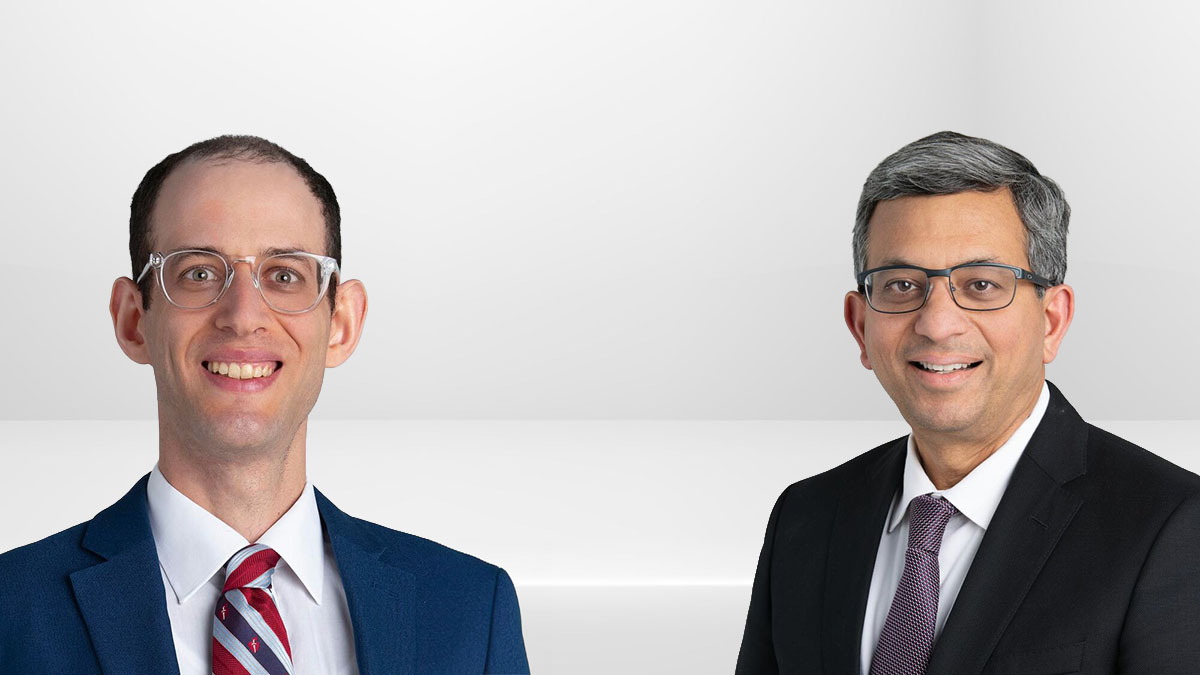
In this episode, Samir Kapadia, MD, and Ohad Oren, MD, explain clonal hematopoiesis of indeterminate potential, or CHIP, and how age-related blood cell mutations can raise the risk of heart disease. They discuss what CHIP is, who it affects, how it is discovered, and why it matters for understanding cardiovascular risk beyond traditional factors.
Schedule an appointment at Cleveland Clinic by calling 844.868.4339.
Advertisement
Cleveland Clinic is a non-profit academic medical center. Advertising on our site helps support our mission. We do not endorse non-Cleveland Clinic products or services. Policy
Recent Episodes
Encore: AFib After an Ablation
This is an encore episode of "AFib After an Ablation: What to Know", originally published in June 2025. Experiencing persistent or recurrin…
Understanding High-Risk Aortic Valve Endocarditis
Milind Desai, MD, and Per Wierup, MD, discuss high-risk aortic valve endocarditis, a serious infection that can affect heart valves and lead…
Robotic Heart Valve Surgery
Marc Gillinov, MD, and Per Wierup, MD, discuss how robotic heart valve surgery allows surgeons to repair or replace heart valves through sma…
Video content: This video is available to watch online.
View video online (https://cdnapisec.kaltura.com/p/2207941/sp/220794100/playManifest/entryId/1_x0o6aq32/flavorId/1_5f3sgelj/format/url/protocol/https/a.mp4)
Transcript
Announcer:
Welcome to Love Your Heart, brought to you by Cleveland Clinic's Sydell and Arnold Miller Family Heart, Vascular & Thoracic Institute. This podcast will explore disease prevention, testing, medical and surgical treatments, new innovations and more. Enjoy.
Advertisement
Cleveland Clinic is a non-profit academic medical center. Advertising on our site helps support our mission. We do not endorse non-Cleveland Clinic products or services. Policy
Dr. Samir Kapadia:
Welcome everyone. This is our podcast for Cleveland Clinic. I am Samir Kapadia. I'm the chairman of cardiology here at Cleveland Clinic. I'm very excited to have today with us Dr. Ohad Oren. He's an amazing cardiologist and a hematology oncologist, which is very unique. We recruited him with a lot of effort to come to Cleveland Clinic to lead and start the CHIP cardiology program. This is a program which is a unique program that is not available elsewhere. Dr. Oren trained at Mayo Clinic and Brigham and Women's Hospital with Dr. Peter Libby, who is again, a pioneer and well-known person. We are very excited to have you here, Dr. Oren. Maybe you can introduce and tell us about yourself in a few sentences, what you like about Cleveland Clinic and how you came to Cleveland Clinic.
Dr. Ohad Oren:
It's a terrific privilege to join this podcast. It has been an honor to join and be able to be part of the terrific HVTI (Heart, Vascular & Thoracic Institute) and Cleveland Clinic cardiology program for the past eight months, and to continue with the effort to boost the cardio-oncology enterprise as well as the CHIP cardiology endeavors, which we will discuss, of course, more in this conversation today. Thank you.
Advertisement
Dr. Samir Kapadia:
Excellent. A lot of people know when they think about cardiology in CHIP, they are talking about the high-risk coronary interventions and things like that. This is a very unique program. CHIP is a clonal hematopoiesis of indeterminate potential. If you can, tell them what this really means.
Dr. Ohad Oren:
Absolutely. This CHIP, different clonal hematopoiesis of indeterminate potential, is in fact a condition. It's a precursor for certain bone marrow disorders, certain blood malignancies that involves an age-related process in which we acquire mutations. It's somatic. We are not born with those mutations. We acquire them with age as we are exposed to all sorts of mutagenic exposures, smoking, cosmic radiation, chemotherapy. Those mutations put the individual patient at risk of developing blood malignancies. It depends on the mutation, of course, it depends on a lot of genetic factors. But why do we cardiologists care about that? Because those same mutations, the same clonal process, increase the risk for cardiovascular disease and different types of cardiovascular disease, but in a nuanced fashion. It depends on the mutation. So does the risk for the development of certain phenotypes of cardiovascular disease.
Dr. Samir Kapadia:
So it's amazing because in myself, when I tried to learn about this, I was thinking in my mind that when people really develop cancer or rheumatologic diseases or cardiovascular diseases, the underlying problem is many times similar in the sense that they are getting older. They are stressed out, or they have a lot of mental stress, physical stress, and they're getting older. In some people, it leads to cancer. Some people, it leads to heart problems. Some people, it leads to some rheumatologic diseases. This is a unifying mechanism to try to understand that all these things are happening at one time. How common is this CHIP mutation?
Dr. Ohad Oren:
Great question. This is an extreme, very tightly age-related process. It really is, as I say, the crossroads of aging, cancer, and cardiovascular disease. Before age 40, you will very infrequently see it. I mean, it's exceedingly rare below age 40. Then it starts kicking off at about age 60, 65. We are talking seventh decade, you're seeing 5–8%. When we get to 70, 75, 10–15%. And as much as 20–25% when we get to our 80s. So, a very exponentially increasing rise in the prevalence, which has obviously clear implications on the general population with the booming aging of our society.
Advertisement
Dr. Samir Kapadia:
So, one in five persons, up to one in five after the age of 80.
Dr. Ohad Oren:
Exactly.
Dr. Samir Kapadia:
So, a very large number of people have this. Let's say that tomorrow somebody comes and tells me that, “I'm otherwise healthy, I'm doing well, but I want to have my blood tested for this.” What do you say to them? “Come on over, we should check it”? Or we should say, “Okay, well, wait a minute, is this worth it or not?” I don't know. What is the current status?
Dr. Ohad Oren:
Right. Certain conditions that warrant considering those whole genome sequencing or targeted panels or a plethora of testing opportunities that would help uncover whether an individual has clonal hematopoiesis. One of them is if a patient has blood count abnormalities, cytopenias that are persistent and are unexplained otherwise, no vitamin B12, no other iron deficiency, you cannot pinpoint the etiology, the cause of those cytopenias. Then, typically, it would be the hematologist, could also be primary care or cardiology, but typically in most cases it would be the hem-onc who would pursue that testing. Then, of course, at the time of diagnosis with the cancer, if a patient has cancer, when the oncologist and the treating provider look for targeted mutations, targeted changes that they can hijack and utilize in the therapy of the individual cancer, they may identify those somatic mutations. That's another strong indication to do so.
Advertisement
Another is, of course, in the surveillance phase. The patient is done with their chemotherapies. They are done with the stem cell transplant. At that point, those tests are going to be performed again to look for the mutations that have identified the individual tumor, the EGFR (epidermal growth factor receptor) mutation, if it's a lung cancer, the Philadelphia chromosome or the CML (chronic myeloid leukemia) aberrations. Incidentally, it may pick up those somatic mutations.
That's something we need to emphasize here. This is incidentally detected. This is a risk factor. It's a precursor. It's not a disease in itself. And it's an opportunity, an opportunity to be empowered, to empower our patients to recognize a factor that changes the risk stratification of those individuals for various forms of heart disease and implement therapies, lifestyle, medications, as we're going to talk about later, in order to prevent those events.
Dr. Samir Kapadia:
So my question to you is that, let's say, you don't have a cancer. One is that you have a cancer, as you said, or they're treated for cancer. Say, now I have a patient who is coming to me, and he or she does not have a cancer, but they are proactive people. They want to have proper preventive care. They are testing nowadays. There are so many tests that people can do, so they're doing a lot of different tests. Let's say that they had two heart attacks despite being treated with all kinds of lipid-lowering therapies and medications. They're doing everything possible, and they still continue to have the problem. Is it some kind of indication for this population that is saying, “let us try to at least understand that something is happening there”?
Advertisement
Dr. Ohad Oren:
Fantastic question. I would say we are working on that. Soon enough, hopefully, we'll do another podcast talking about exactly that, but right now we are waiting for the evidence that will inform that question of testing for clonal hematopoiesis, but certainly more to come soon about that.
Dr. Samir Kapadia:
But this is an important question because a lot of people want to stay tuned to the fact that it is very likely that we are going to test these people. Because I think the reason why I'm interested in the cardiovascular medicine department is not just the cancer patients, but also the patients who have a very high event rate of coronary artery disease, and maybe even heart failure, maybe even arrhythmias. There are a lot of different ways that these mutations can manifest in cardiovascular.
Dr. Ohad Oren:
And enrichment, if I may add. Enrichment in clinical trials to identify the residual cardiovascular inflammatory risk. In order to utilize clinical trials to enrich for particularly high-risk individuals, we can test for inflammatory diseases. Now, essentially every trial in cardiovascular medicine, including, of course, at C5, is utilizing some form of sequencing to look at clonal hematopoiesis at time zero. I think that is also incredibly important from a research perspective.
Dr. Samir Kapadia:
So one part is the research. The reason why people want to enrich or people want to do the research, is the idea is that if you are going to test a medication, maybe it does decrease the risk of death, but it probably decreases the risk of death much more in a certain population and not so much in other populations. If we can have a precision medicine where we would say that there are certain groups of people that we want to target for this therapy, then this is one of those targets that we can utilize for using it. It's not just to do the clinical trials, but also in practical terms, this will be helpful at some point to say that we want to give X, Y, and Z treatment if you have certain conditions. Like right now, when you have a breast cancer and if you have certain receptors, they treat you differently, and if you don't have certain receptors, they treat you differently.
In the same way, if we are going to use different lipid-lowering therapies or different anti-inflammatory strategies, or different relaxation strategies, depending on what mutations you have, it could be very exciting.
Dr. Ohad Oren:
Absolutely. In fact, we talk about that element in the recent Circulation: Genomic and Precision Medicine paper, utilizing the understanding of the inflammatory or molecular milieu of each of those mutations and how we can leverage immune checkpoint inhibitors or targeted mutation inhibition, or inhibition of downstream inflammatory IL-1 beta inhibition according to the mutation. It becomes really personalized beyond statins, PCSK9 (proprotein convertase subtilisin/kexin type 9) and the existing armamentarium that we have currently.
Dr. Samir Kapadia:
No, excellent, excellent. I always ask myself this question: why do they say, “indeterminate potential”? So, what is the indeterminate side of the potential? Because it gives a little bit of a question mark to people. “What is this thing that even in the term it says indeterminate? And do you want me to do something about it?”
Dr. Ohad Oren:
Absolutely. The original term, when it was coined, “indeterminate” specifically referred to the likelihood of developing hematologic malignancy. It was not yet known. Since, there has been risk modeling, the CHRS and other scores that leverage biomarkers, blood count abnormalities and so forth and genetics to predict the likelihood of developing hematologic malignancy. But at the time, it was not known. Yes, in one way, it's a misnomer. There have been a couple of papers in the literature suggesting that we should change it. If you ask me, I think we should just change into pro-inflammatory potential because we understand how much those inflammasomes, the NLRP3, the AIM2 and others are playing a fundamental role in the pathogenesis of specifically cardiovascular disease, but also the hematologic consequences.
So yes, clonal hematopoiesis is the umbrella term. The indeterminate potential, yes, there is a gap and I think it will have to change and adapt itself over time in nomenclature.
Dr. Samir Kapadia:
And maybe instead of indeterminate, inflammatory potential. So you don't have to change the acronym. It can continue to be an I.
Dr. Ohad Oren:
All the papers can remain.
Dr. Samir Kapadia:
Remain the same. Instead of indeterminate, you call it inflammatory potential.
Dr. Ohad Oren:
Yes. I like that.
Dr. Samir Kapadia:
Because this term is bothering me, and I'm sure bothering other people. Tell me now, if a patient needs this kind of testing, is it something that you can order on the panel? If insurance doesn't pay, how does it work? Is it something that is so specific that only a few people can order? Can everybody order? How does it work?
Dr. Ohad Oren:
Yeah. Right now, the hematologists and oncologists are the ones that are centralizing most of those efforts, while I am working with the lab and with genetics on creating an infrastructure that will allow cardiologists. We have not trained on that. Most cardiologists have not had a lot of training, if any, on genetics. This is fundamentally important to know what to order, how to order, but also to interpret those variants, variants of unknown significance, maybe a sub-threshold variant large-large frequency, because the convention is 2% and greater is considered CHIP.
This is in fact a very large, a long conversation to have. In fact, one of my future papers is going to deal with that, a primer to assist the general cardiologist to understand how to order and how to interpret genomic findings. I think it's key to the entire cardiovascular genomics, but specifically in CHIP.
But to simply state it, you have whole genome sequencing, whole exome sequencing that is looking at a much broader array of genes across the genome, but with lower coverage or lower sensitivity. The ability to detect extremely minuscule clones, variant large-large frequency of 0.3, 0.5, anything below 1% is very limited.
Then you have targeted gene panels that offer much deeper coverage and a higher resolution, but are limited with regard to the number of genes. Most targeted panels have anywhere between 40 to 70 or 90 genes that are identified. That another thought. Can we devise a targeted panel that includes the genes that are known to have cardiovascular associations?
Dr. Samir Kapadia:
Exactly.
Dr. Ohad Oren:
Exactly. This is not currently in place, but that's the future: to be able to create an adaptable platform that is dynamic because as we said, this knowledge changes over time. This is going to be key to allow us to work with geneticists as a bridge between the genetic lab, the lab that performs the assay from the moment of CHIP-calling, which is pretty complicated and has to be much more uniform, in my opinion, on a national basis because there are a bunch of CHIP-calling platforms. It introduces a little bit of a variability into the clinical assessment but also into the research assessment. That's where the field is moving, more personalized and to be able to provide cardiologists who are currently not ordering those tests, but they are orderable technically, the next generation targeted myeloid gene panels and whole exome sequencing.
Dr. Samir Kapadia:
Now, this is in the peripheral blood only, or in the bone marrow, or you do both? Or how does it work practically, if people want to do this thing?
Dr. Ohad Oren:
Definitely, it works in the peripheral blood. The reason you may do it in the bone marrow is if a bone marrow test is being performed anyway, if there is a suspicion for myelodysplastic syndrome, suspicion for myeloproliferative neoplasm, and you need to exclude myelofibrosis and polycythemia vera, you need to look at the morphology of the bone marrow. The hematologist would order a bone marrow. They may potentially repeat it over time if there are changes in the counts or if the mutation is particularly high risk, but you could do it increasingly. The liquid biopsies, you can leverage the peripheral blood with increasingly more sensitive assays to just do it with blood available from a peripheral stick. Again, the marrow is more about looking at the morphology and excluding certain hematologic conditions that are going to be actionable and are going to guide certain therapies like hypomethylating agents that the hematologists are using.
Dr. Samir Kapadia:
Very nice. I think you have educated people a lot. Do you have a final message for people?
Dr. Ohad Oren:
So, I would say this is an age-related risk factor that was previously unrecognized. We didn't know about its existence. We know it's novel. It's potent in some forms, not all the mutations. In some forms, some mutations, very potent, and it's independent of other traditional risk factors. It comes on top of the diabetes, the blood pressure, the cholesterol. It is causal in those forms, the TET2 (tet methylcytosine dioxygenase 2), the JAK2 (Janus Kinase 2), it has been shown to be clearly causal in the development, in the pathogenesis of cardiovascular disease. Although right now we don't have targeted therapies, we should. The hope is that we would, in about five to 10 years. There are multiple trials that are going on, trying to establish the first-ever targeted therapies for clonal hematopoiesis, with the effort to reduce or mitigate the burden of cardiovascular disease. But even today, we have tools that we are using to ensure that the risk of future cardiovascular disease in those patients is as low as it gets.
Dr. Samir Kapadia:
Amazing. This is a great summary, a lot of effort and a lot of new areas that you are exploring, and very exciting. As I said, we are very excited to have you here, and your leading this effort has already helped us tremendously.
Dr. Ohad Oren:
Thank you. Appreciate all the support.
Dr. Samir Kapadia:
Best wishes for the future.
Dr. Ohad Oren:
Thank you so much. Appreciate it greatly.
Dr. Samir Kapadia:
Thank you.
Announcer:
Thank you for listening to Love Your Heart. We hope you enjoyed the podcast. For more information or to schedule an appointment at Cleveland Clinic, please call 844.868.4339. That's 844.868.4339. We welcome your comments and feedback. Please contact us at heart@ccf.org . Like what you heard? Subscribe wherever you get your podcasts or listen at clevelandclinic.org/loveyourheartpodcast.
Recent Episodes
Encore: AFib After an Ablation
This is an encore episode of "AFib After an Ablation: What to Know", originally published in June 2025. Experiencing persistent or recurrin…
Understanding High-Risk Aortic Valve Endocarditis
Milind Desai, MD, and Per Wierup, MD, discuss high-risk aortic valve endocarditis, a serious infection that can affect heart valves and lead…
Robotic Heart Valve Surgery
Marc Gillinov, MD, and Per Wierup, MD, discuss how robotic heart valve surgery allows surgeons to repair or replace heart valves through sma…
Never miss a moment - subscribe now.
Listen to the Health Essentials Podcast on your favorite streaming platform.
Other Podcasts You May Love
Beyond Leadership
Hosts Jim Pae and Elizabeth Pugel escort you through a network of thought leaders, sharing world-cla…
Beyond the Pages: CCJM Podcast
Beyond the Pages: CCJM Podcast takes the listener more in-depth into Cleveland Clinic Journal of Med…
Butts & Guts
A Cleveland Clinic podcast exploring your digestive and surgical health from end to end. You’ll lear…
Cancer Advances
A Cleveland Clinic podcast for medical professionals exploring the latest innovative research and cl…