



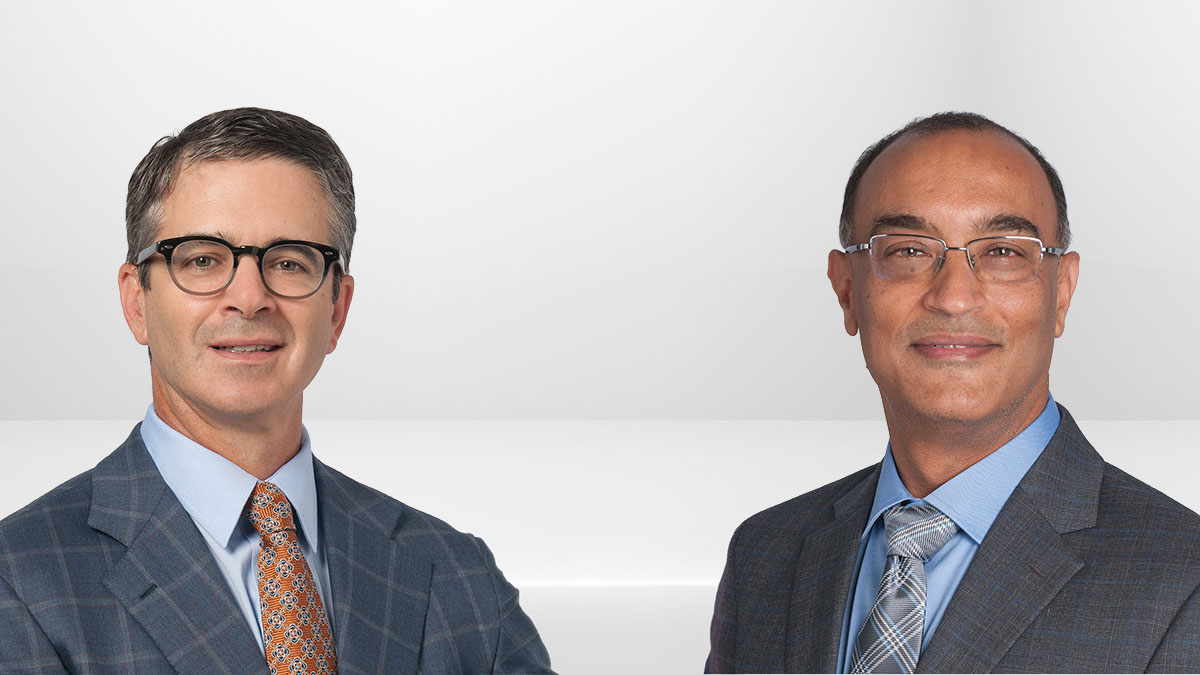
Medications and Surgery for Hypertrophic Cardiomyopathy
Milind Desai, MD, and Nicholas Smedira, MD, explain how hypertrophic cardiomyopathy is diagnosed and how treatment decisions are made based on symptoms, heart structure and individual goals. They discuss medications, surgical myectomy and emerging innovations that are shaping care for people living with this condition.
Advertisement
Cleveland Clinic is a non-profit academic medical center. Advertising on our site helps support our mission. We do not endorse non-Cleveland Clinic products or services. Policy
Recent Episodes
Ask the Heart Doctor | Genomics: Precision Medicine for Your Heart
In this Ask the Heart Doctor discussion, Cleveland Clinic experts explain cardiovascular genomics and how genetic testing can help identify…
Ask the Heart Doctor | Heart Failure: Surgical Options and Mechanical Support
Heart failure affects millions of people and can range from mild symptoms to advanced disease. In this episode, discuss how heart failure is…
Quick Questions: Mitral Valve Prolapse
Marc Gillinov, MD, explains what mitral valve prolapse is and how it is diagnosed. He also discusses when mitral valve prolapse can lead to…
Video content: This video is available to watch online.
View video online (https://cdnapisec.kaltura.com/p/2207941/sp/220794100/playManifest/entryId/1_pnnoobix/flavorId/1_5f3sgelj/format/url/protocol/https/a.mp4)
Transcript
Announcer:
Welcome to Love Your Heart, brought to you by Cleveland Clinic's Sydell and Arnold Miller Family Heart, Vascular & Thoracic Institute. This podcast will explore disease prevention, testing, medical and surgical treatments, new innovations and more. Enjoy.
Advertisement
Cleveland Clinic is a non-profit academic medical center. Advertising on our site helps support our mission. We do not endorse non-Cleveland Clinic products or services. Policy
Dr. Milind Desai:
Thank you for joining us on this episode where we discuss various treatment strategies and workup strategies for patients with hypertrophic cardiomyopathy. I'm Milind Desai, Director of the HCM Center, and along with me is Dr. Nick Smedira.
Nicholas G. Smedira, MD:
So, Milind, we've been treating patients with hypertrophic cardiomyopathy for 30 years. There's been an amazing evolution and revolution in both how we diagnose patients and how we treat them. 30 years ago, we basically had echocardiography, and the drugs that we had weren't all that effective in their therapy. Tell the audience what you use now for diagnosing and how you decide when a patient should have treatment and/or surgery.
Dr. Milind Desai:
We have come a long way in terms of diagnosis and management of hypertrophic cardiomyopathy patients over the last two or three decades. Echo still remains the first line and the primary modality of how we evaluate the patients. The only difference is that we have gotten savvier at identifying pattern recognition, and more importantly, ascertaining whether or not they have obstructive HCM physiology or non-obstructive HCM physiology using various techniques. For instance, we routinely use provocative maneuvers to bring out LV (left ventricular) outflow tract obstruction. If you look for obstruction only at rest, you see it in about 25% of patients. If you provoke them, that number, at least in a referral center like ours, can go as high as 70%. In fact, in a recent paper that we published where we showed on almost 1,300 patients who underwent stress echocardiography, all these patients were deemed asymptomatic. Asymptomatic by us. We put them on a treadmill. About one in five, about 22% of patients had outflow tract obstruction that was latent and not picked up on any other modality. So, we've gotten very good at identifying obstruction, anticipating and identifying obstruction.
Advertisement
The other thing that we have evolved in our thinking is not all HCM patients have only thick walls that are driving their obstruction. We've identified concomitant mitral valve problems. We've identified concomitant subvalvular papillary muscle problems. Once we started to dabble in advanced imaging like cardiac MRI, those things became clearer. Then we went back and looked at those echoes, and we found out this was always there, we just did not recognize it. Now we use a combination of echo, MRI, and sometimes CT to make the conclusive diagnosis so that we have a full understanding of these patients, so that we can decide appropriate therapy.
The other thing that MRI brings besides this structural assessment is that it is extremely good at identifying and quantifying myocardial fibrosis, or in simple terms, we call it scar. In fact, just recently, a large study on almost 2,750 patients, a multicenter NIH-sponsored prospective study, showed that scar assessment by MRI provided incremental prognostic value. Our understanding of HCM has gotten extremely well-refined.
Once a cardiologist looks at these patients, two or three things go through my thought process. Is this HCM or not? Number one. Number two, is it obstructive or not? Number three, is the obstruction coming from the thickening of the heart muscle, mitral valve problem, papillary muscle or not? That helps me decide then what treatment pathway I'm going to put them on. Just simple stuff, lifestyle modification, background, traditional medical therapy, newer therapy, which we will talk about, or is this person ready for an invasive procedure?
So, with that said, Nick, when I hand over this patient to you, I send you an email saying, "I have seen Mr. XYZ, who I think has obstructive HCM symptomatic enough that this person should consider septal reduction therapy." How do you decide what to do, when to do, how much to remove in terms of muscle, what else to do?
Nicholas G. Smedira, MD:
Well, I use the imaging studies that you just outlined to help clarify whether this is all a muscle problem because we have forever thought hypertrophic obstructive cardiomyopathy meant you had to have extra thick septal muscle. The operation we perform most of the time is resecting the septum because it's extra thick and it gets in the way of the blood getting out of the heart. But as you pointed out a little bit earlier, there are other components inside the chamber of the heart, the mitral valve, the papillary muscles. These structures are also involved in generating obstruction. We've learned over the years that there is a subset of patients that could have a primary mitral problem, a primary septal problem, or a combination of the two.
So, using the imaging studies that you've outlined, I try to figure out, and we do additional testing in the operating room, what operation is indicated. Over 20 years, I've developed a number of techniques that we can use to adjust the mitral valve position so it no longer participates in the obstruction, often concomitantly removing some of the septal muscle. It's using the information the imaging studies provided to guide very specific resection or intervention on the mitral valve.
Advertisement
Dr. Milind Desai:
One thing I will tell you, and in our practice, as you very well know about, correct me if I'm wrong, but about 15% to 20% of our practice involves addressing beyond the septum, the mitral valve, the papillary muscle. that requires skillset that you have finessed. This is not something that should be tried in lesser experienced volumes.
I'll give you some numbers. There's a paper that we have co-authored that is in press right now, which has looked at Cleveland Clinic experience in surgical myectomies, more than 3,500 surgical myectomies done between 2002 and 2021. So, a large number. Our surgical outcomes are stellar. The mortality rates are less than 0.5%. In fact, many years, majority of the years, we've had close to 0% mortality.
The additional thing is, if performed at an experienced center like the Cleveland Clinic by a surgeon like you, whatever procedure we do, a myectomy or a myectomy plus, we do not pay an outcomes penalty. This paper should be published sometime in the middle portion of 2026, 3,500-plus surgical myectomies. I think experience at a clinical level, experience at an imaging level, and experience at a surgical or a procedure level and working together as a team is what drives these stellar outcomes.
Advertisement
Nicholas G. Smedira, MD:
I appreciate the recognition. It's a team approach, and I learned so much intraoperatively from the echocardiographers in how to refine the procedure. We're a center of excellence in mitral valve repairs, so I've incorporated all I've learned about mitral valve repairs into transferring them into the management of these outflow tract obstructions. I think that's why we get outstanding results. The surgery generally takes just a handful of hours, three to four hours, and I would expect the patient's going to be in the hospital for four or five days, with the expectation that the obstruction is completely eliminated. The need for anti-obstruction medications are also eliminated, although it doesn't materially impact the likelihood of the cardiac arrhythmias. When I finish with a myectomy, patients often ask whether they need an ICD or not, a defibrillator? How do you determine that? I know we use some imaging stuff we haven't in the past.
Dr. Milind Desai:
What I tell patients, what I tell trainees, what I tell other cardiologists is, assessment for need for a defibrillator for primary prevention of sudden cardiac death and assessing what type of procedure they have, they are two separate thought processes. At least at this point of time, we do not have the data to merge the two. Meaning, one procedure reduces the risk of sudden cardiac death, what have you, we do not have conclusive data. There's some suggestion. But there are two systems for a device. One is American College of Cardiology/American Heart Association guidelines. They look at family history of sudden cardiac death in multiple first-degree relatives, extremely thick heart muscle, a high degree of myocardial scar. If you have LV or heart dysfunction, if you have unexplained passing out or syncope, if you have non-sustained VT, these are some of the things we utilize, and if you have at least one or more risk factors, then we recommend.
Advertisement
In Europe, there is similar criteria, but they create a formula where you plug in the numbers, age, whether or not you have syncope, whether or not what's your left atrial size, etc. it comes up with a score. Low risk score, high risk score, and then intermediate. Either way, every HCM patient annually should have an evaluation for risk of sudden cardiac death, including arrhythmia monitoring. The other thing, just as I alluded to earlier, just a few days ago a large NIH study has come out prospectively, which is now suggesting that if your scar burden in your left ventricle is more than 9% of your LV mass, then that's an independent risk factor for sudden cardiac death.
I think that is going to shape the guidelines in a definitive way in the next iteration of the guidelines. The other thing, I think it is also germane to discuss that along with procedural innovation, there's a lot of novel therapies that have emerged in the space. I'll let you comment on where you perceive those, and then I'll talk about it also.
Nicholas G. Smedira, MD:
I think that's been the refinement in the safety. The expectation at a hypertrophic cardiomyopathy center is that a myectomy should be done with near 0% mortality for patients with normal EKGs, less than 1% need for pacemaker, very few septal defects. In all subspecialties of cardiology, they're looking at less invasive approaches to treatment of the hypertrophic cardiomyopathy, including alcohol septal ablation, which has been around for many decades. It requires the coronary artery anatomy to be appropriate for where the septal bulge is, and we use that for patients we consider higher risk for surgery. There's other forms of transcutaneous, through the skin, forms of using various sources of energy to heat the muscle, and they've been done in a number of centers, small volumes. Mixed results at this point, so it's not clear how efficacious they will be.
But the most exciting aspect is this approach where the heart remains beating, a very small incision in the chest. A special device has been devised by a surgeon from Wuhan, China where we actually take almost just like biopsy pieces of the septal muscle, as we would do with the myectomy, but this is with the heart still actively beating. We remove the muscle till we thin the septum, as we would in this traditional operation. It has been absolutely effective, amazingly effective, and the real advantage of it is that you have immediate feedback by looking at the echocardiogram as to your results in the elimination of the obstruction.
I think that will be the future of how we do septal myectomies. It's going through the approval process in China, and we are planning to lead the trial that will begin in the United States in conjunction with, or through our relationship with the FDA. I think that's going to be a really big deal.
Dr. Milind Desai:
Rising tide floats a lot of boats. There's a lot of attention being paid to hypertrophic cardiomyopathy, and that is resulting in a lot of innovations, including much needed surgical innovation. I am very excited, like you said, to participate in this upcoming study where we are going to bring the beating heart myectomy technology to the United States after discussions with the FDA, etc.
But an important elephant in the room that needs to be addressed is that these innovations and these results require a high-volume center and a highly experienced myectomy surgeon. Two or three years ago, we published a paper which showed a stark reality to us, that in spite of these stellar numbers, about 70% of septal reduction therapies performed in the United States, forget the rest of the world, are done in lower volume centers. There is a need for an all-front approach on how to manage these patients.
So along with invasive innovations, there's obviously a lot of medical innovations that have happened, including the arrival of this new class of drugs called cardiac myosin inhibitors. Mavacamten was first in class. Aficamten was recently approved as the second in class. These drugs are extremely potent in terms of relieving outflow tract obstruction. They work on the muscle. They're not going to work in a mitral valve papillary muscle type situation potentially. Maybe they will, but they work on the muscle. There are specific drugs developed to work on the muscles, where they relieve obstruction. They reduce symptoms. They improve quality of life. They result in cardiac remodeling. Dare I say, in a study that we both participated in, it also potentially reduced significant need for surgery or septal reduction therapy in the rightly selected patients. The future is absolutely bright in this space.
We are doing a lot more to make the diagnosis better, so we are going to be diagnosing a lot of people. Let me address one thing. The prevalence is one in 500. If you do the math, in the United States there should be 700,000 to a million patients. We know of, what, 150,000 patients? So, there's a lot more work needs to be done. If you do the same math in India plus China, that's like 3 billion, 3.5 billion people. Do the math. That's millions upon millions of people. There's enough work for all of us, including cardiology, cardiac surgery, interventional cardiology. There's enough impetus for new innovation for years to come.
The other thing that I would be remiss if I don't mention is the ultimate in precision therapy, the gene therapy business. That has the potential of halting the progression in a given patient. If that technology works, then all the downstream things we may not even potentially need. Again, we are still in its infancy, but the bottom line is we are headed in the right direction as far as this disease is concerned.
Nicholas G. Smedira, MD:
You see a patient with obstruction, and they have hypertrophy, so all the modalities around the table, including the new drug therapies. Healthy patient, all options available, how in your practice do you navigate all the different options?
Dr. Milind Desai:
Shared decision-making is the most important name of the game, and I'll give you some anecdotal flares also as I go along. This is exactly the conversation I have with the patients. "Let's continue course, do nothing different. Let's try medical therapy." And we discuss the new medical therapies. "There is surgical myectomy. You are at the Cleveland Clinic. We do a lot of these. We have experienced surgeons," etc. Or, what I tell patients is, "Typically at the Cleveland Clinic, if we are going the invasive route, we will approach surgical myectomy first. If you are deemed high risk or turned down by the surgeon, then we will go and understand if alcohol septal ablation is appropriate for you." That has been our practice for a long time. That doesn't mean other centers that are excellent at alcohol septal ablation should not have a slightly different approach.
Then we go over the pros and cons. There will be some patients who say, "Doc, let me try the medical therapy first. If it doesn't work, then I will pivot to surgery." And what I tell everybody is, "I want to see you back in six months. If you are feeling better, continue course. If you are not feeling better, then we pivot to a more invasive, more aggressive strategy." That's the conversation we have.
Now, there are some patients who come in and say, "I'm young. I don't want to take medications. I want to take a six-week vacation for my surgical recovery and be done with it." At the Cleveland Clinic, that's a perfectly acceptable option because I’ve got Nick Smedira sitting next to me who is going to be operating. It's a different conversation if I'm in a small town where there's nobody with this expertise, where the outcomes are not close to 0% mortality. That's how we navigate.
On the flip side, if there's a 75, 80-year-old person, they're going to say, "Let me try the medicine." So, it's not a one-size-fits-all. I'll give you another classic example that we took care or, both of us took care of. A young patient was in college. She was doing a master's and stuff, so she stayed on the medical therapy till she got done with her college. Then she comes to me a few years later and says, "I want to start a family." So, we got her off of the medical therapy, washed it off for about a month, and got her to surgery, and she's doing great. Nick operated on her. I still take care of her. She's doing great. It's not a this or that, it is this plus/minus that. It is how we can get the best thing for our given patient.
Nicholas G. Smedira, MD:
I would guess you have the largest experience in the world with the myosin inhibitors.
Dr. Milind Desai:
Well, I don't know, but we have a large experience.
Nicholas G. Smedira, MD:
Large experience. Is there any sense of what type of patient might not respond? There have been some that don't respond to it. Or have you seen enough where you can say, "This patient is less likely," or it's unpredictable? Is there any signal that you're getting that tells you?
Dr. Milind Desai:
So, nothing conclusive. There are some smaller reports that do suggest. Now, where does an advanced level of stiffness, diastolic dysfunction, and a higher degree of myocardial fibrosis or scar, where does that interplay into the response? There are some theories. There's some emerging data that this could be the bad actor. If you are in AFib and you expose them to cardiac myosin inhibitors, they may respond suboptimally or not respond. We are still fishing through this. I cannot exactly with a high degree of confidence say, "This person is not going to respond." But on the flip side, Nick, the unfortunate reality is, often the person who I may think may not respond also may or may not be the best candidate for an invasive procedure. It's a judgment call, and I don't think I have the full judgment yet.
Nicholas G. Smedira, MD:
Are the drugs the same? If you take the mavacamten, aficamten, they're the same or do they have subtle differences?
Dr. Milind Desai:
Yeah, there are subtle differences. Mavacamten has a slightly longer half-life than aficamten. In terms of if you look at the pure trial, the efficacy perspective, there's not a significant difference. Mavacamten, the majority of its effect is seen in the lowest two doses. Aficamten, it is in the higher doses. But efficacy is the same. The way I look at it, all these drugs, you titrate the dose and monitor the ejection fractions.
Nicholas G. Smedira, MD:
How they do.
Dr. Milind Desai:
Yeah, how they do. I think in the grand scheme of things, they are, I would say, fairly similar.
Nicholas G. Smedira, MD:
One thing, we've talked a lot about hypertrophic obstructive cardiomyopathy, and there's a subgroup, a relatively large subgroup, that don't have obstruction. We've been interested in the surgical and medical management of patients without obstruction. I know we carefully evaluate patients for surgical debulking, because we have this sense that if we resect a large amount of muscle and create a larger chamber, that'll allow them to have higher physical activity with less shortness of breath, less fatigue. We don't have a lot of data, but we think it's reasonable to consider that. We put them through a very extensive evaluation. What's your sense of that? And I know we did a trial to look at that for the medical therapy. How'd all that pan out?
Dr. Milind Desai:
This is a fairly heterogeneous population and a challenging one to treat. We have dabbled in debulking myectomy. We've been very careful in selecting which patients go for it. We do detailed right heart cath. We look at their MRIs, look for the scar burden. The last thing you want to do is debulk somebody and the heart does not recover after cardiopulmonary bypass. We've been very, very diligent and reasonably successful. With the arrival potential of the debulking myectomy, I suspect that may impact how we approach these patients.
Nicholas G. Smedira, MD:
These are off-pump?
Dr. Milind Desai:
Yeah, off pump. The beating heart myectomy.
Nicholas G. Smedira, MD:
Beating heart, yeah.
Dr. Milind Desai:
Sorry. Now, the natural question was, or is, can medical therapy work? So, mavacamten was tested in the ODYSSEY trial and it missed its statistical significance. The p-values were 0.06. The clinical thresholds established by the powers that be is you have to reach one mils per kilo per minute on cardiopulmonary exercise testing, and you have to reach a minimum of five point improvement in KCCQ score.
Nicholas G. Smedira, MD:
So that is your quality of life score?
Dr. Milind Desai:
Yeah, the quality of life score. The delta improvement in the KCCQ was about three, and the delta improvement in the peak VO2 was close to 0.5. It did not reach the clinical threshold, so a negative trial. Recently, aficamten, they have only presented their top-line results, which showed, in a similar manner, the delta KCCQ change was also three.
Nicholas G. Smedira, MD:
The same.
Dr. Milind Desai:
But a statistically significant p-value.
Nicholas G. Smedira, MD:
Oh, wow.
Dr. Milind Desai:
So stats. And the delta peak VO2 was 0.6 and change. So, both of them have not reached what the FDA has deemed as a clinically acceptable threshold. The question now is, is there a more refined population that needs to be studied, which will respond better, or do we need to lower the bar of what we describe as efficacy? Either way, rising tide floats a lot of boats. There are at least two or three other novel drugs that are being developed in this, that are being trialed in placebo-controlled clinical trials. Watch out for this space in the next five years. I think procedurally, medically, and all innovative therapies, watch out for this space. There's something related to RNA therapy that is being developed in this space. I think five years from now, the landscape is going to look very different.
Nicholas G. Smedira, MD:
Absolutely. I think it's super exciting. I mean, we had a few things we could do 30 years ago. Now there are a bunch of things.
Dr. Milind Desai:
It's a buffet of riches and adds a lot more challenges to my practice.
Nicholas G. Smedira, MD:
Well, and it's an opportunity for patients. Again, it emphasizes what you said earlier, that patients with hypertrophic cardiomyopathy, obstructive or non-obstructive, should seek care at a highly experienced center of excellence where all these modalities, all these options can be shared with the patient so they can choose what's best for them.
Dr. Milind Desai:
Absolutely. Cannot agree more. Thank you so much for listening to us. Hopefully, this was informative enough, and we look forward to continuing engagement. Thanks a lot.
Nicholas G. Smedira, MD:
Thank you.
Announcer:
Thank you for listening to Love Your Heart. We hope you enjoyed the podcast. For more information or to schedule an appointment at Cleveland Clinic, please call 844.868.4339. That's 844.868.4339. We welcome your comments and feedback. Please contact us at heart@ccf.org. Like what you heard? Subscribe wherever you get your podcasts or listen at clevelandclinic.org/loveyourheartpodcast.
Recent Episodes
Ask the Heart Doctor | Genomics: Precision Medicine for Your Heart
In this Ask the Heart Doctor discussion, Cleveland Clinic experts explain cardiovascular genomics and how genetic testing can help identify…
Ask the Heart Doctor | Heart Failure: Surgical Options and Mechanical Support
Heart failure affects millions of people and can range from mild symptoms to advanced disease. In this episode, discuss how heart failure is…
Quick Questions: Mitral Valve Prolapse
Marc Gillinov, MD, explains what mitral valve prolapse is and how it is diagnosed. He also discusses when mitral valve prolapse can lead to…
Never miss a moment - subscribe now.
Listen to the Health Essentials Podcast on your favorite streaming platform.
Other Podcasts You May Love
Beyond Leadership
Hosts Jim Pae and Elizabeth Pugel escort you through a network of thought leaders, sharing world-cla…
Beyond the Pages: CCJM Podcast
Beyond the Pages: CCJM Podcast takes the listener more in-depth into Cleveland Clinic Journal of Med…
Butts & Guts
A Cleveland Clinic podcast exploring your digestive and surgical health from end to end. You’ll lear…
Cancer Advances
A Cleveland Clinic podcast for medical professionals exploring the latest innovative research and cl…