



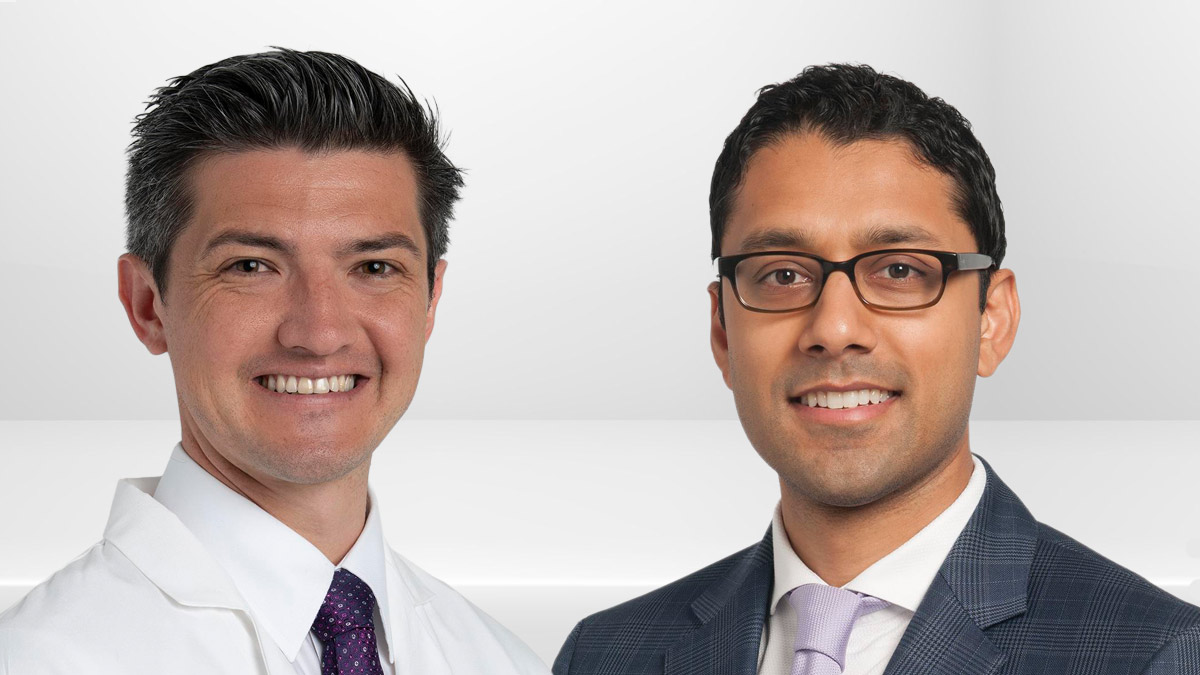
Multidisciplinary Management of Cerebrospinal Fluid Leaks and Idiopathic Intracranial Hypertension
In this episode of Head and Neck Innovations, Edward Doyle, MD, and Varun Kshettry, MD, join host Paul Bryson, MD, to discuss the diagnosis and management of cerebrospinal fluid (CSF) leaks and encephaloceles. They explore common presentations, advances in imaging and diagnostic testing, and collaborative surgical approaches for skull base repair. The conversation also highlights the growing recognition of idiopathic intracranial hypertension as an underlying cause of spontaneous CSF leaks, as well as emerging treatment strategies including venous sinus stenting, weight management, and GLP-1 receptor agonists.
Advertisement
Cleveland Clinic is a non-profit academic medical center. Advertising on our site helps support our mission. We do not endorse non-Cleveland Clinic products or services. Policy
Recent Episodes
Advancing Care in Facial Plastic and Reconstructive Surgery
In this episode of Head and Neck Innovations, Paul Bryson, MD, MBA is joined by facial plastic and reconstructive surgeon Khashayar Arianpou…
Collaborative Care and Innovation in Lateral Skull Base Tumors
In this episode of Head and Neck Innovations, experts in neurotology and neurosurgery discuss the diagnosis and management of lateral skull…
Advances and Risk Management in Endonasal Skull Base Surgery
In this episode of Head and Neck Innovations, Christopher Roxbury, MD, and Rhinology Fellow Chase Kahn, MD, join host Paul Bryson, MD, to di…
Video content: This video is available to watch online.
View video online (https://cdnapisec.kaltura.com/p/2207941/sp/220794100/playManifest/entryId/1_j72t8pl7/flavorId/1_5f3sgelj/format/url/protocol/https/a.mp4)
Transcript
Paul C. Bryson, MD, MBA:
Thanks for joining us for another episode of Head and Neck Innovations. I'm your host, Paul Bryson, Director of the Cleveland Clinic Voice Center. You can follow me on X, formerly Twitter, @PaulCBryson, and you can get the latest updates from Cleveland Clinic Otolaryngology-Head and Neck Surgery by following us on LinkedIn at Cleveland Clinic Otolaryngology - Head and Neck Surgery, and Instagram at Cleveland Clinic Otolaryngology.
Advertisement
Cleveland Clinic is a non-profit academic medical center. Advertising on our site helps support our mission. We do not endorse non-Cleveland Clinic products or services. Policy
Today I'm joined by Dr. Edward Doyle, an ologist and neurotologist. Welcome to the podcast, Dr. Doyle,
Edward Doyle, MD:
You for having me
Paul C. Bryson, MD, MBA:
And Dr. Varun Kshettry, neurosurgeon specializing in vascular and skull-based surgery. Welcome to the podcast, Dr. Kshettry.
Varun Kshettry, MD:
Paul, pleasure to be here.
Paul C. Bryson, MD, MBA:
Well, pretty cool topics today. This is just going to be another one of the examples of some of the great multidisciplinary collaborations that we have amongst our two groups. And as we dive in, can each of you share with our listener just a little bit of your training background and how you came to work together?
Edward Doyle, MD:
Sure. So happy to get started with that. I initially trained as an otolaryngologist and completed my training at the University of Wake Forest, and then I went on to subsequently do a fellowship in skull-based surgery, so lateral skull-based surgery and neurotology, so specializing in taking care of chronic ear diseases, hearing restoration, and then a portion of that is complex anatomical approaches to skull base, either reconstruction or resection of skull base masses. So as a component of that, we work with our neurosurgery colleagues quite intimately for this problem for reconstruction of the skull base and resection of cephaloceles and repair of spinal fluid leaks from the brain.
Advertisement
Paul C. Bryson, MD, MBA:
Yeah, Dr. Kshettry, MD?
Varun Kshettry, MD:
Yeah, great. So I did full training as a neurosurgeon, but had developed a specific interest in skull base surgery. I went on to do a fellowship specifically in minimally invasive skull base surgery and in my practice, because the brain has a junction with the sinus cavity, the middle ear, the head and neck, the orbit in my practice on a routine basis, I work a lot in joint cases with ENT and oculoplastics. And so specifically for today, spinal fluid leaks, they occur into the sinus cavity, which I work with rhinologists and they occur into the middle ear, which I work with neurotologists like Dr. Doyle.
Paul C. Bryson, MD, MBA:
I appreciate that, and I think for our listener, the Cerebro spinal fluid leak concept, it can kind of be under-recognized, right, and it can present in all sorts of ways. What do you both typically see, and for our listeners, when should we have a high index of suspicion?
Edward Doyle, MD:
You're exactly right. It's something that even when we're referred patients for a chronically draining ear or for a hearing loss that won't improve by another otolaryngologist, it's not something that is often considered. So I'd say from our practice, we normally see people who have for some reason developed a progressively worsening hearing loss that just hasn't gotten better. And when you look at the ear, it seems like they have fluid behind the ear and from a primary care perspective, that's where the problem kind of stops. If they get sent to another otolaryngologist, normally what happens is a tube is placed at some point and they think that the tube is infected or they've been treated for recurrent infections of the tube that was placed. And so we see them and it seems consistent with a brain fluid leak where it's just clear drainage from the ear that oftentimes the patient will say like, listen, my pillow's wet at night. If they haven't had any intervention, if they haven't had a tube that's been placed, sometimes patients will get unilateral nasal drainage, so they'll come in saying, my sinuses have been bothering me and I've been taking Flonase and ASIN and a lot of over the counter remedies and things just aren't improving. I still have this drainage. You'll tip those patients over in clinic and all those drip like a faucet from their nose. So that's mainly how we see it from the ENT side.
Varun Kshettry, MD:
I would mention that actually the vast majority of these patients, they all initially present to our colleagues in otolaryngology because of these ear symptoms or because of sinus symptoms, and it's actually quite uncommon that they primary presentation would be a neurologic symptoms that presents to the neurosurgeon. Now, unfortunately, because the brain is a sterile environment compared to the nose or the ear, some of these patients can present with bacteria that have translocated and to the CSF and present with meningitis, or occasionally some of these patients have some brain tissue that has herniated chronically through these defects and they can present with seizure. So those are cases where as a neurosurgeon we may be the primary person who's interfacing with these, and of course meningitis in the community, our neurologists, we do see a fair amount of that a seizure disorder can be seen in a fair amount and very few of meningitis or seizure disorders is actually from a spinal fluid leak or encephalocele. So a high index of suspicion and high resolution imaging need to be done in these cases to try and identify when this is present.
Paul C. Bryson, MD, MBA:
Yeah, no, I appreciate that. It seems pretty varied. So there's infectious presentations. I understand that sometimes it can even be a spontaneous presentation or one that just there's no good obvious reason for. Can you walk us through a little bit of the management strategies and sort of how it goes down for the patient?
Advertisement
Edward Doyle, MD:
Yeah, so I think that the other way that we see these present most of the time if somebody were to have either a fall or I think the most commonly seen is after a motor vehicle collision or a motorcycle accident, we see people with a temporal bone fracture and in those cases they'll have a tear in the DORA overlying where their temporal bone fractured. Most of the time those leaks will heal spontaneously on their own, and we could just observe those. There's been a few times where I've seen us consult with neurosurgery and we put a drain in or something and just to help that along until take the pressure off of our repair until that can heal As far as from an iatrogenic perspective, either from an anterior skull base or lateral skull base approach, when surgeons are going in to resect either a chot or chronic mid ear or chronic sinusitis, there can be extremely thin areas along the skull base that are kind of weakened points where you can violate the dura or have a leak at that time. Sometimes it's noticed immediately, and in those cases it's generally repaired by the surgeon at that time. But other times if somebody were to present with a CSF leak and they have a history of having a nasal surgery or have a history of having an ear surgery, it should be high on the differential to suspect and seek consultation for that problem.
Advertisement
Paul C. Bryson, MD, MBA:
Yeah. I was going to start talking a little bit about the surgical approaches. I know we've talked about Varun. I know you'll work with sort of the rhinologist and the oculoplastics, but with Dr. Doyle, are these repairs, do you guys sort of collaborate more in the lateral skull base space whenever you're repairing these? Is that sort of the,
Edward Doyle, MD:
I think it really depends upon the location of the leak and what we were just talking about as far as what caused the leak to begin with. More and more so now we haven't touched on this yet, but we're seeing kind of global thinning of the teman mast, sodium teman symphony, so the entire lateral skull base in cases where people have concern for idiopathic intracranial hypertension, and in those cases where it's just kind of a moth eaten bone, there are multiple sites and there may be a large encephalocele that may be smaller. So it's very helpful for us to engage with our neurosurgery colleagues who can provide exposure through a middle fossa craniotomy. So I tell the patient, it's kind of like, think about it, if you have multiple holes in your ceiling, how are we going to repair that? Well, you can either stand on a ladder and you can fix one little spot and put in a new ceiling tile, but if you have multiple holes everywhere, it's much easier for us to just take off the whole roof of the building and drop in a completely new ceiling at the same time, and we repair the whole thing at once, and that's where the middle fossa is advantageous for us.
Advertisement
But we work hand in hand with our colleagues like DR, to come in and repair multiple spots or provide access to it, and then we repair it with multiple layers. So we use fascia, we use some types of bone cement, and sometimes we use patient's own autologous bone to repair those
Varun Kshettry, MD:
As well. For this condition. Before we discuss a lot about the actual repair, I think there's a few things with the diagnostic measures that are really important to emphasize because iatrogenic the traumatic, the presentations tend to be a little more obvious, but the spontaneous patient population that we're talking about that mimic eustachian tube dysfunction or allergic rhinitis, these can be more difficult to diagnosis. But when the index of suspicion is there, we want some sort of confirmatory test, and the main test that we will get is a beta two transferrin, which is highly sensitive, highly specific for cerebral spinal fluid. In cases where there's a high index of suspicion, we may often repeat that a second or even a third time, and that can be directly collected in a cup if it's Rhine area at times, if it's just a middle ear collection that might need to be aspirated or if they had a tube placed to collect it from the ear.
Once that's confirmed, or even in parallel, as Dr. Doyle was saying, localizing where this is coming from, this is really one of the things over the last couple of decades that has advanced significantly is our imaging. So our protocols for high resolution CT sinus or CT temporal bone really allow us great views at those thin areas of bone that Dr. Doyle had mentioned. But we also want to get an MRI of the skull base. We have specific protocols that will suppress fat. We give contrast to make sure there's not happen to be a tumor in that area causing this leak. We get high resolution T two images that can actually see a little saxa spinal fluid or little pieces of brain tissue that have herniated out, and it also gives us a general sense of what's going on in the brain coming back to the idiopathic intracranial hypertension, because when we look at the brain in those patients, we often see things like empty cell, dilated optic nerve sheets.
We might see flattening of the posterior globes or even little other arachnoid pits in the bone. Now, in some patients, they may have very subtle defects and there's not a clear encephalocele, and so we might see is something suspicious, but it's not definitive, and that's where we may need to look at more advanced provocative testing such as a sonogram. So CT sonogram, we inject CT contrast in via lumbar puncture, lay the patient in trendelenberg, and then a few hours later get a high resolution CT scan to see if we can actually identify contrast extravasation. Rarely there may be a patient who has such a low flow leak that it's hard to collect, and the CT cisterna gram misses it because the amount of fluid leaking is very low. There is a type of test that can be done through nuclear medicine where we do a lumbar puncture injection of a radiotracer, and you can do imaging not only in the short term but even delayed. So we bring the patient back 24 hours later and for certain very hard to diagnose slow flow lesions. Sometimes we may pick up something on the nuclear medicine test that we didn't see on the ct. The issue with the nuclear medicine testing is that it doesn't give you the high resolution of exactly where it's coming from, but at least it may give you the big picture. Okay, there's a defect coming into the nose or going into the ear.
Edward Doyle, MD:
Just to follow up on that, I would say that a lot of the evaluation and management is kind of putting together multiple pieces of information that may be incomplete. So from our perspective, looking at what type of hearing loss pattern do they have? Is it mainly conductive? Do we have a tube in the air? Do they have a low flow kind of pulsatile egress of clear fluid that we've collected multiple times, and it may be negative for beta two, but simultaneously they also have the appearance of encephalocele on their CT scan or on their T two weighted MRI. And in those cases, we've kind of put all this together, conferred with each other and still taking those patients and identified an intraoperative leak. So the testing is, there's multiple layers of this, I think, to be able to catch and identify exactly what we're going for so we can present the patient with the clearest option for surgical repair.
Varun Kshettry, MD:
Dr. Doyle had talked about how we often might use a middle fossa craniotomy basically as he said, to reconstruct the entire roof or of the lateral skull base. In anterior skull base leaks. We work with the rhinologists and over the last 20 years, the endoscopic and a nasal approach has really widely become the first line option of repair just because of faster recovery time, no incisions on the head or face less exposure of normal brain tissue, so we can see patients recover quite quickly and reduce risk. Dr. Doyle had mentioned this idea of multilayered closure. This has been one of the concepts that's really evolved over the last few decades and the idea that between spinal fluid, dura bone, there's multiple avenues to try and repair that. So we can put, for example, a dural substitute, tuck it inside the dura on top of the dura. We can either use dural substitutes or we can take the patient's own tissues such as fascia, which might be a temporalis if we're doing a middle fossa approach, or we can harvest mucosal flap within the nose and put that on top of the dura. We do have adjuncts that have improved over the last decade or so, such as dural sealants. We can often use intrathecal dyes such as fluorescein in surgery. Not necessarily always do we need that, but in certain cases that might be very subtle. We can inject the dye in surgery and actually see fluorescein. It looks like highlighter fluid come out to help identify where the CSF leak might be.
Paul C. Bryson, MD, MBA:
As you guys look ahead, it seems like this is a pretty dynamic space. There's some traditional things that you described, but clearly imaging has gotten better. What other sort of innovations do you foresee or are you experiencing now with how you are managing CSF leaks? I guess specifically, it sounds like maybe in the idiopathic intracranial hypertension space, it sounds like the iatrogenic and traumatic spaces, you're pretty familiar with all of that, but maybe in that particular category,
Edward Doyle, MD:
I think the multidisciplinary nature of this problem has become a much more prevalent or we know more about it and how to use various members of our team. And I think consultation with either our dieticians as far as weight loss as a management option for idiopathic intracranial hypertension, that can be a really impactful part of this. With the advent of new medications for treatment of obesity, I think that that has had an impact and will continue to have an impact on this problem going forward. But I think that the most important part is working together as a team for treatment from an idiopathic perspective,
Varun Kshettry, MD:
And I can discuss a little bit about IH. So just for those who might not be familiar, this is increased intracranial pressure and increased spinal fluid pressure. The other term often used is pseudotumor cerebri because historically it might mimic somebody who has increased intracranial pressure from a tumor, but there's not actually a tumor. It's a spinal fluid issue. There's an extremely strong association with severe obesity, and that's why in the US we've seen an increase in the prevalence of IH. The mechanism kind of simply put is thought that obesity will increase venous pressure, and in particular, the jugular veins draining blood from the brain that gets transmitted intracranial to the venous sinuses and the normal CSF reabsorption into the sinuses occurs through arachnoid granulations into the venous sinuses. So when there's resistance for that CSF to get reabsorbed, the CSF doesn't, and that causes an increase in pressure in the brain.
Unfortunately, then that increased ICP further compresses the venous sinuses. So venous sinus stenosis is seen in about 95% of people with IIH, and it's more of a functional stenosis that occurs. This then has a negative feedback where that increase that venous stenosis causes even worse increase in venous pressure and even less CSF absorption. So it becomes a negative cycle that leads to this increased pressure. In addition to that kind of primary mechanism, there's some ongoing research to also understand other aspects that are not necessarily mechanical, but things related to secondary effects of inflammation in the brain and in the spinal fluid affecting the natural lymphatic drainage of the brain. So there's this whole glial G lymphatic system in the brain that gets affected in this condition and other metabolic effects in the brain. So historically, people would find a leak they would present whether it's an ear or nose, and we just go and patch that and totally ignore or not be able to figure out why did this happen.
So as Dr. Doyle was saying, a lot of the focus is to try and diagnose does this patient have IH that probably had caused this leak. So at the clinic, we had developed and been using this algorithm for the last eight to 10 years where we actually measure the spinal fluid pressure at the time of surgery, and we devised a three risk profile from low intermediate high risk based on what the intraoperative pressure was. We feel that when people are above 30 centimeters of water, that they fall into this high risk category that if we don't address the IH, they're very likely to leak again from the same area. Or we sometimes see a few years later, they spring a leak in a totally new area. Now some patients, because they're leaking, we worry is this a falsely normal pressure? So part of the algorithm is often a recheck of the pressure in about six weeks to see now that the leak has been sealed, has the pressure gone up.
So we use that to diagnose and figure out how we're going to treat whether if a patient has IH as Dr. Doyle was mentioning, this is where we work with our dieticians and bariatric specialists and metabolic health specialists to look at weight loss. There are a couple of medications that can have some very minor effect to decrease spinal fluid production and topiramate, coming back to the venous stenosis side of the equation, we can actually treat patients with an invasive procedure to stent the venous sinuses open, and that's shown to significantly help the intracranial pressure in patients with IAH. And then we always have options that we've used for many years that's CSF diversion such as ventricular peritoneal shunt that can be very effective to decrease pressure. However, shunts, they're basically plumbing systems and like any plumbing system, the tubing can clog, it can kink, it can malfunction. So sometimes those can result in need for multiple procedures over one's lifetime.
Lastly, I would mention there is kind of this interesting new research happening within the space on GLP one receptor agonists. So GLP one receptor agonists, of course, we know that they can be very effective for weight loss and weight loss, even just 10% can have a dramatic effect to reduce intracranial pressure. However, there is new research in the last couple of years that show that some of these medicines have a direct immediate effect at reducing intracranial pressure. So the choroid plexus of the brain, which makes spinal fluid, has been shown to have GLP one receptors and when activated, it actually causes it to reduce the production of spinal fluid. And there was a couple studies in the last couple years that showed that even within six hours of administering a single dose of a GLP one and at 24 hours, intracranial pressure can reduce five to six points, and that pressure reduction is sustained even at three months whether or not the patient has any weight loss.
So we know that there's a direct and indirect effect with some of these medications. There is research in not necessarily patients who have spinal fluid leak, but other IH patients who might have headaches or vision loss that show some of these medications, the GLP one receptor agonists reduce vision loss, reduce headache, reduce the need for invasive procedures. So this is a promising area where some of these medicines might have a direct application and we are using them. The problem becomes insurance approval. So this is not a FA approved indication for these medications IH. So it can be very difficult for patients to get insurance approval for one of these medications.
Paul C. Bryson, MD, MBA:
Well, I mean, thank you for sharing that. It really is interesting. So some of these patients are probably perhaps been struggling with weight and metabolic issues for most of their lives, maybe having to contemplate a shunt procedure to try to get things to heal. So it'll be an interesting sort of conversation that goes on to see if perhaps it can be an expanded indication for some of these medications. I want to thank you both for coming onto the podcast. I think mean it seems like patients with this problem will really get a very comprehensive workup multi-team conversation here at the Cleveland Clinic. As we wrap up any final take home messages for our listeners,
Varun Kshettry, MD:
I would mention just as always, is that you need to have a high index of suspicion to always kind of keep this in the back of your mind in a primary evaluation of some of these patients that when something seems a little bit off, could this be spinal fluid? And as we treat the patients in our practice, as Dr. Doyle had mentioned, this is a combination of skull-based neurosurgeons, rhinologists, neurotologists, neurointerventional, stenting specialists, neuro radiologists, ophthalmologists. So this patient population interfaces with all of these providers to help make sure that we deliver the optimal care.
Edward Doyle, MD:
Just make sure that in your evaluation of a patient, if at any point you have the concern that there is some type of spinal fluid leak, make sure the patient is vaccinated against streptococcal pneumonia. The indications for that recently changed to where it's any patient over the age of 50, but whenever I have any concern for that, I administer Prevnar 20 in the office. We're now Prevnar 21 in the community.
Paul C. Bryson, MD, MBA:
Very important. Thank you for adding that. Well, for more information, please visit cleveland clinic.org/services/otolaryngology-care, and to connect directly with a specialist or submit a referral, call 2 1 6 4 4 4 8 5 0 0. That's 2 1 6 4 4 4 8 5 0 0. Dr. Doyle and Dr. Kshettry, thank you both for joining us on Head and Neck Innovations
Edward Doyle, MD:
For having me.
Varun Kshettry, MD:
Thank you, Dr. Bryson.
Paul C. Bryson, MD, MBA:
Thanks for listening to Head and Neck Innovations. You can find additional podcast episodes on our website clevelandclinic.org/podcasts. Or you can subscribe to the podcast on iTunes, Google Play, Spotify, BuzzSprout, or wherever you listen to podcasts. Don't forget, you can access real time updates from Cleveland Clinic experts in otolaryngology – head and neck surgery on our Consult QD website at consultqd.clevelandclinic.org/headandneck. Thank you for listening and join us again next time.
Recent Episodes
Advancing Care in Facial Plastic and Reconstructive Surgery
In this episode of Head and Neck Innovations, Paul Bryson, MD, MBA is joined by facial plastic and reconstructive surgeon Khashayar Arianpou…
Collaborative Care and Innovation in Lateral Skull Base Tumors
In this episode of Head and Neck Innovations, experts in neurotology and neurosurgery discuss the diagnosis and management of lateral skull…
Advances and Risk Management in Endonasal Skull Base Surgery
In this episode of Head and Neck Innovations, Christopher Roxbury, MD, and Rhinology Fellow Chase Kahn, MD, join host Paul Bryson, MD, to di…
Never miss a moment - subscribe now.
Listen to the Health Essentials Podcast on your favorite streaming platform.
Other Podcasts You May Love
Beyond Leadership
Hosts Jim Pae and Elizabeth Pugel escort you through a network of thought leaders, sharing world-cla…

Beyond the Pages: CCJM Podcast
Beyond the Pages: CCJM Podcast takes the listener more in-depth into Cleveland Clinic Journal of Med…

Butts & Guts
A Cleveland Clinic podcast exploring your digestive and surgical health from end to end. You’ll lear…

Cancer Advances
A Cleveland Clinic podcast for medical professionals exploring the latest innovative research and cl…