



AVANT GUARD Study: Early Ablation for Persistent Atrial Fibrillation
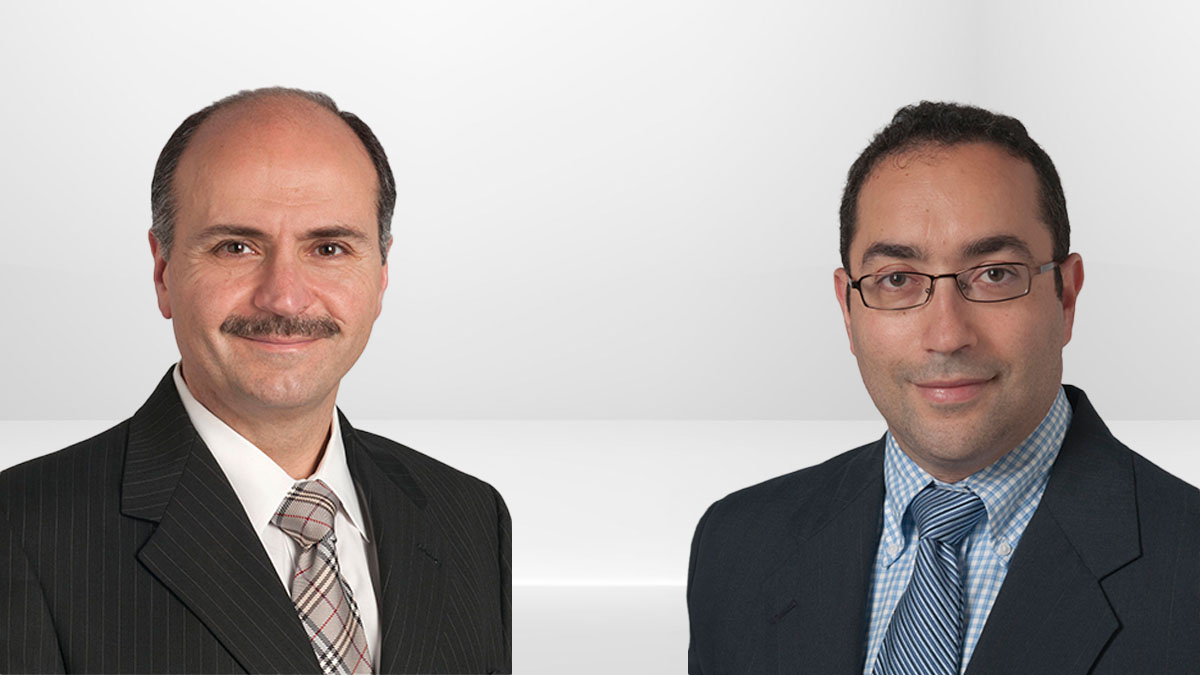
Walid Saliba, MD, and Oussama Wazni, MD, discuss the design and outcomes of the AVANT GUARD study evaluating first-line pulsed field ablation in drug-naive patients with persistent atrial fibrillation. The conversation explores efficacy endpoints, safety findings, and the implications for early rhythm control and disease progression.
Looking to refer a patient? Please reach out to our Physician Referral team Mon. - Fri., 8 a.m. - 5 p.m. (ET) at 855.751.2469.
Advertisement
Cleveland Clinic is a non-profit academic medical center. Advertising on our site helps support our mission. We do not endorse non-Cleveland Clinic products or services. Policy
Recent Episodes
CTX310 and the Future of Gene Editing for Lipid Disorders
Steven Nissen, MD, and Luke Laffin, MD, discuss one-year follow-up data for CTX310, a CRISPR-Cas9 gene-editing therapy targeting ANGPTL3 to…
Evaluating Kylo-11 for Long-Acting Lipoprotein(a) Suppression
Steven Nissen, MD, and Ashish Sarraju, MD, discuss early clinical data on Kylo-11, a novel therapy that produced substantial reductions in l…
Robotic Approaches to Mitral and Aortic Valve Surgery
Marc Gillinov, MD, and Per Wierup, MD, discuss the evolution of robotic valve surgery, including advanced mitral valve repair techniques, pa…
Video content: This video is available to watch online.
View video online (https://cdnapisec.kaltura.com/p/2207941/sp/220794100/playManifest/entryId/1_8f43qzon/flavorId/1_5f3sgelj/format/url/protocol/https/a.mp4)
Transcript
Announcer:
Welcome to Cardiac Consult, brought to you by the Sydell and Arnold Miller Family Heart, Vascular & Thoracic Institute at Cleveland Clinic. This podcast will explore the latest innovations, medical and surgical treatments, diagnostic testing, research, technology and practice improvements.
Advertisement
Cleveland Clinic is a non-profit academic medical center. Advertising on our site helps support our mission. We do not endorse non-Cleveland Clinic products or services. Policy
Dr. Walid Saliba:
Thank you for joining us for this podcast. We are here to talk about a new study that was recently published, the AVANT GUARD study, which pertains to ablation for atrial fibrillation. I'm Dr. Walid Saliba. I'm an electrophysiologist at Cleveland Clinic and the director of the Atrial Fibrillation Center. With me is Dr. Oussama Wazni, who is the section head of the EP section at the Cleveland Clinic.
Dr. Oussama Wazni:
Good morning. Hello.
Dr. Walid Saliba:
Morning. Dr. Wazni, I understand that you have done a lot of work in terms of ablation of atrial fibrillation. One of your initial interests is how early should we ablate atrial fibrillation? Can you tell us a little bit of the background for this work?
Dr. Oussama Wazni:
Yeah. Thank you. Atrial fibrillation, as you know, is a progressive disease. Over the years, we've noticed that the sooner we ablate, the better the outcomes. From retrospective data, we found that the diagnosis-to-ablation time is very important. The longer the diagnosis-to-ablation time is, the worse the outcome. Then we thought, what if we start with first-line ablation instead of trying medications and then going to ablation? So that's how the idea started, because as you know, traditionally and per guidelines, ablation is offered to patients after they had failed antiarrhythmic drugs.
Advertisement
So, a few years back now, we did the first study called STOP AF FIRST for paroxysmal AFib. Paroxysmal AFib is in patients who have atrial fibrillation that comes and goes and does not last more than seven days. We found that in that group of patients, the success rate with an ablation, first-line ablation, was 70% versus, for example, antiarrhythmic drugs was only 40%, but that was in paroxysmal patients.
Dr. Walid Saliba:
Just to make sure that we cover the details, these ablations were done using what kind of energy?
Dr. Oussama Wazni:
In the STOP AF FIRST, that was cryoablation at that time. Now, many years before that, we had a study on radiofrequency as first-line, and that was RAFT-AF, the RAFT-AF study, but that was a very small number of patients. In that study, we also showed that ablation works much better than antiarrhythmic drugs, but that was in a very small number of patients.
Dr. Walid Saliba:
Obviously, the next step was to address if the same will hold true in patients with persistent atrial fibrillation. But during that period of time, there was an advent of a newer technology, which is the pulsed field ablation. Can you tell us about that study that you designed?
Dr. Oussama Wazni:
Yes. We'll back up a little bit. Atrial fibrillation, as we said, is progressive. From the studies of the first-line ablation for paroxysmal, our colleague and friend from Canada, his name is Dr. Jason Andrade, also had a study called EARLY-AF also for paroxysmal patients. But what he did in his study was also implant loop recorders. He showed definitively that patients who get an ablation are less likely to progress to persistent atrial fibrillation. That's why it was very important for me at least to see whether early ablation in persistent patients would do the same thing and have less progression and maybe better results initially and maybe less progression.
In the meantime, the technology for ablation had evolved from thermal energies, cryo and radiofrequency, to now pulsed field ablation. Pulsed field ablation does not destroy collateral tissues or is less risky for collateral tissues. It does not cause, for example, pulmonary vein stenosis, esophageal injury or phrenic nerve injury. The reason this is important is because we thought, as you know in our practice, that if we ablate the posterior wall of the atrium, then we will have better outcomes, especially in persistent patients.
But we were not able to do that freely with cryoablation or radiofrequency ablation because of the risk of the esophagus. Now that we have this technology, I thought it would be great to test it as first-line treatment because it's a lot safer in the atrium and on the posterior wall, and hence we came up with AVANT GUARD.
Dr. Walid Saliba:
So it's important then to note that the advent of the newer technology, the safety of the newer technology, and the efficiency of the newer technology, coupled with the fact that we need to attack the next phase of atrial fibrillation or the persistent atrial fibrillation, led to the design of the AVANT GUARD study. Can you tell us what is the design of the AVANT GUARD study?
Advertisement
Dr. Oussama Wazni:
So, the AVANT GUARD study included drug-naive, meaning patients who have persistent AFib but have never been treated either with an ablation or with medication. We randomize these patients to first-line ablation versus antiarrhythmic drugs in a two-to-one fashion, meaning for every one patient who gets randomized to the antiarrhythmic drug, two will get an ablation. In addition, this time we also implanted loop recorders in everybody.
Dr. Walid Saliba:
Which is very important to track.
Dr. Oussama Wazni:
It is very important. The loop recorder, another word for it is an implantable cardiac monitor. It is a continuous monitor. So now we will know on a continuous basis what the burden of atrial fibrillation is.
So we take these patients, we randomize them in a two-to-one fashion to ablation versus antiarrhythmic drugs. We put loop recorders or an ICM, implantable cardiac monitor, in everybody, and then we followed them for one year to assess efficacy and safety. We're also going to report on a three-year outcome.
Dr. Walid Saliba:
Can you just elaborate on the ablation pattern that was mandated in the study?
Dr. Oussama Wazni:
As I alluded to earlier, in the ablation arm, we did the pulmonary vein isolation, which is ablation around the veins that drain the lungs because that's where most triggers happen. But in addition to that and more than in paroxysmal, which was only pulmonary vein isolation, in AVANT GUARD, the ablation also consisted of ablating the posterior wall. The pulsed field ablation enabled us to do this.
Advertisement
Dr. Walid Saliba:
That is very exciting. What did you find?
Dr. Oussama Wazni:
Just one word on the endpoint, because we also used a new endpoint in the study. The usual endpoint that we had been using all along, all of the EP community for atrial fibrillation, was recurrence of AFib greater than 30 seconds, whether it's symptomatic or not. But most of the time, that was symptomatic because the patient had to say that there was something, and then they would record. If it shows AFib for longer than 30 seconds, we would say that this is a recurrence.
In AVANT GUARD, we used that endpoint too, but in addition, we used a more clinically relevant endpoint, and that endpoint is something that is new. It is any atrial fibrillation, symptomatic or asymptomatic, lasting more than one hour, because that is actually more consistent and is more particular to using healthcare.
Dr. Walid Saliba:
I believe this was shown to be a good endpoint in prior studies using the same kind of energy.
Dr. Oussama Wazni:
Prior studies have shown that AFib lasting more than one hour is something that basically leads to more healthcare utilization, and that's why we wanted to incorporate this new endpoint. Using these endpoints at one year, we found that the success rate using this endpoint in the ablation arm was 56% versus only 30% in the antiarrhythmic drug arm. So, a large difference, 26 percentage points difference in a success rate between ablation versus antiarrhythmic medications.
Advertisement
Dr. Walid Saliba:
Since this is a newer ablation modality that is used as a first-line therapy in patients with persistent atrial fibrillation, was there any concern about the safety of the procedure as compared to the side effects of antiarrhythmic medications?
Dr. Oussama Wazni:
Yeah. The serious adverse events and adverse events were similar in both groups. That is very encouraging. We also used the performance goal for safety. The safety endpoints were 5% in the ablation group versus a 12% performance goal. So, much lower than that performance goal, which, again, that performance goal is from previous studies.
But what we did realize in the study is that patients with persistent atrial fibrillation are a little bit sicker, and they could be prone to more complications around the procedure time. It's very important to be careful in the selection of the patients and also to follow a rigorous algorithm or a rigorous workflow during the ablation.
Dr. Walid Saliba:
That is very exciting and very interesting because now for the first time and using a new ablation technology, we have evidence that first-line therapy and early therapy with ablation actually is better than suppressive antiarrhythmic medications. Are we ready to start actually telling our patients that this is the preferred way of treatment of their atrial fibrillation when they present to us with first onset persistent atrial fibrillation?
Dr. Oussama Wazni:
So, this is a very important question, and it's going to take a long-ish answer, but I will try to get to it. Traditionally when we started with AFib ablation, it was mostly to suppress symptoms. But more recently, it has become clearer to us that if we are able to maintain normal rhythm, patients will have less risk of stroke, heart failure and hospitalizations. That's why we included the endpoint of asymptomatic atrial fibrillation lasting more than one hour.
For these reasons, I think, yes, now we can tell our patients that in addition to alleviating symptoms, the goal for an ablation is to decrease the risk of stroke, heart failure and hospitalizations. If you want to do that, then the best thing to do is to use early ablation or first-line ablation.
Now the study, AVANT GUARD, will have a follow-up of three years. We will have more data to present in three years. In three years, we will be able to comment on progression with ablation versus antiarrhythmic drugs. If we find at that time that also ablation decreases the rate of progression, I think this will be very welcomed news for our patients, and we will be able to provide even more reassurance that we can tell them that first-line ablation is the way to go.
Dr. Walid Saliba:
Since you're mentioning early ablation is the way to go, one question that we hear quite a bit from referring physicians is how early is early? Is it the first episode of atrial fibrillation that is persistent, we have to think about ablation? Or do we wait six months, do we wait a year? In the AVANT GUARD study, how early was this ablation from the time of diagnosis till the intervention?
Dr. Oussama Wazni:
The time of diagnosis was not looked at specifically in this, but it was early persistent patients. This is a very important point; it was early persistent patients.
Now I think if it's the first episode and then we were able to get the patients back into normal rhythm, and they stay in normal rhythm, I think that's fine. But if, for example, it's hard to keep them in normal rhythm, then I think ablation is the way to go instead of medications. Or if they have then a recurrence, then I think an ablation is the right choice instead of antiarrhythmic drugs.
Dr. Walid Saliba:
Okay. You have heard it. If you have atrial fibrillation that is recurrent and persistent atrial fibrillation, it appears that an early intervention with an ablation using pulsed field ablation is the way to go, at least, to reduce the burden of atrial fibrillation, and hopefully, in the future, we will see to reduce the risk of stroke, heart failure, hospitalization and progression of the disease.
Dr. Oussama Wazni:
For more details on the results of the study, the study was presented as a late breaker at Heart Rhythm Society and also published in the New England Journal of Medicine. Those are good resources to go to for more details. Please feel free to call us or email us with any further questions. Thank you very much.
Dr. Walid Saliba:
Stay tuned for more and more research in the field of atrial fibrillation. Thank you very much.
Dr. Oussama Wazni:
Thank you.
Announcer:
Thank you for listening to Cardiac Consult. We hope you enjoyed the podcast. For more information or to refer a patient to Cleveland Clinic, please call 855.751.2469. That's 855.751.2469. We welcome your comments and feedback. Please contact us at heart@ccf.org. Like what you heard? Subscribe wherever you get your podcasts or listen at clevelandclinic.org/cardiacconsultpodcast.
Recent Episodes
CTX310 and the Future of Gene Editing for Lipid Disorders
Steven Nissen, MD, and Luke Laffin, MD, discuss one-year follow-up data for CTX310, a CRISPR-Cas9 gene-editing therapy targeting ANGPTL3 to…
Evaluating Kylo-11 for Long-Acting Lipoprotein(a) Suppression
Steven Nissen, MD, and Ashish Sarraju, MD, discuss early clinical data on Kylo-11, a novel therapy that produced substantial reductions in l…
Robotic Approaches to Mitral and Aortic Valve Surgery
Marc Gillinov, MD, and Per Wierup, MD, discuss the evolution of robotic valve surgery, including advanced mitral valve repair techniques, pa…
Never miss a moment - subscribe now.
Listen to the Health Essentials Podcast on your favorite streaming platform.
Other Podcasts You May Love

Butts & Guts
A Cleveland Clinic podcast exploring your digestive and surgical health from end to end. You’ll lear…
Health Essentials
Tune in for practical health advice from Cleveland Clinic experts. What's really the healthiest diet…
Love Your Heart
A Cleveland Clinic podcast to help you learn more about heart and vascular disease and conditions af…
Neuro Pathways
A Cleveland Clinic podcast for medical professionals exploring the latest research discoveries and c…