



20 Years of Multidisciplinary Collaboration: Lessons from the Spine Tumor Board
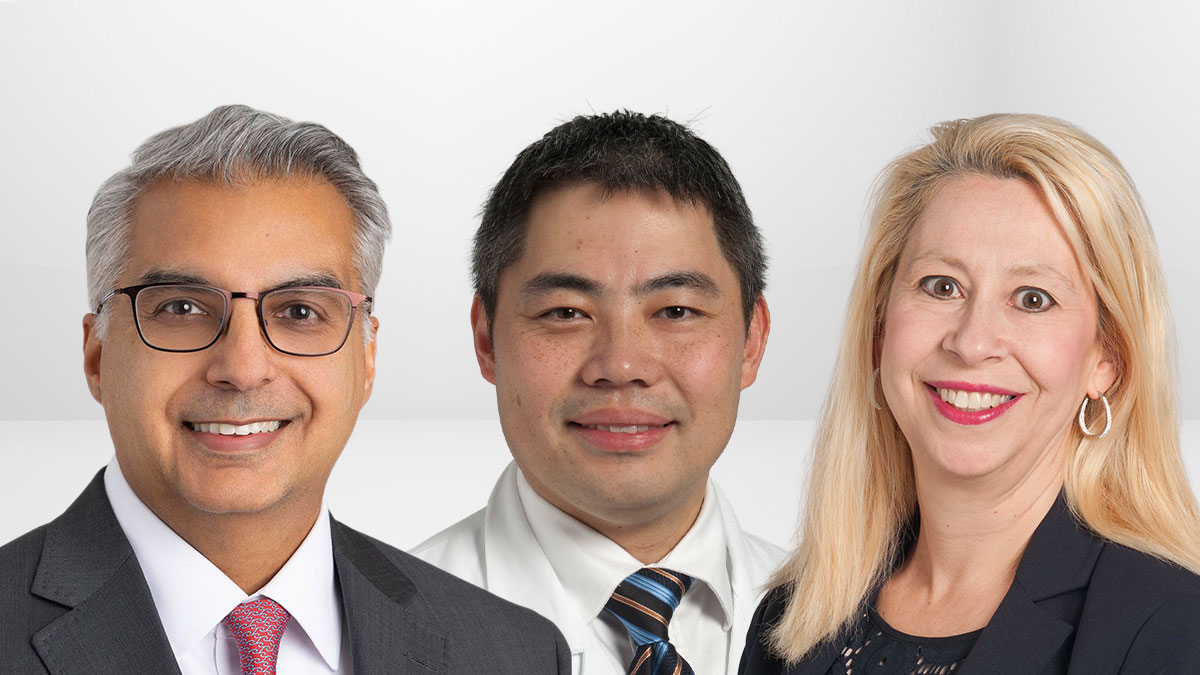
Lilyana Angelov, MD, Neurosurgeon and Director of the Cleveland Clinic Gamma Knife Center, Samuel Chao, MD, Radiation Oncologist and Associate Director of the Gamma Knife Center; and Ajit Krishnaney, MD, Neurosurgeon in the Center for Spine Health, join the Cancer Advances podcast to share insights from 20 years of a multidisciplinary spine tumor board. Learn how multidisciplinary strategies and newer technologies are improving decision-making, local control and patient outcomes.
Advertisement
Cleveland Clinic is a non-profit academic medical center. Advertising on our site helps support our mission. We do not endorse non-Cleveland Clinic products or services. Policy
Recent Episodes
Personalizing Pediatric Cancer Care: The Promise of Precision Oncology
As molecular profiling advances, precision oncology is reshaping cancer care for children, adolescents and young adults. In this episode of…
From Evidence to Practice: How NCCN Defines the Standard of Cancer Care
What does it take to establish the standard of care in oncology? Matt Kalaycio, MD, Vice Chair of the Cleveland Clinic Cancer Institute and…
Redefining Resectability in Advanced Rectal Cancer
What happens when a cancer is deemed unresectable? In this episode, Dr. Haniee Chung discusses how multidisciplinary care is expanding treat…
Video content: This video is available to watch online.
View video online (https://cdnapisec.kaltura.com/p/2207941/sp/220794100/playManifest/entryId/1_wa4uuxmo/flavorId/1_5f3sgelj/format/url/protocol/https/a.mp4)
Transcript
Dale Shepard, MD, PhD:
Cancer Advances, a Cleveland Clinic podcast for medical professionals, exploring the latest innovative research and clinical advances in the field of oncology.
Advertisement
Cleveland Clinic is a non-profit academic medical center. Advertising on our site helps support our mission. We do not endorse non-Cleveland Clinic products or services. Policy
Thank you for joining us for another episode of Cancer Advances. I'm your host, Dr. Dale Shephard, a Medical Oncologist and Co-Director of the Sarcoma Program at Cleveland Clinic. Today, I'm happy to be joined by doctors Lily Angelov, Sam Chao, and Ajit Krishnaney. Dr. Angelov is a Neurosurgeon and Director of the Cleveland Clinic Gamma Knife Center. Dr. Chao is a Radiation Oncologist and Associate Director of the Gamma Knife Center. And Dr. Krishnaney is a Neurosurgeon in the Center for Spine Health. They are here to discuss 20 years of multidisciplinary collaboration through a spine tumor board, and new advances in the management of these tumors.
So, welcome everyone.
Lilyana Angelov, MD:
Thank you.
Samuel Chao, MD:
Thank you.
Dale Shepard, MD, PhD:
So to start, let's give us a little bit of an idea of what everyone does here. Dr. Angelov, let's start with you.
Lilyana Angelov, MD:
So I'm a neurosurgical oncologist. I have been here at the Cleveland Clinic for 24 years, and have a passion for CNS oncology.
Dale Shepard, MD, PhD:
Very nice. Dr. Chao?
Samuel Chao, MD:
I am a radiation oncologist. I've specialized in brain and spine tumors, and I've been here for 20 years.
Dale Shepard, MD, PhD:
And Dr. Krishnaney.
Ajit Krishnaney, MD:
I'm a neurosurgeon that specializes in complex spine surgery and spine oncology, and I have also been here for 20 years.
Advertisement
Dale Shepard, MD, PhD:
Wow. So we have a lot of longevity here. So as it turns out, we're talking about a spine tumor board that's been around for 20 years now. So give us a little bit of an idea. As this tumor board started, what was the state of affairs at the time, and what were we trying to fix here?
Lilyana Angelov, MD:
So maybe I can kick off. When we originally began Spine Tumor Board, we had a brain tumor board that was established, and that was multidisciplinary. It has been the paradigm in terms of our care for brain tumor patients for a long time. At the end of that meeting, we would sometimes discuss spine cases, but we quickly learned that unlike other tumor boards, there had to be a discussion about the oncologic, as well as the mechanical aspects of spine tumors, and it was distinct from the other discussions. So that as there was more traction for this effort, there was greater understanding in terms of what spine tumor care involved, we decided to develop our own dedicated standalone tumor board, with some of the same players from the brain tumor board, but also a whole new cohort of participants like our spine surgeon, spine oncology group.
Dale Shepard, MD, PhD:
All right. So let's kind of build on that. Sam, who all is involved from a multidisciplinary standpoint?
Samuel Chao, MD:
So definitely neurosurgeons, as well as radiation oncologists, but also medical people, medical spine. There's also people who are interventional radiologists that are now involved, because there's technological advances in terms of how we can care for people with spinal disease using interventional radiology. So there's actually a multifaceted number of people that are involved, including nurses, and residents, and fellows. It's a lively group.
Dale Shepard, MD, PhD:
There you go. And Ajit, when we think about spine, I know that sometimes when we think about that, there's a question about neurosurgery compared to ortho. How do we differentiate who sees patients and in what settings here at Cleveland Clinic?
Ajit Krishnaney, MD:
So we're lucky here that we have a very integrated program, where our orthopedic surgeons and neurosurgeons that do spine surgery are all in the same center, and we're under the same umbrella. So we're very, very closely tied at the hip. And for most spine surgery, we're one and the same, and we can go back and forth without impunity between orthopedic and neurosurgeon. Now, there is one exception to that, is the intradural tumors, which are squarely in the field of neurosurgeons. So at least when it comes to spine oncology and spine tumors, the dividing line is the dura. So intradural tumors will go to a group of us that specialize in intradural spine tumors, and then there's a group of us that are both, consist of both orthopedic surgeons and neurosurgeons that will deal with everything outside of the dura. So bony tumors, metastases, primary bone tumors, all of those things can go to either or, depending on who has an interest in dealing with those type of pathologies.
Advertisement
Dale Shepard, MD, PhD:
Yeah. And Lily, Ajit was just sort of touching on types of tumors. What are the most common types of tumors that are discussed?
Lilyana Angelov, MD:
Not unexpectedly, the most common pathology that's discussed is metastatic tumors. They affect the whole neural axis in terms of spine, and so, we discuss a multidisciplinary approach to that. We discuss primary bone tumors, intradural meningiomas, schwannomas. And the other piece that's really relevant is that there are a lot of tumor mimics out there, and with the assistance of neuroradiology who are very experienced, we have three neuroradiologists that are integrated very tightly with our group, we can distinguish the mimics and ones that do not need intervention or should not be treated or considered as tumor pathology, and actually deferred to other appropriate care.
Dale Shepard, MD, PhD:
When you think about types of tumors and particularly as patients live longer, a lot of these diagnoses, I'm guessing there's a little bit of a shift over 20 years. So Sam, how have the types of cancers that we see changed over time?
Samuel Chao, MD:
So originally, the predominant focus of what we do a lot of is spine stereotactic radiosurgery here at the Cleveland Clinic. Predominant focus were the patients who actually had radiation before, and then tumor recurred, and we had to find a way to salvage them. And spinal stereotactic surgery, by sparing the cord, allowed us to give a proper dose of radiation to the tumor and get that under control.
Advertisement
Over the years, that has shifted. We've started focusing more on radio-resistant disease, where conventional radiation would not necessarily control that disease. But with recent studies showing, improving the role of locally ablative radiation therapy to maximize tumor control, we are starting to treat a lot more oligometastatic disease. And so, we're seeing a lot more oligometastatic disease, and that translates to a survival advantage for many of these patients.
Dale Shepard, MD, PhD:
And then, when we think about those treatment modalities and that shift, Ajit. How does the role of surgery, how has that changed in terms of management over time?
Ajit Krishnaney, MD:
Well, there's been a dramatic difference over the last 20 years. I think back to 2005 when the Patchell paper came out, prior to that, really, surgery had no role in the treatment of metastatic disease. It was almost all radiation therapy for management. And days before that, surgery actually was harmful to patients. We made them worse. And it wasn't until in the late '90s and early 2000s with our advances in instrumentation, where we were actually able to stabilize the spine better, that we actually started helping patients with surgery. And the Patchell paper in 2005, right when we started the tumor board, was a landmark to bring us to the table. And I think that was part of the impetus of starting this whole endeavor.
Advertisement
Over the years, the advances in terms of radiosurgery, separation surgery, and now newer medications and treatments for cancer with people living longer, we've seen a shift from surgery being a primary modality to now being an adjunct, and trying to help people live longer. We've turned cancer, in many cases, to a chronic disease. And we're seeing patients with chronic spine problems now, not just acute spine problems. And so, it really has shifted how we're looking at these patients in terms of how we're operating on them, what kind of constructs we're building, and how durable these constructs need to be since people are living longer and longer.
Dale Shepard, MD, PhD:
And we'll get back to that in a little bit when we talk about maybe some advances in the field. In a similar way with radiation, so Lily, when we think about Gamma Knife®. How have things changed in terms of how the recommendations are in terms of sequencing? We have newer systemic therapies, new modalities, radiation techniques. Most patients, how are we sort of staging treatments?
Lilyana Angelov, MD:
Among the biggest paradigm shifts is the radio-resistant tumors. Originally, I think in the very early days, kidney cancer was not a tumor that was expected to respond durably to conventional radiation, we weren't seeing those patients. And suddenly, we had this therapy in spine radiosurgery that was equally effective in radio-resistant disease as in presumed radiosensitive disease, and now it was kind of an equalizer in terms of pathology. So it has shifted where the no-fly zone is, if you will, and has meaningfully impacted care of a lot of patients that previously were impaired in terms of neurological function, in terms of quality of life. And when a patient has impaired gait, impaired KPS, performance status, they are not eligible for other therapies. So we've started to impact their overall survival in that way as well, by keeping them functioning well, and therefore having them be able to pursue other treatments because of their good performance status.
Dale Shepard, MD, PhD:
And I guess along those lines, and Sam, I'll start with you and then Ajit, sort of a similar question. Over time, what have you seen in terms of availability of radiation techniques, surgery techniques, medical therapies? How often now can you impact a patient in a positive way with radiation, first with you, Sam. With your therapies, where in the past you might've said, "We can't really help. You just have to either think about supportive care, or you have to think about medical management." How have things changed in terms of your ability to make a difference?
Samuel Chao, MD:
Prior to the development of spine stereotactic radiosurgery, oftentimes, we would just kind of shrug our shoulders. We've done the radiation that we can. You know, Ajit can only do so much surgery in that area, and so we oftentimes shrug our shoulders and say, "Well, hospice care or something like that." Now that we're able to locally ablate tumors, better control, patients are living longer as a consequence of that. We're not delaying their systemic therapy because our treatments is fairly short. We can do this in a single day or a few days, depending on the tumor type, so they can continue on with their systemic therapy. Oftentimes, there's not really too much interaction between the systemic therapy and the radiation. And as mentioned, we've been doing more and more oligometastatic, oligoprogressive disease. So oligometastatic disease, we locally ablate their tumor, they do better in the long run in terms of tumor control.
Oligoprogressive disease, they're continuing on their systemic therapy and, "There's only one area that's starting to escape the control of their systemic therapy. Well, let's just go ahead and locally ablate that." And they can continue on with their systemic therapy, so they don't run out of options towards the end.
Dale Shepard, MD, PhD:
And so I guess in a similar vein, Ajit. How have you seen things change based on your ability to do surgical procedures, patients you may not have been able to help so much in the past that now you can provide some benefit?
Ajit Krishnaney, MD:
Yeah, I think we've just seen a proliferation of both MIS techniques and just more advances in the field in general. What I mean by that is, the types of hardware we have now with carbon fiber and more MIS techniques allow us to do surgery quicker and safer on patients, allow for better imaging for patients after. So patients maybe who wouldn't have tolerated a very large operation that we needed to do 15 years ago, we can do some MIS techniques on them that'll give them some relief and some stabilization, without having to put them through such a large surgery.
The other parallel advance has been in plastic surgery. A lot of the newer flaps that have been designed for spine oncology, that we didn't have 15 or 20 years ago, that allow us then to actually treat patients that may have had prior radiation and prior chemotherapy, maybe have poor wound healing that in the past would be too high risk to undergo surgery. We now have options for those patients as well, to get them healed and back on their feet. So really has opened the door to a subset of patients that we just were too scared to operate on, to be honest with you, before.
Dale Shepard, MD, PhD:
How has imaging changed? You mentioned imaging. So what imaging modalities have made the biggest impact, in terms of being able to localize where a tumor is, maybe not proceeding because you've found things you wouldn't have found otherwise? How has imaging impacted your decisions on how to move forward with patients? So Lily, maybe.
Lilyana Angelov, MD:
Probably, if I think back over the past couple of years, the biggest impact of imaging has been, for example, in prostate cancer. We have PSMA PETs, they show us the disease before it becomes symptomatic. And so we treat oligometastatic disease with good certainty, with very helpful surveillance, and then we can get in to essentially try and manage a low metastatic burden very early, and impact their global survival.
So from my perspective, besides better MRI scans, higher tesla magnets, better ways to bypass the artifact from spine imaging. I think probably one of the important game changers has been targeted PET scans that have helped us distinguish tumor and open up appropriate targets.
Dale Shepard, MD, PhD:
So if we have things like PSMA, I mean, it's good and bad in many ways. We find things we wouldn't have known about before, and it might force us into different decisions. So I guess the question is, are you still treating those primary things you could have seen by conventional means, but then also adding in systemic therapies? Or are things more sensitive, like PSMA PET, keeping you from doing radiation in the first place?
Samuel Chao, MD:
I think it's actually increased our ability to do radiation, because we see, that we know that these patients can do better if they are oligometastatic. So then we locally ablate the many areas that they have, up to five, and that would be something that could potentially impact their survival. So I think it's been something that has allowed us to do more radiation rather than say, "Oh, yeah, patient's already metastatic. Let's do less."
Dale Shepard, MD, PhD:
Yeah. And similar with you, Ajit?
Ajit Krishnaney, MD:
Yeah. I mean, I think the biggest thing I've noticed is that we're doing less and less emergency metastatic surgery. I mean, in the past, it was a huge part of our practice, that patients would come in declining very rapidly because of epidural disease compressing their cord. And we were taking these patients to the middle of the night, oftentimes, to do the surgery. I can't remember the last time I had to emergently take someone to the OR. I mean, we're finding these metastases way earlier and dealing with them before they become a problem for the patient, neurologically at least. And I think that that's really changed what we're seeing on my end of things.
I'm going to turn the question around a little bit, as well. I think the other thing that I've seen is that we've changed how we design our spine surgeries to be better at imaging for surveillance, because we know these patients are going to live longer. So we've developed newer techniques of where do we put the screws, and we're more mindful of where we put the screws, where we put the rods, where we put the cross-links to allow for better imaging to the areas where we know they have tumor. And then we also started using some newer hardware types with carbon fiber, that are much lower profile imaging, that allow us to see kind of around the hardware, which I think has helped as well.
And so, I think there's been a huge advance in that, and it's really changed the practice that I have. Definitely in the last five years, especially.
Dale Shepard, MD, PhD:
Lily, are there still particular cancer types that are more problematic than others in terms of... Ajit, you mentioned emergency sort of presentation. Are there still things that are more difficult to treat, either because of presenting with more mets at a given time, or are there tumors that really we still need to make a lot more progress on than others?
Lilyana Angelov, MD:
One of the more challenging tumors are the sarcomas, and the family of sarcomas. The appropriate dosing, the appropriate paradigm about how to treat them, it continues to be challenging. There are unanswered questions. There are also primary bone tumors, chordomas. How do you best approach those? Do you do them with surgery? The role for unblock surgery has certainly changed over time, as it affects the spine. But I think that there are still many unanswered questions in certain types of tumors that just require more focused, higher volume care, that we need to maybe integrate with our colleagues across the country to determine what is the best way to manage some of these less common pathologies and move forward in terms of their care.
Dale Shepard, MD, PhD:
So I guess I'm going to once again ask Sam, and then Ajit. Think about patients you talk about in the tumor board. It seems like there are likely cases where someone has one or two tumors, might be amenable to surgery, might be amenable to radiation. What are the issues that used to occur, and maybe, how has that changed in terms of how you decide which one wins?
Samuel Chao, MD:
Yeah, so I don't think it's so much which one wins, right? I think it's a partnership in terms of what we do. For some patients, radiation is the most appropriate. Some of these patients are maybe older, may have not a great performance status, maybe just not good candidates for surgery in general. And certainly, we have radiation options, radiosurgical options to be able to control their disease locally.
There are times, as was previously mentioned, where tumors are pushing on the spinal cord, and us doing radiosurgery is not going to do as good of a job in terms of controlling that. So then we reach out to someone like Dr. Krishnaney, "Can you do a separation surgery, debulk some of that disease away from the spinal cord, so we can maximize the dose to the tumor and maximize control?"
Certainly there are things that we could go either way, like some of the benign tumors. We could go do radiosurgery, and that'll be effective in terms of taking care of it. We can also do surgery, and that could be also effective in terms of taking care of it. But that's the elegance of having that tumor board, is to have that discussion where we can look at all the options, talk about all the options, and then decide on what may be the best for the patient. Sometimes, there might be two good options, and we present both of them to the patient.
Dale Shepard, MD, PhD:
Yeah. Ajit, what's your take on competing ways to treat? Are there certain characteristics of patients or tumors that you really try to push a little harder for surgery?
Ajit Krishnaney, MD:
Yeah, we've had a lot of evolution over the time we've been doing this. And I think, like Sam said, that we are very collaborative here in that sense. There's no winning or losing, but there are times obviously where one of us feels strongly about one pathway or another, and I think that that comes through. Oftentimes, we're not shy about telling each other that.
Dale Shepard, MD, PhD:
It's a healthy discussion, right?
Ajit Krishnaney, MD:
Yeah, no, it is a healthy discussion. But I think for me, as a surgeon, the things that I kind of stand on principle are stability of the spine. If I'm looking at something and thinking, "The spine is going to fracture soon," I'm going to be pushing a lot harder to say, "Maybe we need to do surgery," even though maybe radiosurgery is the best way to control that disease, maybe we need surgery first to stabilize that spine to prevent injury. So for me, that's always in the back of my head is, it's not just the oncology part of it, it's the structural part of the spine and how do we keep this person ambulatory and walking for the rest of their life? And so that usually is what sways us one way or the other, to be honest with you, in many of these cases.
Dale Shepard, MD, PhD:
Yeah. Lily?
Lilyana Angelov, MD:
And if I can just also give a shout-out, we have medical oncologists that are part of our tumor board. And with a lot of the molecular profiling of the tumors, we have an option of targeted agents that we did not understand so well previously, that can work adjunctively with some of the therapies, or in lieu of some of the options that we had previously. So we seem to be holding more cards in our hand, and can play them more effectively over time.
Dale Shepard, MD, PhD:
And then Sam, I'm going to go back to you. You talked about sort of combination procedures. How has that changed over time? Sort of the ability to maybe do radiation and surgery for any given patient for optimal benefit?
Samuel Chao, MD:
So certainly with the use of separation surgery, that really allows us to be able to do radiosurgery much more effectively. Things that Dr. Krishnaney has helped us with, because we do the separation of surgery, and then they put rods and screws and they're often titanium. Sometimes it's very difficult to be able to see where the tumor was, or is, and where the spinal cord is. And so he can do things like put in a carbon fiber rod, and it becomes easy to see where that spinal cord is, and easy to see where we need to do the treatment. And so. There has been an evolution in terms of the technology, even from the surgical standpoint, that really does help us out from a radiation standpoint.
Dale Shepard, MD, PhD:
So we're going to talk about technology here for a couple of minutes next, but because there's a lot of different people that might be listening in. Separation surgery, what is that?
Lilyana Angelov, MD:
So we coined that term here at the Cleveland Clinic.
Dale Shepard, MD, PhD:
There we go.
Lilyana Angelov, MD:
So I'm glad you asked about that. And essentially what we need to do is in our, for example, radiosurgical treatment, you want to give an ablative dose to the tumor, but have the dose fall off very rapidly to the adjacent spinal cord, and not give toxicity to the cord. Separation surgery is a way to do more minimal surgery, if you will, not big thoracotomies where patients are in the ICU for a prolonged period of time after a large thoracotomy. But actually decompress the cord through a posterior, more minimal approach, to give us just room, just give us a few millimeters. And so, two minimally invasive approaches are additive to a major impact, and getting the patient out the door much quicker and with less toxicity, morbidity from the overall treatment. So one plus one is giving us three, in terms of separation surgery.
Ajit, do you want to add anything to separation surgery concept?
Ajit Krishnaney, MD:
Yeah. I mean, I think this is a paradigm shift as well, as we talked about with the Patchell paper before, but it's a cognitive shift. In the sense that, in the past, spine surgery was the main thing for taking these radio-resistant tumors away from the cord. And for renal cell, for instance, we would do end block resections, or try to get complete gross total resection of the met, just to make sure it stayed away from the cord. With this paradigm, I don't need to do that anymore. I can do a much smaller surgery, because my goal is just to make space around the cord so Lily and Sam can see it and target it effectively, and give enough of a targeted dose to the remaining tumor to prevent it from coming back. I may need to stabilize it, but I can do that minimally invasively as well.
And so, it's a much smaller operation for the patient, to allow them to have this radiosurgery. Which, frankly, is a much better local control than any surgery I could have done in the past, prior to radiosurgery. And so it's a much better outcome for the patient with a much less invasive approach to it.
Dale Shepard, MD, PhD:
So as we talk about better surgery, Ajit, we'll start with you in terms of, what have you seen as the biggest advances? And we've talked about a couple of things along the way. Biggest advances that have led to improvements in patient outcomes, and what do you see coming up in terms of techniques or materials, or things that you're looking forward to?
Ajit Krishnaney, MD:
So I think the three things that I've seen over the last probably 15 years would be one, the wholesale adoption of minimally invasive techniques, so percutaneous screw fixation, fluoroscopic guidance and image guidance to allow us to do these smaller incisions, and still put the hardware we need to in there to stabilize the patient.
The use of carbon fiber instrumentation, our first carbon fiber case here was in 2019. So we've now got six years of experience with it, and we're using it more and more every day, just because we're getting more facile with it. But it's proven to be a benefit, for our radiosurgeons to be able to target better. And also for following these tumors, and being able to see small recurrences before they become a real problem for the patient, so that we can treat them effectively.
And then, probably the third one is the newer flaps we have in plastic surgery. So patients that have had prior radiation, that have recurrent disease that we need to operate on, oftentimes had horrible outcomes with wound healing, and wound infections, and open wounds. And with the new flaps, that our plastic surgery colleagues can help us with to close these incisions, really has improved those patients' outcomes.
What's coming down the pike? I think we're seeing more and more minimally invasive techniques. Endoscopic techniques are starting to gain traction. We've got two surgeons now starting to play around with endoscopic techniques here at the Cleveland Clinic, that we're hoping to adopt into our world. The ablative techniques the IR folks are doing as adjuncts to what we do are also advancing rapidly, and I think incorporating those techniques into our armamentarium is going to allow us to get smaller and smaller with our incisions. And ultimately, the goal here is that I become obsolete, and we don't have to do surgery anymore. Hopefully not until after I retire.
But, yeah, I mean, I think that's the goal here, is that spine surgery hopefully will become just another tool in the bucket for the actual primary people managing these patients, to help out.
Dale Shepard, MD, PhD:
So similarly with radiation, Sam, biggest advances so far, and where do we need to go? What are you excited about in terms of things coming up?
Samuel Chao, MD:
Biggest advances, particularly over the last decade, has been really improving the safety in terms of our delivery of radiation. And that comes in the form of just better radiation delivery, in general, but also image guidance. So we're able to see things a lot better. The technology for image guidance has certainly improved.
Moving forward in the future, there's a lot of enthusiasm for particle therapy. We don't know where that's going as of yet, but there may be some way that we're going to be able to deliver radiosurgery safely, using particle therapy. That's something that we have to kind of consider as part of the future. They actually make these machines nowadays that are what we call PET guided, or metabolically guided, radiation therapy systems. And so, perhaps that could be something that may be considered in the future, where we inject a PSMA tracer agent. We know where their met is, we can plan on the fly and deliver radiation fairly quickly to all their mets.
So there's a lot of interesting new radiation technologies coming through the pipeline. Machines are going to be faster, so that we don't have to worry about their motion while they're on the table getting treatment, and it's going to be much safer moving forward in the future.
Dale Shepard, MD, PhD:
Lily, anything from a technology standpoint that you find exciting?
Lilyana Angelov, MD:
I actually find exciting the concept of team, that there is team interest in this problem. The fact that we all come to the table and think about the integrated needs of the patients, and the fact that we are looking not just at the immediate and short-term impact of what we do, but we're focusing on the intermediate and long-term outcome of what we do. So for me, the most exciting thing is that we are well integrated, we're learning from each other, and we have a synergy there that is focused on our spine tumor patients.
Dale Shepard, MD, PhD:
So, you guys have been doing this for 20 years. Somebody's listening in, and say, "Why aren't we doing this?" What's the best guidance you could provide for somebody that kind of wants to set up this infrastructure?
Samuel Chao, MD:
Well, it definitely has to be multidisciplinary. So our team is run by all of us, in a sense. So we have a neurosurgery, we have radiation oncology. We always appreciate the help of medical oncology and neuro-oncology, people who see the patients, who know the patients very well. Neuroradiology is exceptionally important, because they help us define what we're seeing, confirm that, "That's tumor," give us an understanding of what we need to look after.
Dale Shepard, MD, PhD:
Excellent. Last question. If we think about patients that are out in the community, again, people might be listening. Are there particular patients, types of tumors, anything that really, you say should be seen by us here at Cleveland Clinic, tumor board discussions? Who's the ideal patient to have referred? Ajit, let's start with you.
Ajit Krishnaney, MD:
That's an easy one. That's anybody with a spine tumor, I think. I mean, there's just so many nuances to every one of these, in terms of complicated factors that you have to take into account. Because it's not just the tumor biology, it's location, it's structural integrity of the spine, location of the nerves, location of the spinal cord, location of other adjacent structures in the thorax and abdomen, and even in the head. So there's just so many factors that have to go into this that there's not one specialty that can reliably be able to understand all of that. So I think we all, as a group, have committed that we bring all of our patients we see in our clinics to the tumor board, regardless of whether we're sure we're going to do something or not, just to get everybody else's opinion.
And oftentimes in those cases, I'll present something and say, "Well, I'm thinking about offering this person surgery." And everybody says, "Okay, that sounds good." But other times someone may come up and say, "Well, did you think about this? Did you think about that?" Or, "There's this clinical trial we could try for this patient," that I didn't know about. And I think having that resource is invaluable. So I think, it sounds glib, but the real answer is anybody with a tumor in their spine should probably be reviewed at a multiple disciplinary tumor board, at least at some point, to set their treatment plan.
Lilyana Angelov, MD:
I 100% agree with Ajit's comment. In terms of collegiality we are happy to liaise, even with outside providers, to render kind of a 40 for one opinion as I refer to it. In terms of patients, we have the STEP line, Spine Tumor Excellence Program line, where we sometimes have patients self-referring to that. To say, "Hey, I've got this tumor. I'm not getting a satisfactory answer. Can I possibly get involved with this effort?" And we will triage that patient to the appropriate first step provider, who then brings it to tumor board, so that there are multiple avenues. But we hope to be a resource for whoever feels that they can benefit from the resource, and there is no spine tumor that is inappropriate for discussion.
Dale Shepard, MD, PhD:
Sam?
Samuel Chao, MD:
Yeah, I completely agree with that. I mean, I think there are maybe some, what we think about as straightforward cases. But many are not necessarily straightforward. And that's kind of where you have those opinions. Medical therapy has become much more complicated, there's a lot more targeted agents, a lot of things that we don't necessarily... Have not historically understand, but we are starting to understand now, and having their input in terms of what we can do to maximize their control is exceptionally important.
Dale Shepard, MD, PhD:
Very good. Lily, Sam, Ajit, you guys are working well together. You guys sort of embody what Cleveland Clinic's about with teamwork, and congratulations on all your success along the way. And appreciate you being here with your insights.
Lilyana Angelov, MD:
Thank you.
Ajit Krishnaney, MD:
Thanks, Dale.
Samuel Chao, MD:
Thank you, Dale.
Dale Shepard, MD, PhD:
To make a direct online referral to our Cancer Institute, complete our online cancer patient referral form by visiting clevelandclinic.org/cancerpatientreferrals. You will receive confirmation once the appointment is scheduled.
This concludes this episode of Cancer Advances. For more podcast episodes, visit our website, clevelandclinic.org/canceradvancespodcast. Subscribe on Apple Podcasts, Spotify, or wherever you listen to podcasts.
Thank you for listening. Please join us again soon.
Recent Episodes
Personalizing Pediatric Cancer Care: The Promise of Precision Oncology
As molecular profiling advances, precision oncology is reshaping cancer care for children, adolescents and young adults. In this episode of…
From Evidence to Practice: How NCCN Defines the Standard of Cancer Care
What does it take to establish the standard of care in oncology? Matt Kalaycio, MD, Vice Chair of the Cleveland Clinic Cancer Institute and…
Redefining Resectability in Advanced Rectal Cancer
What happens when a cancer is deemed unresectable? In this episode, Dr. Haniee Chung discusses how multidisciplinary care is expanding treat…
Never miss a moment - subscribe now.
Listen to the Health Essentials Podcast on your favorite streaming platform.
Other Podcasts You May Love
Beyond Leadership
Hosts Jim Pae and Elizabeth Pugel escort you through a network of thought leaders, sharing world-cla…

Beyond the Pages: CCJM Podcast
Beyond the Pages: CCJM Podcast takes the listener more in-depth into Cleveland Clinic Journal of Med…
Butts & Guts
A Cleveland Clinic podcast exploring your digestive and surgical health from end to end. You’ll lear…
Cardiac Consult
A Cleveland Clinic podcast exploring heart, vascular and thoracic topics of interest to healthcare p…