



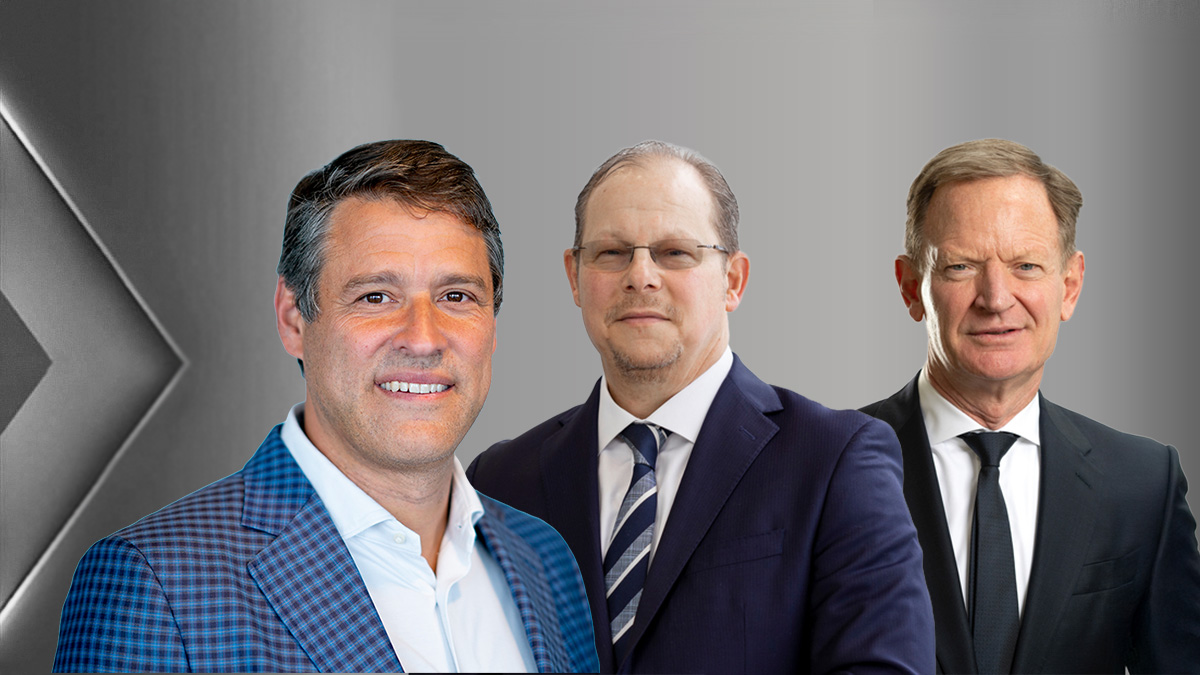
The Integrated Leader: Balancing Finance and Operations in Uncertain Environments
This episode will focus on Balancing Finance and Operations in Uncertain Environments. Our panel will evaluate specific frameworks for managing expenses and scaling innovation while maintaining a steadfast commitment to patient-centered care. By quantifying the impact of adaptability and collaborative leadership, we provide actionable insights necessary to measure and drive growth in today’s volatile healthcare landscape.
Advertisement
Cleveland Clinic is a non-profit academic medical center. Advertising on our site helps support our mission. We do not endorse non-Cleveland Clinic products or services. Policy
Recent Episodes
Bridging the Gap by Reconnecting Disconnected Workforces
This episode will focus on approaches to fostering culture, connection, and involvement in hybrid and remote work environments. They focus o…
New Leadership Skills: AI and Beyond
This episode explores how artificial intelligence (AI) is reshaping healthcare. The panel examines the practical AI applications across clin…
Empowering Leadership Voice
This episode will explore how leaders can strengthen their voice, balance advocacy with active listening, and build psychological safety. Th…
Video content: This video is available to watch online.
View video online (https://cdnapisec.kaltura.com/p/2207941/sp/220794100/playManifest/entryId/1_9w713pcc/flavorId/1_5f3sgelj/format/url/protocol/https/a.mp4)
Transcript
Beyond Leadership Podcast Series
Advertisement
Cleveland Clinic is a non-profit academic medical center. Advertising on our site helps support our mission. We do not endorse non-Cleveland Clinic products or services. Policy
Release Date: February 26, 2026
Expiration Date: February 25, 2029
Estimated Time of Completion: 40 minutes
The Integrated Leader: Balancing Finance and Operations in Uncertain Environments
Mike Kessel, MBA, CPA Dennis Laraway, MBA William Peacok, MS
Description
Welcome to L.E.A.D., a special series by Beyond Leadership. L.E.A.D. is an innovative, action-oriented framework built on four human-centered behaviors: Listening, Empathizing, Adapting, and Developing. In this series, we explore how top leaders apply these behaviors to build trust, foster collaboration, promote growth, and connect authentically every day.
This episode will focus on Balancing Finance and Operations in Uncertain Environments. Our panel will evaluate specific frameworks for managing expenses and scaling innovation while maintaining a steadfast commitment to patient-centered care. By quantifying the impact of adaptability and collaborative leadership, we provide actionable insights necessary to measure and drive growth in today’s volatile healthcare landscape.
Learning Objectives
Target Audience
This program is designed for healthcare professionals interested in advancing their leadership skills.
Accreditation
In support of improving patient care, Cleveland Clinic Center for Continuing Education is jointly accredited by the Accreditation Council for Continuing Medical Education (ACCME), the Accreditation Council for Pharmacy Education (ACPE), the American Nurses Credentialing Center (ANCC), and Interprofessional Continuing Education (IPCE) Credit to provide continuing education for the healthcare team.
Advertisement
Credit Designation
Cleveland Clinic Center for Continuing Education designates this internet enduring material for a maximum of 0.75 AMA PRA Category 1 Credits ™. Physicians should claim only the credit commensurate with the extent of their participation in the activity.
Participants claiming CME credit from this activity may submit the credit hours to the American Osteopathic Association for Category 2 credit.
Cleveland Clinic Center for Continuing Education designates this internet enduring material for a maximum of 0.75 ANCC contact hours.
Cleveland Clinic Center for Continuing Education has been authorized by the American Academy of PAs (AAPA) to award AAPA Category 1 CME credit for activities planned in accordance with AAPA CME Criteria. This activity is designated for 0.75 AAPA Category 1 CME credits. PAs should only claim credit commensurate with the extent of their participation.
Cleveland Clinic Center for Continuing Education designates this knowledge-based activity for a maximum of 0.75 hours. Credit will be provided to NABP CPE Monitor within 60 days after the activity completion. Universal Activity Number List:
- Pharmacist UAN : JA0000192-0000-26-036-H99-P
This activity was planned by and for the healthcare team, and learners will receive 0.75 Interprofessional Continuing Education (IPCE) credit for learning and change.
A certificate of participation will be provided to other health care professionals for requesting credits in accordance with their professional boards and/or associations.
Cleveland Clinic Planning Committee
James Stoller, MD, MS Co-Activity Director Chair, Education
Cecile Foshee, PhD Co-Activity Director Director, Office of Interprofessional Learning
Sawsan Abdel Razig, MD Chief Academic Officer, Cleveland Clinic Abu Dhabi
Lindsey Amerine, PharmD Sr. VP, Chief Pharmacy Officer
Lisa Baszynski, DNP Executive Director, Associate Chief Nursing Officer
Colleen Carroll, MS Sr. Director of Leadership and Learning
Matthew Donnelly, MBBS (Hons) VP, Professional Staff Affairs
Mark Hamilton, MD Cleveland Clinic London
Jospeh Iannotti, MD Chief of Staff, Cleveland Clinic Florida
Debra Kangisser, PA-C Office of Interprofessional Learning
Aanchal Kapoor, MD, MEd Founder and Director of the Medical Intensive Liver Unit
Suchetha Kshettry, MD Enterprise & Ohio Women’s Professional Staff Association President, (2025-2026)
Christopher Nagel, BA, MA VP, Leadership and Learning
Silvia Perez Protto, MD Immediate Women’s Professional Staff Association Past President, (2025)
Ronna Romano, MBA Office of Interprofessional Learning
Advertisement
Stormy Sweitzer, PhD Office of Interprofessional Learning
Faculty
Mike Kessel, MBA, CPA President and Chief Executive Officer Cleveland Clinic Canada
Dennis Laraway, MBA Executive Vice President and Chief Financial Officer Cleveland Clinic
William Peacock, MS Executive Vice President and Chief Operations Officer Cleveland Clinic
Host
Jim Pae, MSOD Manager, Organizational Development
Disclosures
The Cleveland Clinic Center for Continuing Education has implemented a policy to comply with the Accreditation Council for Continuing Medical Education Standards for Integrity and Independence. This activity includes non-clinical content only. In accordance with the Standards for Integrity and Independence, identification, mitigation and disclosure of financial relationships does not apply.
CME Disclaimer
The information in this educational activity is provided for general medical education purposes only and is not meant to substitute for the independent medical judgment of a physician relative to diagnostic and treatment options of a specific patient's medical condition. The viewpoints expressed in this CME activity are those of the authors/faculty. They do not represent an endorsement by The Cleveland Clinic Foundation. In no event will The Cleveland Clinic Foundation be liable for any decision made or action taken in reliance upon the information provided through this CME activity.
Advertisement
HOW TO OBTAIN AMA PRA Category 1 Credits™, ANCC, AAPA, ACPE, IPCE Contact Hours, OR CERTIFICATE OF PARTICIPATION:
Go to:
http://cce.ccf.org/ccecme/process?site_code=main&activity_session_code=EKCE02701
to log into myCME and begin the activity evaluation and print your certificate. If you need assistance, contact the CME office at myCME@ccf.org
Copyright © 2026 The Cleveland Clinic Foundation. All Rights Reserved.
Kelly Hancock, DNP, RN, NE-BC, FAAN:
Hello and welcome to Beyond Leadership, a Cleveland Clinic podcast where we explore the many dimensions of leadership. I'm Kelly Hancock, Executive Vice President, Chief Caregiver, and Administrative Officer here at Cleveland Clinic, and I'm thrilled to have you join us. In this podcast series, we will feature conversations with remarkable thinkers and uncover how their insights and experiences are shaping the future of leadership in healthcare. Now let's turn it over to our host, who will guide us through today's enlightening conversation.
Jim Pae, MSOD:
Hello everyone. I am your host, Jim Pae, and this is Beyond Leadership. Today I'm joined by Mike Kessel, President and Chief Executive Officer of Cleveland Clinic Canada. Dennis Laraway, Executive Vice President and Chief Financial Officer of the Cleveland Clinic, and Bill Peacock, Executive Vice President, and Chief Operations Officer of the Cleveland Clinic.
Advertisement
It isn't hyperbole to say that healthcare is at a turning point. On one hand, we are seeing incredible breakthroughs in science, technology, and care delivery. On the other hand, health systems are facing substantive financial pressures. Issues like rising labor costs, supply chain challenges, and changing reimbursement models are top of mind. Throughout the industry these financial realities have the potential to directly affect how care teams are supported, how resources are invested, and how patients may experience care.
But here is the good news, pressure can also be a catalyst. With strong financial insight and operational excellence, these challenges can drive new ways of working. Ways that make care more tightly aligned across care sites, more efficient, and more centered on patients.
In our conversation today, we will look at how today's financial headwinds can become opportunities for innovation and how the right strategies can build a stronger, more resilient, and even more hopeful future for healthcare. So, as we talk about financial implications and operations, we recognize that in today's economy, the financial constraints are more than just basically a line-item budget. They are a direct force shaping operational decisions that we happen to have, and it is a bit of a tricky balance.
So, my question is, how do you manage expenses and still stay resilient while investing in the innovation that will drive the future growth of our enterprise? Dennis, your initial thoughts around that?
Dennis Laraway, MBA:
Yeah, so there's always financial constraints in the businesses that we operate, and that is true at Cleveland Clinic as well. We are not immune to financial pressure. Resources are not unlimited. You know, we are a global enterprise and we have a lot of wants and needs and some strategies that we would like to bring to the communities we serve around the world. And so that does take a lot of resources, and it does take financial rigor and financial discipline to be able to manage those resources appropriately.
In my role, I would like to stay centered as a leader, and centered as a financial leader, as the CFO of the enterprise. I guess I'm somewhat of the financial conscience of the organization, of the leadership team, try to spread that around the rest of the team and the rest of the enterprise. But if we stay true to our vision, true to our mission, keep that in the center of what we do and really what that means is we're keeping the patient, and keeping the DNA of Cleveland Clinic at the center of what we do. And, if we stay true to that and balance our resources, it has been a hundred plus-year history of exercising that duty and that rigor. I think we're going to do well into the future if we stay true to who we are, manage what's right in front of us, manage our operating expenses, manage our resources, deploy our capital investments carefully, smart growth, things of that nature. I think we will be fine.
Jim Pae, MSOD:
That is really helpful and thoughtful.
Bill Peacock, MS:
Yeah, Jim, I'd say, as a leader, and I've learned this over the years, I don't care what markets you're in, you have a responsibility to be a sound and prudent manager of the resources you are given to execute your piece of the work for that company. No matter what market segment you are in.
And I think especially these times lately, educating your direct reports, ensuring they understand the why is so important. Dennis doesn't know it, maybe does, I plagiarize the living daylights out of his product, his briefs to the finance committee, his briefs to the ET [executive team]. I try to make sure that I share those with my direct reports, on a regular cadence, and a regular basis. And we are labor intense in operations. We are capital intense too. We spend a lot of the company's money. We have an obligation to be accountable for where those dollars go.
And so, without frequently explaining what is happening, what impacts are happening, both external and internal to the organization, how can we maintain credibility with finance? How can we gain the trust and show the organization that we will execute the dollars smartly and effectively? I think it is really important.
Jim Pae, MSOD:
Kind of as a location owner. Mike, what are your thoughts?
Mike Kessel, MBA, CPA:
Yeah, I will piggyback on what Dennis and Bill said, Jim. I completely agree with their sentiments there. And I would add, you used the words resilience, and I think you may have used adaptability as well. So, I think those are two great words. As leaders, I think we have to be, as Bill said, very cognizant of the resources and the funds we have in a fiduciary way. But I also think that we have to be adaptable, and we have to be resilient, especially during uncertain times.
So, for me, I think in a global market in Canada, focusing on what we can control is really, really important. And there are certain things we can't control, like at times, external markets, and government interventions in some of these areas. But I think my job and our team's job, as Canadian caregivers, is to focus on what we do control and what we can influence. And at the end of the day, we have to be aligned, globally, with the organization, which is extremely key.
And I will just share personally, in order to be adaptable and be resilient, I spend a lot of time on myself as well, making sure I'm exercising, making sure mentally I'm fit, and making sure I'm sleeping. You know, these are, these are non-negotiable things for me. So, I could be around for my family and, and for the Cleveland Clinic for a long time.
Jim Pae, MSOD:
It allows you to stay top of your game. I think that is really thoughtful. Mike, you mentioned adaptability very specifically. I'm interested, from each of you, to understand maybe where you have adapted as your role has evolved based on these conditions. What approaches might have allowed you to change from maybe a less, I will call it conventional, not risky, but a less conventional approach. What new approaches are you taking to drive the future of the organization?
Bill Peacock, MS:
One of the things I'm really looking at is how AI [Artificial Intelligence] is changing the future of work, the future of the firm. And we have got about 47 active AI projects that are going on in the shared services group of operations today.
And it is going on in marketing, its philanthropy, it's in facilities and construction and supply chain. We are looking for solutions that will act almost as people, as agents for us to help amplify our work. The company's not getting any smaller, the revenue that is associated with patient care continues to increase. And I think Dennis is going to add a little bit to that in 2026, he is going to ask a little bit more of everybody.
We've got to find ways to do it and be force multipliers. So, these new technology tools, going at them with some healthy respect, making sure that they are legitimate and the answers are not hallucinations. They are answers that we can rely on. But understanding how we can do that and really create the future of work for Cleveland Clinic, find these solutions. I think that is an important obligation for us to do. And I tell you, if you are not playing in this space right now, you sure need to be.
Dennis Laraway, MBA:
I think what I have realized, I've only been here for just a few years now, so, I've had to adapt and sort of transform myself as the leader, as I've moved my career from company to company, market to market. And that is true here at Cleveland Clinic, especially for a global enterprise. So, I find some of the principles around portfolio management to be quite helpful and very realistic here at Cleveland Clinic. We have markets and some of our operations and assets really are in different swim lanes of maturity, certainly geographies and the like. So, a couple of examples, of course, our largest market is here in northeast Ohio. We have a large aggregation of assets and operations here. We represent a large part of the healthcare community in Ohio as a whole, and market share and all of the measurements that would go behind that. We are very relevant here, very mature. The hundred-year history is here.
Go to Florida, it's a little different, right? Only more recently five assets, [but] for a long time it was one asset in Florida. So, we are continuing to mature there. We are continuing to grow. We are building out a broader portfolio there, that can be sustainable in a very competitive market like Florida. Now, jump over the pond, if you will, and go to the UK and go to London. A new hospital that opens in the face of the pandemic in 2022.
Still going through startup mode, still maturing, building up consultants, providers, for us to continue to optimize the assets from our outpatient centers there in London as well as our hospital. And so that is a different swim lane, as we work through the maturity of a startup in a new market, in a new country.
Michael's online here with us, a smaller operation in Toronto with some restrictions that, what Cleveland Clinic might want to bring to Canada and to Toronto, we don't have the luxury of doing so in a more restricted government healthcare enterprise in that country. So, we have to adapt to that swim lane as well. And so, we could go on and on. We have more domestic as well as international markets and assets. We have to be able to manage a portfolio differently with competencies and rigor and management that need to be applied and adapt to those specific markets.
Jim Pae, MSOD:
I'm curious, do you consider that to be a strength of ours?
Dennis Laraway, MBA:
I very much do, but I would also admit, and maybe I'm just admitting to myself, that those are muscles we are still building.
We haven't been the global dynamic enterprise that we are today for all that long, really. And, you know, think...
Bill Peacock, MS:
Yeah,
Dennis Laraway, MBA:
London's new, right?
Bill Peacock, MS:
Yep. London's new. And you think about it, the operating model really forced our thinking, [Good point.] our headsets to change to market-driven discussions. So, when we present to our board, when we talk to our executive team, we are talking largely now on market-to-market performance across the enterprise. That's different for us. I can tell you; I have been here longer than Dennis, but I can tell you that a lot of times the discussions were service line focused. Service line still comes up, and we will focus on the service line. But largely when we are looking at the enterprise’s performance, we are looking at it from a market-to-market basis now.
Dennis Laraway, MBA:
Again, London's new, the Cleveland Clinic, Abu Dhabi just celebrated a 10-year anniversary. So that's still relatively young. Especially given Cleveland Clinic's history and now we find our colleagues in Abu Dhabi are benchmarking themselves against Cleveland Clinic's US hospitals, whether it's in Ohio or Florida.
And we are doing a little of the same, you know, because quality markers in outcomes that we are seeing in Abu Dhabi in London are actually higher graded than they are in some of our US operations. So, we find ourselves doing a little comparison to them as well. So, we are still building these muscles as we move along.
Jim Pae, MSOD:
Interesting. Mike, let me give you an opportunity to jump in here too, with your perspective.
Mike Kessel, MBA, CPA:
Yeah. I mean, this is right on, and as, as Bill also mentioned, he's been here a while, which has been extremely beneficial and at a leading hand in opening up Canada, 19 years ago. So, we do have some history here together, which is wonderful. And I'll tell you from Canada's perspective, I think we have hit probably five or six different inflection points.
And as Dennis mentioned, there's a startup mode, there's a growth mode, there's a maturity mode. So, I think almost 20 years later now, I will tell you that the skills and what's gotten us here now, will always improve and shift. And it's kind of a learning organization. I think as caregivers, we have a responsibility to continue to upskill ourselves and turn to the Education Institute, as well as turn outside as well to learn as much as we can. Because I think the thing that's really benefited us over the years as a market, as Bill said, is empowering our people and educating our people and upskilling them.
I think that's created continuity, which has led to tenure in our organization, which has translated quite frankly into an ideal and a better and improving patient experience. So, I would say with regards to the original question around adaptability, I think empowerment, education, and lastly, agility.
So, we've got about 400 caregivers right now and 80 physicians in Canada. And we have to be spry, and we have to be agile, and we have to respond to our local domicile market. And I think that's something as leaders we have to pay particular attention to is what's going on in the markets and how does it impact our patient, and our service offerings. As Dennis mentioned before.
Jim Pae, MSOD:
You bring up a really interesting construct and perspective there, Mike. I think with the complexity of our organization being startup to well established, multiple international locations. I'm interested then, of also understanding from you, how you balance and develop a long-term strategy for the enterprise broadly, as well as locally and align the financial responsibilities with each of those.
Dennis Laraway, MBA:
Well, we of course manage to the whole, we manage to the enterprise, but you get to the enterprise as a sum of the parts. So back to the portfolio management, back to adapting, and bringing our managerial tools, financial management tools. Let's maybe spin it to budgeting, forecasting, things of that nature. That's got to be done at a local enough level, where you're giving real consideration to those market conditions, those assets, those operations. What swim lane are they, in terms of maturity and performance.
So, you've got to be able to monitor, manage, and account for the local operations collectively, the enterprise operations. We have to be able to swim in the swim lanes individually, but we have to bring the pool together. The entire pool. That's why the interaction, and Michael just touched on it, the interaction of local leadership teams, boots on the ground in their markets to the folks that are in Cleveland, that has to stay very, very connected.
Bill Peacock, MS:
I'm just thinking 38 million square feet, over a thousand surgical cases a day. One roof leak over an OR [operating room] can cut out a day's worth of cases. We're running all of the assets at 90% or greater occupancy every day. So, every member of the team, every executive that reports to each of us, on this podcast today, has to understand their piece in the puzzle. They have to be able to pick up the responsibilities of others when they are not there. We have to be able to work together as a cohesive team to keep the lights on in this place. And, we have to understand the impact if a transformer blows today or if, overhead fire sprinkler system leaks, or if a refrigeration system goes down, we have to understand the impact of that, to the overall business. And we have to understand it across all the geographies that we're serving. We're in a better place today, I think, than we've ever been before. But I think there's still room for improvement. And I think it's just so important that we make everyone operationally aware of just how significant our obligations are, every day, to the patients and the communities we serve.
I think we're seeing more patients than we have ever seen in the 20 years that I've been at this organization. More than I ever thought we would see. And we're pushing the assets of the organization harder than I ever thought we would push them. But they are producing, our teams are producing our, our teams are getting the throughput. We are, you know, we're opening up Saturday hours in some of our outpatient surgical centers, and we are going to give patients the opportunity to be treated at times that may well be more convenient for them. That's fantastic that we're doing that. To me, that's really sweating the assets. That's really taking responsibility as an executive team, as an organization that serves communities. I think we got to do it everywhere.
Mike Kessel, MBA, CPA:
I think that's very well said. That balance between making sure you're focused on the long-term and growing, which the Clinic has done, and ensuring that we are able to get the short-term results in order to provide for our mission, if you will reinvesting in patient care research and education is critically important. And if I could just share, just in Canada, I absolutely agree with Dennis's comments around a portfolio of services that we offer and making sure, at various times, some of the services, whether it's specialty care, or virtual care, or strategy work, or sports medicine rehab, may go up or may go down, may have changing reimbursements, may have lower or higher cost structures, there may be technology innovations [that] do better or worse over time.
I think as leaders our responsibility, quite frankly, is to stay on top of this proactively, make sure we study our local markets, and make sure we learn from both an operational and financial perspective what is going on, what are the set of circumstances, and adjust accordingly in order to stick to the long-term plan, but deliver on the short-term plan.
And I'd say lastly, with all this being said, at the end of the day, my humble opinion is staying connected to fellow leaders, just like Bill and Dennis here in the room who have supported Canada over many, many years. To truly understand where opportunities are in the short term is really, really important, as well as the long term.
Bill Peacock, MS:
Very true. We've seen your rules change in Canada, what we can do, and it's different by province. But I think the whole exercise has made us a much smarter organization when it comes to caring for patients that we see from around the world. And I think it helps improve our knowledge base when we take these opportunities and leverage ourselves internationally. I can't think of another not-for-profit healthcare system that is operating with such agility in overseas markets. Taking on the Middle East, taking on Europe, taking on Canada.
Dennis Laraway, MBA:
Agree. I think, I guess it took us about 15 minutes to get to the pandemic <laugh>. So, we can't forget...
Jim Pae, MSOD:
Yeah. I'm just saying. I didn't bring it up.
Dennis Laraway, MBA:
I know, Leave it to the finance guy. You can't help but reflect on what that era was like to all of us. And certainly, in the health sector, we are in the crosshairs of the pandemic for many reasons. And obviously the core mission here is to make peoplewell, get people well, and that was never more difficult than during the pandemic era. But what the pandemic did, though, was show us just how much disruption can really occur.
To our workforce, to our enterprise, to our community, our patients. I mean the disruption levels were catastrophic. Of course. We saw the workforce across healthcare as a broader sector just be completely dislocated, and large vacancy rates and turnover and you know, licensed caregivers taking their license and going somewhere besides hospital medicine. And leaving caverns of staffing problems and so forth. The end result, from the pandemic is a rather significant structural cost shift to our business as the workforce needed to be invested in wages and benefits in order to stabilize it, reduce the reliance on agency staff that were selling back to us at twice the rate.
Things of that nature. Supply chains, distribution, things of that nature. All the cost structures in healthcare went up. And while the inflationary trends are a bit less now. They didn't back up in the race the eight, nine, 10% years during the crisis, during the pandemic. All while reimbursement rates and government payment rates, federal and state are coming down. So that's a pretty tough business model for all of us. And so, we have to challenge ourselves and challenge leaders across our enterprise to think different. Don't assume that ‘the normal’ is coming back. It's not. We have to look at our operations differently, as Michael said, be adaptive to the operation in Toronto, which looks nothing like the operation in Ohio or Florida. How we manage our assets, how we sweat those assets for throughput. We have to think about our businesses differently today than we would have in the past when arguably we were just simply more comfortable.
Bill Peacock, MS:
Every one of these things teaches us something, and we learn for the next event or the next challenge, whether it's on the regulatory side, or another pandemic. I'm so glad you brought up COVID because one of the examples I think about is we never thought as hard as we did during that exercise about where our supplies came from.
We would buy from a distributor, we'd buy from a wholesaler, we'd bring that product in. Now I wonder where the flocking material comes from on a swab. Now I wonder where that mask is actually manufactured, now I wonder [what are the component parts of that implant? And what nations do they come from? What processes do they go through before they get to distributor, or they get to the manufacturer to sell to us? And that discipline created the type of discipline that we are using today to think about tariffs. It created the discipline we are using today to think about what some pharmaceutical companies may decide to do with their 340B participation. It's forcing us to think at levels beyond, and we build on that.
Dennis Laraway, MBA:
And to your point Bill, and to the credit of our team leaders, look how quick they are responding.
Bill Peacock, MS:
Yes.
Dennis Laraway, MBA:
Look how quick the supply chain folks stepped in front of the tariff activity and looked for country of origin, replacement products, so on and so forth, to deflect any of that kind of inflation or transfer of tariff to the doorsteps of Cleveland Clinic. Look how fast they moved into action there. Maybe the same holds true with our pharmacy team and leaders that are trying to respond to manufacturer after manufacturer that wants to remove the next drug from the 340B price list.
Bill Peacock, MS:
Right.
Dennis Laraway, MBA:
And they're moving quickly for alternatives. I'm not sure that we would've had that agility pre pandemic, to be quite honest.
Jim Pae, MSOD:
Well, you've all mentioned at one point or another the idea and the necessity of educating our leaders, not only amongst each other, but also across the enterprise at various levels. And of course, Cleveland Clinic's operating model has been redefined to be ever more matrixed than it has been prior.
So, I'm curious, how do you help create an appreciation for fiscal responsibility and the impact that each of us has in our individual roles, and collective roles? How do you disseminate that throughout an enterprise like ours? Michael, I'll start with you.
Mike Kessel, MBA, CPA:
Yeah. I mean, look, Jim, and you know this, we all know this is a big learning system.
And we always try to continuously improve. Lisa Yerian has taught us that in spades. Speaking on behalf of our Canadian caregivers, I think there's a high degree of entrepreneurship in our organization, globally, but also in Canada. And I think what that means is, if you don't have the money, you don't spend the money, and you treat this like it is your money, each and every day.
So, at the end of the day, for us, there are good times, there are okay times, and there are maybe not so great times. And everything goes through cycles in life, as we know. And I think our team has been very good making sure that we kind of upskill, and whether it's trips to Cleveland because it's a five-hour drive, or whether it's programs like Lead and Succeed, right. Training people up on things like conflict resolution or if it's patient experience and customer service programs like Answer with Heart and Start with Heart. I think our organization provides us with an incredible amount of knowledge that we can take care of. But number one, I think we do have to think of this as it's our own money and be great stewards, and everyone has to be empowered. And that thread of entrepreneurship should be in all of our caregivers.
Jim Pae, MSOD:
I love that.
Dennis Laraway, MBA:
The OP [operating] model was mentioned here just a few minutes ago and, and that empowerment piece, Michael, I think is spot on. But it has to be a two-way street. So, we need to engage our leaders in building our plans for the coming year, building our budgets, building our capital initiatives, whether it's recapitalizing existing assets or investing in new programs and new growth for our communities. We need to engage our leaders to develop it from the ground up. Work with our teams in Cleveland in that regard, we bring the enterprise together. And then, to empowerment.
If you've been engaged in building the plan and building the budget, well now you're empowered to execute, deliver, and sort of manage what's in front of you, manage your expense base, manage your resources, your capital investments, and those capital dollars as if it were your own money.
And so, I think the bi-directional engagement and empowerment works well together. And I think the OP model sort of helped create the framework to carry that out. You think about the market leaders that are owning those p and ls for Ohio, Florida, London, Toronto sometimes. Then there's sub-market leaders for a market like Ohio and Florida, facility leaders that empowerment goes all the way through and as did the engagement when those plans were being built and those budgets were being developed, that went all the way through and then came back up through the enterprise. So, structure and form, working together.
Bill Peacock, MS:
I'll go tactical Jim. I've been the beneficiary of having an embed from finance and my team since the beginning of my time here at the Cleveland Clinic. And I wouldn't serve a day without it. I think it's so important that we stay locked in tight with finance, not just on the operating expenses, but on the tremendous amount of capital and expenses that we are entrusted to execute on.
Understanding and having that individual knowledgeable about the operations, getting that, usually it is a young accountant, second or third tour of duty at the Cleveland Clinic, and I make sure I get them to the distribution center. I make sure I get them out to the construction sites. I make sure that they work as a peer with all of my direct reports, to understand what their challenges are and to help come up creatively together with solutions that will get us to that next budget target for that next year. That is so important, both for their development, and for the development of the directors that I have in the organization.
I think it is really important too that executives be financially literate. We offer courses at GLLI, but I have sent from time to time, I've sent myself and folks that have worked [for] me, to these Ex-ed courses that go on at the B schools, the CFO for the non-CFO type courses. I think it helps so much to be able to talk about depreciation and alpha and investment criteria and things like that. To have that dialogue with your CFO partner.
And if you're not having that, and if you're not working from a common vocabulary, how do you have constructive discussion about all of the many, many challenges and obligations of a 17-billion-dollar company? I mean, it is tough and we tussle back and forth. I have had those contests with Mike when he has wanted to expand in certain areas in Toronto. But it helps to be on the same plane, and on the same wavelength. I will never be a CFO, I don't have that background in accounting and stuff like that, but I have got enough of a literacy that I can at least wander into conversations, and we can creatively discuss. I think it is so important to be in a leader.
Dennis Laraway, MBA:
It is better than me trying to be a fighter pilot <laugh> and trying to get in your airplane.
Bill Peacock, MS:
Oh, we, train you. We will train you. You will be ready, <laugh>.
Jim Pae, MSOD:
Well, at the very beginning of this, we talked about in our introduction, the idea that these challenges can actually serve as catalysts for innovation. So, as we close out today, I'm interested from your seat and your perspective, what positive outcomes do you foresee, based on that might have been launched because of the situation that we find ourselves in, the new headwinds and things of that nature. What has that caused us to do? And how do you see that being a positive opportunity for us defining our future in healthcare, Michael?
Mike Kessel, MBA, CPA:
I will talk about my market, and I know Dennis brought up COVID <laugh> and Bill brought up AI. So, try to combine both of these here, at the end of the day when COVID occurred over a few years, here in Canada, we had to shift our model. And what we realized was that healthcare, as we all know, is a very cerebral activity. And during that period of time, virtual care was leaned on heavily. So, we were extremely bullish and proactive with virtual care. And we basically came up with a strategy during that time, of we have onsite revenue, and we have offsite revenue.
And as we know, real estate at times can be expensive and has to be recapitalized. And if there is a way to basically detach the cost of real estate from healthcare, you could actually create a significant amount of value and basically do great stuff for patients.
So, one of the things we did during that period of time was, since there are only 10 provinces and three territories in Canada, so much easier than to do this in the states. We basically built up our network of nurse practitioners, which were used during COVID for vaccine clinics and screening, if you will. We leveraged them to implement a nationwide strategy to access Cleveland Clinic Canada care within five minutes, 24/7 on your phone, where we could diagnose, and we could prescribe. And on top of it, we had some remote diagnostic equipment in various sites throughout the country that enabled us and our clinicians to diagnose up to 1000 medical conditions rather than typically 200 conditions only using the phone.
And I bring this up as well because the, the kind of the learning during COVID, if you will, and innovation spun out of it because that detaches from real estate, if you will. And we can basically bring our costs down, increase value, generate margins for the organization to fuel us. But also, as Bill mentioned about AI, I heard a stat a number of years ago that medical knowledge doubles every 73 days. Now with AI, my hunch is it is probably less than 30 days. So, a very cerebral activity.
I think having our team format as Cleveland Clinic globally, and having that OP model, like Dennis mentioned, I think those are really big things that have aided us. And I will share with the group and the team here that, that transition in learning to virtual care was a significant move for Cleveland Clinic Canada that's going to benefit a lot of patients and our organizations for a very long time. And it is something I am extremely proud of from a learning, and from a technology, and from a cost perspective.
Dennis Laraway, MBA:
Well, well said Michael. And, I just want to try to add to that, and hopefully I won't repeat it because you made some great points. And I would observe in this space that our health sector is in today, any sector of the economy that is accounting for nearly 20% of GDP is fertile ground, right? And, it is fertile ground for disruption and change.
Of course, we have a great deal of tech transformation occurring throughout the business world. The AI technology will be a key driver for healthcare. There is no question about it. But we are going to see some unprecedented exponential change in healthcare compared to the last decade, two or three. If you measure over the next five or 10 years, you will see more change, we think there than you would have over last decade or two. And there is a lot of things that are pushing that.
I mentioned the GDP. We can of course look at AI and technology disruption, but somewhere between a third and 40% of US hospitals are all losing money, from operations. Cleveland Clinic has recovered post-pandemic better than most. We continue to have resilience. We have diversified our enterprise domestically and abroad, internationally. We have the ability to capture opportunities again within the US and outside the U.S. in ways that others simply cannot. So, we will need to stay focused on those opportunities, be diligent, be careful, but be able to capture and capitalize on what is in front of us.
We have some very important relationships in political venues, and business venues, and some of the top leaders of the world. We have a seat at the table, almost every venue you can think of. That is a great place for Cleveland Clinic to be. We will be an architect to help shape the future of healthcare. We need to just be diligent and smart about what we do and stay true to our mission, stay true to our vision, and keep that in the center.
Bill Peacock, MS:
I think Dennis hit the nail on the head. We have got systems and processes in the conduct of healthcare in this country that haven't been shook up, turned over, laid out on the table, and rebuilt and reconstructed for decades and decades and decades.
Dennis Laraway, MBA:
Right.
Bill Peacock, MS:
And we at the Clinic have the advantage of looking at healthcare globally. We have the advantage of learning from other markets. We have the advantage of connections to technology, that I think few people have access to. We are connected in so many different ways, in so many vectors.
So I'm very hopeful, and I'm actually very positive that we'll be looking around the next corner, and all of these experiences, whether it's COVID, or reshaping our operating model, even going back to the boldness that we were at, to set up the clinical institutes and get away from the traditional division of medicine, division of surgery, those are all steps that boldly take us into the future as Cleveland Clinic to make us ready to provide care to patients tomorrow.
Jim Pae, MSOD:
Thank you for that insight, Mike, Bill, Dennis, each of you bringing your brilliance to us all. Thank you so much for being with us today.
Bill Peacock, MS:
Thanks, Jim.
Dennis Laraway, MBA:
Thanks Jim.
Mike Kessel, MBA, CPA:
Thanks Jim.
Jim Pae, MSOD:
Again, I'm Jim Pae and this has been Beyond Leadership. This concludes another episode of Beyond Leadership. You can find additional podcast episodes on our website, clevelandclinic.org/beyondleadership. Or subscribe to the podcast on iTunes, Google Play, Spotify, or wherever you get your podcasts.
Recent Episodes
Bridging the Gap by Reconnecting Disconnected Workforces
This episode will focus on approaches to fostering culture, connection, and involvement in hybrid and remote work environments. They focus o…
New Leadership Skills: AI and Beyond
This episode explores how artificial intelligence (AI) is reshaping healthcare. The panel examines the practical AI applications across clin…
Empowering Leadership Voice
This episode will explore how leaders can strengthen their voice, balance advocacy with active listening, and build psychological safety. Th…
Never miss a moment - subscribe now.
Listen to the Health Essentials Podcast on your favorite streaming platform.
Other Podcasts You May Love
Beyond the Pages: CCJM Podcast
Beyond the Pages: CCJM Podcast takes the listener more in-depth into Cleveland Clinic Journal of Med…
Butts & Guts
A Cleveland Clinic podcast exploring your digestive and surgical health from end to end. You’ll lear…
Cancer Advances
A Cleveland Clinic podcast for medical professionals exploring the latest innovative research and cl…
Cardiac Consult
A Cleveland Clinic podcast exploring heart, vascular and thoracic topics of interest to healthcare p…