



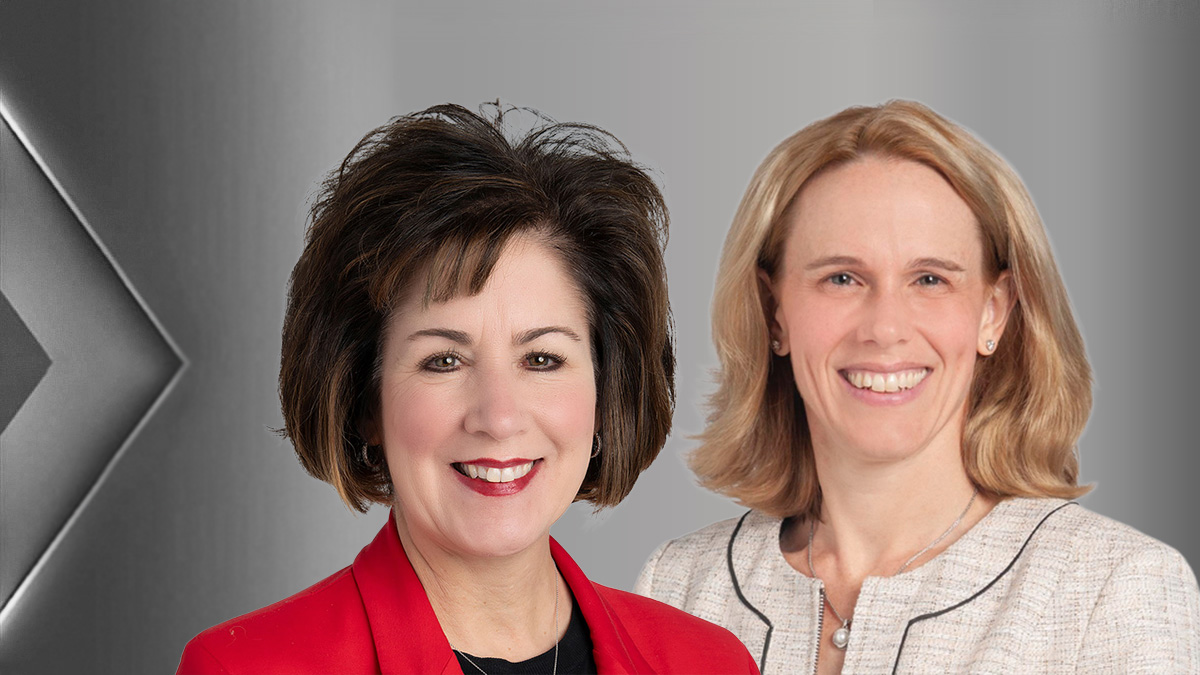
The Adaptable Leader: How Flexibility Strengthens Team Engagement
This episode explores how Cleveland Clinic leaders are redefining engagement, resilience, and purpose in today’s evolving healthcare landscape. Through real world stories listeners gain insight into the strength, empathy, and dedication that caregivers [employees] bring to their work across the enterprise.
Advertisement
Cleveland Clinic is a non-profit academic medical center. Advertising on our site helps support our mission. We do not endorse non-Cleveland Clinic products or services. Policy
Recent Episodes
Bridging the Gap by Reconnecting Disconnected Workforces
This episode will focus on approaches to fostering culture, connection, and involvement in hybrid and remote work environments. They focus o…
New Leadership Skills: AI and Beyond
This episode explores how artificial intelligence (AI) is reshaping healthcare. The panel examines the practical AI applications across clin…
Empowering Leadership Voice
This episode will explore how leaders can strengthen their voice, balance advocacy with active listening, and build psychological safety. Th…
Video content: This video is available to watch online.
View video online (https://cdnapisec.kaltura.com/p/2207941/sp/220794100/playManifest/entryId/1_85sj8y76/flavorId/1_5f3sgelj/format/url/protocol/https/a.mp4)
Transcript
Beyond Leadership Podcast Series
Advertisement
Cleveland Clinic is a non-profit academic medical center. Advertising on our site helps support our mission. We do not endorse non-Cleveland Clinic products or services. Policy
Release Date: May 28, 2026
Expiration Date: May 27, 2029
Estimated Time of Completion: 26 minutes
The Adaptable Leader: How Flexibility Strengthens Team Engagement
Kelly Hancock, DNP, RN, NE-BC, FAAN Sarah Vogler, MD, MBA
Description
Welcome to L.E.A.D., a special series by Beyond Leadership. L.E.A.D. is an innovative, action-oriented framework built on four human-centered behaviors: Listening, Empathizing, Adapting, and Developing. In this series, we explore how top leaders apply these behaviors to build trust, foster collaboration, promote growth, and connect authentically every day.
This episode explores how Cleveland Clinic leaders are redefining engagement, resilience, and purpose in today’s evolving healthcare landscape. Through real‑world stories listeners gain insight into the strength, empathy, and dedication that caregivers [employees] bring to their work across the enterprise.
Learning Objectives
Target Audience
This program is designed for healthcare professionals interested in advancing their leadership skills.
Accreditation
In support of improving patient care, Cleveland Clinic Center for Continuing Education is jointly accredited by the Accreditation Council for Continuing Medical Education (ACCME), the Accreditation Council for Pharmacy Education (ACPE), the American Nurses Credentialing Center (ANCC), and Interprofessional Continuing Education (IPCE) Credit to provide continuing education for the healthcare team.
Advertisement
Credit Designation
Cleveland Clinic Center for Continuing Education designates this internet enduring material for a maximum of 0.5 AMA PRA Category 1 Credits ™. Physicians should claim only the credit commensurate with the extent of their participation in the activity.
Participants claiming CME credit from this activity may submit the credit hours to the American Osteopathic Association for Category 2 credit.
Cleveland Clinic Center for Continuing Education designates this internet enduring material for a maximum of 0.5 ANCC contact hours.
Cleveland Clinic Center for Continuing Education has been authorized by the American Academy of PAs (AAPA) to award AAPA Category 1 CME credit for activities planned in accordance with AAPA CME Criteria. This activity is designated for 0.5 AAPA Category 1 CME credits. PAs should only claim credit commensurate with the extent of their participation.
Cleveland Clinic Center for Continuing Education designates this knowledge-based activity for a maximum of 0.5 hours. Credit will be provided to NABP CPE Monitor within 60 days after the activity completion. Universal Activity Number List:
- Pharmacist UAN : JA0000192-0000-26-038-H99-P
This activity was planned by and for the healthcare team, and learners will receive 0.5 Interprofessional Continuing Education (IPCE) credit for learning and change.
A certificate of participation will be provided to other health care professionals for requesting credits in accordance with their professional boards and/or associations.
Cleveland Clinic Planning Committee
James Stoller, MD, MS
Co-Activity Director Chair, Education
Cecile Foshee, PhD Co-Activity Director Director, Office of Interprofessional Learning
Sawsan Abdel Razig, MD< Chief Academic Officer, Cleveland Clinic Abu Dhabi
Lindsey Amerine, PharmD Sr. VP, Chief Pharmacy Officer
Lisa Baszynski, DNP Executive Director, Associate Chief Nursing Officer
Colleen Carroll, MS Sr. Director of Leadership and Learning
Matthew Donnelly, MBBS (Hons) VP, Professional Staff Affairs
Mark Hamilton, MD Cleveland Clinic London
Jospeh Iannotti, MD Chief of Staff, Cleveland Clinic Florida
Debra Kangisser, PA-C Office of Interprofessional Learning
Aanchal Kapoor, MD, MEd Founder and Director of the Medical Intensive Liver Unit
Suchetha Kshettry, MD Enterprise & Ohio Women’s Professional Staff Association President, (2025-2026)
Christopher Nagel, BA, MA VP, Leadership and Learning
Silvia Perez Protto, MD Immediate Women’s Professional Staff Association Past President, (2025)
Ronna Romano, MBA Office of Interprofessional Learning
Advertisement
Stormy Sweitzer, PhD Office of Interprofessional Learning
Faculty
Kelly Hancock, DNP, RN, NE-BC, FAAN Executive Vice President Chief Caregiver and Chief Administrative Officer Cleveland Clinic
Sarah Vogler, MD, MBA Market Chief of Staff Cleveland Clinic Florida
Host
Jim Pae, MSOD Manager, Organizational Development Mandel Global Leadership and Learning Institute Cleveland Clinic
Disclosures
The Cleveland Clinic Center for Continuing Education has implemented a policy to comply with the Accreditation Council for Continuing Medical Education Standards for Integrity and Independence. This activity includes non-clinical content only. In accordance with the Standards for Integrity and Independence, identification, mitigation and disclosure of financial relationships does not apply.
CME Disclaimer
The information in this educational activity is provided for general medical education purposes only and is not meant to substitute for the independent medical judgment of a physician relative to diagnostic and treatment options of a specific patient's medical condition. The viewpoints expressed in this CME activity are those of the authors/faculty. They do not represent an endorsement by The Cleveland Clinic Foundation. In no event will The Cleveland Clinic Foundation be liable for any decision made or action taken in reliance upon the information provided through this CME activity.
Advertisement
HOW TO OBTAIN AMA PRA Category 1 Credits™, ANCC, AAPA, ACPE, IPCE Contact Hours, OR CERTIFICATE OF PARTICIPATION:
Go to:
http://cce.ccf.org/ccecme/process?site_code=main&activity_session_code=EKCE02703
to log into myCME and begin the activity evaluation and print your certificate. If you need assistance, contact the CME office at myCME@ccf.org
Copyright © 2026 The Cleveland Clinic Foundation. All Rights Reserved.
Podcast Transcript
Kelly Hancock, DNP, RN, NE-BC, FAAN:
Hello and welcome to Beyond Leadership, a Cleveland Clinic podcast where we explore the many dimensions of leadership. I'm Kelly Hancock, Executive Vice President, Chief Caregiver, and Administrative Officer here at Cleveland Clinic, and I'm thrilled to have you join us. In this podcast series, we'll feature conversations with remarkable thinkers and uncover how their insights and experiences are shaping the future of leadership in healthcare. Now let's turn it over to our host, who will guide us through today's enlightening conversation.
Jim Pae, MSOD:
Every great story in healthcare starts with people. We may be fascinated by the technology or the clinical outcomes, but the story is still about the people, in particular, the caregivers who show up shift after shift to heal, to comfort, and to connect. But the world around them is changing fast. Resources are tight, expectations are high, and the pace just keeps accelerating. And all that pressure though, one truth has never mattered more. The future of healthcare depends on how we care for the people who care for others.
Advertisement
When caregivers feel supported and trusted, they bring energy, creativity, and focus, that lift everything ranging from quality and safety to patient experience. But when that connection fades, even the best strategies start to crack. The next chapter of healthcare will be written by leaders who understand that true excellence is ultimately built on trust, teamwork, and purpose. Because in the end, the systems may sustain care, but it's our people who give it meaning and life.
Hello everyone. I am your host, Jim Pae, and this is Beyond Leadership. Today I am joined by Dr. Kelly Hancock, who is Cleveland Clinic's Executive Vice President, Chief Caregiver Officer and Chief Administrative Officer, and holder of the Rich Family Chief Caregiver Chair.
Kelly Hancock, DNP, RN, NE-BC, FAAN:
Hi, Jim. It's great to be here.
Jim Pae, MSOD:
As well as Dr. Sarah Vogler, Chief of Staff for our Florida Market.
Sarah Vogler, MD, MBA:
Hi Jim and Kelly. Thanks for the invitation. This is exciting.
Jim Pae, MSOD:
We are really fortunate to have both of you accomplished leaders here with us today. So, as we think about healthcare, I mean, we have to admit that we've faced some pretty tremendous pressures over recent years. Patient volumes are up, care delivery models are changing, and of course, there's the ongoing public conversation around costs.
Yet through it all our caregivers keep showing up. They're showing remarkable dedication and compassion for the work that they do. So, I'm just curious, from your perspective, what are you most proud of about Cleveland Clinic caregivers and how they've responded to these pressures? Kelly, I'll start with you if I can.
Kelly Hancock, DNP, RN, NE-BC, FAAN:
Sure. Well, there’s so many things to be proud of as it relates to our caregivers. I'm a firm believer that our caregivers are our greatest asset, and there's a number of reasons why. You mentioned the number of patients that we continue to serve. It's been unprecedented, which is a good problem to have. There are so many patients across the globe who really are in need of Cleveland Clinic care, and our caregivers have just risen to the occasion. They come fully present, ready to care for our patients. So, whether they're clinical facing or non-clinical facing, and they continue to live out our mission here at the organization, which makes me extremely proud. And as I think about the past several years, we think about the pandemic, that crisis that we all have gone through together. I don't think that we couldn't have got through it without our caregivers.
One story comes to mind for me as I think about the pandemic. And if you remember early on in the pandemic, as we were preparing to care for our patients and our caregivers who were impacted with COVID-19, we knew that other parts of the country were experiencing a harder impact at the time than we were.
And so, I'll never forget the day, we’re sitting around the executive team and Dr. Mihaljevic says, we are so prepared, and yet we're watching our colleagues in New York and Michigan suffer and trying to care for patients the best they could. He says, I wonder if we put out an inquiry. And we asked our caregivers if anybody would volunteer and be ready to go and help. And I said, well we can ask.
And so, we sent out the request, as you probably remember, asking if there was anybody interested to go to New York and to Michigan for several weeks to care for patients and fellow caregivers in the healthcare, the broader healthcare community. And we were overwhelmed with people who rose their hand and said, I'll go.
We had nurses, physicians, respiratory therapists, techs, even administrative caregivers, said, I'll go to help, whatever I can do. And that was a proud moment for me. In a time of uncertainty. And there was a lot of things that were unknown. For them to really raise their hand and go to their calling for healthcare was an extremely proud moment for me. And I continue to be proud as we are here today.
Jim Pae, MSOD:
Those commitments to purpose and the broader community are amazing. Sarah, what about you? What are your thoughts?
Sarah Vogler, MD, MBA:
I echo everything Kelly has said. Just the enthusiasm and empathy that the team show up with on a daily basis, regardless of the challenge, sometimes even more enthusiastic, depending on the challenge they're facing. When they come, sometimes with hurricane warnings, as Kelly said, through the pandemic, that is when you really see the bond of these teams coming together.
I think the growth we've seen, not only with patient care, but just in the number of caregivers we have. So, we have caregivers that face new caregivers on their team every day, bringing them into that fold of showing them how to be enthusiastic team members and empathetic towards patients.
I think one of the examples I have from Florida, as we've integrated across the Treasure Coast, was rolling out Epic, right? Something that <laugh>, everybody kind of thinks, oh, this is gonna be fun. It is literally a part of every component of patient care, is that documentation piece. And watching teams face that just with this sense of calm, perseverance, knowing that they were still gonna take care of the patient, the patient was gonna come out of it ahead. We are gonna continue to see more patients and the teams have continued to grow, embrace it, and make it even better. So, the challenges that these caregivers face, various things that may be a simple part of their day every day, but they face it and continue to grow, is absolutely amazing and makes me very proud every day.
Jim Pae, MSOD:
That's phenomenal. We have to admit though, that there has to be an impact to our caregivers being asked to do so much consistently, even within the scope of these amazing situations. How do we make sure that we're keeping a pulse on their experience and their wellbeing and their own resilience and their engagement. So, what are you hearing that is of most importance to our healthcare colleagues?
Kelly Hancock, DNP, RN, NE-BC, FAAN:
Sure. I mean, there's quite a bit. And as I think about the engagement of our caregivers and ensuring that they continue to find their purpose in the work that they do, it's important that as leaders, we show up and be present. And we do that in a variety of different ways. That formally we have an engagement survey that goes out on an annual basis so we can understand what matters most to our caregivers, what we can continue to do, and where there's opportunities. We also do a variety of different leadership rounding, town halls, and one-on-one discussions.
And again, these are all data points that we take the feedback, and we use it wisely to inform what programmatic changes we may have here in the organization to better support our culture. So, our caregivers can come to work every day. They can be professionally fulfilled, they can be resilient, highly engaged, because we know the impact for our patients that that has as well. And really be their true best self. That's what we want. We want people to really live out their purpose and the shared mission that we have.
So, as I think about what's top of mind for our caregivers, most recently what we heard is they value the communication that we have here in the organization. They know that healthcare is such a fast pace changing environment. So, we have the external factors in terms of administrative changes, regulatory changes, the changing needs of our patients, right? And so, the more that we can communicate transparently and authentically is something that our caregivers want us to continue to do.
And so, we partner with our talented colleagues in the communications team to see how we can get out messaging differently and more timely to our caregivers. How do we equip our leaders to have those conversations as well? And so, you know that in our organization, we've invested deeply into programs to grow and develop our leaders so they can have these communications, because that's really critical to the engagement of our teams.
Jim Pae, MSOD:
Sarah, your thoughts too.
Sarah Vogler, MD, MBA:
Yes, agree. I think very intentional about listening has been a key component of making sure that we keep a good pulse on what the caregivers are experiencing every day. So, meeting regularly and being present amongst institute leaders, hospital leaders, joining the rounds in the hospital, town halls, and even the informal conversations that just happen amongst patient care throughout the day, right? Being out on the wards, being in the operating rooms, being in the clinic 'cause there's a lot of data. We're excellent about getting that data, which is a great place to start and understand where to start meeting our caregivers. So, the surveys, retention metrics, they tell the story, but what really matters, I think, is hearing those one-on-one moments and learning their challenges, what's giving those teams energy to excel every day.
Jim Pae, MSOD:
I agree. Just to connect with the rounding that you talk about and the leadership connections, I just had a story yesterday where the nursing leaders are rounding in one of our regional hospitals, but they are not only rounding of course, on their own people, they're rounding and talking with our operation staff, our facility staff, and the connections that they're building are astounding, and really building a sense of community amongst one another. So that really seems to be driving forward that engagement, recognizing that people are not just part of a system or an enterprise, but truly part of an overall care team. I thought that was really impressive.
Kelly Hancock, DNP, RN, NE-BC, FAAN:
That's a great example. I think for me that really illustrates what we are known for in our organization is this teams of teams approach. That's why we're all called caregivers. No matter what you do, your contribution makes a significant difference to the patients and the communities. That's a great example. Yeah.
Jim Pae, MSOD:
So, I'm curious, as we gather these data, Sarah, you mentioned we've got a lot of data. So, what does that mean from a leadership standpoint? How might leaders need to start shifting their approach to things? Recognizing that, again, healthcare is constantly changing and we're getting this information, how might their approaches need to start shifting as well? Sarah, I'll start with you.
Sarah Vogler, MD, MBA:
I think a piece of that is understanding what that information, and even one-on-one conversations, what caregivers really want. The most important components, I think, they want to feel valued, supported, and really seen and recognized as part of the Cleveland Clinic care team.
So, they're asking for transparency, that career development connection to the purpose as to what they're doing, how they're helping their patients. As part of that, what can I bring to them, fantastic teams and I think being able to communicate the why behind some of the changes they may be understanding, because it's not just the operational decision, the policy that's put in place, it's really these strategic shifts that trying to take the time to connect those components to the strategy and purpose, allows caregivers to understand the value behind it, how they can support it, how it can really be owned by them too, to push forward the mission and take care of our patients.
Kelly Hancock, DNP, RN, NE-BC, FAAN:
I couldn't agree more. I think it is so important for leaders to get with their teams and really understand their feedback and co-create what matters most to them. So, whether from an engagement survey standpoint, how do you take that information and co-create your action plan and how is that meaningful to that team? And not only one time in creating that plan, but how do you continue to show up and follow up on what you mutually agreed upon as what is the right path forward?
But as it relates to the continued shift of mindset, I think for leaders, as I mentioned in my earlier comment, healthcare is such a fast-paced environment, rapid change is the norm. I mean, we look at the evolution of AI and now its penetration into healthcare. Leaders need to be agile in how they show up and how they deliver the communication. Going back to that, as Sarah mentioned, the why and why we're doing this, why are we engaging in these other tools, resources that may be fueled by automation AI. It's not to replace an individual, it's really how do we enhance or augment. And you have to be agile in your style in terms of really explaining, I guess, like Sarah said, the why. Why are we doing this? So, we could better support you, we could provide better care for our patients and we can be a better organization.
Jim Pae, MSOD:
I'm curious, have either of you recognized a substantive shift that you've personally made in terms of your leadership approach in order to meet your caregivers? Is there a shift in mindset or something that, yeah, that was really great for five years, but now doesn't seem to land the way that it used to?
Kelly Hancock, DNP, RN, NE-BC, FAAN:
It's interesting. I've been a proud Cleveland Clinic caregiver for the last 32 years and in a leadership role for 28 of those 32 years. So, my journey in leadership began when I was a novice career person. And I've learned quite a bit. And so, you're absolutely right. What worked then certainly does not work now. But I think one thing that I learned early on that I continue to focus on is those who are closest to the work, whatever the work may be, know the solutions much better than I do. And so, when you're young and you assume this leadership role, sometimes you have your mind that you should know all the answers and your answers are the best answers or the best direction. And what I quickly learned, <laugh>, is that you really have to go to those that you serve because they know really what's going on and they really know the solutions. And you could take that; you could use it wisely. You as a leader need to remove those barriers so they can do what they need to do.
Sarah Vogler, MD, MBA:
I totally agree with what Kelly's saying, could learn a lot from Kelly and have <laugh>, but I think with this rapid change that we're seeing every day, it is absolutely impossible to stay on top of it all. So, it's the frontline caregivers that are seeing this, adapting to it because that's what their day brings, and then the two-way communication on how do we optimize it, how can I best support them?
Empowering leaders who I work with every day that I trust and support their path forward so that they can do the right thing. Guide the teams into the right direction without always feeling like there has to be this checkbox that's going back and forth, right? The teams need to kind of do what they need, boots on the ground to continue to capture the best, the newest technology, the best care for our patients.
Jim Pae, MSOD:
So, I'm curious too, how might we be best supporting the development of our future leaders as well? So, we engage with folks, we recognize that those individuals who are closest to the work are seeing the latest and greatest, so to speak, and will then be our future leaders. How do we empower them and support them in their growth to be the next generation?
Sarah Vogler, MD, MBA:
I could start with this one. It's interesting to understand where you start with a young leader. Even myself and my journey, I feel like you have to start with some of the objective data. What do you have at your fingertips? That's how you start to get to know the teams around you.
And I also think when they're faced with challenges and difficulties, which is part of healthcare these days, is there's an instinct sometimes to look at the data that's in front of you and think, this can't possibly be right. <laugh>, there's no way. [That's right.] You have to fix the data, right? And fixing the data is not necessarily the way to go. It's more the curiosity and interest about that, and helping them kinda gain momentum. And how can you impact the change of this data? How can you change where this is going or proactively start to plan for this to happen better in the future?
Kelly Hancock, DNP, RN, NE-BC, FAAN:
I couldn't agree more. I think as leaders, it's helping create this vision of where we're going as an organization. I mean, clearly, we have a vision, but looking at the data, the outcomes, what does it mean to those that we serve?
And as leaders, our job is to create this shared vision, if you will, about how we're going to get there together. And so, it's important to use the data wisely. I was chuckling when Sarah mentioned nobody believes the data, right? And so, we have to ensure that we take it for what it is and, and how can we use it to the best of our ability.
Jim Pae, MSOD:
As we continue to evolve. And of course, there will be new challenges. Yes. We're not done sustaining this sense of engagement with our colleagues. So, promoting wellbeing, creating environments in which they can continue to thrive. What do you think would be most influential to foster that sense of engagement and even retention in healthcare? That’s a big thing that we are faced with as well. Not only retention but also filling those folks who are serving off after multiple years of amazing patient care. So where do you think we're headed next?
Kelly Hancock, DNP, RN, NE-BC, FAAN:
I think for us as leaders and our, our future leaders, I think the importance of focusing on our fellow caregivers, why and reminding them of their purpose is really going to influence the engagement, the resiliency of our teams. And I think Sarah said it so eloquently earlier, people really, at the end of the day, they want to be seen. They want to be heard, and they wanna ensure that their contributions are valued in the organization.
And that's what makes us such a dynamic organization. I mean, we have the privilege to work alongside 83,000 caregivers across our globe, across three continents. Our caregivers represent over a hundred nations. And so, they come to us with different experiences, life experiences, healthcare experiences, and it's really our job to bring the best of them to our teams, to our organization.
Sarah Vogler, MD, MBA:
I can totally appreciate that. And I think they need to feel that connection. It's been interesting in our OP model evolution in Florida, the strength of that connection. In my position alone, I feel very comfortable reaching out to anyone on the executive team when I need help in the OPSA caregiver office and then communicating that and working with the team in Florida. And I think seeing teams within their own specialties build those connections and meaningful peace of mind when they're coming to work, especially in a competitive market.
The Florida market, and I'm sure the Ohio market too, although Kelly knows that far more than I do, but they can easily not move where they're living and go work in another healthcare system. So that connectivity part of the team, how we change flexibility and compensation, it really is gonna come back to the culture of the inclusivity. Having everyone committed to the same shared goal and vision, making sure that the teams have their area of expertise that they feel connected to and responsible for, and really part of.
Jim Pae, MSOD:
I love that I spent a lot of my time working with teams. So, this is near and dear to my heart and I do find that when people share their why amongst one another, they tend to make that connection. They're like, yes, I had a similar experience. I came into nursing because yes, my family had a situation and a nurse showed up for me, for example. And from across the table, people are like, yes, me too. So, you're building that connection, and I've recognized that there are times when reconnecting just as you mentioned, Kelly, not only affords them additional resilience and ability to move forward but also makes that team that much more functional because they now know that there's a shared experience amongst them.
Kelly Hancock, DNP, RN, NE-BC, FAAN:
That's right. That's right. It's powerful, isn't it?
Jim Pae, MSOD:
It is.
Kelly Hancock, DNP, RN, NE-BC, FAAN:
I'm a firm believer in that storytelling has such a powerful impact. And when we tell these stories of whether it's our own experiences, or they share the stories of the impact our organization has had on patients and their families, it's remarkable. And how that refuels you, and your energy, and your commitment, and your connection to the mission and vision of the organization. And I would advise, and I always do all leaders about the power of storytelling because it does resonate with different individuals along the way, and it's very impactful.
Jim Pae, MSOD:
And it's that authentic connection.
Kelly Hancock, DNP, RN, NE-BC, FAAN:
Yes.
Jim Pae, MSOD:
I think with people, we can appreciate the communication that we receive from our executive teams and others, but then also making meaning of that from a very local standpoint. I think it allows us to drive forward.
Sarah Vogler, MD, MBA:
I think it also allows you, it gives you permission for to pause and actually think about it., right? That's what brings a smile to everybody's face, are those stories 'cause we can all relate to 'em, and we're all proud in the moment for whoever it may be involved. So it is in a rapid day, very changing every day. It gives you that permission to pause and be reflective and appreciative of what's happening.
Kelly Hancock, DNP, RN, NE-BC, FAAN:
That reminds me, Sarah, earlier this year, one of the leader guided discussions that we had at the executive team that Dr. Mihaljevic was leading was just share your why. Why did you choose to get into healthcare? And it was so powerful, for some I knew their story and others I didn't. And I just think it really shifted in how we connected as an executive team, understanding how people got into healthcare. So, I think we should not underestimate the power of that.
Sarah Vogler, MD, MBA:
You're absolutely right.
Jim Pae, MSOD:
I agree. And I think that the word that we keep using is people.
Too often. We can get distracted by roles, responsibilities, titles, things of that nature. I know that when I go into certain areas, leaders have shared with me, well, for example, they're numbers people. I'm like, okay. So, they don't have families, they've never seen a movie? What? You know. So, engaging one another as human beings, and as people, is super powerful.
So, we're kind of getting to the close of our particular session today. If you could offer one piece of advice to healthcare leaders seeking to keep their teams energized, and connected, and supported among these changes, and you've shared several already, but closing thoughts around that?
Sarah Vogler, MD, MBA:
I would say lead with empathy, clarity, and consistency. As people start to tackle harder jobs in our fast-paced healthcare system. If they can trust their leader’s intent expectations, and know that they have their support, I think that leads them to really actually find their why and push forward to accomplish the goals they need to, within the same mission and vision that we all share.
Kelly Hancock, DNP, RN, NE-BC, FAAN:
I couldn't agree more with you, Sarah. I think showing up as your authentic self, and being clear about the direction that you're setting, the vision, how it supports the overall organization mission and vision, is something that I think novice leaders or new leaders in healthcare need to keep in mind and front and center. And again, at the end of the day, I think it's very simple. leaders show up and that means you show up at all times. You show up to listen, to be of support, to take the feedback, to use it wisely. And don't underestimate your power of your presence. It's important.
Jim Pae, MSOD:
It seems clear that the future of healthcare will depend not only from our operational excellence, but creating workplaces where people actually have the opportunity to feel cared for themselves, capable and, and truly connected to their purpose.
Thank you both for your insights. This has been truly amazing for your perspectives to be shared with us. Thank you so much.
Kelly Hancock, DNP, RN, NE-BC, FAAN:
Thank you. It was fun. Thank you, Sarah.
Sarah Vogler, MD, MBA:
Yes. Thank you both.
Jim Pae, MSOD:
This concludes another episode of Beyond Leadership. You can find additional podcast episodes on our website, clevelandclinic.org/beyondleadership, or subscribe to the podcast on iTunes, Google Play, Spotify, or wherever you get your podcasts.
Recent Episodes
Bridging the Gap by Reconnecting Disconnected Workforces
This episode will focus on approaches to fostering culture, connection, and involvement in hybrid and remote work environments. They focus o…
New Leadership Skills: AI and Beyond
This episode explores how artificial intelligence (AI) is reshaping healthcare. The panel examines the practical AI applications across clin…
Empowering Leadership Voice
This episode will explore how leaders can strengthen their voice, balance advocacy with active listening, and build psychological safety. Th…
Never miss a moment - subscribe now.
Listen to the Health Essentials Podcast on your favorite streaming platform.
Other Podcasts You May Love
Beyond the Pages: CCJM Podcast
Beyond the Pages: CCJM Podcast takes the listener more in-depth into Cleveland Clinic Journal of Med…
Butts & Guts
A Cleveland Clinic podcast exploring your digestive and surgical health from end to end. You’ll lear…
Cancer Advances
A Cleveland Clinic podcast for medical professionals exploring the latest innovative research and cl…
Cardiac Consult
A Cleveland Clinic podcast exploring heart, vascular and thoracic topics of interest to healthcare p…