



Diffuse alveolar hemorrhage is when there’s widespread bleeding in your lungs due to damage or inflammation in your lungs' blood vessels. There are many causes, including autoimmune diseases, heart or kidney conditions and certain treatments. Symptoms include shortness of breath, chest pain and coughing up blood.
Advertisement
Cleveland Clinic is a non-profit academic medical center. Advertising on our site helps support our mission. We do not endorse non-Cleveland Clinic products or services. Policy
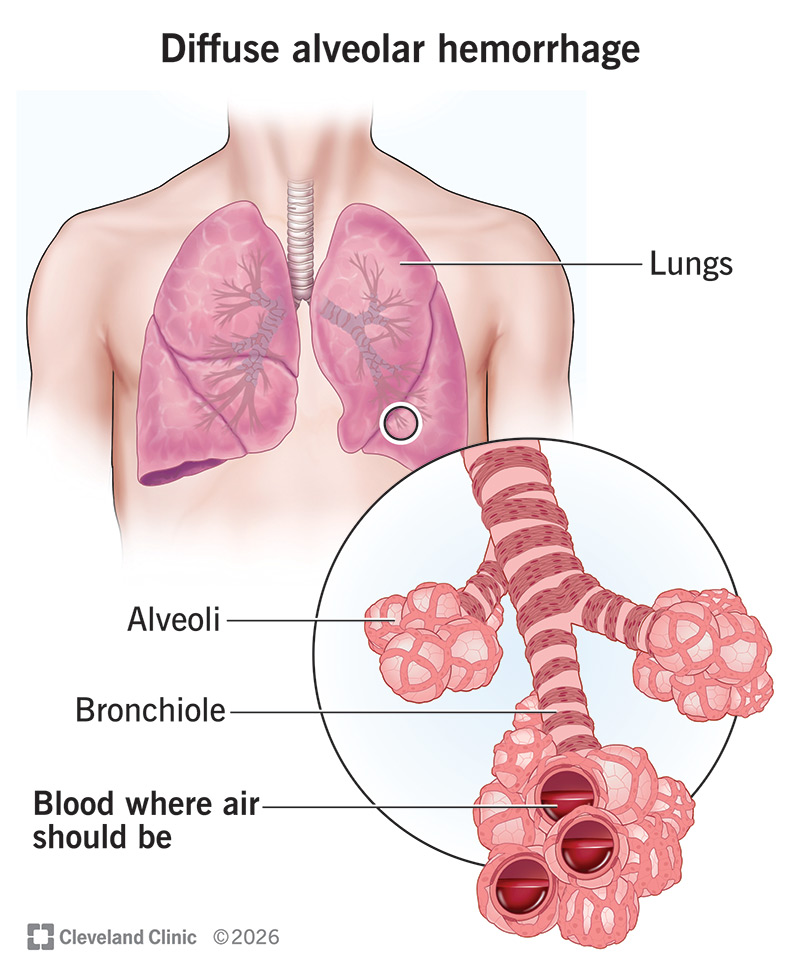
Image content: This image is available to view online.
View image online (https://my.clevelandclinic.org/-/scassets/images/org/health/articles/diffuse-alveolar-hemorrhage)
Diffuse alveolar hemorrhage (DAH) is when there’s bleeding in the small air sacs in your lungs (alveoli). The bleeding is widespread (diffuse) in your lungs’ tissues.
Advertisement
Cleveland Clinic is a non-profit academic medical center. Advertising on our site helps support our mission. We do not endorse non-Cleveland Clinic products or services. Policy
DAH happens when there’s damage or inflammation in the blood vessels in your lungs. It can feel hard to breathe as your alveoli fill with blood.
Diffuse alveolar hemorrhage can be fatal. Call 911 or go to the emergency room if you have shortness of breath or chest pain, or you’re coughing up blood.
DAH symptoms include:
You might also have symptoms of the underlying condition that’s causing the bleeding. These could include rash, muscle pain or joint pain.
Inflammation or damage to the blood vessels in your lungs causes DAH. There are many different causes that can lead to this damage, including:
Advertisement
You're at an increased risk if you have any of the conditions that can cause DAH or you have a weakened immune system.
If blood fills the sacs in your lungs that are meant for air, you won’t be able to breathe properly or get oxygen to the tissues in your body. This can lead to hypoxia and respiratory failure.
Healthcare providers diagnose diffuse alveolar hemorrhage with bronchoalveolar lavage. This means washing and collecting fluid during a procedure that looks inside your lungs (bronchoscopy). If you have more than one sample of fluid with blood in it, your provider will diagnose DAH.
They may also use additional tests to determine the cause. These include:
Treatment for DAH varies widely based on the cause. You’ll likely have a care team that includes pulmonologists, rheumatologists, cardiologists and others.
If autoimmune disease is the cause, your provider may use IV corticosteroids. For other causes, they may also use:
If a medication is causing DAH, your provider might recommend stopping or changing your medication.
Call 911 or go to the emergency room if you’re having trouble breathing, you have chest pain or you’re coughing up blood. Diffuse alveolar hemorrhage and other conditions that cause these symptoms can be fatal.
Diffuse alveolar hemorrhage is an emergency. You’ll be treated in the hospital. New treatments are more effective at bringing down inflammation and stopping the bleeding. But it can still be fatal in many cases.
If an ongoing health condition caused DAH, it could happen again in the future.
Managing any health conditions that can lead to bleeding in your lungs is the best way to prevent diffuse alveolar hemorrhage. Talk to your doctor about any concerns you have.
Diffuse alveolar hemorrhage can be fatal if not treated quickly. Call 911 or get to an ER if you have symptoms. Talk to your provider if you have a condition that puts you at higher risk for DAH. They can help you manage the condition and let you know what symptoms to look out for.
Advertisement



Sign up for our Health Essentials emails for expert guidance on nutrition, fitness, sleep, skin care and more.
Learn more about the Health Library and our editorial process.
Cleveland Clinic’s health articles are based on evidence-backed information and review by medical professionals to ensure accuracy, reliability and up-to-date clinical standards.
Cleveland Clinic’s health articles are based on evidence-backed information and review by medical professionals to ensure accuracy, reliability and up-to-date clinical standards.
Whether you need stitches, a broken bone set or think your appendix might be causing your abdominal pain, Cleveland Clinic’s emergency medicine team is here to help.
