



The first trimester lasts until the end of the 13th week of pregnancy. You may begin feeling signs of pregnancy like nausea and tender breasts. Fetal development starts when the egg is fertilized. By the end of the 13th week, all of its organs and body systems are developing. Find a pregnancy care provider as soon as you know you’re pregnant.
Advertisement
Cleveland Clinic is a non-profit academic medical center. Advertising on our site helps support our mission. We do not endorse non-Cleveland Clinic products or services. Policy
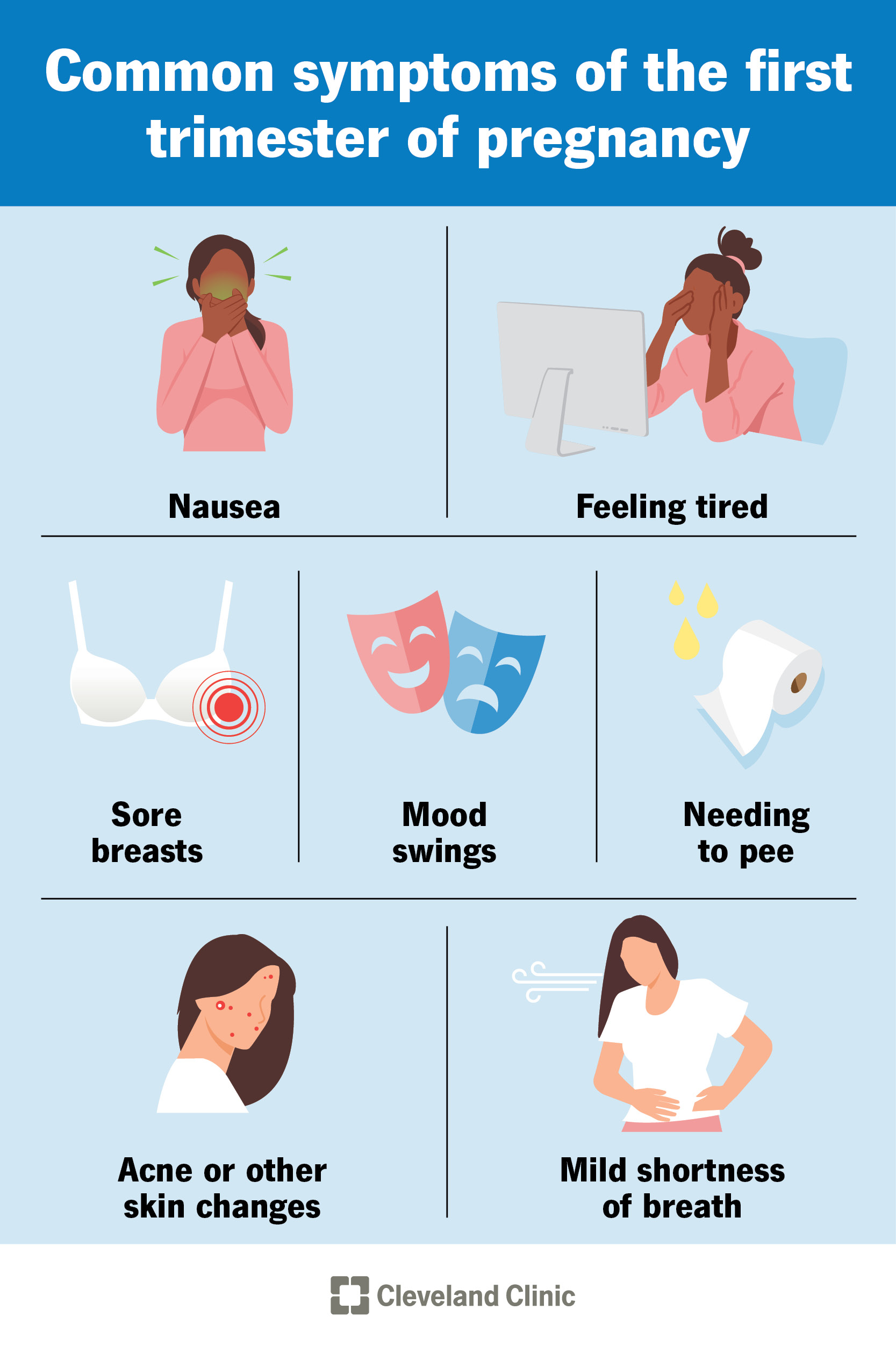
Image content: This image is available to view online.
View image online (https://my.clevelandclinic.org/-/scassets/images/org/health/articles/9699-first-trimester)
Pregnancy has three trimesters. Each trimester is about 13 weeks, or three months long. A full-term pregnancy lasts 40 weeks (between nine and 10 months). Your first trimester starts on the first day of your last menstrual period and goes until the beginning of the 13th week.
Advertisement
Cleveland Clinic is a non-profit academic medical center. Advertising on our site helps support our mission. We do not endorse non-Cleveland Clinic products or services. Policy
Your first trimester is very important. You might not look or feel pregnant at first, but your body is changing. Now is a great time to think about your overall health and lifestyle changes you may need to make during pregnancy.
Every person and every pregnancy is different. But some of the most common symptoms are:
The first trimester brings many physical and emotional changes. Your hormone levels rise quickly. In fact, your body produces more estrogen during one pregnancy than it does during your entire life when you’re not pregnant.
Advertisement
Your heart also pumps more blood during pregnancy. This can make your pulse faster and cause you to feel tired more easily. Listen to your body and rest when you feel tired or short of breath.
During the first trimester, many body structures and organ systems develop. Making healthy choices and getting regular prenatal care is important during this time.
The structures that will become the amniotic sac, placenta and umbilical cord start to form. A tube that becomes the fetus’ brain and spinal cord forms, as well as its circulatory system. A face, circles for eyes and the beginning of a mouth take shape. The embryo is about a quarter-inch inch long, smaller than a grain of rice.
During the sixth week of pregnancy, several major organs begin to form. These include the heart, lungs, ears, arms and legs. Soft tissue slowly turns into bone. The face has a more-defined mouth and nose. Some providers may offer an early ultrasound at this time to check for a heartbeat. By the end of the eighth week, the embryo is called a fetus. It is about 1 inch long, or roughly the size of a raspberry.
Towards the end of your first trimester, the fetus will have toes, fingers and nails. It will start to move by opening and closing its hands and mouth. Its urinary and digestive systems are also fully functioning. At around 12 weeks of pregnancy, your provider can listen to the fetal heart using a Doppler ultrasound.
It also has a vagina or a penis at this point (though your provider can’t see it on an ultrasound). By the end of the 12th week of pregnancy, the fetus is between 3 and 4 inches long — about the size of a plum. It weighs about 1 ounce.
Checkups, screenings and other tests during pregnancy help identify any health issues that may cause problems in your pregnancy. Prenatal care appointments are important because your pregnancy care provider discusses what you can expect, performs checkups and screenings, and answers any questions you may have.
Once you find out you’re pregnant, contact a pregnancy care provider as soon as you can. If you don’t have one, there are resources that can help you find care, even if you don’t have insurance.
You’ll have either two or three prenatal visits during your first trimester. This can vary depending on your provider or if you have a high-risk pregnancy. You can expect to discuss your personal medical history, gynecological and obstetrical history (prior pregnancies and births), as well any family medical history that may affect your pregnancy.
At your first prenatal visit, your provider will calculate your due date. They’ll check your weight and blood pressure. You can also expect them to perform the following:
Advertisement
Some providers use transvaginal ultrasound at your first appointment to measure the fetal heart rate and size. This ultrasound also shows if you’re expecting multiples. You’ll have at least one ultrasound in your first trimester. The exact timing varies depending on your provider. If you’re expecting multiples, you may have more ultrasounds in your first trimester.
Your provider may suggest other screening tests during pregnancy. Screening tests identify if you or the fetus are at risk for certain health conditions. Based on the results of your screening, you may need more tests.
Here are some helpful tips on staying healthy during the first 13 weeks of pregnancy:
Advertisement
After learning you’re pregnant, you may need to make some lifestyle changes. These choices can help support a healthy pregnancy. You should avoid:
Call your provider right away if you have:
Pregnancy is an exciting, and sometimes scary, time. You may feel overwhelmed with information and have lots of questions. During the first trimester of pregnancy, your body is growing and changing rapidly. The fetus is growing and developing, too. In fact, by the end of the first trimester, the fetus is the size of a lemon. You may begin having symptoms of pregnancy like feeling tired, nausea, sore breasts or needing to pee more often. Schedule an appointment with a pregnancy care provider as soon as you know you’re pregnant. Getting regular prenatal care is one of the best things you can do.
Advertisement



Sign up for our Health Essentials emails for expert guidance on nutrition, fitness, sleep, skin care and more.
Learn more about the Health Library and our editorial process.
Cleveland Clinic’s health articles are based on evidence-backed information and review by medical professionals to ensure accuracy, reliability and up-to-date clinical standards.
Cleveland Clinic’s health articles are based on evidence-backed information and review by medical professionals to ensure accuracy, reliability and up-to-date clinical standards.
Trying to choose where to give birth? Learn why Cleveland Clinic is the best choice to help you through each step of the labor and delivery process.
