



Hemochromatosis (iron overload) happens when your body absorbs and stores too much iron. Your body needs iron to function, but too much can become harmful. Over time, the extra iron can build up in organs like your liver, heart and pancreas and cause serious damage. Treatment can lower your iron levels and help prevent complications.
Advertisement
Cleveland Clinic is a non-profit academic medical center. Advertising on our site helps support our mission. We do not endorse non-Cleveland Clinic products or services. Policy
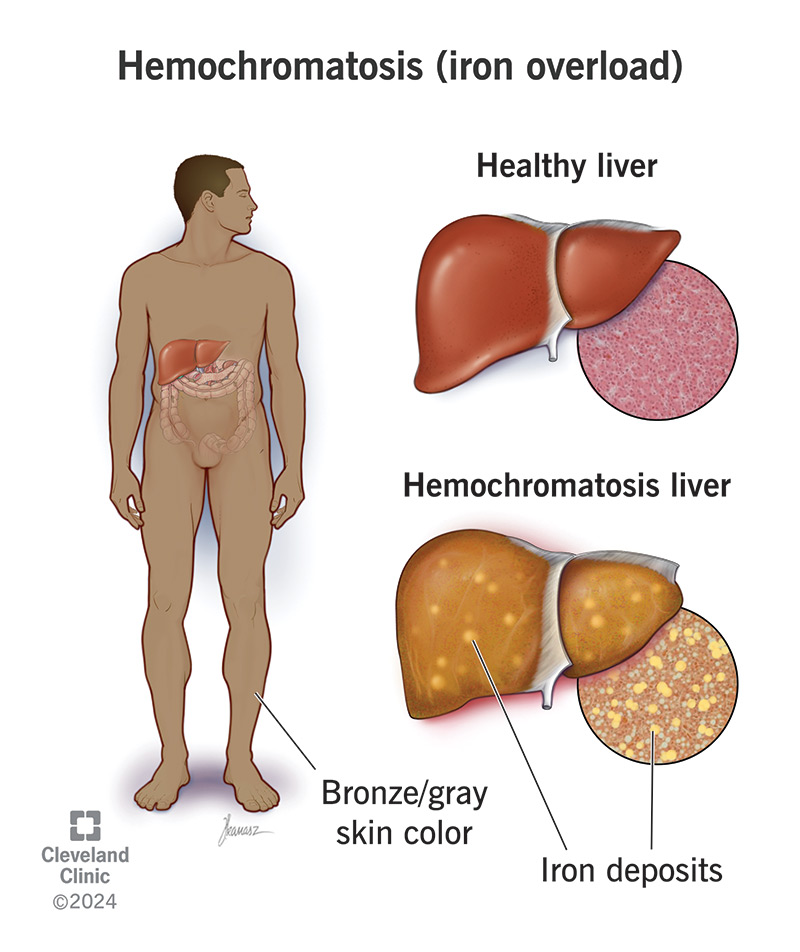
Image content: This image is available to view online.
View image online (https://my.clevelandclinic.org/-/scassets/Images/org/health/articles/14971-hemochromatosis-iron-overload.jpg)
Hemochromatosis (iron overload) is a condition in which your body has too much iron. Your body absorbs too much iron and your organs store the excess, which damages them over time. It can be especially damaging to your heart, liver and pancreas.
Advertisement
Cleveland Clinic is a non-profit academic medical center. Advertising on our site helps support our mission. We do not endorse non-Cleveland Clinic products or services. Policy
Your body needs iron. But too much becomes toxic. Your body doesn’t have a built-in way to get rid of excess iron. So, it stashes it away in your tissues. As iron builds up, you may start to see it in your skin. You could also feel it in your joints.
Without treatment, iron overload can be life-threatening. But by getting treatment to reduce your iron levels, you can manage the condition.
Hemochromatosis symptoms happen when iron builds up to levels that start to affect your organs. The condition is usually present at birth. But it takes a long time for iron to build up. Most people don’t develop symptoms until their 40s or 50s.
If you have a milder form of iron overload, you might not ever notice it. Or symptoms might appear much later in life. They may look like normal signs of aging.
Common symptoms of hemochromatosis include:
There are two main forms of iron overload: primary (hereditary) hemochromatosis and secondary hemochromatosis.
Advertisement
Most people have hereditary hemochromatosis — they get it from their biological parents. Genetic changes (variations) cause this form. It primarily involves the HFE gene. It takes two copies of the changed gene — one from each parent — for you to develop the condition.
A less common type of the genetic form comes from changes in the HJV or HAMP genes. It’s called juvenile hemochromatosis. Changes in these genes cause iron to build up more quickly. So, symptoms appear sooner. This form typically appears between the ages of 15 and 30.
Other medical conditions or treatments cause secondary hemochromatosis. For example, if you have anemia, frequent blood transfusions can cause iron overload. If you have advanced liver disease, your liver may have trouble processing iron properly. This can cause it to build up.
Rarely, a developing fetus with preexisting liver disease can develop neonatal hemochromatosis.
Hereditary hemochromatosis is more common in white people of Northern European descent.
You can find out if you have copies of the changed HFE gene through genetic testing. If you’re planning a family, you and your partner may want to find out if you each carry one of the genes.
Risk factors for secondary hemochromatosis include:
Iron overload can cause problems with many different organs and glands in your body. It affects your heart, liver and pancreas the most. It can lead to serious complications, like:
To diagnose hemochromatosis, your healthcare provider will start by asking some questions. They’ll want to know:
Your provider will do a physical exam to look for signs and symptoms of iron overload.
You may need testing, including:
Hemochromatosis treatment includes several methods to help reduce iron levels in your body. These treatments can help prevent or delay further damage to your organs:
Advertisement
If you have secondary hemochromatosis, you may need separate treatment for the condition that caused it.
The outlook for iron overload depends on how soon you get a diagnosis and start treatment.
If you go a long time without treatment, it can cause severe damage to your organs. Some damage may be permanent.
But with early diagnosis and treatment, hemochromatosis is manageable. You can live a typical life and may be able to reverse organ damage.
If you remember Popeye, or having to eat spinach as a kid, you know that getting enough iron is a health goal. So, you might be surprised to learn that you can actually get too much. It usually takes a glitch in your genetic code for this to happen — and it typically takes decades. But iron overload can do real damage if it goes untreated. Regular checkups and blood tests can help catch it before that happens.
Advertisement



Sign up for our Health Essentials emails for expert guidance on nutrition, fitness, sleep, skin care and more.
Learn more about the Health Library and our editorial process.
Cleveland Clinic’s health articles are based on evidence-backed information and review by medical professionals to ensure accuracy, reliability and up-to-date clinical standards.
Cleveland Clinic’s health articles are based on evidence-backed information and review by medical professionals to ensure accuracy, reliability and up-to-date clinical standards.
Cleveland Clinic’s primary care providers offer lifelong medical care. From sinus infections and high blood pressure to preventive screening, we’re here for you.
