


Welcome
Thank you for your interest in the Cleveland Clinic’s Transplant Nephrology Fellowship Program. Our Fellowship Program offers comprehensive training structured to enhance critical thinking skills, manage high clinical volume, and provide hands-on opportunities to participate in quality improvement projects. Our fellows benefit from mentorship by global leaders in kidney transplantation, preparing them to become future leaders in the field.
Our program features a well-rounded curriculum covering all aspects of kidney transplantation. Fellows gain experience in evaluating patients before a transplant, managing care after transplant in both inpatient and outpatient settings, and performing living donor evaluations and follow-ups. With one of the largest kidney transplant programs in the country, we also offer training in complex procedures such as kidney protocol biopsies, opportunities to care for multiorgan transplant recipients, histocompatibility testing, and immunosuppression management.
Our fellows are exposed to a wide range of clinical scenarios, helping to enhance their decision-making and clinical judgment. Our transplant nephrology fellows work closely with a collaborative, multidisciplinary team where a spirit of camaraderie and shared purpose is central to patient care.
In addition to clinical training, our curriculum includes opportunities to strengthen your research skills. Fellows are supported in quality improvement initiatives and receive mentorship from faculty across the department. As the largest transplant center in Ohio and one of the largest in North America, we offer unparalleled access to robust data and research resources to help improve outcomes and advance the field.
We aim to train transplant nephrologists who will lead with vision, skill, and compassion. Upon completion of the fellowship, our graduates are well-prepared for eligibility for certification through the United Network for Organ Sharing (UNOS) in kidney and pancreas transplantation.
Anne Huml, MD
Program Director, Transplant Nephrology Program
Virtual Tour of Main Campus
Please enjoy this aerial video of Cleveland Clinic's Glickman Tower and Main Campus.
Overview
Mission
Our mission is to train outstanding transplant nephrologists through comprehensive, high volume clinical experience, rigorous academic mentorship, and hands-on participation in quality improvement and research. We are committed to fostering critical thinking, clinical excellence, and compassionate, patient-centered care within a collaborative multidisciplinary environment. Through exposure to the full spectrum of kidney transplantation and access to exceptional clinical and research resources, we prepare our fellows to become innovative leaders who advance transplant medicine and improve outcomes for patients.
Program overview
The Nephrology Transplant Fellowship is a one-year fellowship accredited by the Accreditation Council for Graduate Medical Education (ACGME). Applicants must have completed a two-year ACGME general nephrology fellowship prior to acceptance into the program.
History
- 1960s: Dr. Magnus O. Magnusson pioneered research in kidney preservation, lengthening the waiting time to find suitable transplant donors for recipients.
- 1963: Cleveland Clinic performs its first cadaveric kidney transplant.
- 1968: Dr. William Braun establishes the histocompatibility laboratory for kidney transplantation.
- 1972: Dr. William Braun is appointed Chief of the Renal Transplantation Section at Cleveland Clinic, where the 450th kidney transplant is performed.
- 2008: The Glickman Tower is completed and becomes the new home of the Glickman Urological and Kidney Institute, which includes the Department of Nephrology and Hypertension.
- 2019 to present: Dr. Emilio Poggio is awarded NIH funding for APOL1 Long-term Kidney Transplantation Outcomes Network (APOLLO) Study. The prospective study is assessing the effects of renal-risk variants in the apolipoprotein gene. He also serves as the principal investigator for Clinical Trials in Organ Transplantation (CTOT).
- 2021 to present: Dr. Crystal Gadegbeku was appointed as Chair of the Department of Kidney Medicine in 2021.
Training & Curriculum
The fellowship curriculum includes six months of inpatient rotations, complemented by outpatient rotations and participation in a dedicated fellows’ clinic focused on the long-term care of transplant recipients. Fellows also receive training in kidney transplant biopsy procedures and are provided with scheduled research blocks throughout the academic year to support scholarly activity. In addition, fellows may tailor their training through elective rotations. Available electives include Histocompatibility and Immunogenetics Services, for which a one-week rotation is mandatory, as well as Transplant Cardiology, Intestinal Transplantation, Renal Genetics, Transplant Infectious Disease, and Transplant Hepatology.
Research
Each transplant fellow is paired with a research mentor whose expertise aligns with the fellow’s individual interests. Fellows are expected to actively take advantage of available professional development opportunities and to attend weekly research meetings, where they will provide updates and discuss progress on their projects. At a minimum, fellows are expected to engage in scholarly activities that include submitting one abstract to the American Transplant Congress (ATC) and completing one original research manuscript.
Conferences
The Department of Kidney Medicine hosts internal and external speakers to discuss areas of interest with a special focus on nephrology related research, diagnosis, physiology, management, and treatment. Fellows are required to deliver one Grand Round presentation. The fellow is expected to identify an area of interest for self-discovery, undertake an extensive literature search, and present the topic in an organized, concise forum to peers and faculty. The transplant fellow is expected to attend mandatory conferences, including transplant core curriculum, biopsy conference, journal clubs and other didactics. The transplant fellow is expected to present one presentation at the Nephrology Case Conference.
Faculty
Program leadership
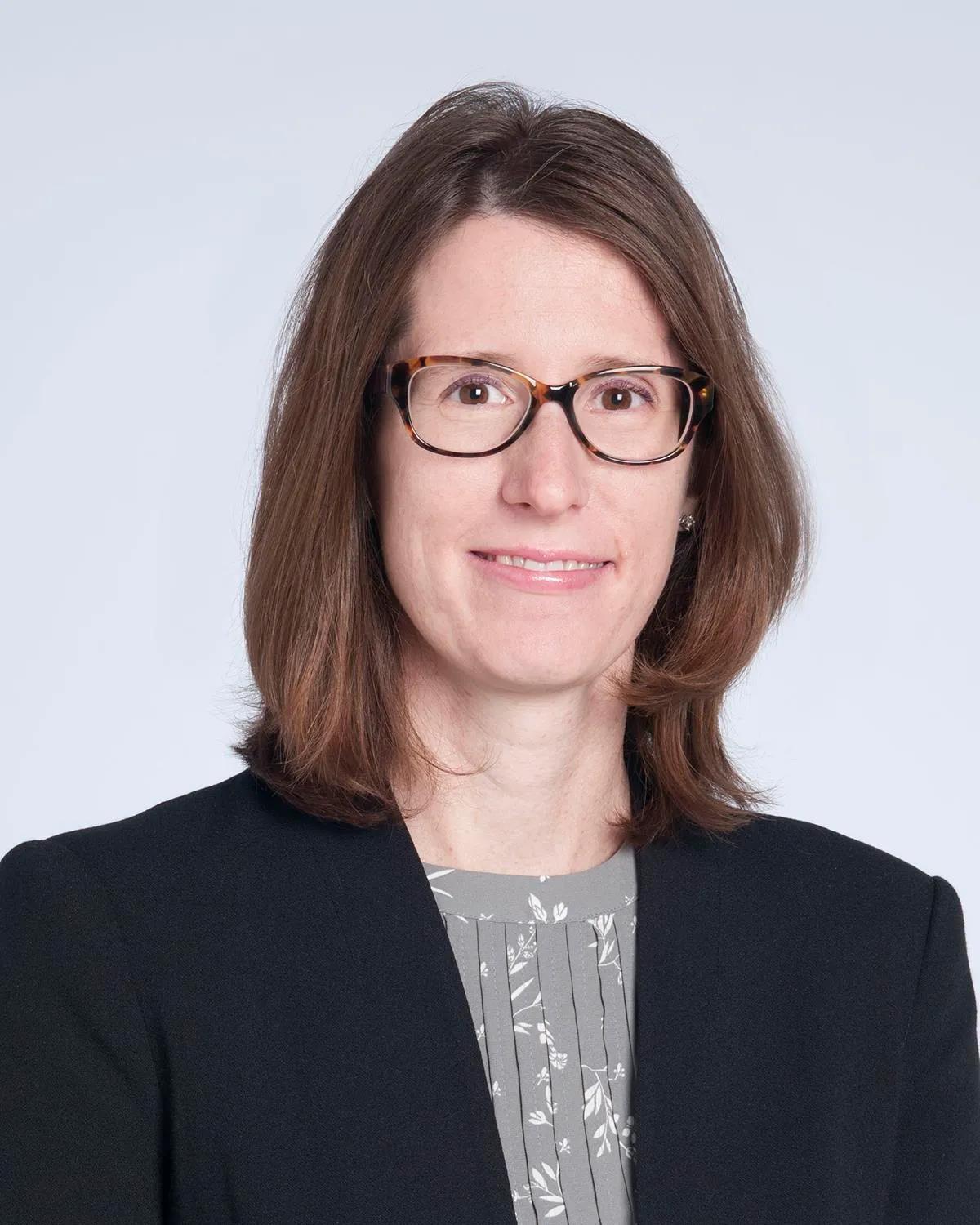
Anne Huml, MD
Program Director, Transplant Nephrology Program
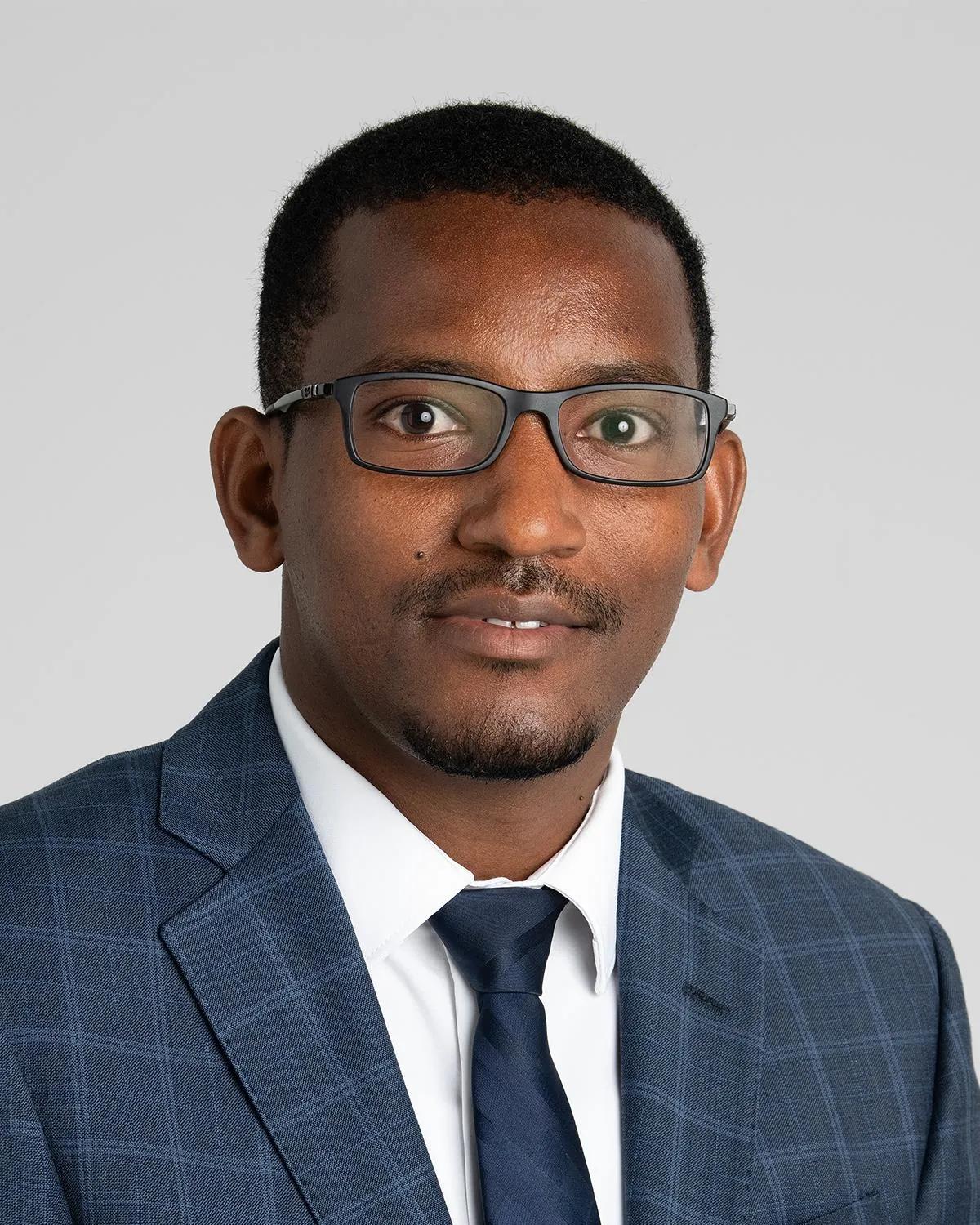
Tariku Gudura, MD
Associate Program Director, Transplant Nephrology Program
Faculty
- Joshua Augustine, MD
Medical Director of Kidney Transplantation - Emilio Poggio, MD
Research Mentor and Living Donor Clinic Preceptor - Saul Nurko, MD
Clinic Preceptor - Ziad Zaky, MD
Transplant Allograft Biopsy Preceptor - Richard Fatica, MD
Clinic Preceptor, Quality Initiative Project Preceptor - Tariku Gudura, MD
Clinic Preceptor
Fellows
Class of 2027
Name: Humberto Diaz del Castillo Guzman, MD
Medical School: Universidad Autonoma de Guadalajara. GDL, Mexico
Residency: Trinity Health Oakland / Wayne State University, Pontiac, MI
Fellowship: Cleveland Clinic Nephrology Fellowship 2026
Awards: NephSIM Nephrons Program (2023, 2024), American Society of Nephrology (ASN) Kidney STARS Award (2018, 2022)
Name: Mariam Ikhlas, MBBS
Medical School: CMH Lahore Medical & Dental College
Residency: Harlem Hospital Center-affiliated with Columbia University
Fellowship: Montefiore Medical Center- Albert Einstein Medical College
Awards: Speaker at Journal Club Montefiore Medical Center (2025, 2026), Honorary mention - Clinical research poster competition at Montefiore Medical Center (2026)
Past Fellows
| 2025-2026 | Ratib Mahfouz, MD | Cleveland Clinic |
| 2025-2026 | Yasin Obeidat, MD | Cleveland Clinic |
| 2024-2025 | Juan Pablo Huidobro Espinosa, MD | Valparaiso Chile |
| 2023-2024 | Tariku Gudura, MD | Cleveland Clinic Main Campus |
| 2022-2023 | Boonyanuth Maturostrakul, MD | Baystate Medical Center, Springfield MA |
| 2021-2022 | Aimen Liaquat, MD | Methodist Transplant Institute |
| 2020-2021 | Omar Aleter, MD | Cleveland Clinic Abu Dhabi |
| 2019-2020 | Bushra Syed, MD | University of Mississippi |
Application Process
Cleveland Clinic’s Nephrology Fellowship Program also offers (2 positions) for a one-year accredited training program by the ACGME (Accreditation Council for Graduate Medical Education) for all interested applicants who have completed a two-year ACGME Nephrology Fellowship Program.
For additional information about our Transplant Nephrology Fellowship Program, please contact:
Cleveland Clinic Department of Kidney Medicine
Shelley Sekerak - Program Coordinator
9500 Euclid Avenue / Q7
Cleveland, OH 44195
Phone: 216.636.5254
Email: NephrologyFellowship@ccf.org
Please include the following information:
- Curriculum vitae
- Personal statement
- A minimum of three letters of recommendation (one letter from your Program Director)
- USMLE transcripts
Living in Cleveland
Cleveland, a mid-sized city located on Lake Erie, features a host of cultural and recreational attractions. Cleveland Clinic is located near the University Circle area, which is the major cultural center in Cleveland. This area also features the Cleveland Orchestra, the Cleveland Museum of Art, Playhouse Square (second largest theater district in the country), and Case Western Reserve University. Downtown Cleveland is approximately 2 miles from the Cleveland Clinic campus.
