



Thoracic outlet syndrome (TOS) occurs when you have compression of nerves or blood vessels in your lower neck and upper chest. Symptoms include pain, tingling and numbness in your arms and hands. This comes from vigorous arm movements (especially in sports), traumatic injuries and anatomical variations you’re born with.
Advertisement
Cleveland Clinic is a non-profit academic medical center. Advertising on our site helps support our mission. We do not endorse non-Cleveland Clinic products or services. Policy
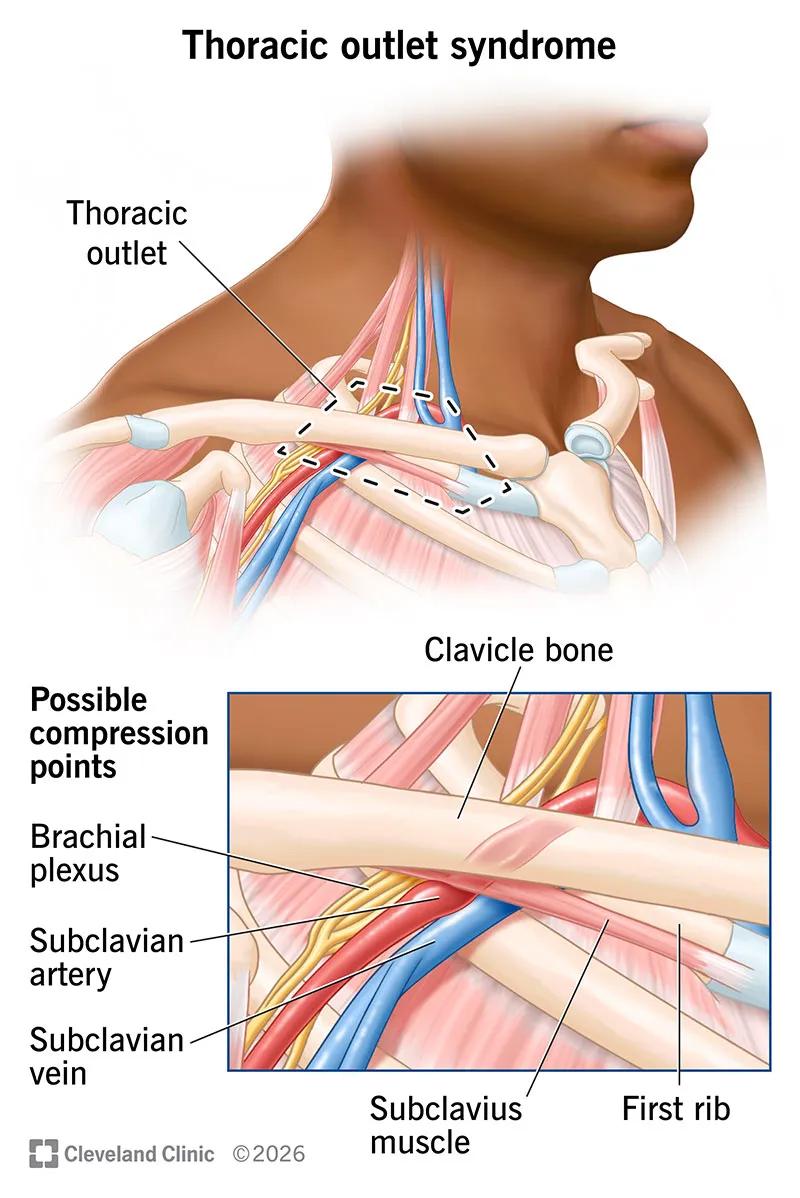
Image content: This image is available to view online.
View image online (https://assets.clevelandclinic.org/transform/9a642a14-1987-4122-88e7-a03e6941bab8/Thoracic-Outlet-Syndrome-Illustration)
Thoracic outlet syndrome (TOS) is a group of rare disorders that happen due to the compression of nerves or blood vessels in your lower neck and upper chest. The “thoracic outlet” is the opening between your collarbone (clavicle) and first rib. Your brachial plexus (nerves that cross from your neck to your armpit), subclavian artery and subclavian vein pass through this opening.
Advertisement
Cleveland Clinic is a non-profit academic medical center. Advertising on our site helps support our mission. We do not endorse non-Cleveland Clinic products or services. Policy
Normally, your thoracic outlet has enough room for these nerves and blood vessels. But injuries or certain differences in anatomy can crowd this outlet. When that happens, bones or muscles in your chest press on the nerves or blood vessels within this space. This compression can cause pain, abnormal sensations (paresthesia) and other symptoms in your upper body. The wide range of symptoms, which could point to many possible problems, can delay diagnosis.
Treatments like physical therapy and pain medications help most people. But you may need surgery if those methods don’t work or if TOS gets in the way of normal blood flow.
Types of TOS vary by what’s compressed:
Advertisement
The term “vascular thoracic outlet syndrome” refers to the venous or arterial types.
Thoracic outlet syndrome symptoms vary by type. They affect your upper body (neck, upper chest, shoulder, arm or hand), typically on one side.
Some people confuse thoracic outlet syndrome pain (a dull ache) with angina. Angina is chest pain you feel when your heart muscle doesn’t get enough oxygen. It can be a sign of a heart attack. But there are some important differences:
In addition to pain, thoracic outlet syndrome symptoms may include:
The symptoms you feel can vary depending on the type of thoracic outlet syndrome you have. Here’s a breakdown:
| Type of TOS | What happens | Symptoms |
|---|---|---|
| Neurogenic TOS | Pressure on your brachial plexus, which gives movement and feeling to your arm and hand. | Pain, tingling or numbness |
| Venous TOS | Pressure on your subclavian vein keeps blood from draining from your arm to go back to your heart. A deep vein thrombosis can form. | Swelling and heaviness |
| Arterial TOS | Pressure on your subclavian artery weakens its wall and a blood clot can form. This reduces blood flow to your arm, hand and fingers. | Numbness, tingling, pain or weakness and skin that feels cool to the touch |
| Type of TOS | ||
| Neurogenic TOS | ||
| What happens | ||
| Pressure on your brachial plexus, which gives movement and feeling to your arm and hand. | ||
| Symptoms | ||
| Pain, tingling or numbness | ||
| Venous TOS | ||
| What happens | ||
| Pressure on your subclavian vein keeps blood from draining from your arm to go back to your heart. A deep vein thrombosis can form. | ||
| Symptoms | ||
| Swelling and heaviness | ||
| Arterial TOS | ||
| What happens | ||
| Pressure on your subclavian artery weakens its wall and a blood clot can form. This reduces blood flow to your arm, hand and fingers. | ||
| Symptoms | ||
| Numbness, tingling, pain or weakness and skin that feels cool to the touch |
Healthcare providers divide the causes of TOS into three main groups:
A congenital issue may make you more likely to get TOS. But you may not feel any symptoms until you have trauma to your neck from a sudden injury or chronic overuse.
Many cases of this syndrome happen in people between ages 20 and 50. Sources disagree about which type is more common among males vs. females. You may face a higher risk of developing thoracic outlet syndrome if you:
Advertisement
Many causes of TOS are beyond your control. If your job requires heavy lifting or overhead arm movements, talk to a healthcare provider about exercises that can help lower your risk of injury.
Without treatment, thoracic outlet syndrome can lead to serious complications, including:
Healthcare providers diagnose TOS by performing a physical exam and reviewing your medical history. Your exam may include thoracic outlet syndrome testing, like an upper-limb tension test or an elevated arm stress test.
For these tests, you may lift your arms, tilt your head and clench your fists. Your provider will see which movements trigger pain or other symptoms. The results can help with a diagnosis. Providers may inject lidocaine into your muscles to relax them.
Providers order lab and imaging tests as needed to confirm TOS and rule out other causes of symptoms. These tests help your provider find atypical anatomy, check blood flow in blood vessels, see how well your muscles and nerves work, and find the exact location of compression.
Advertisement
You may need one or more of the following thoracic outlet syndrome tests:
Thoracic outlet syndrome treatments vary, depending on the type of TOS and symptoms. The goals of treatment are to reduce symptoms and prevent complications. Your provider will recommend the treatment option that’s right for you.
Possible treatments include:
Advertisement
Seek medical care if you have symptoms of TOS. Don’t wait for your symptoms to go away. In many cases, physical therapy and medicine can improve symptoms. But some people need surgery or other treatments to prevent serious complications. Your provider will recommend a treatment plan that’s best for your needs.
Call your provider if you have new or changing symptoms. They’ll tell you how often you need to come in for follow-ups and tests.
Questions to ask your provider may include:
Thoracic outlet syndrome can make it hard to perform daily tasks and do physical work. Early diagnosis and treatment can give you a better outcome. But sometimes, people don’t get a diagnosis until they see a vascular surgeon.
The outlook for people with thoracic outlet syndrome varies based on the type. Your healthcare provider is the best person to ask about what you can expect.
Follow your healthcare provider’s guidance on how to take care of yourself if you have TOS. They may recommend you:
Thoracic outlet syndrome (TOS) can interfere with your usual routine. It may feel frustrating to take time away from your sport or slow down your pace at work. But be patient. Taking care of yourself with physical therapy or other treatments will help you regain your strength and feel much better in the long run. Talk to your provider if you have any questions or concerns about your condition, treatment plan or outlook.



Sign up for our Health Essentials emails for expert guidance on nutrition, fitness, sleep, skin care and more.
Learn more about the Health Library and our editorial process.
Cleveland Clinic’s health articles are based on evidence-backed information and review by medical professionals to ensure accuracy, reliability and up-to-date clinical standards.
Cleveland Clinic’s health articles are based on evidence-backed information and review by medical professionals to ensure accuracy, reliability and up-to-date clinical standards.
Vascular disease may affect your life in big and small ways. Cleveland Clinic’s specialists treat the many types of vascular disease so you can focus on living.
