



Erectile dysfunction (ED) is the inability to get or maintain an erection long enough to have sexual intercourse. There are many different causes, which may include conditions that affect your blood vessels, neurological conditions, mental health conditions and injuries. A healthcare provider can diagnose and treat erectile dysfunction.
Advertisement
Cleveland Clinic is a non-profit academic medical center. Advertising on our site helps support our mission. We do not endorse non-Cleveland Clinic products or services. Policy
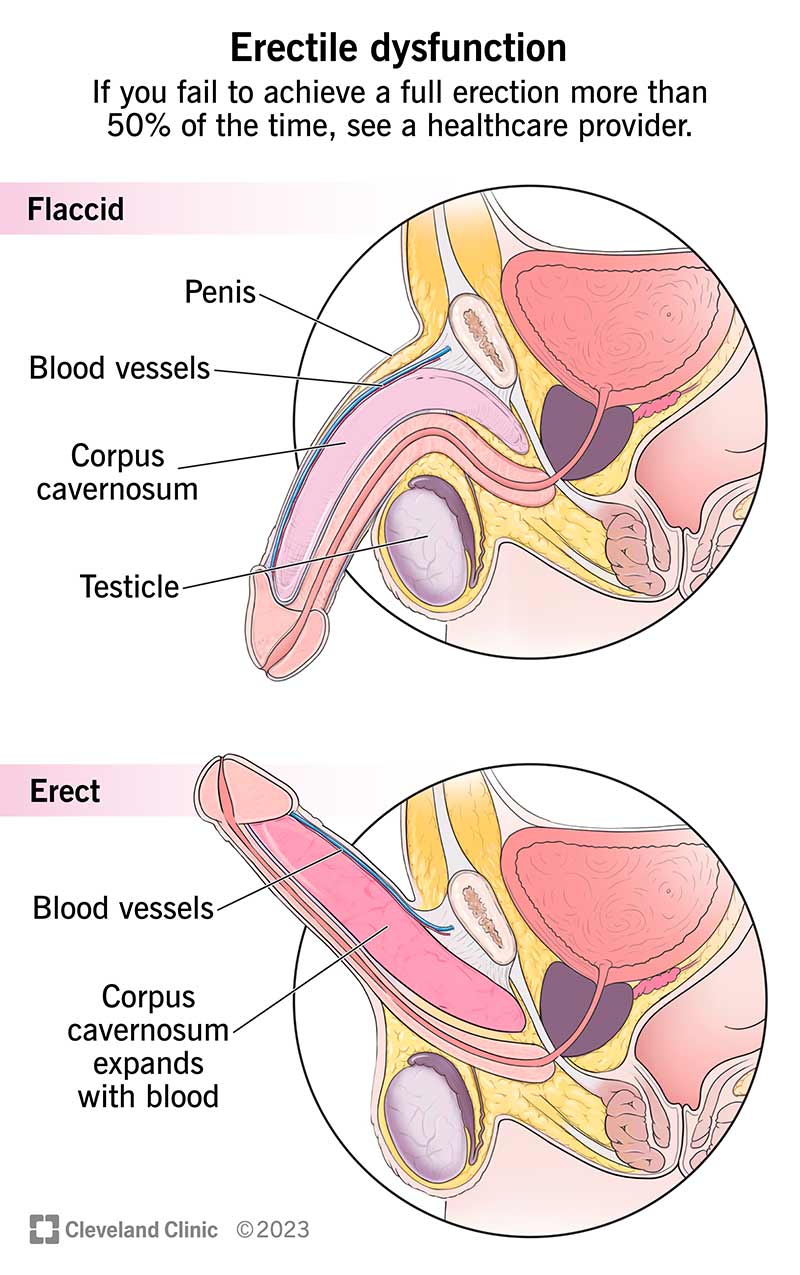
Image content: This image is available to view online.
View image online (https://my.clevelandclinic.org/-/scassets/images/org/health/articles/10035-erectile-dysfunction)
Erectile dysfunction (ED) is a type of penile disorder. It affects your ability to get and maintain an erection firm enough for sexual intercourse.
Advertisement
Cleveland Clinic is a non-profit academic medical center. Advertising on our site helps support our mission. We do not endorse non-Cleveland Clinic products or services. Policy
Your feelings play a major role in getting and maintaining an erection. Feeling relaxed, confident and aroused is essential. But it’s normal to sometimes have erection issues. Erection problems can occur if you feel nervous, anxious, frustrated or tired. Drinking alcohol and/or using substances can also have an effect. It can also result from other conditions or as a side effect of certain medications or cancer treatments.
If you’re having difficulty getting or maintaining an erection, it’s a good idea to schedule an appointment with a healthcare provider for further discussion.
In many cases, ED can be the first symptom of another underlying problem, including heart disease. It’s important to talk to a healthcare provider if you have problems getting and maintaining an erection.
Other names for erectile dysfunction include:
Healthcare providers separate ED into several categories:
Advertisement
Erectile dysfunction is the most common sex-related condition that males report to healthcare providers, especially as they age and develop other health issues.
Providers and medical researchers estimate that erectile dysfunction affects over 50% of males between the ages of 40 and 70. And those numbers may be higher — many don’t seek help for the condition due to embarrassment or shame.
Erectile dysfunction symptoms include:
There are many possible causes of ED, including conditions that affect your:
The factors may include:
Injuries (trauma) to your penis and surrounding areas can also cause ED. They include:
Erectile dysfunction is a common side effect of many prescription drugs. Common medications that list ED as a potential side effect include:
Substances that have addiction potential may cause ED, including:
These substances can affect and suppress your central nervous system. They can also cause severe damage to your blood vessels, which may lead to permanent erectile dysfunction.
Advertisement
Conditions that affect your body’s ability to deliver blood to your penis are the most common cause of ED.
You may have a greater risk of getting ED if you:
A healthcare provider can diagnose ED and determine its cause. They’ll review your medical history and perform a physical exam. They’ll also ask you questions about your personal and sexual history. These questions may make you feel embarrassed or awkward. But it’s important to be honest with the provider in order to quickly determine the cause. The questions may include:
Advertisement
The provider may also ask to talk with your sexual partner. Your partner may be able to offer additional insight on potential causes.
The provider may order tests to confirm their diagnosis and determine the cause of your ED.
It depends on what your healthcare provider suspects is causing erectile dysfunction. Your provider may order:
Before testing, your provider will explain what’s involved with a test and answer any questions you have. If you don’t feel comfortable, you can decide not to do the test at any time.
The first step in treating erectile dysfunction is identifying the underlying cause. A healthcare provider will help determine the best treatment for you. Treatment options may include:
Advertisement
ED will not likely go away on its own without changes to your lifestyle or some kind of treatment.
The outlook for ED is good and it’s a very treatable condition. Though there aren’t cures for some causes of ED, many treatment options can help you get and maintain an erection hard enough for sexual intercourse.
Certain lifestyle changes can help lower your risk of developing erectile dysfunction, including:
Talk to a primary care physician or a urologist if you suspect you have erectile dysfunction. They can help diagnose ED, identify its cause and recommend the best treatment option for you. A urologist is a healthcare provider who specializes in diagnosing and treating conditions that affect your reproductive system and urinary system.
Go to your nearest emergency room if you’re taking medication for erectile dysfunction and have a painful erection that lasts longer than two to four hours. This may be a sign of priapism, which can cause permanent damage to your penis without treatment.
Erectile dysfunction can cause you to feel many different emotions. You may feel embarrassed, frustrated, guilty, ashamed, angry or “less than.” This can lead to more serious long-term emotions, like anxiety and depression. But you don’t have to live with these feelings. ED is common, and it doesn’t reflect your worth as a person. Healthcare providers are available to help.
Erectile dysfunction is a sensitive topic for many people. The following tips can help you support your partner if they have erectile dysfunction:
Erectile dysfunction (ED) is common, especially as you get older. It can cause embarrassment, low self-esteem and other more serious psychological conditions. But you shouldn’t feel ashamed or embarrassed to have ED. It may be your body’s way of telling you that something isn’t right. It’s important to have an open conversation with a healthcare provider about your symptoms and how they affect your quality of life. They can diagnose ED, determine its cause and recommend the most appropriate treatment for you.



Sign up for our Health Essentials emails for expert guidance on nutrition, fitness, sleep, skin care and more.
Learn more about the Health Library and our editorial process.
Cleveland Clinic’s health articles are based on evidence-backed information and review by medical professionals to ensure accuracy, reliability and up-to-date clinical standards.
Cleveland Clinic’s health articles are based on evidence-backed information and review by medical professionals to ensure accuracy, reliability and up-to-date clinical standards.
Get the care you need today! At Cleveland Clinic, we offer specialty care that’s focused on you.
