Brachytherapy is a cancer treatment that involves placing tiny implants with radioactive material in your body. You may have an implant in or near a tumor. The treatment destroys or shrinks tumors without damaging healthy tissue. You may receive low or high doses of radiation. And the implant may be temporary or permanent.
Advertisement
Cleveland Clinic is a non-profit academic medical center. Advertising on our site helps support our mission. We do not endorse non-Cleveland Clinic products or services. Policy
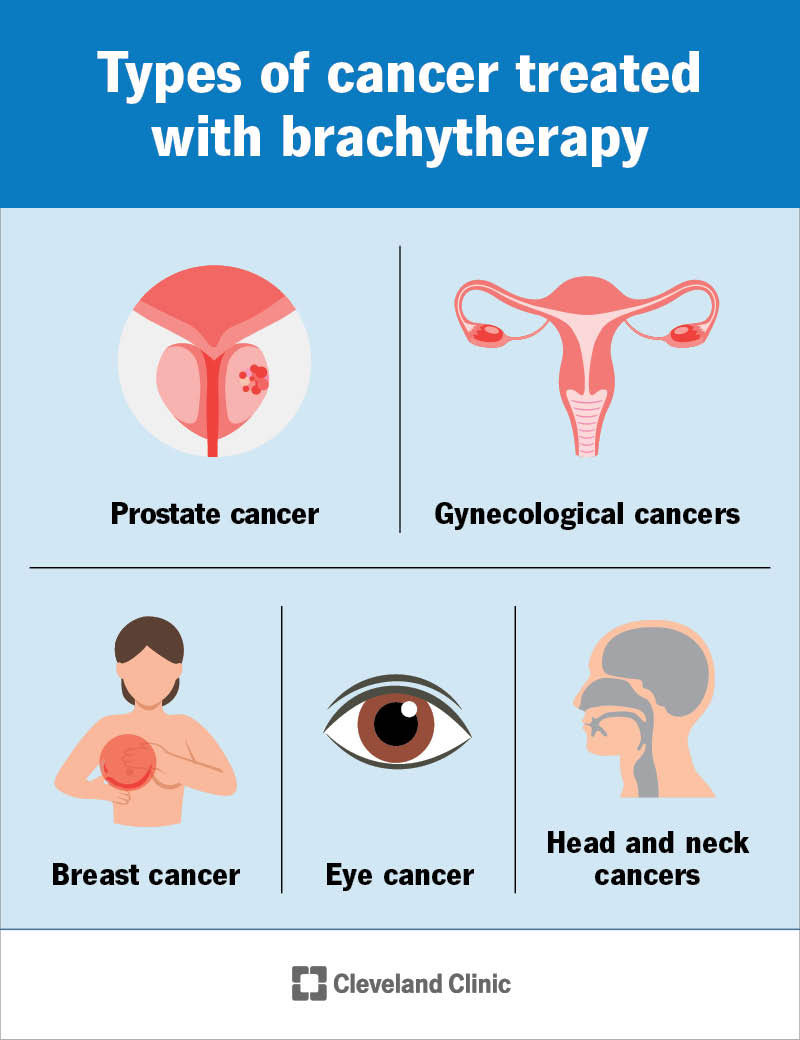
Image content: This image is available to view online.
View image online (https://my.clevelandclinic.org/-/scassets/Images/org/health/articles/brachytherapy)
Brachytherapy, or internal radiation therapy, is a treatment for cancerous tumors that haven’t spread. Healthcare providers put implants carrying tiny amounts of radioactive material inside or right next to cancerous tumors. The implants release radiation to shrink or destroy tumors without hurting nearby healthy tissue. Your provider may call the implants “seeds”.
Advertisement
Cleveland Clinic is a non-profit academic medical center. Advertising on our site helps support our mission. We do not endorse non-Cleveland Clinic products or services. Policy
You may have brachytherapy after surgery to remove a tumor. Or you might have it along with external beam radiation therapy. It may be a treatment for:
It may be an option for head and neck cancers when other treatments aren’t effective.
You may feel anxious about having radiation inside your body or about whether it can affect those around you. Your radiation oncologist will explain how internal radiation works and what you can expect.
Healthcare providers may classify brachytherapy by the dose rate and whether the implant is temporary or permanent. They may you’ll have low dose rate (LDR) or high dose rate (HDR) brachytherapy:
As the name suggests, permanent implants stay in your body. They release low doses of radiation over several weeks or months. They’re a common treatment for prostate cancer. This treatment is also called seed implantation.
Advertisement
Temporary implants are removed after your treatment session. Temporary implants may involve both low and high dose rates of radiation.
Brachytherapy is a successful treatment for tumors that haven’t spread. For example, research shows that in most cases, brachytherapy can get rid of prostate cancer and keep it from coming back.
Like other types of radiation therapy, brachytherapy may cause side effects or complications. Side effects vary and depend on the part of your body that’s treated. They may include:
Some side effects develop during treatment and stop soon after you’re done.
Brachytherapy complications may include:
Your radiation oncologist will discuss specific side effects and complications with you so you’ll understand how brachytherapy may affect you. They’ll explain ways to manage side effects or treat complications.
They’ll also explain what you need to do to get ready. For example, you may have anesthesia or pain medication before or after your treatment. In that case, someone will need to bring you to your treatment and take you home. If you have treatments over several days, you may need to stay in the hospital.
The procedure depends on the cancer and the type of brachytherapy (LDR or HDR, temporary or permanent). It also depends on where the radiation oncologist places the implant. For example:
Intracavity and interstitial brachytherapy follow the same steps. You’ll have anesthesia before treatment. You may have general or local anesthesia. With general anesthesia, you’re asleep during the procedure. Local anesthesia involves medication to numb the area where your provider will place the implant.
Next, your radiation oncologist will:
Depending on the procedure, you may feel better within a few days up to a week. You may need to limit your activity and get extra rest after treatment. Follow your healthcare provider’s guidance on when it’s safe to return to your usual routine.
Advertisement
Fatigue and digestive issues are common side effects. You can’t power your way through radiation fatigue, but you can manage it:
Likewise, planning your meals can help prevent issues like diarrhea, nausea and vomiting. For example, eating several smaller meals instead of three large ones may help.
Brachytherapy may cause serious side effects during or after your treatment. Contact your healthcare provider if you have:
Brachytherapy is a successful treatment for tumors that haven’t spread. Keep in mind that brachytherapy is a treatment for many kinds of cancer. Your radiation oncologist will explain the impact that brachytherapy may have.
If you have permanent brachytherapy, there’s a very small risk that you could expose other people to radiation. The risk may last until the implant releases all the radioactive material. This may take a few weeks or months.
Your healthcare provider will explain how you can safely interact with others. They’ll likely advise that you limit close contact with babies, young children and pregnant women. But don’t hesitate to ask questions so you feel comfortable spending time around others.
Advertisement
You may know that radiation is a safe and effective cancer treatment. But you may think there’s a big difference between receiving radiation from a machine outside your body and brachytherapy, which involves putting radioactive material in your body.
Your cancer care team will understand if you want to know more about this treatment. They’ll explain how brachytherapy works and how it may shrink or destroy a cancerous tumor. They’ll also discuss any potential side effects. Don’t hesitate to ask questions or share your concerns.
Advertisement



Sign up for our Health Essentials emails for expert guidance on nutrition, fitness, sleep, skin care and more.
Learn more about the Health Library and our editorial process.
Cleveland Clinic’s health articles are based on evidence-backed information and review by medical professionals to ensure accuracy, reliability and up-to-date clinical standards.
Cleveland Clinic’s health articles are based on evidence-backed information and review by medical professionals to ensure accuracy, reliability and up-to-date clinical standards.
When you’re diagnosed with cancer, you want expert and compassionate care right away. At Cleveland Clinic we personalize your treatment to match your needs.