



The Role of Forensic Nursing
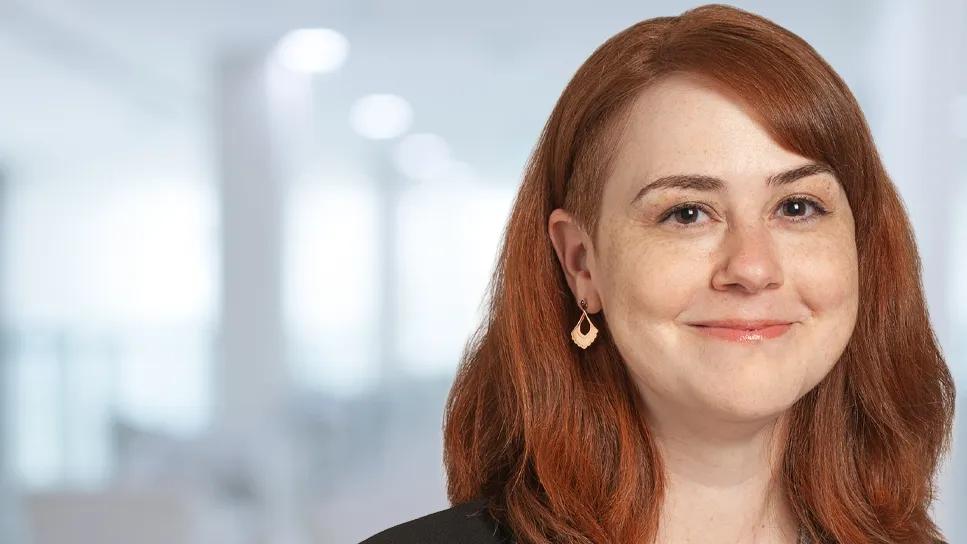
Forensic nurses have a special role in healthcare at the crossroad between medical and legal outcomes. “We’re here to serve and care for any patient that has experienced any kind of intentional injury or harm,” says Heather Tripp, MEd, BSN, RN, SANE-A, SANE-P, enterprise nurse manager of forensic nursing at Cleveland Clinic. She discusses the challenges and rewards of being a forensic nurse and offers advice to those who feel called to the specialty.
Advertisement
Cleveland Clinic is a non-profit academic medical center. Advertising on our site helps support our mission. We do not endorse non-Cleveland Clinic products or services. Policy
Recent Episodes
Leveraging Your Nursing Career for New Opportunities
Nurses develop so many valuable skills that can cross over to different roles within healthcare or other fields. These include assessment ab…
Inspiring Nurses to Become Innovators
Innovations require two components: They need to be novel and have value, says Nancy Albert, PhD, CCNS, CHFN, CCRN, NE-BC, FAHA, FCCM, FHFSA…
Spotlight on Critical Care Transport
Imagine employing all the skills, competencies and critical thinking needed to deliver top-notch care to patients in urgent situations while…
Video content: This video is available to watch online.
View video online (https://cdnapisec.kaltura.com/p/2207941/sp/220794100/playManifest/entryId/1_9pdp5jsq/flavorId/1_5f3sgelj/format/url/protocol/https/a.mp4)
Transcript
Carol Pehotsky:
As nurses, most of us live in a world where we're taking care of patients for medical issues. Sometimes those are acute and crisis-based, somewhere along that continuum, and sometimes it's chronic. However, it takes a special breed of nurse to care for patients who come to us after being intentionally harmed. It's delicate balance. We're delivering healthcare to the patient, but we also need to balance that with being responsive to the legal system if and when they get involved. It's a balance between meeting the patient where they are and delivering the care they need. I'm joined today by Heather Tripp, enterprise nurse manager of forensic nursing, to learn more about this specialty.
Advertisement
Cleveland Clinic is a non-profit academic medical center. Advertising on our site helps support our mission. We do not endorse non-Cleveland Clinic products or services. Policy
Hi, and welcome to Nurse Essentials, a Cleveland Clinic podcast where we discuss all things nursing, from patient care, to advancing your career, to navigating tough on-the-job issues. We're so glad you're here. I'm your host, Carol Pehotsky, Associate Chief Nursing Officer of Surgical Services Nursing. Welcome back, everyone. I'm going to start this episode with a little bit of a preamble. We have had some really fantastic guests already on the show talking about things like human trafficking and trauma-informed care. And we're going to dig a little deeper into the realm of forensic nursing today. Such an important role to play for our patients and our organization, our communities. But I share that we're going to dig into some things that might feel uncomfortable to you as a listener, so we're happy you're here. We want you to listen with thoughtfulness. If you need to step away from it…
We totally understand. There will be transcripts, so if it's more comfortable you can read it on our website where you can access the content. However it feels most comfortable for you. We know that, especially as we're recording this in October of 2026, there's a lot of conversation and emotion around this topic. So having said that, it is my great pleasure to welcome to the show today, Heather Tripp. Heather is our enterprise nurse manager for forensic nursing. Heather, thank you so much for joining us today.
Advertisement
Heather Tripp:
Thank you so much for having me. I'm really excited to be here today.
Carol Pehotsky:
Same. You have a fantastic nursing career. Before we get into the topic at hand, can you tell us a little bit about your nursing journey thus far?
Heather Tripp:
Yes, absolutely. Nursing was a second career for me. I was working as an advocate for the Cleveland Rape Crisis Center. I started out as a volunteer and then eventually started to work up to a part-time role with them. I did that for about nine and a half years and bartended to actually pay the bills, right?
Carol Pehotsky:
As one does sometimes, yes.
Heather Tripp:
As one does. And I think being an advocate, one of the jobs I had was to go to the hospital to sit with patients while they got a sexual assault exam. And I was really inspired by the SANE nurses or forensic nurses that I saw and decided to go back to school for nursing. I started out as a baby nurse here at the Cleveland Clinic. And I started out in the CVICU (Cardiovascular Intensive Care Unit) as a new grad. I learned so much from the CVICU and quickly moved into forensic nursing because I knew that was where my heart was and where my passion was. So I've been here in forensic nursing going on 10 years in December.
Carol Pehotsky:
Wow. You're so uniquely qualified to support our patients. And I'm just personally so glad that you found your way to nursing from the start.
Advertisement
Heather Tripp:
Thank you.
Carol Pehotsky:
A lot falls into forensic nursing. How do you define it and tell us a little bit more about, there's obviously lots of roads you can take as a forensic nurse, but generally what the role of a forensic nurse is.
Heather Tripp:
Yes, absolutely. I think the simplest, most straightforward definition is forensic nursing is really where legal and medical outcomes meet for our patients. If you drill down into that definition a little bit, it can mean a lot of different things. Depending on what state you're in, even what country you live in, you can be a death investigator as a forensic nurse. And you can actually be involved in those types of investigations. We have forensic nurses that work in correctional facilities, so more on the offender side of doing forensic nursing and more like forensic psychology. But the role that our forensic nurses play here at Cleveland Clinic and largely just in Northeast Ohio, we're here to serve and care for any patient that has experienced any kind of intentional injury or harm. That can mean a lot of different things.
Carol Pehotsky:
There can't possibly be two days that are the same in that type of role. So, I'm going to ask you the most ridiculous question, which is what does a typical day look like?
Advertisement
Heather Tripp:
It's a great question. Again, there's such a variety there just depending on what the role is of a particular forensic nurse. For our team, for instance, a lot of our nurses work PRN for us. And they are absolute heroes, superstars. I cannot say enough good things about them because these are the folks that have a full-time job or a part-time job somewhere else in nursing. And then they take call for us, on top of everything, family, school, everything. They often take call from home and we will be contacted by typically the emergency department or sometimes our inpatient units because there is either a disclosure from a patient or it's more of a concern from the caregiver team, such as “We think something might be going on with this patient. We see some indicators or signs that there may be some abuse happening or exploitation. Can you come in and talk to them?”
Then for our full-time forensic nurses, we might start our day testifying in court. And then we come here and maybe we're on call to see patients. A lot of our nurses are working on training within our communities. So we do a lot of education, a lot of training. Obviously, patients are at the center of everything we do, but we get to do a lot of other really cool, fun things. And we get to work with government relations.
Advertisement
Carol Pehotsky:
Sure.
Heather Tripp:
Yes. To help with certain legislation. And that's something that I love. I just love the variety of all the different things we get to do within forensic nursing.
Carol Pehotsky:
Helping patients on so many levels. That's amazing. So, you came from a victim's advocate and then CVICU and here you are.
Heather Tripp:
Yes.
Carol Pehotsky:
Is there any type of specialty that helps prepare a nurse more than others? Is it that you have a little bit of road on your tires and we'll meet you where you are? How do people find their way in?
Heather Tripp:
Yes, absolutely. My experience has been that it doesn't really matter what your background in nursing is, as long as you have the passion to be a lifelong learner and you have that kind of core advocate. And you really want to excel. We get nurses that come from all different backgrounds. I have another fellow CVICU nurse that works with me. We have a lot of nurses from labor and delivery, the emergency department and behavioral health. But I would say that it is just a passion and an interest in really serving others.
Carol Pehotsky:
I can only imagine. We think about skills in any type of specialty. The skills here are different and the task, right? It's not about starting an IV or some of the hands-on things we do, but there are different skills obviously. What are some of the most important skills and qualities that nurses either bring to forensic nursing or learn as they mesh themselves into the specialty?
Advertisement
Heather Tripp:
Yes. I think the most important thing and the guiding star of our practice and our program is trauma-informed care or trauma responsive care. Some nurses just have that empathy from the get-go, but it's still something that you can learn and develop. And it's something that I think all of us have to continue to develop. Trauma responsive care is not a checklist, and it is something that is constantly evolving. You're constantly learning it and you're constantly flexing it for the person that's in front of you. So I think that skill is by far the most important one that we have as forensic nurses. And the desire to continue to develop that skill is really important. And then just being flexible. I think that's true for all of nursing. We go into the room and we always have a plan.
We always have a plan. But you end up like, well, let's go with plan X because we've already run through the rest of the alphabet, right? So, I think that's an important quality for our nurses to have as well, just that flexibility, empathy and humility.
Carol Pehotsky:
So, we could and probably should do a whole separate episode on trauma-informed care. At a high level, tell me a little bit more about what that looks like.
Heather Tripp:
This is definitely a topic that we could do a whole day seminar. But I think the most important thing to keep in mind with trauma-informed care, trauma-responsive care is the ability to collaborate with your patient and really level the playing field when we go into the room. Also assuming that when we go into a room, the person in front of us may have had some uncomfortable and unpleasant prior life experiences with the medical field, with nurses, with doctors. Some of these folks have encountered systems their whole lives that have failed them. I know we hate to say that, but that is the truth for a lot of our patients. And so going into the room and letting them know that you work for them today and it's a collaboration. I'm going to bring the knowledge that I have and the resources and the support that I can give, but you as the patient are the expert in your own life.
You bring your own expertise to the table. So here's what I have. It really is kind of an exchange, a collaboration. I think the other important piece is making sure that we are turning that same grace and care for ourselves, our team and the other people that we work with. Don't make assumptions, be curious and don't take things personally. I think that's another big piece of being trauma responsive is, especially for forensic nursing, when we go into the room, we have patients that are absolutely enraged and they have every right to be. We're not there to tell them how to act, how to feel. So recognizing that they've got this big feeling and it's not directed at us. And it's okay to ask, "Hey, I see you're upset. You have every right to be. What can I do to help you?" Just recognizing those things and letting people be.
Carol Pehotsky:
And I can't imagine the delicate balance between, "I'm meeting you where you are. I'm here to help you. I do need to collect evidence."
Heather Tripp:
Yes.
Carol Pehotsky:
Tell us a little bit more about that, please.
Heather Tripp:
Absolutely. Again, going back to that trauma responsive care, we really let the patient make those choices. It really is, “This is one of the things that I am trained to do. I am trained to collect evidence. However, I'm not going to do anything you don't want me to do.” And so, we can do some of the evidence collection. We can do all of it. We can do none of it. “What can we do to support you?” And I think a lot of times once folks know that they don't have to do something, they're a lot more open to that discussion. Again, “What are some of the things that will make you feel safe while you're here in the hospital? What are some things that will make you feel safe when you leave the hospital?”
Sometimes that's evidence collection, sometimes it's not. So that's one thing that sometimes we butt heads with some of our other multidisciplinary partners about. But ultimately, we'll try and make other adjustments to the exam so that our patients feel in control and empowered. For instance, maybe there is a swab that we need to get from a more sensitive part of the body. We'll instruct them how to do it and they can do it themselves.
Carol Pehotsky:
There's probably some fear of, I don't want them to leave before I get there.
Heather Tripp:
Yes.
Carol Pehotsky:
Give me a chance to talk to you versus I can't wait anymore.
Heather Tripp:
Exactly.
Carol Pehotsky:
So, let's flip the coin.
Heather Tripp:
Yes.
Carol Pehotsky:
I can just hear in your voice how passionate you are, and I know that there are rewarding times. What are some of the most rewarding times?
Heather Tripp:
I think that moment when you're with a patient and you're fully present and you feel that connection to that other human being. You know that you can't fix it for them and you can't make it go away, but you can tell them that they matter. And that look that they get where they're like, "I do matter." Just that connection with that human being and knowing that you're there is the most rewarding thing. It's those little moments of just holding somebody's hand or getting ready to leave and the patient says, "Can I give you a hug?" And you respond, "Of course, of course." Because after they leave, a lot of times we don't know what happens.
Carol Pehotsky:
I know you've inspired a bunch of our listeners already.
Heather Tripp:
Yes.
Carol Pehotsky:
So somebody now is curious but not sure where to start. What advice would you give to somebody about how to explore the field, what training looks like, how to take that next step?
Heather Tripp:
I would say reach out to any forensic nurse. A lot of folks that we've hired onto our team, it's been because our forensic nurse has been on their unit with a patient and they've just started a conversation, "Tell me more about this. I think it's really cool." There are lots of opportunities to shadow. We also have some information on the career path. We have a career path page on Connect Today.
Carol Pehotsky:
Nice.
Heather Tripp:
Through nursing education. Certainly, reach out to myself or Michele Reali. She's the director of forensic nursing here. Again, there's the Emergency Nurses Association. There is the Academy of Forensic Nursing. They also have a website with helpful information. I think just reaching out to other organizations that work with folks who have been harmed. Go to your local advocacy group and see what they're doing.
Carol Pehotsky:
Yes. I can't thank you enough. It's been such a great conversation.
Heather Tripp:
Oh, thank you.
Carol Pehotsky:
And on behalf of countless patients at their most vulnerable, thank you for all that you and your team do.
Heather Tripp:
Thank you so much for having me.
Carol Pehotsky:
Before you're off the hook though, we're going to lighten it up just a little bit. <Laugh> And move on to a couple more personal questions. So think back to your 10-year-old self. What did 10-year-old Heather want to be when she grew up and what would she think about what you're doing now?
Heather Tripp:
Absolutely. Keeping in line with our theme of dancing, I wanted to be a backup dancer for Janet Jackson. I was a dancer and I grew up in Tampa, and I went to the same dance academy as the Tampa Bay Buccaneer cheerleaders. So, I was very -
Carol Pehotsky:
The real deal.
Heather Tripp:
I was very much like I'm going to be that backup dancer. So I think my 10-year-old self would be a little sad. But I didn't make it.
Carol Pehotsky:
I bet you can still bust out the “rhythm nation” dance move if you need to.
Heather Tripp:
Absolutely. Good thing it's not being videotaped. <Laugh> but I think ultimately, I'm just so grateful for where I am and the career path that I've been able to take. I've had so many people along the way to push me along and support me in this. And I think it's a really -
Carol Pehotsky:
It's important.
Heather Tripp:
Great career.
Carol Pehotsky:
And then finally, as you know, we revised our organizational values this year to serve with heart, succeed as one team and shape the future. Which one resonates with you the most?
Heather Tripp:
Serve with heart. Kindness is trauma-informed care. I think serving with heart and just making that your goal every day to be a good human being and a better person. Help as many people as you can, even if it's just a smile or a hello in the morning, I think is really, really important.
Carol Pehotsky:
Thank you so much.
Heather Tripp:
Thank you.
Carol Pehotsky:
As always, thanks so much for joining us for today's discussion. Don't miss out. Subscribe to hear new episodes wherever you get your podcasts. And remember, we want to hear from you. Do you have ideas for future podcasts or want to share your stories? Email us at nurseessentials@ccf.org. To learn more about nursing at Cleveland Clinic, please check us out at clevelandclinic.org/nursing. Until next time, take care of yourselves and take care of each other. The information in this podcast is for educational and entertainment purposes only and does not constitute medical or legal advice. Consult your local state boards of nursing for any specific practice questions.
Recent Episodes
Leveraging Your Nursing Career for New Opportunities
Nurses develop so many valuable skills that can cross over to different roles within healthcare or other fields. These include assessment ab…
Inspiring Nurses to Become Innovators
Innovations require two components: They need to be novel and have value, says Nancy Albert, PhD, CCNS, CHFN, CCRN, NE-BC, FAHA, FCCM, FHFSA…
Spotlight on Critical Care Transport
Imagine employing all the skills, competencies and critical thinking needed to deliver top-notch care to patients in urgent situations while…
Never miss a moment - subscribe now.
Listen to the Health Essentials Podcast on your favorite streaming platform.
Other Podcasts You May Love
MedEd Thread
MedEd Thread explores the latest innovations in medical education and amplifies the tremendous work…
Health Essentials
Tune in for practical health advice from Cleveland Clinic experts. What's really the healthiest diet…
Beyond Leadership
Hosts Jim Pae and Elizabeth Pugel escort you through a network of thought leaders, sharing world-cla…
Studies in Empathy
Join Cleveland Clinic Patient Experience leaders and a group of guests with a wide range of experien…