



Spotlight on Critical Care Transport
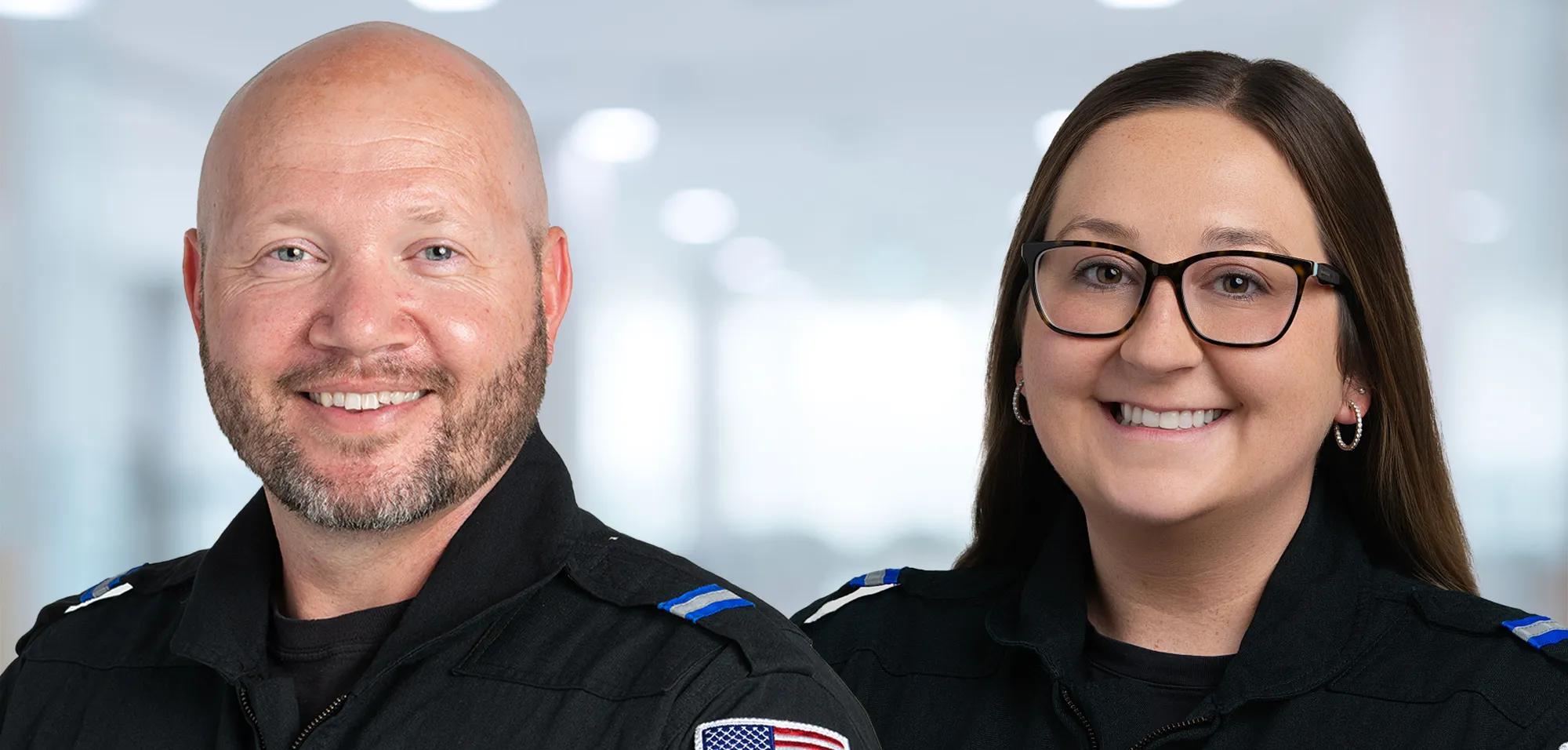
Imagine employing all the skills, competencies and critical thinking needed to deliver top-notch care to patients in urgent situations while flying a few thousand feet in the air or speeding down a highway. That’s what critical care transport nurses do every day. Two assistant nurse managers for Cleveland Clinic Critical Care Transport share insight into the specialty, discussing the logistics, interprofessional team, training and more.
Advertisement
Cleveland Clinic is a non-profit academic medical center. Advertising on our site helps support our mission. We do not endorse non-Cleveland Clinic products or services. Policy
Recent Episodes
Leaning into Evidence-Based Practice
Evidence-based practice involves three factors: using high-quality research to guide nursing practice, relying on clinical expertise and inv…
Caring for Patients with Chronic Lung Disease
Four to six percent of Americans live with some form of chronic lung disease, and it remains one of the leading causes of death and illness…
Back to School: Is it Time to Pursue Another Nursing Degree?
Lisa Baszynski, DNP, RN, NE-BC, Associate Chief Nursing Officer (ACNO) for nursing education and professional development at Cleveland Clini…
Video content: This video is available to watch online.
View video online (https://cdnapisec.kaltura.com/p/2207941/sp/220794100/playManifest/entryId/1_0694xolt/flavorId/1_5f3sgelj/format/url/protocol/https/a.mp4)
Transcript
Carol Pehotsky:
Imagine all the skills and competencies that you have and need to deliver care to your patients, especially in urgent situations or in ICU situations where your patient is decompensating. Now, imagine all of that happening in a helicopter or ambulance with perhaps only one or two other caregivers by your side to support that care. I'm joined today by Chris Durken and Hallie O'Brien from Cleveland Clinic Critical Care Transport to learn more about the vital role nurses play in CCT.
Advertisement
Cleveland Clinic is a non-profit academic medical center. Advertising on our site helps support our mission. We do not endorse non-Cleveland Clinic products or services. Policy
Hi, and welcome to Nurse Essentials, a Cleveland Clinic podcast where we discuss all things nursing, from patient care to advancing your career, to navigating tough on-the-job issues. We're so glad you're here. I'm your host, Carol Pehotsky, Associate Chief Nursing Officer of Surgical Services Nursing.
Welcome back, everyone. As you've probably noticed, if you've been listening to episodes so far, I am a very proud Gen Xer, and with that comes the media that I've consumed. And in college, Thursday night, must see TV had to include ER. As a non-healthcare major at the time, that was fortunately my only exposure to emergency care and ultimately the critical care transport that often in some episodes brought patients to the hospital. And of course, all the drama around helicopters malfunctioning and people losing arms. And yes, those things happened in the 90s on TV. <Laugh> We fast forward to now, and we still have media, right? We have things like The Pitt that really talk about, of course, the focuses of the ER, but there are instances where we are seeing what it might be like to receive care in a helicopter, to receive care on the road.
But we really don't get from those media examples, what is it really like? What is the nursing care involved? What does the interprofessional team look like? And I really want to really is how on earth are you brave enough to get into a helicopter? <Laugh> So with all of that as a preamble, it is my great pleasure to introduce two experts in critical care transport at Cleveland Clinic. They are both assistant nurse managers for Cleveland Clinic Critical Care Transport. Chris Durken, welcome.
Advertisement
Chris Durken:
Thank you for having me, Carol.
Carol Pehotsky:
And Hallie O'Brien, thanks for joining us.
Hallie O'Brien:
Thank you for having us.
Carol Pehotsky:
Of course. Just to get us started, each nurse has a fascinating journey on how they end up in my chair. So, if you wouldn't mind sharing with the audience for each of you, maybe Chris, if you'll go first, a little bit about your nursing journey so far.
Chris Durken:
Yes, sure. So right out of high school, trying to figure out what I wanted to do for a living like everybody else, I was drawn to the firefighter profession was kind of my original thought process. Part of that these days is firefighters and paramedics go hand in hand. So, I went right out of school and got into a paramedic school.
Carol Pehotsky:
Fantastic.
Chris Durken:
Did that, started working as a paramedic, trying to gain experience in that realm. And as I did that more, I really enjoyed the medical side of things even more than the firefighter thing. So, it took me down more the medical route. I worked as a paramedic, I worked for fire departments, I worked in the ER. Ultimately, my exposure in the ER and ambulance service got me into critical care transport. I started out with Cleveland Clinic CCT Ground Transport as a paramedic back in 2009. I've been here for about 17 years. I transitioned through that time through Cleveland Clinic has a great tuition reimbursement program. I went to nursing school over that time, got my nursing degree, and I've been here ever since as a nurse. Worked my way up, did the flight nurse portion of it, and then fairly recently took the role as the A&M.
Carol Pehotsky:
Wow. Amazing. Thank you. Hallie, about, how about for you?
Hallie O'Brien:
I started my nursing journey. I went to Walsh University in Canton and while I was in school there, I started as a nurse tech in the emergency department at Akron General. So, then I ultimately became a nurse there. And from there, I applied for this job. I didn't really have much experience, but I had the bare minimum and I was lucky enough to get the job. I've been on critical care transport since 2019. And then just like Chris, I recently took the A&M spot, but we love CCT.
Carol Pehotsky:
My goodness. And thank you for that clinical care you've provided and the leadership role you're stepping into. All of these things take guts, including now I'm going to lead these efforts. So, for those who maybe have only seen media or really don't know what critical transport is, and yes, we'll abbreviate it CCT for ease, can each of you describe the clinical role, what your perspective is, what a shift might look like?
Chris Durken:
I think one of the best things about it is that every shift is different from how busy you are to what types of patients. You're getting the full spectrum, whether it's landing at another hospital to bring somebody back to Cleveland Clinic or landing on a highway to take care of somebody who's in a car accident. It's a full range. The exciting part is that it's such a range of opportunities on every shift. I think it is also a blend of so many different skill sets when it comes to that pre-hospital type thing that for some people is a little bit unusual if you've been an ICU nurse or something for a period of time. It's a different perspective, but then it also blends the full range all the way to the super-high acuity ICU patients.
Advertisement
So that's what I enjoy about it the most as far as the shifts go.
Hallie O'Brien:
Yes, absolutely. As much as we try to, we do have somewhat of a routine. So, we get to work, check all of our equipment if we have the opportunity. Sometimes we get paged right away, so we're doing a little more fast-paced checking but ensuring we have all the right stuff to take with us. We do call it a mobile ICU and that's truly what it is. Anything you have in the ICU, we have all those things with us. And it's super important for multiple reasons, just because we are taking care of some really critical patients. So, a lot like Chris said, you have no idea what you're walking into. You could take three different types of neuro patients, or it might be a mix of all different sorts of patients. So, it's very exciting, keeps you on your toes, and it just gives you a wide variety.
Carol Pehotsky:
And Hallie, a question for you. So, Chris, you talked about some of your paramedic background that I'm sure helped you, at least in terms of that pre-hospital care. That was not an experience you had. So, what are some of the things that you need to learn or experiences you had to help you transition from, "I'm doing this care in an ED or an ICU," to “We haven't even gotten there yet"?
Advertisement
Hallie O'Brien:
That's a great question. A lot of the things, there are simple little tasks that you've probably never had to do before. So, changing the regulator on an oxygen tank. When we first started doing that, I said, "Okay, so you take this wrench and then you do what with it? There are tools involved?" And they said, "Yes, you need to carry one on you." So that was much different. Changing some of the things I had in my pockets, somebody told me I needed a pocketknife. I said, "What do you need that for?" Things like that. You know, there are definitely differences there. And then even in an ambulance, loading the cot, unloading our helicopter is different than our ambulance, so learning all that. I have learned a lot about transport is just logistics.
There's so much logistics involved and pre-planning. And so just learning that you're not in a temp regulated ICU, it's not perfectly 70 degrees. Just getting out in the elements and being prepared for different things. It's been awesome with our team having so many paramedics who have so much pre-hospital background. They really help the nurses with that kind of transfer of, okay, now we're out kind of in the wild. That's very nice.
Carol Pehotsky:
Can you tell us a little bit about the interprofessional team? And I'm sure that changes probably based on the modality as well, but who's on the team and what are the different roles? Chris, do you mind starting?
Advertisement
Chris Durken:
Sure. Like you said, it depends on the modality. We have a general structure that we go by. Our aircraft are staffed with a provider, either a nurse practitioner or a physician, and then they are partnered with just one other person that's either a nurse or a paramedic. That's the base structure. And then our mobile ICU ambulances are generally staffed with a nurse. It could be two nurses or a nurse and a paramedic and then an EMT. Some of the other stuff, if we get into that, the mobile stroke staff has a CT tech, but that's the general structure that can be configured differently depending on the patient we may be going for. The providers can absolutely go with us on the mobile ICU if that's deemed necessary. We have fly cars now that we have a car designated at each helicopter base.
That should, for whatever reason, whether it's sometimes an aircraft isn't an option, whether it's for weather-related reasons. Or maybe the destination isn't suitable for helicopter land. There's a variety of reasons that you can't necessarily use that vehicle. So, they have the option to jump in the fly car, we call it, and meet up with a crew wherever they need to, if they need another level of care or extra hands, whatever it may be. So, you definitely learn to work with the different professional levels. But it really does become one team. Everybody is trained up and expected to function together where it's almost difficult to identify what the role is. If you're seeing us working at the bedside, that's something pride ourselves on.
Carol Pehotsky:
Yes.
Chris Durken:
If we're at the bedside and somebody comes in, they don't necessarily know who's the nurse or who's the paramedic
Carol Pehotsky:
Or
Chris Durken:
Who's the nurse practitioner. So, the goal is to get to that level.
Carol Pehotsky:
Hallie, appreciate that there are different modalities, and you mentioned all the logistics. That's so amazing and unsurprising to hear the team gel so well. But when you have less space, when you're in the air, so talk to us about how those rules might have to evolve either because of the modality or as the patient's condition is changing in route.
Hallie O'Brien:
We only have access to one side of the patient in the aircraft. So, we really have to be careful when we're preparing at the bedside to have all of our lines in a good access point, have everything packaged appropriately because if you don't, you won't be able to access it once you're loaded in the aircraft. As we talked about logistics and everything, a big point is just making sure our patients are packaged appropriately so that we have access to everything that we need. We also carry two bags that have everything possible in them. There's airway management, bleeding management and just tons of different items we carry that we know are important to us, as well as a ton of medications. We have all those things right in front of us ready to go.
So anytime if a patient's condition were to change, we have all those options available to us. Usually, the nurse practitioner in an aircraft sits in front of the patient right above their head, and then the nurse or paramedic will sit beside the patient. The nurse or paramedic will adjust strips and medications, and the nurse practitioner usually monitors the airway. But like Chris said, we are adaptable and sometimes that's not where we sit and that's okay. We try to have clear roles. And that's talked about as we pick up each patient. We really pride ourselves on pre-planning and getting ready for things to expect. We try to think about the worst of the worst. Everything could go completely fine. But in case it doesn't, we have to be prepared for those things.
Carol Pehotsky:
Certainly, we've talked about how the setting obviously is different. It is a mobile ICU. So what clinical skills are so important? There's a whole range, I'm sure, but to really be able to say, "I am caring for this ICU level patient in these limited settings in motion."
Hallie O'Brien:
Airway management and ventilator management, those are not typically given by a nurse. When you're in the hospital, we have respiratory therapists who typically will manage your vent and your airway, and you have physicians. But for us, we have to do that. We have to put them on the ventilator and do those types of things. So, there's a lot of training for things like that. We also have to mix our own drips, so we don't have pharmacy. You become the multiple levels that you see in the ICU. You're the pharmacist, you're the respiratory therapist, things like that.
Carol Pehotsky:
Chris, you had some skills coming into the nursing role. What are some other skills that you find that you're tapping into?
Chris Durken:
At the end of the day, you're taking patients who are typically critically ill, sometimes from settings where they have maybe not unlimited resources, but certainly more resources than we maybe have with us at time. And you're taking them into a very confined space. Logistically challenging space and with two to maybe three people to care for them. So, you have to be the jack of all trades, master of none, but almost expect to be the master of all. That's kind of the mindset, right? You have to be the jack of all trades and your goal is to be the master of all trades. So, when you come into it, like vascular access type procedures, sometimes we have that, sometimes we don't. If you think about all the skills that you have to have, you have to be performing those skills in a much more challenging environment.
You take all your fundamental skills across all nursing or EMS and home it in for the environment that we're going to be in.
Carol Pehotsky:
What does residency look like? What does orientation look like? Whether you've had a year or 10 years of nursing experience, it's probably not been this.
Hallie O'Brien:
Our orientation is a full 12 weeks. It is jam packed. Technically, for the first year, we say that you're green. So, it's almost like the residency program for the main hospitals. During that first year, you're really taking it all in. But the first 12 weeks are your official orientation. And we do clinical rotations in all the different cardiac ICUs, the ERs and all over to just expose people to areas they've never worked before. Because typically, not everyone has the perfect background, they haven't been exposed to certain patient populations. We really try to home in on things they haven't been exposed to. You also go to the OR for two days. Fairview Hospital is great that they allow us in their OR practicing our airways and getting some really good experience with that. We also have cadaver lab.
We do sim competencies and it's jam-packed. And then that also is time on the trucks. We are with a preceptor, and we just started doing a phase two preceptor style where you're the other person. And this is after the end of your 12 weeks, and you're with the senior person on the team. So, these are people who have been on our team for 10 plus years. Now they continue to learn as they get out of that initial orientation period.
Carol Pehotsky:
Chris, how do you transition that? We have to make sure you have the skills in the hospital. We put you in a truck. But at some point, we have to put you in the air. How do you help people learn those skills, especially when space is so limited?
Chris Durken:
As part of the initial orientation, we try to give people the opportunity to do some observation shifts in the aircraft, just to get a feel for it. Because it is obviously a different environment and it's not necessarily for everybody. And then everybody starts out just working on the mobile ICU for a minimum of a year for that period Allie was talking about. After that year period, there's several factors and ways that people can advance to the rotor wing, what we call the helicopter. There are many things that are taken into consideration, but that first year is really where they're building those fundamental skills. As the nurse or paramedic, you are ultimately the one responsible for learning all those different patient populations, all of the assessment skills that you're going to need to develop, mastering all of the equipment, like Hallie was talking about, especially ventilator management is definitely something new for a lot of people just getting into this.
But then all the other equipment that we have and some specialty things that we transport, even things that we don't necessarily keep in the ambulance or the aircraft all the time, but different cardiac devices, balloon pumps, ECMOs, these types of things. So, you use that first year to get exposure to those things just naturally. After that point, it's a process of elevating to that.
Carol Pehotsky:
Communication is obviously such an important skill in any healthcare, but I'm thinking about whether it's the noise of the helicopter, the noise of the truck, and so much going on. What are some techniques that each of you have employed and encourage your team members to use to really make sure that everybody's on the same page in such stressful situations?
Hallie O'Brien:
Clear communication is so important to us. And like you said, there are times when you truly can't even communicate. Whether it's a hand signal and verifying with another person, we'll give each other thumbs up if we need to, but we pride ourselves on being so connected and that's part of the pre-planning phase. If this happens, this is what we're going to do so we don't need to talk about it at that point. We are just going to execute because that's what the patient needs. We're all pretty good about, okay, we're noticing this, this is how we're going to handle it. And there are times when we're unloading and like you said, the helicopter is so loud, we're unplugged. So truly you're just communicating with hand signals and just making sure that we're doing everything the right way.
Chris Durken:
It's something I've heard multiple times from people that have observed us as they'll make a comment like, "You guys didn't even say anything to each other." And it seems so fluid but that takes time and repetitions. We don't necessarily work with permanent partners or anything like that. Everybody works with each other. But over time, you do develop just a routine and a way of going about things. And you can't necessarily know, like we talked about earlier, what you're walking into. You have to go into it understanding that things can change, but we do our very best to plan through whatever scenarios could potentially come. So, when it comes to it, if you can't necessarily have a conversation, whether it's because you can't hear, there's no time, I can just point to something and give a thumbs up and my partner can put thumbs up back and we're on the same page right from the beginning.
Carol Pehotsky:
Wow. Let's talk a little bit about that pre-planning because, I think the imagination goes to, "I got a page. I'm running to the helicopter and off we go." But that does not sound like that's what happened. So, tell us about how the team is coming together before they get into that modality and head on the way.
Hallie O'Brien:
Usually, the pager will go off and they do try to include, so if it's at another facility, just a main diagnosis. So, if we have the diagnosis, that points us in the direction of how we're going to treat this patient. That by no means guarantees that’s what is going on, but it gives us a good idea so that we're prepared for X, Y, and Z. But I will say, if we get a page for a scene call, you have no idea. It could be a two-year-old, it could be an 80-year-old, you have no idea. As far as pre-planning for those situations, we go down to, "I'm bringing this bag, you're going to bring that bag. I'm going to enter." Usually when we arrive on scene, the patient is in another ambulance. So, we go as far as to say, "I'm entering in this door, you're going to go in this door. This is what you’re going to do.”
Just clearly defining our tasks and that's how we assess our patients and just going over the basics like ABCs. Even if we're picking up a STEMI at Avon, we're still going to go through all those motions. So just clearly defining roles before we get there. And then even if you think the patient just stubbed their toe, we still calculate out what meds we might need, if the patient would need intubated or things like that. That way everything is calculated out and we're ready to go.
Chris Durken:
Depending on what type of call we're going on and how that call comes in, some of our inter-facility type transports go through, we call them clinical coordinators. They essentially operate as our dispatchers, but they can get information from the referring facility. Sometimes it's very limited depending on what it is. Sometimes it's detailed, depending on what's going on. So how pinpoint our preparations can be are related to the information that we're getting going into it, from detailed to none. And then, just always preparing for those worst-case scenarios, regardless of what's going on. You're trying to mentally offload as much of that math or thought process. Whatever it is that you need to prepare for, you've done that in advance so when you're there, you can just act.
Carol Pehotsky:
With each of your rich backgrounds and experience in this space, I'm wondering if you can each share with us, what was one of the more challenging situations you went through and how you navigated through that?
Hallie O'Brien:
The first thing that pops into my mind is sometimes it's not even about the patient. You can prepare all you want for the patient, the patients are critical, but this is just part of being out in the elements. So, we were coming back from Youngstown, it's a pretty far trip by ground because weather was questionable. The patient was critically ill but was stable. Transport is going good, and then all of a sudden, it's a white out blizzard on the side of the road. We pulled over because our EMT truly couldn't see. The storm came out of nowhere. We do weather checks. We use apps. We do all this stuff, but sometimes Ohio weather does not cooperate. And at that moment, we are very close to Twinsburg Family Health Center. And we were able to get off the highway and go there.
And we said, "We're so sorry. We're just stopping in." We do have limitations such as medications and oxygen and things like that, so it was the safest thing to do for the patient. The ER doctor assessed the patient just to make sure we were all good. And then after the weather cleared, we were back on our way to main campus. Things like that will come up. So, it might not necessarily be your patient deteriorating, but it's other things that you have to think about.
Carol Pehotsky:
How about for you, Chris?
Chris Durken:
I was working on our mobile stroke treatment unit this day. It's a truck that has a CT scanner on it for people who aren't familiar with it. So, we can respond with local EMS. We can basically take on any patient with a suspected acute neurological emergency with the goal of doing a CAT scan in the truck and potentially intervening right there in the truck for time benefit. In this case, we were called to a scene. We decided that we were going to transport this patient. We were very close to Fairview Hospital at the time. The patient very quickly decompensated in the back of the ambulance to the point where we were having a hard time laying the patient down to do the CAT scan in the first place. In this truck, we have a neurologist on a telemedicine screen in the back of the truck.
So, you're working with them while you're doing this. There was a lot obviously going on and the option was to just abort what we were doing and take the patient to Fairview because we were close. It's an example of everybody working together as a team and discussing the options. Maybe the neurologist isn't necessarily familiar with where the hospital is. We had to secure the patient's airways. We had to intubate the patient, which is a little bit of a time delay, but we were able to scan the patient and determine that they had a large head bleed, which wouldn't be managed at Fairview. So ultimately, we were able to diagnose that and transport the patient to the Cleveland Clinic main campus where they could be adequately managed, as opposed to choosing faster route to the closer hospital.
Which then would've resulted in probably a helicopter coming to get them and flying to the main campus anyway, which would've delayed things more. It was just a situation where there was a lot going on, a lot of different people involved in deciding where to go. But at the end of the day, everybody was open to hearing everybody's input on why we should do it.
Carol Pehotsky:
Slow down and -
Chris Durken:
End up being a good result for the patient down the road too.
Chris Durken:
That's one that comes to mind in terms of unique circumstances, but everybody is coming together to figure it out.
Carol Pehotsky:
Teamwork is important and communication is important, but I'm just awe struck by the care you're representing and the teams you're representing. The outcomes and the success you're able to have with patients is because there's that trust and that communication. Clearly the work that you and your teams are doing is always striving for the best possible outcome for the patient. But certainly, in this line of work, there are times where unfortunately we can't get that outcome. What do you and your teams do to process that, to support each other when that outcome isn't what you'd want it to be?
Hallie O'Brien:
We have a lot of different things on our team. We obviously have all been involved with some pretty tough calls. We have a peer support team that is led by one of our medical directors, Dr. Gullet, and he just does a really great job of reaching out just to talk about it. We do a lot of debriefs. We typically debrief every call no matter what. And as a leader in this department to reach out to people who have been in these situations because we know it's not easy. We just try to be there for one another.
Chris Durken:
Yes. To echo, the debrief that is part of our process after every transport, we have an opportunity to kind of pause and discuss what was going on. I think too, we have a lot of people who function at a very high level. They have a lot of pride in what they do.
And sometimes it's hard to speak up when you are dealing with something like that. You just want to keep going. We have a lot of people who look out for each other. Everybody recognizes that as a possibility and how hard it can be. People will reach out themselves or they'll reach out to our peer support group and say, "Might want to just check in or whatever." But everybody's very good about recognizing those scenarios and providing not only support, but an opportunity to pause, maybe take a little bit of time before you jump right back into something else. So that option is always there to just realize what's going on and take the time to deal with it.
Carol Pehotsky:
Before we call it a day, we're going to transition to a different type of question. As you know, our organization revised our values this year down to three. Serve with heart, succeed as one team and shape the future. So, I'm hoping each of you will share with us which one of those three resonates with you the most and why.
Hallie O'Brien:
Serve with heart is definitely important to me and I think a lot of people on our team. When we get to bedside for our patients, they're usually not having a good day. For some, it's the worst day of their life and for their families and for the patient. So, we come in as the calm and trained team to take care of this patient and just give them the next steps. A lot of time it's a new diagnosis that just happened and they're in the emergency department. We try to put their worries at ease and just tell them you're going to the best place possible for care. And just remembering these are humans and just giving them the good care that they deserve.
Chris Durken:
For me, I think it's succeed as one team. Going back to my recent example, it really is so important in our roles where, whether where we're working with local EMS as part of the team to get important information that's going to help shape how we're going to care for that patient, and then onto the hospital working with those teams or regular inter-facility type transports we do. We really are a bridge between a sending facility and then whatever the receiving facility is going to be. So, we have to be able to work with both ends to ensure that the patient is truly getting a continuity of care, right? That there's no gaps in that, no misunderstandings, trying to make sure everybody is fully on the same page and knows what was done already, what wasn't done, what needs to be done, all these things to make it a cohesive experience for them.
So, for me, it's that. We have to be able to work with so many different providers and such.
Carol Pehotsky:
Awesome. Thank you so much for joining me today.
Hallie O'Brien:
Thank you.
Carol Pehotsky:
As always, thanks so much for joining us for today's discussion. Don't miss out. Subscribe to hear new episodes wherever you get your podcasts. And remember, we want to hear from you. Do you have ideas for future podcasts or want to share your stories? Email us at nurseessentials@ccf.org. To learn more about nursing at Cleveland Clinic, please check us out at clevelandclinic.org/nursing. Until next time, take care of yourselves and take care of each other. The information in this podcast is for educational and entertainment purposes only and does not constitute medical or legal advice. Consult your local state boards of nursing for any specific practice questions.
Recent Episodes
Leaning into Evidence-Based Practice
Evidence-based practice involves three factors: using high-quality research to guide nursing practice, relying on clinical expertise and inv…
Caring for Patients with Chronic Lung Disease
Four to six percent of Americans live with some form of chronic lung disease, and it remains one of the leading causes of death and illness…
Back to School: Is it Time to Pursue Another Nursing Degree?
Lisa Baszynski, DNP, RN, NE-BC, Associate Chief Nursing Officer (ACNO) for nursing education and professional development at Cleveland Clini…
Never miss a moment - subscribe now.
Listen to the Health Essentials Podcast on your favorite streaming platform.
Other Podcasts You May Love
MedEd Thread
MedEd Thread explores the latest innovations in medical education and amplifies the tremendous work…
Health Essentials
Tune in for practical health advice from Cleveland Clinic experts. What's really the healthiest diet…
Beyond Leadership
Hosts Jim Pae and Elizabeth Pugel escort you through a network of thought leaders, sharing world-cla…
Studies in Empathy
Join Cleveland Clinic Patient Experience leaders and a group of guests with a wide range of experien…