



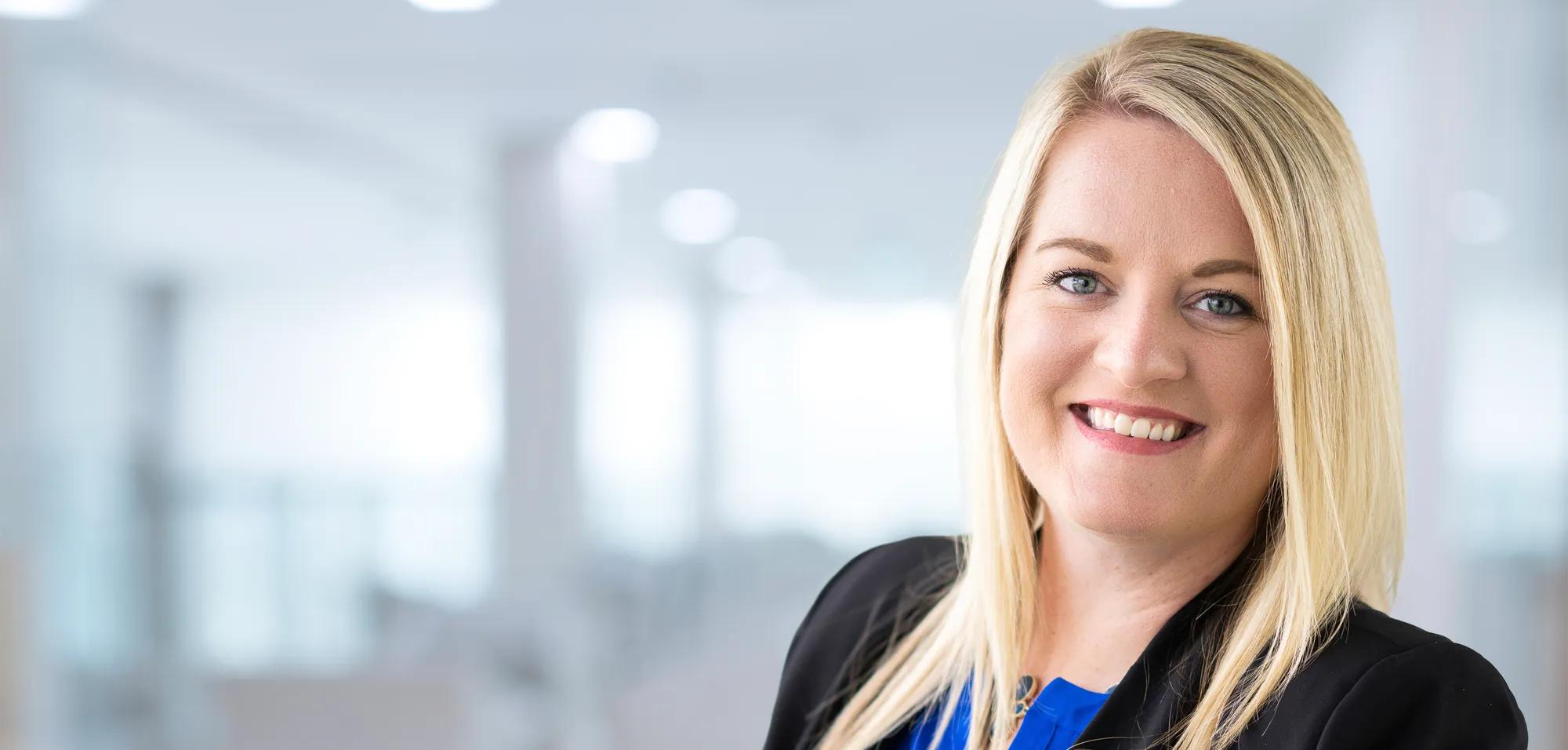
Leveraging Your Nursing Career for New Opportunities
Nurses develop so many valuable skills that can cross over to different roles within healthcare or other fields. These include assessment abilities, communication, advocacy, time management, adaptability and more. Lindsey White, MSN, RN, shares her journey from clinical nurse and leader in a NICU at Cleveland Clinic to organizational development consultant with the health system’s Mandel Global Leadership & Learning Institute.
Advertisement
Cleveland Clinic is a non-profit academic medical center. Advertising on our site helps support our mission. We do not endorse non-Cleveland Clinic products or services. Policy
Recent Episodes
Inspiring Nurses to Become Innovators
Innovations require two components: They need to be novel and have value, says Nancy Albert, PhD, CCNS, CHFN, CCRN, NE-BC, FAHA, FCCM, FHFSA…
Spotlight on Critical Care Transport
Imagine employing all the skills, competencies and critical thinking needed to deliver top-notch care to patients in urgent situations while…
Leaning into Evidence-Based Practice
Evidence-based practice involves three factors: using high-quality research to guide nursing practice, relying on clinical expertise and inv…
Video content: This video is available to watch online.
View video online (https://cdnapisec.kaltura.com/p/2207941/sp/220794100/playManifest/entryId/1_mpzq828y/flavorId/1_5f3sgelj/format/url/protocol/https/a.mp4)
Transcript
Carol Pehotsky:
Here in 2026, and probably for the foreseeable future, there’s never been a better time to be a nurse. There are so many different options afforded to us. Sometimes those are in bedside care, and there are options for us even further away from bedside care, and sometimes even fully away from healthcare in general. But what is the right move to make? When is it the right move? And how do we make sure that whatever we do in this life, we're still able to fill our cup with those things that really drew us to becoming nurses in the first place? I'm joined today by Lindsey White, organizational development consultant at Cleveland Clinic and nurse to talk more about her career journey and how she made that path forward.
Advertisement
Cleveland Clinic is a non-profit academic medical center. Advertising on our site helps support our mission. We do not endorse non-Cleveland Clinic products or services. Policy
Hi, and welcome to Nurse Essentials, a Cleveland Clinic podcast where we discuss all things nursing, from patient care, to advancing your career, to navigating tough on-the-job issues. We're so glad you're here. I'm your host, Carol Pehotsky, Associate Chief Nursing Officer of Surgical Services Nursing. Welcome back, everyone. When I look back over the past several years and we think back to the pandemic, we saw a lot of nurses transition to different roles or transition away from the field for a variety of reasons, some that might have had to do with the pandemic, and some of them that might have really been more about this was my time to do something different anyway. And, you know, as somebody who came to the career late, I had some of that beforehand and have benefited from those experiences outside nursing, I think really to inform myself as a nursing leader.
It's widely known when you look at business circles that someone who is a nurse often is very successful and no matter what path they take, whether it is healthcare adjacent or not, employers really like the skills that we have. We're able to critically think. We're able to assess a situation, we're able to make recommendations and we're able to implement those ideas to make things better, whether that's for a patient or an organization. I'm joined today by my friend, Lindsey White. We were talking beforehand about just how long we've known each other. I think we lost track of time. Lindsey is an amazing nurse, an amazing nurse leader. She is currently in a different role in our organization. She is an organizational development consultant in the Mandel Global Leadership and Learning Institute for Cleveland Clinic. Lindsey, thanks so much for joining me today.
Advertisement
Lindsey White:
Awesome. Thanks for having me, Carol. I'm glad to be here.
Carol Pehotsky:
You're the perfect guest to talk about how a nurse can thrive and succeed in different areas. And so, to get us started, I hope you'll tell our audience a little bit more about your career journey so far.
Lindsey White:
Yes. Awesome. Well, thank you so much Carol and team for having me here. Really excited to come and share a little bit about my story. And it's so true, thinking about what you just shared and how long in our career paths, I'm going back to Lead Forward programs. I'm going back to reaching out, "Hey, will you mentor me or be my preceptor through my master's program?" It was just awesome taking that crosswalk a little bit with you before we start. So, a little bit about me. I think when I think about my space and journey here, it's exciting to think I was one of the ones that got to take advantage of Cleveland Clinic's career pathway. When I think about when I started, I started as a nursing assistant, and I know that title has since then evolved.
And then I transitioned to a nurse tech when I was accepted to my nursing program. I went to Kent State for any fellow flashes out there listening. I worked at Hillcrest most of my clinical career, if not all of my clinical career, in the family maternity center, which I really loved. So spent my time there when I was in school, shortly after transitioned right into my RN and went to the NICU, which was exciting because there was a time when many new grads were not offered that opportunity. So, I think building that network and just working in that space helped me get that role. Through that role, I got to take care of some awesome families, awesome patients, right? Those babies, and once a NICU nurse, always a NICU nurse too.
And then some of my leaders started saying, "Do you want to seek other opportunities? What else is out there? Have you considered being in charge?" Or, "We have this program or committee," which was awesome. So, learning early to say “yes”. So I took on some of those roles. About eight years in, I took my official first leadership role as an assistant nurse manager there about four years. You mentioned COVID was a challenging time. And when I think about that, we all have our stories and experiences. But one thing for me is it gave me the courage to take that risk and maybe step out and explore something different. So, in 2021 I transitioned over to global leadership and learning as a program manager. And then I just hit my year mark as an OD, so organizational development consultant this month.
Well, yes, September.
Carol Pehotsky:
Congratulations.
Lindsey White:
Thank you.
Carol Pehotsky:
Tell us a little bit more about that. What does that mean? What do you do?
Lindsey White:
Yes. It's very versatile. A lot of work around supporting our leaders and teams across the organization. Requests will come in for some facilitation, or leaders and teams are experiencing challenges with team dynamics or trying to overcome an opportunity that they noted or just have some extra support there. We go in and we can support with that, some strategic planning, coaching, mentoring with that. Of course, there's still some project and program management too, but really getting out with the teams and supporting them with their experiences that they are dealing with.
Advertisement
Carol Pehotsky:
So, I can already draw the connection between skills as a nurse and how you're really using your nursing skills in this role and in your previous role. Talk to us a little bit more about some of those specific skills where you're really identifying these things that I'm doing every day, these attributes, these skills that I have might have started in nursing.
Lindsey White:
Oh yes, absolutely. I had a colleague help get me into this role. She said, "You have some transferable skills. Have you thought about using them in a different way?" So, when I think about that and some of those skills, the one that jumps to mind is the assessment background, right? We learn so much about SBAR. But when you're coming in and meeting with clients and teams, really assessing the situation, what’s going on in their space, trying to view it from their lens, offering different perspectives, but truly just listening, too. When we think about nursing, we're sitting with patients, we're listening. We're trying to get all the facts together to put together a plan or a recommendation that might work for them. I also think of things such as communication. So that ability to not only communicate what you're hearing, but listen, being present with the teams.
Advertisement
Advocacy. There's a lot of times we need to speak up; we need to be curious. Also say some of those hard truths or, "What are you not telling me? What else is going on that you might want to build into that space?" Time management, organization, prioritization. Things that we're always dealing with. And then adaptability and flexibility. As requests are coming through now, we're leading different projects or meeting with other teams, they're so different. Just like a patient, you never know what's going to walk through the door. You never know what your patient's going to do there. And with our teams too, we don't know all the ins and outs. One team can be completely different than the next. End up one call, go to the next, completely different. So, I think that has also helped set up for success in this role.
Carol Pehotsky:
I want to linger at time management because, especially thinking about the specialty that you love, emergencies are very much emergencies in family health, in the NICU. It's very clear what needs to happen and not always super clear what needs to happen when, but there are lots of signals that say, "This is an emergency, I need to drop everything, and I'll go do this thing."
Lindsey White:
Sure.
Advertisement
Carol Pehotsky:
They're probably not that apparent in other roles. How do you take all those rich time management skills, balancing the emergency with these things now reshuffle? How do you apply that to these types of roles?
Lindsey White:
Yes. I think we have to connect with our teams too and understand what is happening, not only in your own department, in your workspace, but how systems are working across different systems. I don't think there's ever been an emergency. I mean, there…
Carol Pehotsky:
Could be, right?
Lindsey White:
I think an urgency,
Carol Pehotsky:
Right? Teams are
Lindsey White:
Falling apart.
Carol Pehotsky:
Yes, or really, really need -
Lindsey White:
Was one thing I did think about. And before I came, my team had to transition the onboarding, I think they had 24, 48 hours to switch that from in-person to virtual. So quick turnarounds. Still an
Carol Pehotsky:
Emergency
Lindsey White:
Just different. When we think of our values. Sustaining as one team, everybody jump in to help with that. So, I think that there is looking at what's happening, what is going to make the biggest impact, who's at risk of that, and really assessing all of those situations individually.
Carol Pehotsky:
Yes. You mentioned part of your transition from your assistant nurse manager role into the Global Leadership and Learning Institute was somebody seeing something in you. How can nurses think about that career growth, that movement on their own, maybe without somebody saying, what sort of things were in your head or what do you sometimes hear from other nurses in terms of that curiosity about something different?
Lindsey White:
I think the one thing, and even when I'm coaching and mentoring now, and somebody asks me, "What brings you joy? What fills your cup in the day to day?" I think as nurses, we're constantly looking at things like, "Where's that opportunity to make this better? How can we do something different?" So I think that that helps contribute to that space and maybe can trigger where else I might want to look. Is there another space clinically? I was blessed; I loved my NICU bubble. I was in that space and that was where my heart was and I knew it. Other people chose to leave saying, "I want to go work in surgery." or "I want to go to the adult ICU." There are so many opportunities there too. And I think what's great is when you start networking with other nurses, you're in different programs or committees.
You can learn about that. Ask questions. Tell me about your role. Can I shadow you? And I think even through some of the programs we were connected with, there were those built-in natural connections. I think you can explore online, right? Technology works in our favor. Sometimes it doesn't and it's really irritating because I feel like it's on a Monday morning when it doesn't. Or right before that meeting, talk about that time management. But there are so many spaces and places where you can ask those questions. Go online and research, connect with a mentor, talk with your leader. “I'm interested in this. What might be my path to get there? Who can I talk to to learn more?" I think that those are some of those things that come to mind.
Carol Pehotsky:
Our organization and I would imagine in others, there are paths within nursing that are nursing leadership, nursing education, nursing quality, et cetera. But then there are also paths in our organization that are still leadership, education, and quality that are not necessarily part of nursing. From your vantage point, what do you think nurses bring to those roles, especially those that might not be within a nursing umbrella?
Lindsey White:
Sure. I think the first thing is that clinical or here at Cleveland Clinic, that caregiver perspective. Those lived experiences, the ability to say, "Team, I don't think that's going to work and here's why. Here's what I've experienced that we might not be able to apply that." Theoretically, that program is great if they have time to do it. And you can talk patient ratios. I think there's just that perspective you have from living and breathing it or different dynamics, right?
Carol Pehotsky:
Yes.
Lindsey White:
We think of systems now, but just that one decision here and that impact that it has. So, when we think of the rock in the pond, right? If a nurse is doing that or we make that decision, what other impacts or connection points are there? And there's a colleague of mine who uses interdependencies, but it's so true.
Carol Pehotsky:
Sure. And you think about something simple. It could be a fantastic idea, but if we're going to go on units at 9:00 AM and ask all the nurses together they're going to be busy passing meds. It's probably something as simple as that sometimes.
Lindsey White:
Right. Or we just had a conversation like, "Can we change the program time? What are your thoughts? What might make most sense to get our clinical leaders in that space?" So those are great conversations when you have that real life perspective -
Carol Pehotsky:
Yes.
Lindsey White:
And experience.
Carol Pehotsky:
And all of us as individuals want to feel our cups full, that we're growing, that we're being challenged. How can nurses think about career growth without seeing it as a yes or no? I'm either at the bedside or I'm not. And I move away from it.
Lindsey White:
It's funny because I still get the question, "What made you leave nursing?"
Carol Pehotsky:
That sounds so harsh.
Lindsey White:
I know it does. And I didn't leave nursing; I left that part of the profession. I'm still a nurse and I'm leveraging those skills in different ways and applying it in different ways. When you think about what made you leave nursing and bringing that skillset in different places, you're bringing your voice, your perspective, your knowledge and expertise just in a different way and applying it in a different way. That's truly how I see that. And I feel pretty confident in saying, "You can't take the nurse away from us, right? We're in it. We're just using it in different ways."
Carol Pehotsky:
And folks, she even still has MSN and RN on her badge, so I sure do. Absolutely. As you should. We were talking a little bit before we started recording, so I want to explore this, how can you step into these areas, but not necessarily leave the bedside? What do you think about that? How do we as organizations, leaders or nurses take steps in a direction where we can maybe have our feet in both worlds?
Lindsey White:
I think a big thing is talking to our leaders about that. But a lot of work, you are still connecting and partnering directly at the bedside too. For some, that bedside is their passion. That is where they are going to serve. They are growing and thriving. And I think continuing to help support those nurses be the best they can at the bedside. While others seek different paths, like you mentioned leadership, how are we advocating for our bedside nurses in that way? For some of the consulting, how are we going to those leaders or those bedside caregivers to understand, tell me about your experience, what's working, what's not? We have our colleagues in CI who talk about going to Gemba, but I truly think that that's part of our assessment too, is going and partnering with those colleagues and just understanding workflows, dynamics to help make processes better and make strong recommendations for what could be next.
Carol Pehotsky:
That's a great point. Working with continuous improvement or listeners, whatever that title is in your organization -
Lindsey White:
Yes.
Carol Pehotsky:
Can be a great way as a nurse to sort of scratch that itch that says, "I'm part of something bigger." Or it might be that seed that gets planted that says, "I might want to actually go there someday and do
Lindsey White:
That
Carol Pehotsky:
Work."
Lindsey White:
Absolutely.
Carol Pehotsky:
So, to build on that, let's say in our scenario, we have a nurse that is working at the bedside, has had some exposure and starting to feel curious about what other roles that might fill their cup in a different way. Are there particular interests, strengths or traits that might signal to that nurse that not only am I interested in that role, but I could be really successful in it?
Lindsey White:
I think that's awesome to think about and there are so many things that can go to this. And I think that uniqueness of that individual and what they're looking and thinking about doing. But one thing that jumps to mind is just being dedicated to the profession. We're still serving in a different way, but what does that look like? Where do you see opportunities that you can insert yourself or that you would like to experience? One thing for me is I love developing others. That was really something when I got that question of what brings you joy. I thought of those young nurses that would come into the office and say, "I don't know what to do." Or "I'm thinking about enrolling in my master's program. What are your thoughts?" So, the coaching, the mentoring, some of those pieces, leading projects and programs to help make change, I think was something I was truly passionate about.
So, I would say developing others, being creative and curious. When we ask those questions of, can we do this better? Why do we do it this way? And those why questions are sometimes challenging, but what is another way we can explore that drive, I think in any of our spaces, sometimes we need to take that initiative and roll up our sleeves and ask what does that look like? Where do we want to go? I mentioned communication earlier, but the relationship building. As nurses and no matter what path we take, we're connecting with other partners across the organization to get work done, to understand different perspectives. And again, to that systems thinking, you're not just serving that one patient or your individual assignments, your department needs. Now you're making a greater impact -
And looking at bigger scale opportunities. I think another thing too, being comfortable with change, and I chuckle. So you could see me kind of grin as I say that because we know change is hard.
Carol Pehotsky:
And constant.
Lindsey White:
And in these spaces, right? That we are willing to try something different or listen to another perspective, knowing that that path forward might not be clearly defined for us and what that looks like. I think lastly, I would say having some self-awareness and really some reflection on what's important to you, what are those non-negotiables? And sometimes that influences your decision on which path you take. Where are you in your career journey? What's happening personally, professionally to meet those goals? So, I think some self-awareness and some reflection on that too.
Carol Pehotsky:
Well, and whether it's the drive to and from work or you get home and just everything that's going on, sometimes it's hard to find time to just sit and listen to yourself and think about, because it's I have to get to bed, it's another 12-hour shift or what have you. And so some of it might be carving out time for yourself to really listen to what am I thinking, what am I feeling?
Lindsey White:
Absolutely.
Carol Pehotsky:
You had mentioned a leader seeing something in you and that's very similar to... I was not going to go into leadership and here I am until a leader said, "No, no, no, that's, that's you. You're going to be in that job." Leaders have a big role to play in those who they lead their development. And I can appreciate leaders wanting to help their nurses develop, but if I encourage them to do something different, this fantastic nurse might leave my department, might leave nursing et cetera. It's a double-edged sword, if you will. Certainly, it's so important as leaders to illuminate for people things we see in them that they may not see in themselves.
Lindsey White:
Right.
Carol Pehotsky:
What are some other things that leaders should be thinking about to really help their nurses feel fully invested and developed and give them maybe some courage to explore something different?
Lindsey White:
I think with that, not only those check-in conversations or some of those things we do here at Cleveland Clinic to really reinforce that ongoing performance and what we're looking to do, and just building that relationship, but maybe who else can you expand their network to connect with? Is there an opportunity that you can see them lead a committee? I know you're very involved with leading different committees and programs around the organization, but is there somewhere they can join just to get more exposure, visibility to things happening? I don't necessarily think it's always changing a role, but what else is out there? Who else can help inform this? What are some of their goals that they're truly looking to do? And understanding how we direct them with some of those resources? We have a plethora.
We're, we're overflowing with resources, right? People, programs, tools. But I think sometimes building that connection and having those conversations can help a leader guide them to those right paths.
Carol Pehotsky:
And sometimes it's also a simple saying, "Wow, thank you. I enjoyed that experience. I do not want to do that."
Lindsey White:
Absolutely, right?
Carol Pehotsky:
So certainly I can appreciate that, especially in a pandemic era, in a post-pandemic era, some of the motivations for some nurses was, "I want to try to work from home. I want a remote role." We know as an organization, roles that were made to be remote when they had to be for that response have really evolved into hybrid or back in. What are your thoughts around that? And what would you say to that nurse who thinks, "Oh, it's going to be so much easier because I won't have to go to work and I won't have to put on scrubs." That's one viewpoint. What else would you offer as someone who did have to do some of that in the early days and work your way back to hybrid in-person model?
Lindsey White:
Thinking back on that, there was certainly some envy when we're taking care of our patients and we're there and we're pulling extra hours. I want a remote job too. Complete transparency too. In this role, we do have that hybrid model, and we go where the work goes. So, traveling all over the enterprise to do it as well, you never know what's coming through the queue and if it lands in your area and when you might be serving in that way too. I think with that, it's really a give and take in different spaces. I think there are pros and cons to both. Sometimes clinically, when you are having that challenging situation, you have a buddy right next door that you can flag down. And sometimes not saying that teams are not accessible, but there could be different communication pathways to take to get that.
I know when we're on site, we really enjoy being together or, "We're in the office together. What can we do?" Or "I am preparing for this." So, definitely pros and cons to both.
Carol Pehotsky:
In our roles, we didn't go remote, but just sometimes in your office for more online type meetings. I think it's easy inside the fact of how much work gets done walking in a hallway versus the formality of, "I've sent you an email, or I've sent you a message." But just like the, "Can I bend your ear for two seconds?" And that, I imagine, is a loss when you don't have access to that easy communication.
Lindsey White:
Yes. I especially think of the clinical components. You can watch somebody do something or you have a new admission come in and you're simply the observer. There's so much knowledge you gain in that space. And sometimes when you're not all together, some of those pieces could be lost. Absolutely, I could see a connection point there.
Carol Pehotsky:
There are many great avenues you've been able to pursue. Is there anything you miss from being closer to the bedside?
Lindsey White:
Well, I certainly miss the babies. Carol, I have to tell you, I went to a doctor's appointment at Hillcrest where I used to work. The code pink button went off which is a pediatric emergency.
Carol Pehotsky:
You were ready.
Lindsey White:
I was ready. My heart rate went up a little bit. I stood up a second. "Okay, that's not your role anymore." But there's that part of that experience or that impact you make, those relationships when you see your patients come back to reunions and things like that, that is such an important part when, "Oh, you were such a pain at four o'clock in the morning. Such a little troublemaker for us nurses."
Carol Pehotsky:
The babies, not the families.
Lindsey White:
Oh, yes. Well,
Carol Pehotsky:
Well...
Lindsey White:
No, but when you think of those critical patients or difficult deliveries you are a part of, and then you see them later growing and thriving, it's awesome. We get to see that in a different way on this side too. When you have caregivers come back, that say, "I did it." Or "You're coaching. Guess what I achieved?" Or "Because of that," you know? So, I think that's certainly rewarding, but snuggling with some of those babies too, and just some of that intensity and utilizing that skillset was impactful and great memories. I'm so grateful for that period. Never say never though, right?
Carol Pehotsky:
That’s right. And you were with families in their best of days and in their worst of days.
Lindsey White:
Oh, yes.
Carol Pehotsky:
So there is one final question on this topic.
Lindsey White:
Yes.
Carol Pehotsky:
How does that inform what you do today?
Lindsey White:
I think, Carol, that goes back to a big piece too. When you frame it like that, it could be a bit of a stretch, but sometimes we have leaders and teams coming and they're being very vulnerable. Our team is in a rough place right now, or I am struggling as a leader right now, or I'm struggling with somebody else right now, and I don't know what to do. So, there's that component too. We also have the side of this is amazing. How do we share that? How do we cascade this across the organization? I think there's different components of that. But again, it goes back to that empathy, listening, being present, no judgment. We're all here to help each other with whatever that might be. So, that is something when you shape it like vulnerability, the best and the worst, we see that in different ways too.
Worst might be tough, but tough situations.
Carol Pehotsky:
For sure. Well, you've shared so many beneficial things with our audience. I'm sure you've got lots of people's wheels turning about what projects they can get in on or avenues they can explore. Before we call it a day, I'm hoping you'll humor me and answer a couple more lighthearted and fun questions.
Lindsey White:
Challenge accepted. Okay. Let's try it.
Carol Pehotsky:
So, are you fan of travel?
Lindsey White:
I love traveling.
Carol Pehotsky:
Okay.
Lindsey White:
I wish I could do it more.
Carol Pehotsky:
This might be actually harder questions than the ones I asked you before, but what is the best place you've traveled, your favorite place?
Lindsey White:
Narrow it down to one.
Carol Pehotsky:
Or, you know, a top two, three.
Lindsey White:
My family and I have recently... I think this will be going on our sixth time for me, and I think fifth for my family now, Mexico.
Carol Pehotsky:
Okay.
Lindsey White:
We love the Pacific side.
Carol Pehotsky:
Oh, okay.
Lindsey White:
Tacos are my favorite food group. So I think that that helps influence that. But we've just made such great memories there, and we look forward to things. And when my daughters start making lists of things that they want to do, that's just something fun. So, I think that there is just that connection point too. I love Mexico, so people who haven't traveled there and even exploring the Pacific side, it's a lot of fun and great culture, amazing food, tacos. You know, we talked a little bit about that. So that's one of my places. Checks all the boxes. I think we'll be heading there spring break again.
Carol Pehotsky:
Well, there you go. All right. And then finally, of course, as you know, Cleveland Clinic revised our organizational values this year to three. Serve with heart, succeed as one team, and shape the future. Now, again, this might be a hard question, but I'm hoping you can give some thought to which one of those resonates the most with you.
Lindsey White:
I think as individuals, we come to the table with heart. What is our purpose? Why are we here? What are we hoping to do? How are we hoping to support other people? Especially from that nursing perspective too. But more in the work, especially here at Cleveland Clinic, I feel the succeed is one team. It truly takes a village, and the more our work evolves, the more it's connected. Well, now I'm going to give you the third because we go into shape the future. It's how we move forward and think about the future of our organization, our caregivers, the patients we are serving. So, I think that that's all the threads.
Carol Pehotsky:
Awesome. Thank you so much for joining me today. As always, thanks so much for joining us for today's discussion. Don't miss out. Subscribe to hear new episodes wherever you get your podcasts. And remember, we want to hear from you. Do you have ideas for future podcasts or want to share your stories? Email us at nurseessentials@ccf.org. To learn more about nursing at Cleveland Clinic, please check us out at clevelandclinic.org/nursing. Until next time, take care of yourselves and take care of each other. The information in this podcast is for educational and entertainment purposes only, and does not constitute medical or legal advice. Consult your local state boards of nursing for any specific practice questions.
Recent Episodes
Inspiring Nurses to Become Innovators
Innovations require two components: They need to be novel and have value, says Nancy Albert, PhD, CCNS, CHFN, CCRN, NE-BC, FAHA, FCCM, FHFSA…
Spotlight on Critical Care Transport
Imagine employing all the skills, competencies and critical thinking needed to deliver top-notch care to patients in urgent situations while…
Leaning into Evidence-Based Practice
Evidence-based practice involves three factors: using high-quality research to guide nursing practice, relying on clinical expertise and inv…
Never miss a moment - subscribe now.
Listen to the Health Essentials Podcast on your favorite streaming platform.
Other Podcasts You May Love
MedEd Thread
MedEd Thread explores the latest innovations in medical education and amplifies the tremendous work…
Health Essentials
Tune in for practical health advice from Cleveland Clinic experts. What's really the healthiest diet…
Beyond Leadership
Hosts Jim Pae and Elizabeth Pugel escort you through a network of thought leaders, sharing world-cla…
Studies in Empathy
Join Cleveland Clinic Patient Experience leaders and a group of guests with a wide range of experien…