



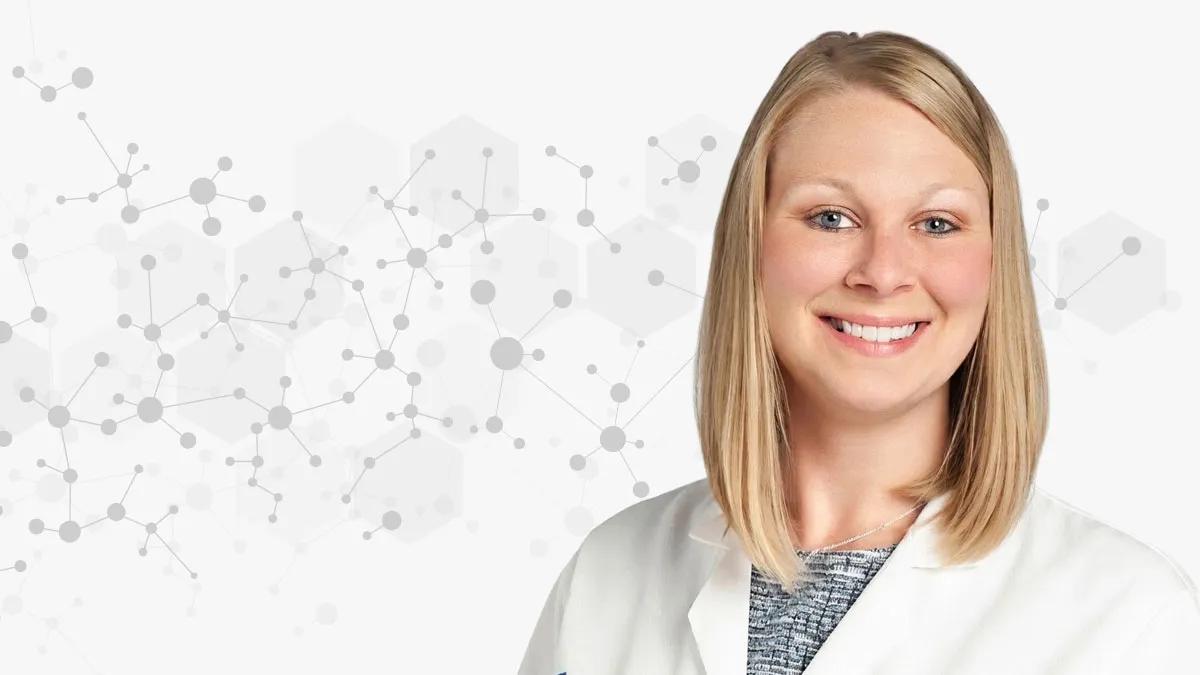
Lavender Rooms & the Future of Caregiver-Centered Design
Kristen Vargo, DNP, RN, NE-BC, explains how Cleveland Clinic's new Neurological Institute building is enhancing caregiver experience, patient safety and operational efficiency.
Advertisement
Cleveland Clinic is a non-profit academic medical center. Advertising on our site helps support our mission. We do not endorse non-Cleveland Clinic products or services. Policy
Recent Episodes
Transforming Epilepsy Diagnosis and Treatment Through AI-Enabled Infrastructure
Imad Najm, MD, discusses how AI-enabled infrastructure and advanced EEG analysis are transforming epilepsy diagnosis.
Delirium in the Hospital Setting: Recognition, Risks, and Management
Anna Shapiro Krew, MD, and Christopher Strayhan, BSN, RN, explain how multidisciplinary care and environmental design can help reduce deliri…
Understanding the Research Impact of the Digital Assessment Center
Jay Alberts, PhD, shares how Cleveland Clinic’s Digital Assessment Center is accelerating neurological research and advancing patient care.
Video content: This video is available to watch online.
View video online (https://cdnapisec.kaltura.com/p/2207941/sp/220794100/playManifest/entryId/1_ns7vczm0/flavorId/1_5f3sgelj/format/url/protocol/https/a.mp4)
Transcript
Neuro Pathways Podcast Series
Advertisement
Cleveland Clinic is a non-profit academic medical center. Advertising on our site helps support our mission. We do not endorse non-Cleveland Clinic products or services. Policy
Release Date: August 1, 2026
Expiration Date: July 31, 2027
Estimated Time of Completion: 30 minutes
Lavender Rooms & the Future of Caregiver-Centered Design
Kristen Vargo, DNP, RN, NE-BC
Description
Each podcast in the Neurological Institute series provides a brief, review of management strategies related to the topic.
Learning Objectives
- Review up to date and clinically pertinent topics related to neurological disease
- Discuss advances in the field of neurological diseases
- Describe options for the treatment and care of various neurological disease
Target Audience
Physicians and Advanced Practice providers in Family Practice, Internal Medicine & Subspecialties, Neurology, Nursing, Pediatrics, Psychology/Psychiatry, Radiology as well as Professors, Researchers, and Students.
ACCREDITATION
In support of improving patient care, Cleveland Clinic Center for Continuing Education is jointly accredited by the Accreditation Council for Continuing Medical Education (ACCME), the Accreditation Council for Pharmacy Education (ACPE), and the American Nurses Credentialing Center (ANCC), to provide continuing education for the healthcare team.
CREDIT DESIGNATION
- American Medical Association (AMA)
Cleveland Clinic Center for Continuing Education designates this enduring material for a maximum of 0.50 AMA PRA Category 1 Credits™. Physicians should claim only the credit commensurate with the extent of their participation in the activity.
Participants claiming CME credit from this activity may submit the credit hours to the American Osteopathic Association for Category 2 credit. - American Nurses Credentialing Center (ANCC)
Cleveland Clinic Center for Continuing Education designates this enduring material for a maximum of 0.50 ANCC contact hours. - Certificate of Participation
A certificate of participation will be provided to other health care professionals for requesting credits in accordance with their professional boards and/or associations. - American Board of Surgery (ABS)
Successful completion of this CME activity enables the learner to earn credit toward the CME requirements of the American Board of Surgery’s Continuous Certification program. It is the CME activity provider's responsibility to submit learner completion information to ACCME for the purpose of granting ABS credit.
Credit will be reported within 30 days of claiming credit.
Advertisement
Podcast Series Director
Andreas Alexopoulos, MD, MPH
Epilepsy Center
Additional Planner/Reviewer
Ari Newman, BSN
Faculty
Kristen Vargo, DNP, RN, NE-BC
Neurological Institute Director of Nursing
Host
Glen Stevens, DO, PhD
Cleveland Clinic Brain Tumor and Neuro-Oncology Center
Agenda
Lavender Rooms & the Future of Caregiver-Centered Design
Kristen Vargo, DNP, RN, NE-BC
Disclosures
In accordance with the Standards for Integrity and Independence issued by the Accreditation Council for Continuing Medical Education (ACCME), The Cleveland Clinic Center for Continuing Education mitigates all relevant conflicts of interest to ensure CME activities are free of commercial bias.
The following faculty have indicated that they may have a relationship, which in the context of their presentation(s), could be perceived as a potential conflict of interest:
Glen Stevens, DO, PhD
| Company | Relationship |
|---|---|
| DynaMed | Consulting |
| Company | |
| DynaMed | |
| Relationship | |
| Consulting |
All other individuals have indicated no relationship which, in the context of their involvement, could be perceived as a potential conflict of interest.
CME Disclaimer
The information in this educational activity is provided for general medical education purposes only and is not meant to substitute for the independent medical judgment of a physician relative to diagnostic and treatment options of a specific patient's medical condition. The viewpoints expressed in this CME activity are those of the authors/faculty. They do not represent an endorsement by The Cleveland Clinic Foundation. In no event will The Cleveland Clinic Foundation be liable for any decision made or action taken in reliance upon the information provided through this CME activity.
HOW TO OBTAIN AMA PRA Category 1 Credits™, ANCC Contact Hours, OR CERTIFICATE OF PARTICIPATION:
Go to: Neuro Pathways Podcast August 1, 2026 to log into myCME and begin the activity evaluation and print your certificate If you need assistance, contact the CME office at myCME@ccf.org.
Copyright ©2026 The Cleveland Clinic Foundation. All Rights Reserved.
Introduction: Neuro Pathways, a Cleveland Clinic podcast exploring the latest research discoveries and clinical advances in the fields of neurology, neurosurgery, neurorehab, and psychiatry.
Glen Stevens, DO, PhD: The caregiver experience is an essential part of delivering exceptional neurological care. At Cleveland Clinic's new Neurological Institute building opening in 2027, a thoughtful approach to design is helping reimagine how caregivers work, recharge, and connect with patients. In this episode of Neuro Pathways, we explore how new innovations are transforming the healthcare environment. I'm your host, Glen Stevens, DO, PhD, neurologist, neuro-oncologist in Cleveland Clinic's Neurological Institute. And joining me today is Kristen Vargo, DNP, RN, NE-BC:, director of nursing for the Neurological Institute.
Kristen, welcome to Neuro Pathways.
Advertisement
Kristen Vargo, DNP, RN, NE-BC: Thank you, Dr. Stevens.
Glen Stevens, DO, PhD: So, let's first start by having you introduce yourself to our listeners. Tell us a little bit about where you came from, a bit about your background training and what you do here.
Kristen Vargo, DNP, RN, NE-BC: So, I'm originally from Erie, Pennsylvania, relocated to Cleveland 19 years ago and began at the Cleveland Clinic at that time. I am actually a cardiac nurse by trade. Spent several years in HVTI, both as a bedside nurse and an assistant nurse manager. During that time, fell in love with nursing leadership, took a nurse manager role in perioperative medicine, so oversaw our same-day surgery in pediatric PACU units, and have been the director of nursing for the Neurological Institute for the last five years.
Glen Stevens, DO, PhD: Well, we appreciate all you do. And I'm not getting any younger, so the fact you have cardiac background is good. Just in case. Just in case.
So, it seems a lot of the podcasts we've been doing lately are on the new Neurological Institute building. And just for those that haven't listened to other podcasts, I'll just do a quick little update. The new building is about a million square feet, will be the largest building on campus. It will include to start well over a hundred beds, maybe up to 300 beds. We'll also have outpatient neuro intensive care beds as well. So one-stop shop as it goes through.
Advertisement
But one of the things that they decided, and I'm sure you're involved with it and will share these things with us, is that on the caregiver side, we should think not only what we're doing for the patients to make their experience better, but we can also make their experience better by improving our caregivers so that we can all provide care better. So, tell me a little bit about the caregiver side and what went into it.
Kristen Vargo, DNP, RN, NE-BC: Yeah. The focus on caregiver experience in the Cleveland Clinic's new Neurological Institute building came from recognition that patient outcomes are deeply connected to the environment in which our caregivers work. Rather than treating caregiver needs as secondary, the project team approached the building as a system where patient care, staff workflows, caregiver wellbeing and technology all reinforce one together.
Glen Stevens, DO, PhD: Yeah. In the previous podcast, I was mentioning that I heard something from Dr. Machado where he called the building itself a caregiver with all the types of things that it's doing with all the new vital signs and the testing that's being done with patients before they get there. So, I mean, it's going to be quite fascinating as it goes through.
Advertisement
So, in your experience, where do inefficiencies in the physical environment most commonly slow down care and how can we address these in the new building?
Kristen Vargo, DNP, RN, NE-BC: Yeah. I think as we started to look at workflows, we really found that there are some operational friction points. And when we really dug deep into them, we found a few things that we could improve on. A few of those are fragmented patient flows, repetitive data collection and confusing layouts for our patients. Also looking at underutilized space and how all of these friction points contributed to staff fatigue.
What's notable about Cleveland Clinic's new Neurological Institute building's design is that it treated these issues as architectural problems and not just workflow problems. We really looked at how the design could be enhanced to meet both patient care needs and also our caregivers' needs. If you think about being our patient ourselves or a patient ourselves, how many times have you completed a MyChart survey and then been asked those same MyChart questions when you arrived at your visit?
One of the many inefficiencies that we explored as we are looking at workflows and how can we improve that process for our patients? We also took into account that we are spread across 10 different buildings right now across the Cleveland Clinic for neurological care and really looked at how this new model of being under one roof will really enhance both caregiver and patient experience and incorporating all of the services that we offer from imaging to outpatient and inpatient services, our rehab therapies, and also our surgical and research spaces.
Glen Stevens, DO, PhD: Yeah, I certainly see patients and they'll say to me, "I've already answered these questions earlier today. Why do I need to answer them again?" And it's true, right? As a caregiver, it's sometimes hard to find those answers or that it's been addressed. And we usually say to patients, "Look, I've not met you before and I'm sorry and I'll try and go through this as quickly as I can." But I mean, even the simple things as if someone's in one area of the cancer center and they're seeing a medical oncologist and they get vitals done when they come see us, do they need to repeat the vitals one hour later or can we just use the vitals from before?
Kristen Vargo, DNP, RN, NE-BC: Correct.
Glen Stevens, DO, PhD: As you say, patients do get fatigue from all of these types of things. I think that as long as we sort of reinforce why we're doing it and we want to enable them to get the best care they can get, most patients will be fine with it. But it's a nice opportunity in the new building, as you say, to look at what are these points that irritant points and how can we make them better as it goes through? Simple things from if we're in position A and physical therapy is over, and B, how do people get there and what makes sense to get there? And is this a real common thing and where do we house people that are going to utilize it most? I guess some of this you won't know until you're done as it goes through.
One of the nursing things, and maybe you're going to talk about this later, but they always talk about eyes on the patient. So, from a nursing standpoint, how do we keep our eyes on the patient? What does a new building do that helps us with that?
Kristen Vargo, DNP, RN, NE-BC: So, a lot of decisions have been made around that. Actually an interesting story. Early on in our design process, they created cardboard mock-ups of the inpatient rooms.
Glen Stevens, DO, PhD: I think they used me as the mock-ups.
Kristen Vargo, DNP, RN, NE-BC: Oh.
Glen Stevens, DO, PhD: Yeah.
Kristen Vargo, DNP, RN, NE-BC: And one thing that we found the second that we walked into those rooms is where they placed the headboard for the inpatients completely eliminated the nurse's line of sight into the inpatient rooms.
Glen Stevens, DO, PhD: Oh, that doesn't sound good.
Kristen Vargo, DNP, RN, NE-BC: No. So, in that moment, we actually changed the head wall to the opposite side of the room. So, the nurse has a direct line of sight into the patient. We also developed what we are calling touchdown stations on every single inpatient floor, which is a space where a nurse can sit and do any computer work that needs to be completed, but also have a direct view into the patient's room so we can maintain eyes on the patient.
I think the other thing that we're looking at too is how can we use technology to assist with this, knowing that the nurse can't have their eyes on every single patient. So, we're looking at some AI technology to assist with falls detection, which will allow caregivers that are offsite to monitor a patient. And if they realize that a patient is getting out of bed, can immediately communicate with the nurse via a badge that they wear. And hopefully we can help assist that patient and maintain their safety while they're under our care.
Glen Stevens, DO, PhD: In the past, it was just an alarm on the bed, right?
Kristen Vargo, DNP, RN, NE-BC: That's correct.
Glen Stevens, DO, PhD: And maybe that's still there.
Kristen Vargo, DNP, RN, NE-BC: It might still be there for a little while, but as you know, there could be some delay in alerting that nurse, or that nurse could be in assisting with another patient that could delay us getting in there. But that real time notification that a patient may be potentially getting out of bed, we're hoping, will assist with us getting in that room.
Glen Stevens, DO, PhD: Yeah. And alarm fatigue gets to be a problem, right?
Kristen Vargo, DNP, RN, NE-BC: Absolutely. That's a real issue in nursing. There's multiple published studies on alarm fatigue. And we continue to see more and more alarms or alerts in Epic that are notifying us of things that need to be completed. And the more we see those alerts, the more the fatigue can occur.
Glen Stevens, DO, PhD: So that sounds quite interesting, utilizing AI in that regard. Anything else utilizing AI in the new building for nursing?
Kristen Vargo, DNP, RN, NE-BC: For nursing, no, but we are exploring all the options that are available to us. We know our physician team is utilizing AI in some ambient listening to complete some documentation. There are some options with nursing to do that too. So, we are currently investigating those options to see how we might be able to implement similar technology for the inpatient nurses to be able to not have to do some much manual documentation for the patient.
Glen Stevens, DO, PhD: Yeah. So, what you're referring to here is using voice technology that one would be integrated into electronic medical record, which is available currently on the physician side of things.
Kristen Vargo, DNP, RN, NE-BC: That's correct.
Glen Stevens, DO, PhD: This is very important because of course, one of my bugaboos is documentation. And it's frustrating for everybody where you see somebody sent to you from someone else and the notes not done. It's hard to address questions when you're not really sure exactly what the question is other than what the patient can tell you. So, whatever can be done to make note-taking more streamlined, faster, more accurate, all those types of things I'm a big fan of. And I don't see why it would be restricted to just one group of individuals. Doesn't make sense.
Kristen Vargo, DNP, RN, NE-BC: Yeah, I agree. And I really think this is where we are going to start to see some advancements in technology happen over the next several years, particularly how we analyze data in our medical record.
Currently, there's several care team members that review Epic and put together a summary of our patient findings to be able for our physician teams to make a diagnosis. Hopefully soon we'll have some technologies that pull all that information together that assist with us diagnosing a patient and treating them.
Glen Stevens, DO, PhD: It's important for you to understand that I personally have no power to make your life better. I'm afraid to say. I'm afraid to say. But I do know people that can. So maybe they'll listen to the podcast and they'll go through that.
So lavender rooms.
Kristen Vargo, DNP, RN, NE-BC: Yes.
Glen Stevens, DO, PhD: I have to say that I love the thought of a lavender field. If I could be transported to Provence right now or the Netherlands, I would have no issue with that. But I'm not a big fan of lavender in my food personally. I know some people like it a lot or lavender tea or those types of things. But tell me the story of the lavender room and what its use is in utility is.
Kristen Vargo, DNP, RN, NE-BC: Well, I'll start by saying that I relate to you. And I like the smell of lavender and the visualization of lavender, but don't necessarily like to eat it. But really the concept of lavender rooms is an important reflection on how healthcare design is evolving. Historically, hospitals were designed entirely around clinical function and really taking care of our patients and patient throughput, but there's now a much more deeper recognition that caregiver wellbeing directly impacts our patient care and safety and our team performance. So, a lavender room actually came about during COVID.
Glen Stevens, DO, PhD: Which makes sense, right?
Kristen Vargo, DNP, RN, NE-BC: Right. And essentially, it's a dedicated space for wellness and decompression of our caregivers. It's a quiet environment where our nurses, physicians, and staff can briefly step away from the intensity of our clinical settings during their shift to spend a few moments on themselves.
What makes lavender rooms most meaningful is that they acknowledge that our caregivers are human beings and may need a second to step away from our intense environments. These spaces were intentionally designed to be lower sensory stimulation, a quiet calm space that has particular artwork that is calming. They also have items in there to help calm the caregiver. We recently implemented a couple in our neurological units and one of them actually has a puzzle table where a caregiver can sit and -
Glen Stevens, DO, PhD: Is that going to relax you or make you more irritated?
Kristen Vargo, DNP, RN, NE-BC: I guess it depends on what relaxes you. But there's other things such as art therapy, aromatherapy. One has a chair that has a massager. So really just a space dedicated to our caregivers to help with our stressful environment.
Glen Stevens, DO, PhD: It sounds so humane. It sounds so different than when I trained 40 years ago. I'm pretty sure if you mentioned a lavender room 40 years ago, negative things would've happened to you.
Kristen Vargo, DNP, RN, NE-BC: I agree. Even 20 years ago when I started.
Glen Stevens, DO, PhD: As it went through. But it makes sense, right?
Kristen Vargo, DNP, RN, NE-BC: It does.
Glen Stevens, DO, PhD: I remember watching a show years ago, they had a documentary called So You Want to Be a Doctor? And it followed a number of medical students through the Harvard Healthcare System, five or six students. And they took a younger person, an older person, a married couple, and sort of followed them through their four years of medical school. And they would then show them in rotations.
I remember this one medical student is on cardiothoracic surgery. She's there and meets this really nice old Scottish guy, I think he was, and he's going to have open heart surgery. And she said to him, "Everything will be fine. They're great here. I guarantee everything will be fine." Use those words. And then it shows them in surgery and the patient dies in surgery during the event. And she's just devastated as you can imagine. She's there during it and they're filming all this. There was nowhere to go. Where did you go back then? This was probably in the early '90s and you didn't have anywhere to decompress.
And if you're a nurse and your patient passes away and then you go down to the next bed and they're getting ready to pass away because it's COVID and they're passing away, how do you decompress? So, it makes sense that during that period of time, these things would be utilized and needed.
So even though I'm old and a little curmudgeony, I must say I can understand why you have this stuff. And I think it's good. I mean, I think we need to look at things differently than we've looked at things before or we'll keep doing the same things we've always done as it goes through.
How long can I stay in the lavender room?
Kristen Vargo, DNP, RN, NE-BC: That's dependent upon caregivers. Some might be on their break or their lunch, which is a dedicated time away from the unit, which could be 15 to 30 minutes. But typically what we are seeing is caregivers are spending about five to 10 minutes in there just to step away.
Glen Stevens, DO, PhD: And how many people can be in a lavender room at once? Or do we know? Are there any studies looking at one, two, three? Should be one? Do we know?
Kristen Vargo, DNP, RN, NE-BC: I don't think we know that at this time.
Glen Stevens, DO, PhD: But what are we allowing at this point?
Kristen Vargo, DNP, RN, NE-BC: A couple of caregivers at a time. Typically, it's one to two.
Glen Stevens, DO, PhD: And other institutes within the Cleveland Clinic, are they utilizing these?
Kristen Vargo, DNP, RN, NE-BC: They are. So almost every institute now has a lavender room where caregivers can go to decompress.
Glen Stevens, DO, PhD: So, in engagement surveys, when they're doing these things, any comments about lavender rooms yet? Are there questions about it or do people voice anything about it or not enough experience since?
Kristen Vargo, DNP, RN, NE-BC: So this is the first time we have had one in our institute, but I will share we have received significant feedback from our caregivers around the room and just their ability to step away, particularly during stressful events that may have occurred and how it's really impacting their ability to be more resilient, to just be able to clear their head for a couple of minutes and then really come back to the unit and be productive and provide exceptional patient care.
Glen Stevens, DO, PhD: And time will tell us if retention is better, if general satisfaction is better, fewer days missed of work, all those things, right? We'll be able to collect data on that.
Where do we go from here with the lavender rooms? Just more of them?
Kristen Vargo, DNP, RN, NE-BC: Yes, actually.
Glen Stevens, DO, PhD: What's next?
Kristen Vargo, DNP, RN, NE-BC: So, as we've been planning the new Neurological Institute building, we'll have three all in our inpatient spaces, but that doesn't mean just inpatient caregivers will be able to come to this space. Anyone in the Neurological Institute is welcome to come to this space and really allow a few minutes to decompress.
Glen Stevens, DO, PhD: Is there a gatekeeper?
Kristen Vargo, DNP, RN, NE-BC: There is no gatekeeper.
Glen Stevens, DO, PhD: So, it's not a locked room?
Kristen Vargo, DNP, RN, NE-BC: It's not a locked room.
Glen Stevens, DO, PhD: I'm just checking. I'm just checking.
Kristen Vargo, DNP, RN, NE-BC: We want this space to be a space where caregivers can come. Obviously, a trusting space.
Glen Stevens, DO, PhD: Have you been in the lavender room yet?
Kristen Vargo, DNP, RN, NE-BC: I actually have been in the lavender lounge. It's actually lovely.
Glen Stevens, DO, PhD: You didn't have a lavender ice cream or anything, did you? Because I know you wouldn't like that.
Kristen Vargo, DNP, RN, NE-BC: No, that doesn't sound too good.
Glen Stevens, DO, PhD: Can the physicians go in the lavender room or no?
Kristen Vargo, DNP, RN, NE-BC: Absolutely.
Glen Stevens, DO, PhD: Okay. Okay.
Kristen Vargo, DNP, RN, NE-BC: We welcome you to come in.
Glen Stevens, DO, PhD: So, moving on from the lavender rooms, just in terms of nursing issues and developing the new building, other things that came up in terms of maybe we can do things better from a caregiver standpoint?
Kristen Vargo, DNP, RN, NE-BC: Yeah, we're actually exploring a lot of different changes and solutions in our ambulatory setting. Obviously, we're implementing some new spaces in the new building as well with our assessment center that's going to provide our teams with new assessments for our neurological patients. But with that, it really allowed us to look at our workflows from a patient and a caregiver perspective.
So, a couple of things that we're doing, I started off by talking about those MyChart questions that we're repeatedly asking patients. One thing that we're doing is we're collaborating with Epic to say, "How can there be greater visibility of those questions so we make sure that we don't ask those questions multiple times to our patients?"
We're also going to try and do some work ahead of time before the patient comes in. So if they don't answer those questions ahead of time, we're actually going to reach out to them to see if we can get them completed. So it hopefully reduces the time that they need to be on site with us.
Another interesting thing that we are currently focused on is around wayfinding in the building. Obviously, we're taking care of neurological patients who could have some cognitive or mobility deficits. And how do we have some simple ways for our patients to navigate through the building? One of those is through how we develop our signage in the building. And we're really trying to work on a simplistic way so they have some easy wayfinding. It seems simple to you and I who are used to navigating the Cleveland Clinic, but can be quite complex for some of our patients. So that's another area that we have really focused on from a design perspective. Also, we have caregivers that are going to be coming into our building too that are not used to, that we also need to think about to make sure that they have good wayfinding in the building.
Glen Stevens, DO, PhD: Yes, I remember when they built the new cardiac building. If I was on hospital service and I had to go see a patient for the first period of time, I'd have to take a resident with me because it was difficult with the design. When you work there, it just seems so intuitive. Obviously, you go down here and you go down there, but when you're new to the area, and of course if you have neurologic related difficulties, it's going to be very complicated.
How different are the floors going to be? I mean, obviously there's a surgical floor, so that's different. But those that are patient room floors or outpatient, all similar?
Kristen Vargo, DNP, RN, NE-BC: Very similar. So, the building is what we call modular. So that means that it's built similarly. So, every single inpatient floor has their inpatient rooms around the perimeter of the building. And then when you think about rooms that are similar on each inpatient floor, such as the medication room where we get our supplies, where we obtain nourishments for patients, are all built in the same location on every floor. When you think about that in a caregiver experience, it's imperative, particularly when we have caregivers that might be floating between different floors or caregivers that are going to be floating from outside the neurological institute and how this is really going to assist as they're working in our spaces.
Glen Stevens, DO, PhD: So, when they come in and they go to the assessment center and they do the gait and the complex drawing and the voice, they then get their vitals taken?
Kristen Vargo, DNP, RN, NE-BC: That's correct.
Glen Stevens, DO, PhD: And then medication reconciliation is done then or-
Kristen Vargo, DNP, RN, NE-BC: It's not going to be done then. It's still going to be done on the ambulatory floor. Sometimes that can be a timely task depending upon the list of the medications that the patient is on. So that work is still going to be completed in our ambulatory setting.
Glen Stevens, DO, PhD: Yeah, it's one of those things that I still find some frustration with in terms of are things really up to date or not up to date and then who's responsible to keep it up to date? But at the end of the day, if we're treating patients and we're adjusting medications, we need the best data that's there. So, my vote would be to do it in that assessment center and get it set for wherever they go. So that'll be my commercial. Nobody will listen to what I say, but that would be my commercial as it goes through. But that might cause a log jam.
Kristen Vargo, DNP, RN, NE-BC: A little one. Might impact our throughput a little bit.
Glen Stevens, DO, PhD: Yeah. So, number of nurses.
Kristen Vargo, DNP, RN, NE-BC: Yes.
Glen Stevens, DO, PhD: How many nurses are we going to have in the new Neurologic Institute building ideally?
Kristen Vargo, DNP, RN, NE-BC: So, we are going to have around 900 nurses in the new Neurological Institute building, plus all of our support staff.
Glen Stevens, DO, PhD: That's a lot.
Kristen Vargo, DNP, RN, NE-BC: It is a lot.
Glen Stevens, DO, PhD: That's a lot. I'm not going to ask you where we're going to find 900 nurses.
Kristen Vargo, DNP, RN, NE-BC: Thankfully, the majority of them are already-
Glen Stevens, DO, PhD: Within the system.
Kristen Vargo, DNP, RN, NE-BC: ... within the system.
Glen Stevens, DO, PhD: And then is there going to be a change in the work model that we're doing with the nurses or that it's the same model that is currently going on in the hospital or is there any shift in that with the new building in terms of 12 on, 12 off? Is there any change there or that's the same from a nursing standpoint?
Kristen Vargo, DNP, RN, NE-BC: From a nursing standpoint, it's still pretty similar to what we see. Actually, our caregivers like that three 12-hour shifts per week and then they have four off throughout the week. So we have not changed that significantly. No.
Glen Stevens, DO, PhD: And within the building outside of just nursing itself, physical therapy, occupational therapy will be embedded within the building?
Kristen Vargo, DNP, RN, NE-BC: Yes, they will. So, they have dedicated space on our first floor that has a large rehabilitation gym.
And then interesting thing is we have developed dedicated rehab spaces on our neuroscience subspecialty unit and our neuro step-down unit where our physical therapists can take patients to a space on that unit and do some more intense physical therapy that is not necessarily able to be done in the patient's inpatient room.
Glen Stevens, DO, PhD: And I may have the numbers wrong, you may know them better, but I thought there's going to be around 36 intensive care beds.
Kristen Vargo, DNP, RN, NE-BC: You are correct.
Glen Stevens, DO, PhD: How many neurologic intensive care beds does the Neurologic Institute currently have?
Kristen Vargo, DNP, RN, NE-BC: Currently we have 24 beds.
Glen Stevens, DO, PhD: Within our group?
Kristen Vargo, DNP, RN, NE-BC: Within our group.
Glen Stevens, DO, PhD: We have access to 24. So we're increasing it.
Kristen Vargo, DNP, RN, NE-BC: That we are.
Glen Stevens, DO, PhD: Oh, okay. Because I wondered if we would... You know how it is, sometimes you're getting borders, you need to use other units, that type of thing. What happens if we have more than 36? I guess they would board over in the other part of the hospital. Is that correct?
Kristen Vargo, DNP, RN, NE-BC: One great thing is we've built our spaces to be incredibly flexible. So the ICU is actually going into a space that has 60 beds that will be equipped for our intensive care unit and one that we developed in order to expand rapidly if needed. We also have some step-down beds on the ICU floor as well that we are able to convert back and forth between step-down and intensive care based on our patient's needs. With that, we are hopeful that we will not need to board patients out of our neuro-dedicated units as often.
Glen Stevens, DO, PhD: So, I'm over in the Neurologic Institute and I need to have a colonoscopy, a bronchoscopy, some type of endoscopy, are we doing any of that in the NI or they're going to have to move over to the other part of the hospital?
Kristen Vargo, DNP, RN, NE-BC: So, for endoscopy procedures, they will still have to travel.
Glen Stevens, DO, PhD: So, they'll have to travel to the other part of the... How are they going to get there?
Kristen Vargo, DNP, RN, NE-BC: Via our transportation team. We'll take them over to that.
Glen Stevens, DO, PhD: All inside?
Kristen Vargo, DNP, RN, NE-BC: All inside.
Glen Stevens, DO, PhD: Nothing outside?
Kristen Vargo, DNP, RN, NE-BC: Correct. So, we actually have two connection points to the hospital on either side of the building. One of those bridges that we have developed is dedicated for inpatient travel.
Glen Stevens, DO, PhD: And the other can be?
Kristen Vargo, DNP, RN, NE-BC: Visitors, caregivers.
Glen Stevens, DO, PhD: Whoever needs it.
Kristen Vargo, DNP, RN, NE-BC: Correct.
Glen Stevens, DO, PhD: I know the most exciting thing at the Cleveland Clinic is always parking. Parking at the new building, will patients have to go outside to get into the building or can they access it again through tunnels or walkways?
Kristen Vargo, DNP, RN, NE-BC: So, there is a bridge that is being attached to our 89th Street parking garage where our patients will be able to navigate into the building via that skyway. We will also have valet in front of the building where our patients can just pull right up to the front door and come in as well.
Glen Stevens, DO, PhD: Well, listen, it's hard to believe, but our time is coming to an end. So takeaway points or things that I haven't asked you about that you feel are important to share?
Kristen Vargo, DNP, RN, NE-BC: I think one of the biggest things that I have taken away from this experience is that healthcare design is no longer about just building a building. It's really about designing workflows and creating spaces for our caregivers. And that even if you are not designing a new building, you can still look at caregiver workflows and areas for our caregivers to decompress to be able to support them.
Glen Stevens, DO, PhD: Well, we appreciate all you do. I'm sure you've put architect on your LinkedIn page and designer.
Kristen Vargo, DNP, RN, NE-BC: Minor in architecture.
Glen Stevens, DO, PhD: Minor and designer. But we appreciate all you and all the caregivers do for us and for our patients and really looking forward to visiting the new building.
Kristen Vargo, DNP, RN, NE-BC: Thank you so much for having me.
Closing: This concludes this episode of Neuro Pathways. You can find additional podcast episodes on our website, clevelandclinic.org/neuropodcast, or subscribe to the podcast on iTunes, Google Play, Spotify, or wherever you get your podcasts. And don't forget, you can access real-time updates from experts in Cleveland Clinic's Neurological Institute on our Consult QD website. That's @CleClinicMD, all one word. And thank you for listening.
Recent Episodes
Transforming Epilepsy Diagnosis and Treatment Through AI-Enabled Infrastructure
Imad Najm, MD, discusses how AI-enabled infrastructure and advanced EEG analysis are transforming epilepsy diagnosis.
Delirium in the Hospital Setting: Recognition, Risks, and Management
Anna Shapiro Krew, MD, and Christopher Strayhan, BSN, RN, explain how multidisciplinary care and environmental design can help reduce deliri…
Understanding the Research Impact of the Digital Assessment Center
Jay Alberts, PhD, shares how Cleveland Clinic’s Digital Assessment Center is accelerating neurological research and advancing patient care.
Never miss a moment - subscribe now.
Listen to the Health Essentials Podcast on your favorite streaming platform.
Other Podcasts You May Love
Beyond the Pages: CCJM Podcast
Beyond the Pages: CCJM Podcast takes the listener more in-depth into Cleveland Clinic Journal of Med…
Beyond Leadership
Hosts Jim Pae and Elizabeth Pugel escort you through a network of thought leaders, sharing world-cla…
Butts & Guts
A Cleveland Clinic podcast exploring your digestive and surgical health from end to end. You’ll lear…
Cancer Advances
A Cleveland Clinic podcast for medical professionals exploring the latest innovative research and cl…