



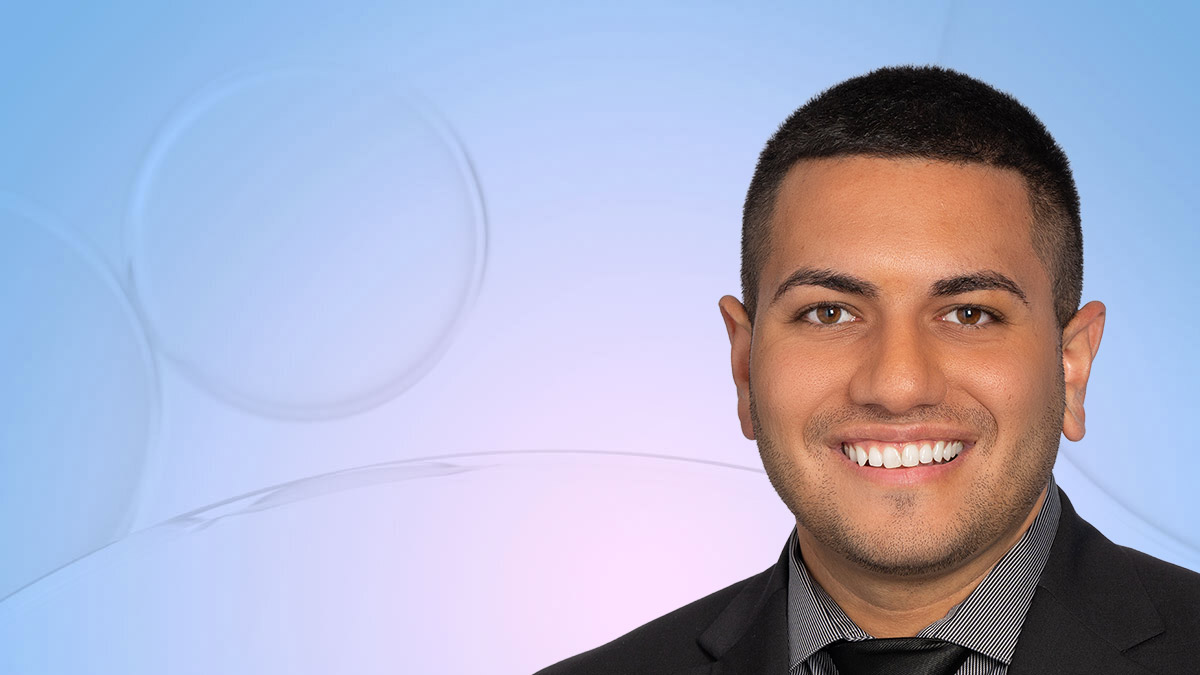
Revolutionizing Pre-Hospital Education
In this episode of MedEd Thread, we talk with Michael Simon, Enterprise Emergency Medical Services Education Manager, about how simulation‑based learning is advancing EMS education across Northeast Ohio. Michael describes Cleveland Clinic’s physician‑led, hands on simulation model, which replaces traditional lectures with high‑fidelity scenarios that build clinical skills, teamwork and real world readiness for EMS providers. He also discusses scaling education across more than 100 agencies and explores emerging innovations such as virtual reality and artificial intelligence in pre‑hospital training. Tune in to learn how simulation is helping prepare EMS professionals to deliver high‑quality care when seconds matter most.
Advertisement
Cleveland Clinic is a non-profit academic medical center. Advertising on our site helps support our mission. We do not endorse non-Cleveland Clinic products or services. Policy
Recent Episodes
Focused Cardiac Ultrasound Training: Building Competency Through a Multimodal Curriculum
In this episode of MedEd Thread, we talk with Dr. Zenab Laiq, cardiologist and cardiac imaging specialist at Cleveland Clinic's Akron Genera…
Launchpad to Nursing: Inspiring the Next Generation of Nurses
In this episode of MedEd Thread, we talk with Dr. Linda Gardner, Senior Director of Nursing Education and Professional Development at Clevel…
Book Club Series: Already Toast: Caregiving and Burnout in America by Kate Washington
In this episode of MedEd Thread, we talk with Loren Hackett, Medical Librarian at Cleveland Clinic Hillcrest Hospital, and Michelle Kraft, D…
Video content: This video is available to watch online.
View video online (https://cdnapisec.kaltura.com/p/2207941/sp/220794100/playManifest/entryId/1_pqnqmkom/flavorId/1_5f3sgelj/format/url/protocol/https/a.mp4)
Transcript
Dr. James K. Stoller:
Hello and welcome to MedEd Thread, a Cleveland Clinic education podcast that explores the latest innovations in medical education and amplifies the tremendous work of our educators across the enterprise.
Advertisement
Cleveland Clinic is a non-profit academic medical center. Advertising on our site helps support our mission. We do not endorse non-Cleveland Clinic products or services. Policy
Dr. Tony Tizzano:
Hello, welcome to today's episode of Med Thread, an education podcast exploring how simulation based learning is enhancing the competency of emergency medical services providers throughout Northeast Ohio.
I am your host, Dr. Tony Tizzano, director of Student in Lerner Health, here at Cleveland Clinic in Cleveland, Ohio.
Today, I am very pleased to have Michael Simon, Enterprise Emergency Medical Services Education Manager at Cleveland Clinic here to join us. Michael, welcome to today's podcast.
Michael Simon:
Thanks for having me.
Dr. Tony Tizzano:
Well, Mike, to get us started. Could you tell us a little bit about yourself, your educational background, what brought you to Cleveland and your role here at Cleveland Clinic?
Michael Simon:
Sure. So I've grown up in northeast Ohio, born and raised. I started with the fire and emergency services at 14 as a cadet with the fire department. So I was an explorer with my local fire department in Medina County, just south of Cleveland.
I started just as an explorer, meaning I rode with the fire department. I, I was, uh, wasn't going into burning buildings or anything like that, but trained alongside of them and really got to see what they did, really have the door open into the profession and, and really saw firsthand what they did and fell in love with the profession at a young age.
Advertisement
From there, I turned 18, went to EMT School, Fire School, Paramedic School, actually at Akron General Medical Center before it was Cleveland Clinic. And then onto to college.
And ultimately started working at Cleveland Clinic back in 2018 as an instructor and worked my way up from clinical coordinator to program director and now oversee EMS education for the enterprise.
Dr. Tony Tizzano:
Great to have you. So this explorer experience, that's kind of an extension of Boy Scouts.
Michael Simon:
It is, yeah.
Dr. Tony Tizzano:
Yeah. I actually was in one, it was with a law enforcement agency and I couldn't believe, you know, I was only 16 and they had to have the radio repaired.
So they let us drive the squad car.
Michael Simon:
Oh wow.
Dr. Tony Tizzano:
Into Cleveland to get their radio worked on. Now, what do you think the chances are that a 16-year-old might flip the siren on for a second or whatever? But anyway, explorers is a great thing.
Michael Simon:
It really is.
Dr. Tony Tizzano:
I love it. So in today's segment, we'll explore the growing role of Cleveland Clinic simulation based learning programs that enhances the expertise around complex critical competencies for our emergency medicine service providers across northeast Ohio.
So Mike, if you could frame for us today's topic and the importance of this sort of technology in the evolution of providing excellent care in emergency medicine services.
Michael Simon:
Sure. So, so the evolution of our continuing education program, it started really being, it was all lecture based. We, we strictly were going out to our fire departments and we had no way of really assessing if they took away any of that knowledge, or if there was any application of the information that we were providing.
We would give continuing education surveys at the end of each session, and we really saw a ceiling effect. All the surveys were coming back with either fours or fives, and they were pencil whipped to get the certificate at the end, and the feedback just reflected, great course. Nothing really actionable, nothing tangible, and there was no assessment of the quality of the education.
So when I took this position, myself and Dr. Chris Meyers, our enterprise EMS medical director, got together and we developed a curriculum where all of our education is now hands-on simulation based approach.
It's physician led, coordinator supported, where we go out to the departments, we take our our technology, we take our simulation equipment to the agencies, the a hundred agencies under our Cleveland Clinic medical direction, and we're training 3000 EMS providers a month. And it's all hands-on simulation based.
Advertisement
We bring three high fidelity cases to the agencies. We bring role players that serve as standardized patients, and these are intense cases. These are very involved complex cases that really dive deep into the Northeast Ohio Regional protocol.
And it forces the providers to critically think, work together as a team and really work their way through some of the most complex patient scenarios that we can come up with so that we can really ensure that the topics that we would normally lecture through we can bring to life and then critically think through in the debrief process afterwards.
Dr. Tony Tizzano:
And so what is the cyclicity do? Do you repeat this same group of things every so often?
Michael Simon:
It's not on a set cycle. So the National Registry, the state of Ohio has specific guidelines as far as topics required for renewal. So there's medical hours that are required, cardiac hours, trauma hours, operational hours, those types of subcategories.
So we make sure that there's a standardized number of hours that reflects the requirements required for each provider, but it's not a set hours approach. We make sure that we have a very diverse number of topics, but it's not the same. We don't hit trauma every month, but we make sure that it is routinely covered once a year, for example.
Advertisement
Dr. Tony Tizzano:
Sure. And that key routinely, you know, not a lot of the things you encounter are routine.
You may go a year or two. And to be able to have a refresher. I, I hope it's not lost on our listeners how important it is to be able to revisit these seldom seen scenarios to maintain a level of expertise that when it does happen, the seconds matter.
So when the shift began to occur in simulation-based learning, was it based on a need or an evolving technology that was coming into its own or perhaps a combination?
Michael Simon:
Definitely a combination. I think we noticed that as the Northeast Ohio Regional protocol expanded and as the Ohio scope of practice expanded to allow providers to do more and to provide better care and more care for the patients, we weren't necessarily seeing that care reflected into what was delivered to the patient.
And as we started initially to roll this model out, we started to notice that some of the basic EKG interpretations, tourniquet placement, some of those basic patient care essential skills were a bit lacking. And so it made us reflect and, and realize that we definitely needed to have an assessment component into our continuing education model.
And this simulation approach definitely allows our medical directors to assess the providers to provide more directed feedback, uh, under the EMS providers that are under their specific medical direction.
Advertisement
Dr. Tony Tizzano:
Okay, so you mentioned Northeastern Ohio, about a hundred or so programs. How far out do you go away from Cleveland Clinic to do this?
Michael Simon:
So we go as far west as Avon Lake, as far east as Fairport Harbor, and as far south as Harrison County, I.
Dr. Tony Tizzano:
Wow. So you've got quite the scope. And within that region, do you see a lot of difference in perhaps what one site might have versus another and the kinds of cases, or perhaps even the kind of hospitals they have to go to?
Michael Simon:
Absolutely. We see a a wide variety just in terms of transport times, in terms of the number of paramedics potentially. So for example, in our Southern submarket the further south towards the Medina Canton area, there's not as many paramedics, so they rely more on advanced EMTs or even just emergency responders.
So we focus in simulation on being able to, to get those cases structured in a way that those that don't have as advanced of a skillset can still provide care to those patients operating within the guidelines of their scope of practice.
Dr. Tony Tizzano:
Great. And so within a system like ours, there is a greater consistency perhaps, and a best practice being put forward that we can hope that everyone is getting under their belt.
So what does the trainer workforce look like and and what sorts of equipment are at their disposal?
Michael Simon:
So we have about 30 EMS medical directors, and they're about 30 EMS coordinators. And all of our EMS coordinators are trained as fire and emergency service instructor level twos in the state of Ohio.
They're. B-L-S-C-P-R instructors, A CLS instructors Pediatric Advanced Life Support Instructors. They work, many of them as firefighter paramedics, actively still in a full-time or part-time capacity. Some are fire chiefs or former administrative positions at fire departments, lieutenants, captains, et cetera.
Our physicians, they have medical command of either one or two agencies predominantly. So they have very targeted approach to their med command. They're not overseeing 10, 20, 30 agencies like some health systems. They have very specific relationships with those departments, very intimate to where they know their providers and they know them well.
That's very unique to Cleveland Clinic and we're very proud of that.
Dr. Tony Tizzano:
You literally know the people in the field providing these services because you've broken it down far enough. Who comes into this profession? I mean, what is required to get started to end up in an ambulance taking care of folks?
Michael Simon:
We see all kinds. So many of our departments are either part-time or volunteer. So many of our providers that work for those types of agencies, they have full-time jobs doing any number of things.
And we have some that work as full-time engineers. We have some that work in, in factories. We have some that work, um, in retail, some that are stay at home moms. I mean, the, the profession attracts really all kinds. And then we have, of course, the full-time firefighter paramedics that do this on a career basis.
And that's the beauty of the profession is there's the gamut of different education levels, different skill sets, different provider certification levels.
So as far as getting into the profession, you have your emergency medical responder, which is about a 48 hour course. You're not able to transport in the ambulance, but you're able to initiate care, get them stabilized while the rest of the ambulance crew is responding. Then you have your EMT certification that takes about 150 hours of training to obtain.
From there, there's the advanced EMT certification. That's about another additional 150 hours after you've obtained your EMT. And then there's the paramedic certification. You have to be an EMT first to pursue that, and then that's about an additional a thousand hours or so of training to obtain your paramedic certification.
Dr. Tony Tizzano:
So when a squad arrives at your door, you're likely to have probably someone towards the higher end of that?
Michael Simon:
It depends on where you're at in the state. So in in the more rural communities you, you're likely to have at least two EMTs. There has to be at least two EMTs to transport you to the hospital.
But in more of a suburban or urban area, you're likely to have at least one, if not two paramedics.
Dr. Tony Tizzano:
Yeah. What do you think the interest level is now? As we look at healthcare and for whatever reasons it seems post COVID that we've not had as many folks as we would like in many areas. How is it for emergency medicine services?
Michael Simon:
Well, across the country, unfortunately, we, we continue to see a decline in those entering emergency services, emergency medical services specifically. We see it across the public safety profession. Fire, police, EMS, everybody is seeing decreased number of applicants, decreased number of people getting into the profession.
Dr. Tony Tizzano:
Yeah, well hopefully that will change. What efforts are underway to, to see that that might occur?
Michael Simon:
There's all sorts, all sorts of efforts, uh, trying to fund grant programs at state and federal levels, trying to re remove barriers to getting into education programs. There, there's definitely efforts being made.
You'd have to look at it to the local [Sure] federal level at at those though.
Dr. Tony Tizzano:
Well, I look at your trajectory starting out in, as a Boy Scout in Explorers, an extension of scouting, does that still exist?
Michael Simon:
Not at the department actually, that I, that I was an explorer with, unfortunately. But I do know that they exist in the communities. It depends on where you're at.
Dr. Tony Tizzano:
I know that scouting in general has taken twists and turns, and boy, it would be a wonderful thing to have that as a, as a potential opportunity because so often individuals don't see themselves as being able to do that. I mean. I think for most of us, you see an ambulance going down the road, you wonder who's in it and it seems scary.
And to want to be that person who walks into that house and gets someone underway and and transports them to, to more advanced care can be, I think, a little frightening. So having a way to get into it where you're not ultimately responsible the explorer thing sounds like a really nice way to support that.
I wonder if there's dollars and interest in pursuing that further. So all that said, and you've got, you know, a great breadth of experience. What do you see on the horizon for your profession?
Michael Simon:
Well, I think there's definitely, uh, expansion in what our profession does. I know there's a great deal of research being done in, in pre-hospital administration of blood products and pre-hospital ultrasound and, and pre-hospital antibiotic administration.
There's continuation of investment in research, investment in equipment and in technology and pre-hospital medicine. There's community-based paramedicine programs out there and trying to keep people in their homes and out of the emergency department.
There's continuations across the country and different efforts to reduce the burden on the emergency response system, on the emergency department and, and overcrowding issues.
So I, I see emergency medical services evolving to be more of a community health partner and helping reduce burden and overuse of emergency services and serving more as a community health partner in addition to emergency services and providing those emergency care resources that it's currently utilized for.
Dr. Tony Tizzano:
Well, that's good to know. When you look at the technology that's involved, and I'm sure it's evolving, what do you see on the horizon for simulation to be able to perform procedures or tasks that you're not doing now that you'd like to see as soon as the technology catches up with your?
Michael Simon:
The technology's catching up quickly. I think augmented reality, virtual reality, I know there's excitement in that technological realm that's coming on the horizon.
The technology's here, they're just fine tuning it, and we're working closely with partners to explore that. And once the technology's ready and we find a good partner, we're excited to hopefully move forward and implement that and be cutting edge.
We're, we're all about innovation at Cleveland Clinic. We wanna provide the best resources, best training possible, but we wanna do it when the technology's right. And unfortunately it's, it's not quite ready. But once it is, we, we'll be excited to partner and, and implement when ready.
Dr. Tony Tizzano:
And it's hard to say when tomorrow we'll be here. So, you know, when you look at the cost of having some of these really advanced apparatus at your beck and call, is that a stumbling block? Or If you need it, you can get it.
Michael Simon:
In many cases, we partner with our agencies, our community partners, our fire and EMS agencies to obtain used pieces of medical equipment.
We partner with MED Wish and are part of their alternative recycling program to where if there's medical supplies that are expired or expiring that can't be used as part of their mission critical event, we can repurpose those for training use only.
And so we're doing everything we can to reduce costs and to be fiscally responsible in our training efforts and to ensure that we can provide the highest quality education while doing so as fiscally responsible.
Dr. Tony Tizzano:
Very well. What about artificial intelligence? We see it on the horizon, and I know from just doing these podcasts for a couple of years, the way we were talking about it at the very beginning to what it looks like now is just unbelievable.
Do you see a time when AI might be available in that ambulance giving confirmation, giving feedback? Giving things to consider?
Michael Simon:
Oh, absolutely. I think both in, in practice and in training, I, I see a use of AI. I think AI potentially has a benefit in a training capacity, at least for allowing providers to train independently. Allowing providers to train without an instructor in the room would be a huge benefit.
To have sort of a, an AI expert in, in the room to train on, shift off duty, train anywhere, and, and get live feedback would be great.
Dr. Tony Tizzano:
So from very personal perspective, it's comforting to know that these essential efforts are underway to ensure that when the need arises, well-trained, EMS providers will arrive at your doorstep, and all of us at some point in our life will probably have need to use these services.
Is there anything I didn't ask that you think it's important for our listeners to know?
Michael Simon:
Not that I can think of. Many people lack an understanding of what goes on in the back of the ambulance. As you alluded to earlier, you know, you, you hear those, those loud sirens, you see the flashing lights, and it's often a mystery of what goes on in that big box truck speeding at you down the road.
And it, it really is remarkable the quality of care that can occur in the back of that moving ambulance at at high speeds, at, at all hours, 24 7, 365 days a year. All across the country we bring care to that patient's doorstep.
And we're very fortunate in northeast Ohio, especially here, uh, with, with such a high quality medical command system under Cleveland Clinic to bring that high quality patient first model, care directly to our patients, bring Cleveland Clinic quality care to them, and then bring them right to our doors.
Dr. Tony Tizzano:
Well, on behalf of all of us who will need your services. Thank you so much, Michael. This has been an interesting and wonderfully insightful podcast.
To our listeners, if you would like to suggest a medical education topic to us or comment on an episode, please email us @ educationatccf.org. Thank you very much for joining, and we'll look forward to seeing you on our next podcast.
Have a wonderful day.
Dr. James K. Stoller : This concludes this episode of MedEd Thread, a Cleveland Clinic Education podcast. Be sure to subscribe to hear new episodes via iTunes, Google Play, Stitcher, Spotify, or wherever you get your podcasts. Until next time, thanks for listening to MedEd Thread and please join us again soon.
Recent Episodes
Focused Cardiac Ultrasound Training: Building Competency Through a Multimodal Curriculum
In this episode of MedEd Thread, we talk with Dr. Zenab Laiq, cardiologist and cardiac imaging specialist at Cleveland Clinic's Akron Genera…
Launchpad to Nursing: Inspiring the Next Generation of Nurses
In this episode of MedEd Thread, we talk with Dr. Linda Gardner, Senior Director of Nursing Education and Professional Development at Clevel…
Book Club Series: Already Toast: Caregiving and Burnout in America by Kate Washington
In this episode of MedEd Thread, we talk with Loren Hackett, Medical Librarian at Cleveland Clinic Hillcrest Hospital, and Michelle Kraft, D…
Never miss a moment - subscribe now.
Listen to the Health Essentials Podcast on your favorite streaming platform.
Other Podcasts You May Love
Beyond Leadership
Hosts Jim Pae and Elizabeth Pugel escort you through a network of thought leaders, sharing world-cla…
Health Essentials
Tune in for practical health advice from Cleveland Clinic experts. What's really the healthiest diet…
Studies in Empathy
Join Cleveland Clinic Patient Experience leaders and a group of guests with a wide range of experien…
The Medicine Grand Rounders
A Cleveland Clinic podcast for medical professionals exploring important and high impact clinical qu…