



Advances and Risk Management in Endonasal Skull Base Surgery
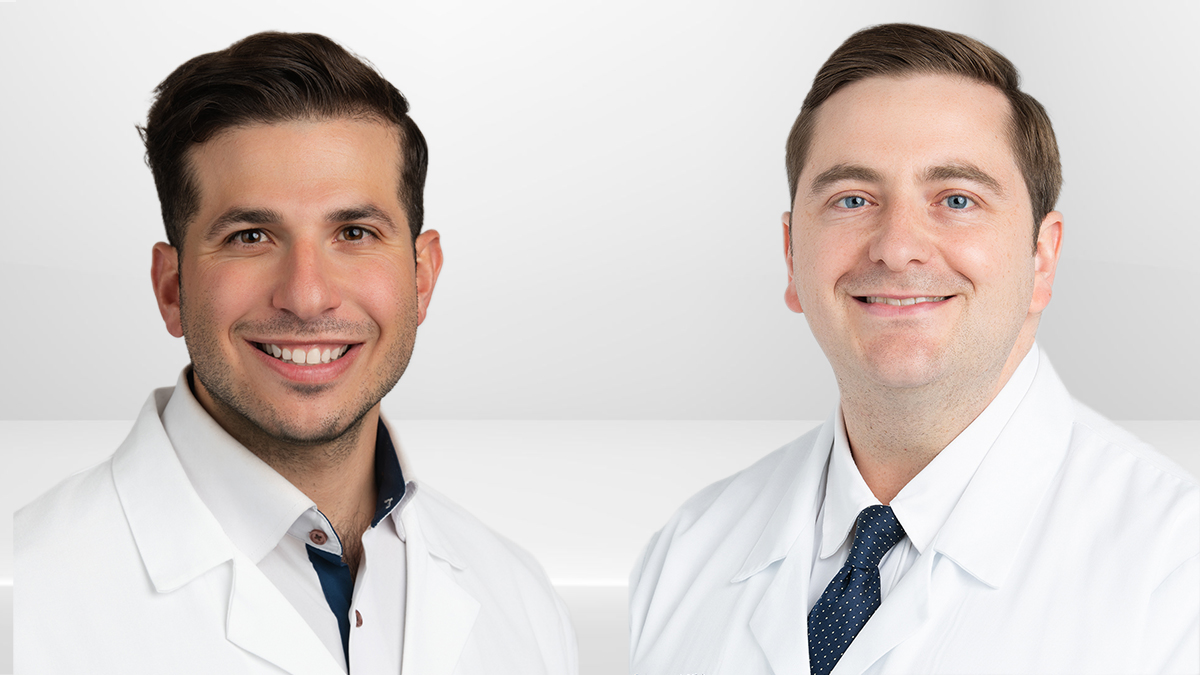
In this episode of Head and Neck Innovations, Christopher Roxbury, MD, and Rhinology Fellow Chase Kahn, MD, join host Paul Bryson, MD, to discuss advances in endonasal skull base surgery. They explore how the field has evolved, key considerations for patient selection and preoperative planning, and strategies for managing risks such as venous thromboembolism and postoperative bleeding. The conversation also highlights multidisciplinary collaboration and emerging innovations shaping the future of minimally invasive skull base surgery.
Advertisement
Cleveland Clinic is a non-profit academic medical center. Advertising on our site helps support our mission. We do not endorse non-Cleveland Clinic products or services. Policy
Recent Episodes
Collaborative Care and Innovation in Lateral Skull Base Tumors
In this episode of Head and Neck Innovations, experts in neurotology and neurosurgery discuss the diagnosis and management of lateral skull…
Multidisciplinary Management of Cerebrospinal Fluid Leaks and Idiopathic Intracranial Hypertension
In this episode of Head and Neck Innovations, Edward Doyle, MD, and Varun Kshettry, MD, join host Paul Bryson, MD, to discuss the diagnosis…
Advances in Pediatric Otolaryngology Care
Mark Fadel, MD joins this episode of Head & Neck Innovations to discuss recent advances and innovations he is excited about as he starts his…
Video content: This video is available to watch online.
View video online (https://cdnapisec.kaltura.com/p/2207941/sp/220794100/playManifest/entryId/1_etp6qvb8/flavorId/1_5f3sgelj/format/url/protocol/https/a.mp4)
Transcript
Paul C. Bryson, MD, MBA:
Thanks for joining us for another episode of Head and Neck Innovations. I'm your host, Paul Bryson, Director of the Cleveland Clinic Voice Center. You can follow me on X, formerly Twitter, @PaulCBryson, and you can get the latest updates from Cleveland Clinic Otolaryngology-Head and Neck Surgery by following us on LinkedIn at Cleveland Clinic Otolaryngology - Head and Neck Surgery, and Instagram at Cleveland Clinic Otolaryngology.
Advertisement
Cleveland Clinic is a non-profit academic medical center. Advertising on our site helps support our mission. We do not endorse non-Cleveland Clinic products or services. Policy
Today, I'm joined by Dr. Christopher Roxbury, rhinologist and endoscopic skull-based surgeon. Welcome to the podcast, Chris.
Christopher Roxbury, MD:
Appreciate the opportunity to be here, Paul.
Paul C. Bryson, MD, MBA:
I'm also joined today by Dr. Chase Kahn, clinical fellow in advanced rhinology and endoscopic skull-based surgery. Welcome to Head and Neck Innovations, Chase.
Chase Kahn, MD:
Awesome. Thank you so much for having me, Dr. Bryson.
Paul C. Bryson, MD, MBA:
Well, it's great to have you both, and it's sort of an exciting time. I wanted to highlight some of the work that you're doing, and it's really great to have the fellow join as well. It's a pretty dynamic year and a really great capstone to your surgical training. Before we dive in, I wanted to ask Chris and Chase, could you briefly share your training backgrounds with our listener and how you developed your focus and interest on endonasal advanced skull-based surgery?
Chase Kahn, MD:
Absolutely. So I did my five years of training at Thomas Jefferson in Philadelphia. And early on, I found myself really drawn to the complex sinus and anterior skull-based anatomy and diseases. I remember during residency, during my third years when we do our rotations, I remember watching tumor being removed entirely through the nose without any external incisions and thinking this is just incredible where the morbidity for these patients are going home on post-op day two, day three. Really fascinating me. So the idea that you could access these deep and I guess historically difficult to reach areas within endoscope using the natural corridors instead of these large open cranial facial approaches that oftentimes we could see in these head and neck cases was fascinating to me. So kind of that blend of complexity, precision and technology is what really drew me towards the field.
Advertisement
Christopher Roxbury, MD:
I did my residency training at Johns Hopkins and then my fellowship here at the clinic about eight years ago. I've been in practice since. And sort of similarly to Dr. Kahn, I got interested in this field really due to the really complicated pathologies that we can manage with literally no incisions on the face in most cases now. And I also enjoy the collaborative nature. We get to collaborate with our neurosurgeons, we get to collaborate with our endocrinology team, our facial plastics team, and oftentimes our oculoplastics colleagues. So really lends itself to a lot of multidisciplinary collaboration, which is where we can really advance the field and make really big impacts on patients with sometimes rare pathologies where we really have to tailor the treatment to the individual.
Paul C. Bryson, MD, MBA:
Yeah. It's really been something. And just as an observer, when I was in my own residency training, we had started to do a lot of pituitary work and things like that. And I had a colleague go and do one of these early advanced rhinology and endoscopic skull-based surgery fellowships, but it's very clear over the last decade, it has expanded considerably. Can you share a little bit more specifically how have indications evolved? What are some pathologies and even some of the image guidance things? How has the technology changed compared to these open or transcranial techniques that now feel a bit historical?
Chase Kahn, MD:
Certainly. So yeah, I think over the last decade, the biggest evolution not just has been technical, but almost philosophical. I think early on, and correct me if I'm wrong, Dr. Huxbury, a lot of these neurosurgeons, these skull-based tumors were limited to the midline where the neurosurgeons and skull-based teams were kind of doing them under a microscope and they would have to be these midline tumors of the pituitary adenomas or select clival tumors. And the main question back then was simply, can they get there safely? And now with our angled endoscopes, our imaging, the high speed drills we have in our reconstruction techniques, I think these common procedures that were once in neurosurgery's hands and now we have them in our skull-based team's hands are reproducible and safe in the experienced hands. So as far as in terms of indications go, I think the many large complex pituitary tumors, ones that are kind of with supercellar extension or laterally into the cavernous sinus are now routinely handled endoscopically.
For anterior skull-based tumors like esthesio neuroblastomas or certain sinonasal malignancies, we're able to reach them endoscopically and reconstruct them robustly. So now this almost has been a standard to routinely tackle them endoscopically rather than these large cranial facial approaches. So I think ultimately over the last decade, that pendulum shifted from asking, is this even possible with the technology we have now is, is this the best corridor for this pathology and for this patient? So very kind of patient and tumor specific. So I think that's really the way we change or how we think about the field now.
Advertisement
Christopher Roxbury, MD:
I think to your point, we've gotten so much better now at reconstructing really complex skull-based defects endoscopically. And I think in the beginning, that was really one of the biggest concerns and I think one of the limiting factors to why we were just approaching small pituitary tumors and kind of testing the water, so to speak. Now vascularized reconstructions with a lot of the materials that we have, both synthetic and then also using autologous grafting in some patients, we really feel comfortable with even very complicated reconstructions. And nowadays we're not dealing with a 20 to 25% CSF leak rate like they were in the beginning of this. And so we feel a lot more comfortable that not only can we actually address the pathology, but we can get the patient through that postoperative phase fairly seamlessly.
Paul C. Bryson, MD, MBA:
As you're evaluating a patient for these approaches, what sort of evolved as the most critical clinical and likely radiographic factors or features that goes into the planning?
Christopher Roxbury, MD:
Yeah, really the biggest things are, again, we have to sort of tailor these approaches to the individual patient. Sometimes it's not just one approach. We can use multiple approaches. So we can use an endonasal approach. We can combine that with our oculoplastics and our facial plastic surgery colleagues with transorbital approaches now. But realistically, the anatomy is kind of what limits us in some cases. So if a tumor's really extending very far laterally or if it's involving, of course, the skin of the nose or the frontal bone, a lot of times those are approaches that are kind of better approached open. And then of course, those patients that have things like cavernous sinus invasion where we might not be able to safely control the vasculature during the surgery, those are the big limiting factors. There's definitely teams that are pushing the boundaries now and we're now with pituitary tumors, for instance, teamly resecting the medial cavernous sinus wall and patients with secretory tumors where we know that a lot of times the tumor starts to invade that wall.
Advertisement
And so to get a biochemical cure, we may need to resect that. That was something that probably even when I was in fellowship, we really were not doing routinely because of concerns about vascular control, but nowadays we feel a lot more comfortable as a field with that. So really the indications are expanding every day.
Paul C. Bryson, MD, MBA:
Well, I appreciate that. Thank you for sharing that. I wanted to change gears slightly and just talk about some recent research that you and the team have been working on and specifically examining venous thromboembolism risk in patients undergoing these endonasal skull-based surgeries. How significant is thromboembolic risk in this population and how have you been approaching balancing prophylaxis with the risk of post-op bleeding, particularly given the confined surgical corridor and the critical structures within?
Christopher Roxbury, MD:
Yeah. So this project kind of became of interest to me really back when I was in practice in Chicago before I came back to the clinic. I had a patient that we did just a standard pituitary case for who didn't have any real risk factors and who came into my clinic and was noticeably having increased work of breathing, ended up having a pulmonary embolism. And at the time when we did these cases, we were very sort of conservative about chemoprophylaxis. There's always a concern that these patients would have potentially high risk for bleeding, especially intracranial bleeding. And so in sort of talking with the neurosurgeons, we often really wanted to avoid chemoprophylaxis. So I thought to myself, I looked into the literature and realized we don't really know what's the risk of these kind of complications and what's the balance between prothrombotic complications and bleeding risk.
Advertisement
I had the opportunity through the AAOHNS to do what's called a Cochran Scholarship where we basically get to attend a international meeting on evidence synthesis and learn techniques and systematic reviews. And I thought this would be a really important topic to tackle. And that's sort of the genesis of this paper. Luckily he was able to collaborate with Dr. Khan on this project. Maybe I can allow him to give a little bit of the details in terms of some of the things that we found.
Chase Kahn, MD:
Yeah, absolutely. So really interesting project that I was happy to be a part of that. We basically did a large systematic review and meta-analysis looking over at over 25,000 patients undergoing these endonasal skull-based surgeries. And we've overall found the rate of VTE, this is including either DVT or PE, was about around 1.4%. So this kind of seems like a low number, but these events, when this population gets a DVTRPE, this could be catastrophic for them. And as we are doing more and more of these surgeries, this number becomes more and more relevant. Additionally, we saw certain disease processes. So patients with cushions, disease or malignancy have noticeably higher risk of VTE, and this was nearly in 3.8 to 4.5% in some cohorts. So given this data, I feel like our skull-based team here, we approach the chemoprophylaxis thoughtfully and individually. So we kind of risk stratify each patient and assess their baseline VTE risk and their intraoperative and perioperative course to determine when we could safely start prophylaxis to hopefully avoid any of these catastrophic events.
Christopher Roxbury, MD:
The other kind of interesting thing we saw in this very large systematic review is using some statistical methods, we were able to calculate what we call a prediction interval, which is sort of like what's the range of a risk of both a thrombotic complication like a DVT or a PE or a bleeding risk in sort of a similar cohort of patients. And if you look at those prediction intervals, you might see that actually in some populations, those rates may even be higher than we expect. So the challenge is, of course, there's always a concern for bleeding. Thankfully, for most of our patients that have bleeding complications, and if you looked at it in the study, sort of bear or true, most of those are nosebleeds that are pretty manageable. Of course, you always worry about intracranial bleeding, but the risk of intracranial bleeding in these patients is actually quite low.
So I think this kind of tells us that certain patients, specifically the Cushing's patients, specifically our cancer patients, even though we're doing endoscopic procedures, even though the procedure length has shortened quite a bit compared to where it used to be, we need to be a little bit more thoughtful about how we're approaching prophylaxis. And in one example in particular here with our Cushing's patients now, we're actually using Lovenox postoperatively for 30 days because we know even if we can get a biochemical cure, there still can be a risk of a later DVT or PE in those patients. And the other thing that we're doing is actually preoperatively having all those patients get screened for occult DVT. So they undergo an ultrasound because we've actually picked those patients up in prior cases where they actually come in and they have a DVT even before surgery.
Paul C. Bryson, MD, MBA:
Can you comment a little bit? Is this like a paraneoplastic phenomenon for some of these things or what's the thought of the genesis of these occult DVTs or this heightened risk? Any comments on that?
Christopher Roxbury, MD:
Yeah. So for the Cushing's patients, they have endothelial dysfunction and that puts them at higher risk for blood clots. And as we all know, patients with malignancies have higher risk due to sometimes paraneoplastic things and then sometimes just due to hypercoagulability related to malignancies. So I'd say, again, to Dr. Khan's point, we really need to be kind of tailoring what we're doing to the individual patients. And especially certain patients, for instance, those that have a malignancy and are going to undergo an extended endonasal approach where they're going to be under anesthesia for a longer period, they're going to be at higher risk. Those may be patients where we may expand that surveillance program, for instance, getting a preoperative ultrasound or even being more aggressive about postoperative surveillance in those patients. There are some studies that look at these types of protocols, but they're limited by very small sample sizes.
So I think where the field is kind of going to need to go is multi-institutional collaborations and prospective trials looking at this, and that's something that we're kind of excited about potentially partnering with some of our colleagues at other institutions on going forward.
Paul C. Bryson, MD, MBA:
Well, I really appreciate you sharing that. It seems like a pretty important publication and it seems like our understanding is going to get more refined in the future, but it seems like certainly having a patient impact now just by doing this analysis. Aside from this important work, what do you think will shape the next phase of skull-based surgery?
Chase Kahn, MD:
I honestly think almost the technological advancements we're seeing in the field allows us to continue to push the boundaries as we're not only staying midline, we're getting more lateral, we're kind of exploring able to get into the, basically do orbital surgery endoscopically now and really expand the field. I think the biggest thing when we talk about this corridor is unlike external open approaches when we have bleeding and it's a little bit easier to, I guess, control, we're kind of in this confined area where millimeters to critical structures, we could have some pretty fatal accidents happen intraop. So I think as our technology advances, it really helps us stay safe in these areas. And I think we're seeing it day in and day out. The industry keeps pushing on, I could give an example. I think it's pretty simple, but the endoscrub system we use instead of pulling out the camera, it's basically a windshield wiper for the camera.
And every time our lens gets smudged or with blood, we don't have to take out the camera, lose the exact area we were working in. We can continue to be efficient and allow us to continually visualize and identify either bleeding or any sources that could cause any problems. Additionally, I feel like the cameras we're getting in the operating room are more high definition. The optics are really, really clear for us, which helps allows us to know that we could, especially with malignancies, get a clean resection on. And then further on, I think the workflow upgrades to the two-surgeon forehanded approach that we use allows us to be in sync and with bimanual instrumentation, kind of shared visualization and allows us to really stay safe in a team fashion.
Christopher Roxbury, MD:
Yeah. I think to add to that, I'd say there's sort of two big things that I think about. So first is, as Dr. Khan mentioned, our optics are so much better now and we can really see the detail being right in the nose, in the sinuses, where we're going. But I think even on top of that, starting to use things like ICG or other fluorescence indicators to kind of get a better sense of tumor mapping in those cases, there's some preliminary data that suggests that that might be helpful in terms of being able to predict where we might be able to either be a little bit less aggressive with surgery or in those areas where we need to be a little bit more aggressive. And then I think from a broad perspective, and one of the things that I'm most interested in is the postoperative care aspect of things.
And that's where this VTE paper came from. How can we better take care of these patients? The complication rates, thankfully, for these patients are quite low in general, but some of the complications that we have like pulmonary embolisms can be quite devastating. If they're not high morbidity in the moment, then at the very least, a lot of these patients are on anticoagulation long term, and that can have its own risks. So I think really as a overall field, trying to push the boundaries in terms of how we're taking care of these patients postoperatively and using an evidence-based means to do so is going to be really the most important, I think, next step because technologically, we've advanced quite a bit and from a philosophical standpoint, we've got all the teams involved and everyone's bought into this from a surgical technique standpoint. And I think the next sort of game changer in skull-based surgery is going to be really managing those postoperative pathways for these patients.
Paul C. Bryson, MD, MBA:
Well, I really appreciate both of you joining the podcast today and congratulations to you both on your work and Dr. Khan. I hope you enjoy the rest of your fellowship time and yeah, it's been great to have you.
Chase Kahn, MD:
Thank you so much for having us.
Paul C. Bryson, MD, MBA:
Thanks for listening to Head and Neck Innovations. You can find additional podcast episodes on our website clevelandclinic.org/podcasts. Or you can subscribe to the podcast on iTunes, Google Play, Spotify, BuzzSprout, or wherever you listen to podcasts. Don't forget, you can access realtime updates from Cleveland Clinic experts in otolaryngology – head and neck surgery on our Consult QD website at consultqd.clevelandclinic.org/headandneck. Thank you for listening and join us again next time.
Recent Episodes
Collaborative Care and Innovation in Lateral Skull Base Tumors
In this episode of Head and Neck Innovations, experts in neurotology and neurosurgery discuss the diagnosis and management of lateral skull…
Multidisciplinary Management of Cerebrospinal Fluid Leaks and Idiopathic Intracranial Hypertension
In this episode of Head and Neck Innovations, Edward Doyle, MD, and Varun Kshettry, MD, join host Paul Bryson, MD, to discuss the diagnosis…
Advances in Pediatric Otolaryngology Care
Mark Fadel, MD joins this episode of Head & Neck Innovations to discuss recent advances and innovations he is excited about as he starts his…
Never miss a moment - subscribe now.
Listen to the Health Essentials Podcast on your favorite streaming platform.
Other Podcasts You May Love
Beyond Leadership
Hosts Jim Pae and Elizabeth Pugel escort you through a network of thought leaders, sharing world-cla…

Beyond the Pages: CCJM Podcast
Beyond the Pages: CCJM Podcast takes the listener more in-depth into Cleveland Clinic Journal of Med…

Butts & Guts
A Cleveland Clinic podcast exploring your digestive and surgical health from end to end. You’ll lear…
Cancer Advances
A Cleveland Clinic podcast for medical professionals exploring the latest innovative research and cl…