



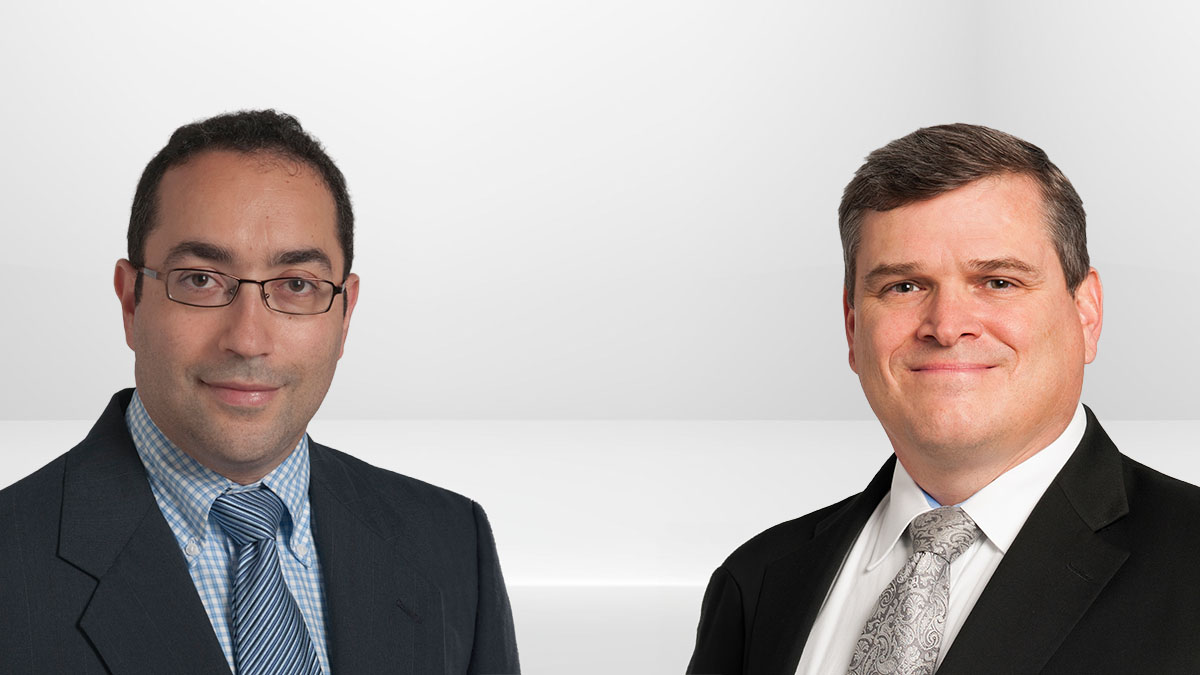
Advances in the Diagnosis and Management of Inherited Arrhythmias
Oussama Wazni, MD, MBA, and Jeffery Courson, DO, examine the evaluation and management of inherited arrhythmias and genetic cardiomyopathies. They discuss diagnostic strategies like genetic testing and advanced imaging, and the role of multidisciplinary care in precision medicine. The conversation also highlights evolving therapies, including individualized pharmacologic approaches and emerging gene-based treatments shaping the future of care.
Looking to refer a patient? Please reach out to our Physician Referral team Mon. - Fri., 8 a.m. - 5 p.m. (ET) at 855.751.2469.
Advertisement
Cleveland Clinic is a non-profit academic medical center. Advertising on our site helps support our mission. We do not endorse non-Cleveland Clinic products or services. Policy
Recent Episodes
Infective Endocarditis Diagnosis and Management
Bo Xu, MD, and Shinya Unai, MD, discuss approaches to diagnosing and treating infective endocarditis, including indications for surgical int…
Expanding Coronary Revascularization With TECAB
Donna Kimmaliardjuk, MD, and Gianluca Torregrossa, MD, discuss the expanding role of robotic coronary artery bypass grafting, including tota…
Stenting, Surgery and Hybrid Strategies for Coronary Disease
Faisal Bakaeen, MD, and Grant Reed, MD, discuss recent advances in the treatment of coronary artery disease, including drug-coated balloons,…
Video content: This video is available to watch online.
View video online (https://cdnapisec.kaltura.com/p/2207941/sp/220794100/playManifest/entryId/1_x578njnt/flavorId/1_5f3sgelj/format/url/protocol/https/a.mp4)
Transcript
Announcer:
Welcome to Cardiac Consult, brought to you by the Sydell and Arnold Miller Family Heart, Vascular and Thoracic Institute at Cleveland Clinic. This podcast will explore the latest innovations, medical and surgical treatments, diagnostic testing, research, technology and practice improvements.
Advertisement
Cleveland Clinic is a non-profit academic medical center. Advertising on our site helps support our mission. We do not endorse non-Cleveland Clinic products or services. Policy
Oussama Wazni, MD, MBA:
Hello everyone, and welcome again to a podcast from the Cleveland Clinic Cardiology Team, specifically the Electrophysiology Team here at Cleveland Clinic. I am Oussama Wazni, I'm the section Head of Cardiac Electrophysiology. Today with me is Jeff Courson, who runs our Adult Inherited Arrhythmia Clinic.
Jeffery Courson, DO:
Thanks, Oussama. I appreciate you having me this morning. The Adult Inherited Arrhythmia Clinic is a clinic geared towards patients that have a concern about an inherited heart rhythm disorder, where there's an underlying genetic cause for an abnormality of the heart. Some of these folks have structural heart disease, like cardiomyopathies. Some of these folks what would appear outwardly to be a normal structural heart, and they can be prone to arrhythmias that can be mild to quite severe and even at times life-threatening.
Oussama Wazni, MD, MBA:
So, what are the symptoms that would point the patient towards maybe that they have an inherited arrhythmia?
Jeffery Courson, DO:
The symptoms can be very broad. Some individuals will be completely asymptomatic. They might have a routine evaluation. They might have an EKG as part of their exam prior to a procedure or a surgery, and they'll have an abnormal EKG. Other folks will have symptoms that may be suggestive of an arrhythmia: palpitations, lightheaded spells, passing out or syncope. Sometimes these episodes can mimic a seizure. Probably the biggest concern we would have is if somebody had a cardiac arrest or a family member died suddenly, unexpectedly, without a clear cause.
Advertisement
Oussama Wazni, MD, MBA:
How do patients show up to the clinic? I mean, they have to have some kind of evaluation before they come to see you, for example. So, what is the pathway where a patient would come and see you in the Inherited Arrhythmia Clinic?
Jeffery Courson, DO:
I think there are two primary ways. A lot of patients will be referred from their doctor, whether it's their primary care physician, their cardiologist, their electrophysiologist. They're already undergoing an evaluation with their regular doctors, then an abnormality is found, and it's felt to be an inherited disorder. That'll be one referral pattern. I think the other pattern would be the patient themselves will request to be seen because they had an EKG and the QT interval was prolonged. Or they were told that they had an inherited cardiomyopathy and that they need to seek care for an inherited disorder.
Oussama Wazni, MD, MBA:
Or sometimes they would have a family member who had what is thought to be a symptom or a clinical outcome that was related to inherited arrhythmia and they're told that they need to be checked. Could you expand a little bit on that?
Jeffery Courson, DO:
When we talk about inherited rhythm disorders, many of these are familial. They're passed down from the parent to the child. It's not always a one-to-one relationship, not necessarily if mom or dad had the disorder. It could be other family members, so we need to do what's called familial screening. The other family members, especially first-degree relatives, should be evaluated. That can be a clinical evaluation, that can be a genetic evaluation. Then I think the other aspect would be if a family member had sudden death, and they were young and healthy, and there was no clear cause for the sudden death. That's another time that family members would want to be evaluated for possible concerns.
Oussama Wazni, MD, MBA:
So, could you tell us, what are these inherited arrhythmias? What are the diagnoses that fall into inherited arrhythmias? And then, what are the things that we do here to evaluate these further?
Jeffery Courson, DO:
Our two basic types, there's quite a few disorders involved, but we think of the primary arrhythmia disorders. These are going to be where the individual appears to have a structurally normal heart, and then they are prone to arrhythmias without a clear underlying cause. Then the other group, with people that have underlying structural disease, oftentimes it's cardiomyopathy or an issue that's not due to what we would typically think of as acquired heart disease. If you have a heart attack, you have damage to your heart, that weakened your heart muscle, it's understandable where the arrhythmia comes from. But if you just develop a weakened heart muscle with no clear underlying cause, that might be a sign of an inherited arrhythmia.
Oussama Wazni, MD, MBA:
Let's unpack these a little bit, just to the two. We have the inherited arrhythmias, which are related to the electrical system in the heart. Usually, what we call channelopathy, or there's something wrong with the channels in the cells that control the electrolytes in the heart, potassium channels, sodium channels. But can you give us names of these diseases that the patients may not be familiar with?
Advertisement
Jeffery Courson, DO:
Sure. With the inherited heart rhythm disorders, those are going to be uncommon to rare. The two primary ones would be long QT syndrome. The QT interval is a abnormality on the EKG. The main depolarization, the large wave that you usually see, is the QRS. Then the heel or the hump afterwards, the T wave, if you look at that timing, that's the QT interval. People develop prolongation of the QT interval.
The other primary disorder would be Brugada syndrome. That's also a repolarization abnormality, usually presents with an abnormal EKG. There are much less common disorders, short QT interval, which is a short QT syndrome, which is the opposite of long QT syndrome. Then CPVT, which is catecholaminergic polymorphic ventricular tachycardia. There are a few other disorders that go along.
Oussama Wazni, MD, MBA:
So, these are the channelopathies: long QT syndrome, Brugada, CPVT. The main symptom from these inherited arrhythmias is passing out. Somebody has a syncopal event, or passes out. If you seek help, the physician, your doctor will say there's something unusual about it. It's not passing out when getting blood drawn, for example. It's not passing out if you're standing in a long line in an uncomfortable environment. This is passing out that is unheralded, we say.
Advertisement
Then somebody does an EKG, and they notice these patterns on the EKG. Is that correct?
Jeffery Courson, DO:
Correct.
Oussama Wazni, MD, MBA:
Usually again, passing out. Now the CPVT one is different. CPVT is when somebody's exercising very rigorously and then all of a sudden, they pass out.
Jeffery Courson, DO:
Yeah. But beyond physical stress, emotional stress can also trigger rhythms with CPVT.
Oussama Wazni, MD, MBA:
Very good. So those are the inherited arrhythmias. The next one is the cardiomyopathy. The cardiomyopathy means that the heart function is weak, and we cannot explain why. The most common reason why a heart muscle is weak is because somebody had a heart attack. But if the investigations reveal that somebody did not have a heart attack and still they have cardiomyopathy, and we can't explain it, that's when we start looking into genetic disorders. Let's expand that on that area.
Jeffery Courson, DO:
The one that is common is hypertrophic cardiomyopathy, where the heart muscle gets very thickened. That is one that you might think about when a young athlete, a high school college athlete has a cardiac arrest or a near-death event. That's not the only cause, but that is one that's high on our list of concerns. Arrhythmogenic right ventricular cardiomyopathy (ARVC), that is not as common as hypertrophic cardiomyopathy, but that's where people get scarring or fibrosis within the muscle itself. Then, when you think about familial dilated cardiomyopathies, that's where people develop an enlarged, weakened heart muscle without a clear underlying cause. Not all of those, but there is a significant portion that are familial as well.
Advertisement
Oussama Wazni, MD, MBA:
That's a very important clarification that it doesn't have to be weak. In hypertrophic cardiomyopathy, actually, the heart is not weak. It's just thickened muscle, but it puts the patient at risk for sudden cardiac arrest or death because that muscle is not normal. Even though it's very thick, there's also something about it structurally that is not normal.
So, now let's say if a patient comes to the clinic, how do we manage these very complicated syndromes, whether it's the inherited arrhythmias or the cardiomyopathy?
Jeffery Courson, DO:
First, you always start with a very careful history and physical exam. I know that seems old-fashioned, but that's incredibly important for these disorders. A strong family history is very important for familial disorders. Then you do the basics. Almost always it's an EKG, almost always it's going to be an echocardiogram. Then it's more specific testing based on what you're looking for. For instance, CPVT, a specific type of stress test may be incredibly important. There is some provocative testing you can do for Brugada syndrome. When you think about ARVC, for me, a cardiac MRI is essential. I think that you may consider more advanced testing for the other forms of cardiomyopathy as well.
Oussama Wazni, MD, MBA:
Yes, it's a comprehensive evaluation that will include, at times, genetic testing, echo, definitely MRI in the dilated cardiomyopathy, and even in hypertrophic cardiomyopathy, to look for scar. Because that muscle line gets very thick, you can have scar in it. So, it's a comprehensive evaluation that will include a comprehensive team. Can you tell us more about the team and who's included in the team?
Jeffery Courson, DO:
We have a new section in heart and vascular. It's the Section for Genomics and Precision Medicine. It's its own integrated group of providers and specialists that works amongst the other forms. Just like we have a heart failure section, electrophysiology section, an imaging section, there's going to be genomics. This is trying to integrate all of the groups across the board. For instance, with inherited heart rhythm disorders, I think our relationship with heart failure is incredibly important, our relationship with imaging. You can really say that with all of the inherited disorders beyond the arrhythmia. It's a very comprehensive assessment. Oftentimes, these disorders are not where a single provider is evaluating and managing them.
Oussama Wazni, MD, MBA:
It's a team effort. It includes genetic counselors, genetic testing, a heart failure specialist, an electrophysiologist. Sometimes imaging, sometimes just a clinical cardiologist. The center is something that's new at Cleveland Clinic and it is really a collaborative effort among many different specialties that come together to take care of that one specific patient with a specific disorder. Anything else? Take-home messages for our patients?
Jeffery Courson, DO:
First and foremost, if somebody has a concern, whether they're told that they have an abnormal test result, whether a family member has had a diagnosis or a concern, first and foremost, I tell people to get evaluated by somebody very familiar with these disorders. Obviously, we would like people to come here and be evaluated with us. But number one, get evaluated, be screened, be tested for these disorders, and get the appropriate treatment and care.
Oussama Wazni, MD, MBA:
What is the new research and what do we expect to get from the research effort at the clinic in inherited arrhythmia and cardiomyopathies?
Jeffery Courson, DO:
So it covers a very broad base, obviously. For cardiomyopathy, we have a very large heart failure program. We have dedicated clinics for hypertrophic cardiomyopathy. They’re already heavily involved in developing new treatments. There are newer drugs that are designed mechanistically, based on information that has been gained from deeper knowledge about the genetics and the pathophysiology of this disorder.
These medications are already in use now. I think in other terms, when you think about the inherited heart rhythm disorders, some of the developments aren’t necessarily brand new. But when we think about, for instance, athletes, for decades we told athletes who have these disorders, you can’t play sports, you can’t do anything but very mild activities. That’s really changed over the last several years, but it hasn’t really filtered out into all of the community. I think it’s a very prominent theme right now on Right To Play, shared informed decision making. There are obviously medicolegal implications and other factors. But I think that’s an area that’s evolving, not because it’s brand new, but because it just hasn’t filtered through
I think when you look at the ability to do broad, whole genome sequencing, that’s really making a big change. We’re looking at polygenic, where instead of it just being one or two genes, this is really bridging the gap between traditionally inherited heart rhythm disorders and disorders that we treat every day, like atrial fibrillation and coronary artery disease .
Now that you can look at a multitude of genes and come up with a risk assessment, not a yes or no answer, but what is your probability of developing disease, the ability to develop new, more specific treatments. And so, for instance, long QT syndrome: if you have the inherited form of long QT syndrome, we all know to use beta blockers. But in specific types, perhaps mexiletine would be appropriate for long QT type 3, use of flecainide with CPVT .
I think that we’re getting more ability to tailor treatment. But to develop new treatments, we’re on the cusp of developing treatments that can modify those abnormal genes and change the structure of the disease. There are obviously some significant hurdles there.
In my own experience with one of my patients, where I thought they had an abnormality of their sinus node, when we did genetic testing and looked at a broader base of a thousand genes, we found out they had a muscular dystrophy but no neurologic symptoms, which was very unusual. We would never have found that ten years ago.
Oussama Wazni, MD, MBA:
So I think the point here is that hopefully we will get into an era, because of genetic studies, of targeted, individualized treatment with medications that we already have, for example, flecainide with CPVT or mexiletine for long, when appropriate, depending on the genetic makeup.
But also, we are not just on the cusp. We’ve already started gene therapy for certain diseases, for example, hypertrophic cardiomyopathy. We have ongoing trials with gene therapy. So, I think those patients would benefit from a referral to our inherited arrhythmia center and also to our hypertrophic cardiomyopathy center to be evaluated for gene therapy in these cases.
Again, I think we’re going to wrap up right now. This is an exciting era in inherited arrhythmias and cardiomyopathies. I think there’s going to be a sea change in how we target these diseases and help our patients. So, thank you once more for your attention, and we’ll see you next time.
Announcer:
Thank you for listening to Cardiac Consult. We hope you enjoyed the podcast. For more information or to refer a patient to Cleveland Clinic, please call 855.751.2469. That's 855.751.2469. We welcome your comments and feedback. Please contact us at heart@ccf.org. Like what you heard? Subscribe wherever you get your podcasts or listen at clevelandclinic.org/CardiacConsultPodcast.
Recent Episodes
Infective Endocarditis Diagnosis and Management
Bo Xu, MD, and Shinya Unai, MD, discuss approaches to diagnosing and treating infective endocarditis, including indications for surgical int…
Expanding Coronary Revascularization With TECAB
Donna Kimmaliardjuk, MD, and Gianluca Torregrossa, MD, discuss the expanding role of robotic coronary artery bypass grafting, including tota…
Stenting, Surgery and Hybrid Strategies for Coronary Disease
Faisal Bakaeen, MD, and Grant Reed, MD, discuss recent advances in the treatment of coronary artery disease, including drug-coated balloons,…
Never miss a moment - subscribe now.
Listen to the Health Essentials Podcast on your favorite streaming platform.
Other Podcasts You May Love
Butts & Guts
A Cleveland Clinic podcast exploring your digestive and surgical health from end to end. You’ll lear…
Health Essentials
Tune in for practical health advice from Cleveland Clinic experts. What's really the healthiest diet…
Love Your Heart
A Cleveland Clinic podcast to help you learn more about heart and vascular disease and conditions af…
Neuro Pathways
A Cleveland Clinic podcast for medical professionals exploring the latest research discoveries and c…