



Building Better Cancer Care Through Global Collaboration
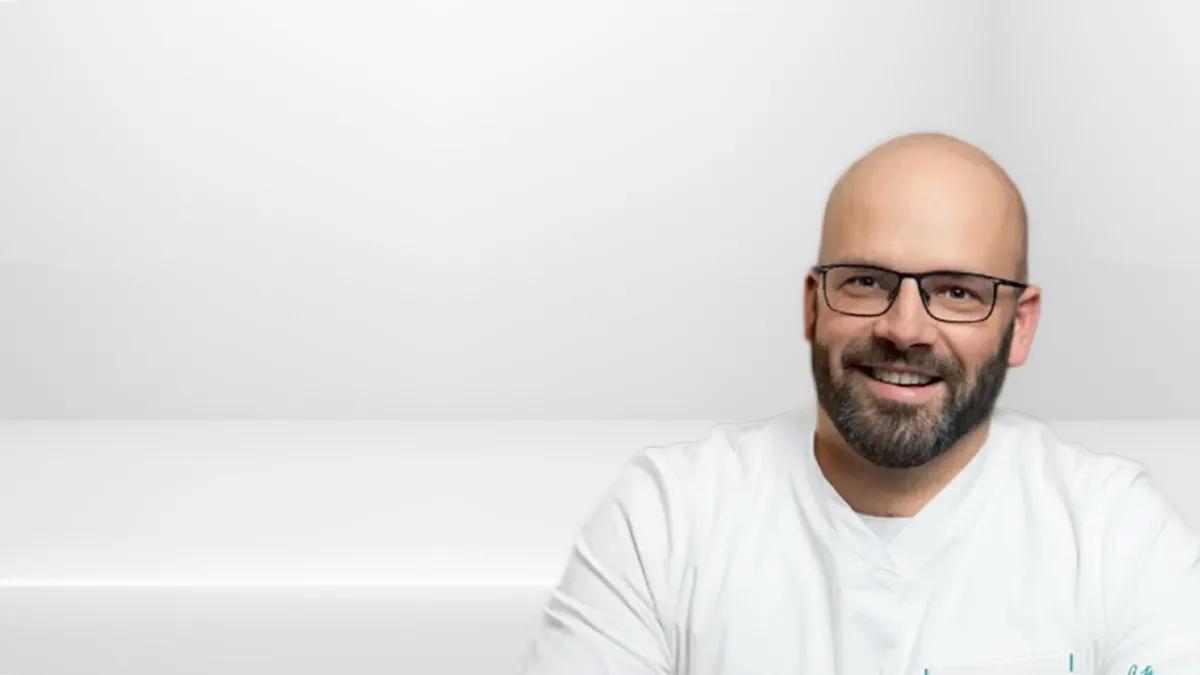
In this episode, Dr. Dale Shepard speaks with Dom Kosmina, chief medical physicist and chief operations officer at Radiochirurgia Zagreb in Croatia, a member of the Cleveland Clinic Connected Network. They discuss how global partnerships foster knowledge sharing and quality improvement, benefiting providers, institutions and patients.
Advertisement
Cleveland Clinic is a non-profit academic medical center. Advertising on our site helps support our mission. We do not endorse non-Cleveland Clinic products or services. Policy
Recent Episodes
Adaptive Radiation Therapy: How AI Is Personalizing Cancer Treatment
Adaptive radiation therapy is changing how radiation is delivered. In this episode, Dr. Ehsan Balagamwala discusses how the Ethos platform u…
Cancer Survivorship in the Era of CAR-T and Bispecific Therapies
As cancer therapies continue to evolve, so do the long-term needs of survivors. In this episode, Dr. Dale Shepard sits down with Christina F…
Inhaled KB707 Plus Pembrolizumab in Lung Cancer
Patients with advanced lung cancer often experience disease progression despite treatment with immune checkpoint inhibitors. In this episode…
Video content: This video is available to watch online.
View video online (https://cdnapisec.kaltura.com/p/2207941/sp/220794100/playManifest/entryId/1_l7cxgb9b/flavorId/1_5f3sgelj/format/url/protocol/https/a.mp4)
Guest
Dom Kosmina
Transcript
Dale Shepard, MD, PhD:
Cancer Advances, a Cleveland Clinic podcast for medical professionals, exploring the latest innovative research and clinical advances in the field of oncology. Thank you for joining us for another episode of Cancer Advances. I'm your host, Dr. Dale Shepard, a medical oncologist and co-director of the Sarcoma Program at Cleveland Clinic. Today, I'm pleased to be joined by Dom Kosmina, chief medical physicist and chief operations officer at Radiochirurgia Zagreb in Croatia, a member of the Cleveland Clinic Connected Network.
Advertisement
Cleveland Clinic is a non-profit academic medical center. Advertising on our site helps support our mission. We do not endorse non-Cleveland Clinic products or services. Policy
Dom Kosmina:
Pleased to be here.
Dale Shepard, MD, PhD:
Absolutely. Well, you're here today. We're going to discuss what it means to be a member of the Cleveland Clinic Connected Network, how partnerships between healthcare organizations foster the exchange of knowledge and best practices, and the ways which these collaborations can benefit providers, institutions, and patients around the world. So, welcome.
Dom Kosmina:
Well, thank you very much. I'm pleased to be here.
Dale Shepard, MD, PhD:
I'm happy you're here. We've spent a couple of days with you here. You're here from Zagreb. So can you tell us a little bit about your role and kind of the organization in general?
Dom Kosmina:
So, we are a small private hospital in Croatia. We actually opened 10 years ago and our focus from the very beginning was to bring SRS and SBRT to Croatia. Well, the SRS program existed in the university hospital, but our institution was the first in Croatia to set up and bring a SBRT program. So we started with 15 employees and one linear accelerator, and now we're at a hundred employees, three linear accelerators, preparing for the fourth.
Dale Shepard, MD, PhD:
Very soon, right?
Dom Kosmina:
Very soon. And in six weeks time, the installation should begin. And we now serve about 2,500 patients with SBRT per year, and this number keeps increasing. And as our organization grew, so did the challenges within the organization to keep the quality high, to bring new staff to standard as the old staff. And this is one of the reasons we reached out to Cleveland Clinic for the Connected program. So our idea was we could learn by trial and error, or we could learn from someone who is more experienced at managing large organizations and actually while we are expanding our cancer care.
Advertisement
Dale Shepard, MD, PhD:
Excellent. People might be listening in a whole bunch of different backgrounds. SBRT, maybe just briefly remind us what that is. There are some previous episodes we've talked about it, but just kind of give us a quick reminder what that is.
Dom Kosmina:
SBRT, stereotactic body radiotherapy. It's ablative form of radiotherapy where in a few fractions from one to five usually brings an ablative dose to tumor cells, either primary or metastatic tumor, and it achieves a high amount of local control with usually lower amounts of toxicities. So it's an advanced form of radiation therapy.
Dale Shepard, MD, PhD:
Okay. And you said when you started this 10 years ago, this didn't really exist in Croatia. What's the environment now?
Dom Kosmina:
Now other clinics, other state hospitals, are starting to open their programs and there is another private clinic also opening last year, but we are still definitely the market leader and do over 90% of all the cases. And we didn't just sit around on the fact that we are doing SBRT. We are continually investing in new equipment and new technologies. For example, we were the worldwide first of the photon-counting system used in radiation therapy. We had a cut site with Siemens for their NAEOTOM machine and we are simulating all our patients using a photon-counting system, which gives us quite significant advantages when dealing with very advanced and complicated cases.
Dale Shepard, MD, PhD:
And then are there particular types of tumors that you primarily focus on? Are there certain kinds of cancers that you see more than others?
Dom Kosmina:
So, from the very beginning, our focus was on pancreatic cancer, and we have very good results regarding locally unresectable pancreatic cancer, so local advanced pancreatic cancer. Now for that type of cancer, we use patients routinely go and do treatment in anesthesia where the anesthesiologist actually controls their breath. We use the anesthesiologist, his team, to do a controlled breath hold and we can do a single fraction treatment for pancreatic cancer, which includes elective lymph nodes. So this is a very advanced form of therapy and produces great results. Basically for local advanced cancer, we have same kind of overall survival for our patients as resectable, which-
Dale Shepard, MD, PhD:
Which is good.
Dom Kosmina:
... yeah, which is very good. Yeah. Without any kind of post-operative mortality and things like that.
Dale Shepard, MD, PhD:
We had a recent episode of the podcast as well where we talked about adaptive radiation and your organization kind of early adopters in a lot of that and even a little ahead of us in many ways.
Dom Kosmina:
We got the Ethos, the Varian Ethos machine, which focuses on cone-beam based adaptation and we generally do about 500 SBRT based adaptive cases there. It's shown to be great for any kind of lymph nodes in the abdominal and pelvis region. It's great for prostate. We also use it for Timmerman's approach for PULSAR. So one fraction every three or four weeks, which kind of works great for large bulky tumors.
Advertisement
Dale Shepard, MD, PhD:
Yeah. So you talked a little bit about the impetus to get involved with Cleveland Clinic and become a member of our Cleveland Clinic Connected Network. You mentioned things about growth and what were some of the things that you were seeing were kind of the pain points, if you will, like the bottlenecks in growth that led you to think about working with us and then you've had some successes?
Dom Kosmina:
So, one of the things is that while we are very specialized in SBRT, we wanted to be able to reach other subspecialties of cancer knowledge like medical oncology and things like that. And I think through this Connected program, we really have access to world-leading experts in any kind of cancer fields. Also, we are expanding to diagnostic cardiology, normal diagnostic treatment, theranostics. So having some input from a bigger partner is something that we very much appreciate that shortens the time to implementation of new specialties and new technologies and really gives us an edge over our competition.
Dale Shepard, MD, PhD:
And then tell us a little bit about how we've been able to work together and you're learning things from us, and we learn things from you, which is ideal, that's the perfect collaboration.
Dom Kosmina:
That's a great collaboration of knowledge. And I like to think with this collaboration, I got a lot of new colleagues.
Advertisement
Dale Shepard, MD, PhD:
Absolutely.
Dom Kosmina:
Maybe they're not in the same building, but I can reach out to anyone via Teams or via email, get any kind of information or ask someone who knows something. Medical knowledge is fairly disseminated throughout the world, but operative knowledge, how to do something was the best course and how to introduce new technologies, how to market new technologies. This is something that we really get value from our Connected program.
Dale Shepard, MD, PhD:
It's kind of the difference between reading how to do something and actually figuring out how to do something.
Dom Kosmina:
So, you said correctly, when you have someone to ask, how are you doing this and what are your plans? How would you do this? It's always two heads are smarter than one.
Dale Shepard, MD, PhD:
Yeah. And I think it's been really good with our case conferences to have that information exchanged. Tell us a little bit about the case conferences that we've done and how we lay that out and how it helps.
Dom Kosmina:
We currently did three case conferences, and I mean this formal arrangement is still under one year. It'll be one year now, right? So we did a lung conference for advanced disease. We did a prostate also for advanced and we did adaptive. And the basic idea is to share our knowledge not on specific patient cases, but on a general strategy and to learn from each other where we think the field will go in the future. How can we bring advanced radiation therapy to even more patients and how can we combine with other treatments such as surgery, systemic therapy, which order, where to proceed. And it not only helps us share knowledge and advanced knowledge, it also helps us align the expectations and align what people are thinking and doing inside the same clinic because discussing cases among each other is a little bit different than discussing cases with other experts from another institution. And then it kind of crystallizes the path more than just doing it on your own.
Advertisement
Dale Shepard, MD, PhD:
What about changes, not necessarily just within delivery of care from cancer specifically, but safety, quality? How have we worked together in that side?
Dom Kosmina:
Safety and quality side from Cleveland is really something we are picking up strongly and implementing in our clinic. Having such an organizational architecture already in place really helps us to see where we need to go next. Of course, we cannot do everything that Cleveland does just because in the difference in size between the hospitals, but we can see and we can plan ahead where will we go next and what will we do? So Cleveland has six tiers of huddles. We are now introducing our second tier of huddle, two tiers, or we have kind of more patient engagement experiences that are giving us a data-driven approach to how we handle with patients, what's bothering patients more and how to improve our processes to serve our patients better.
Dale Shepard, MD, PhD:
Have there been changes in terms of patient workflow or patient satisfaction? I mean, that's kind of hard to measure sometimes.
Dom Kosmina:
Yeah, it is a little hard to measure, but as part of the Connected group, we feel that we need to be more responsible for our patients now to provide them the best experience to justify this name and the program. And as part of all these quality measures, we started measuring all the patient responses even more thoroughly than before and acting on them. And of course, discussing with other Cleveland team members on how to improve so we can say, "Oh, the patients don't like this kind of longer waiting time. What do you do when you have such an occasion?" And this is the knowledge that's really important for us.
Dale Shepard, MD, PhD:
Yeah. You have a little bit of a unique situation in that patients oftentimes have their care not necessarily within your system, right? They come to you for an episode of care and then you have to end up with follow-up and things. How have we worked together in terms of management of data, collection of data, collecting patient information, things like that?
Dom Kosmina:
Cleveland introduced us to the concept of a care coordinator where we have dedicated people who will contact the patient and ask them to share any data they have with their kind of primary care physician that they generated outside our hospital. In Croatia, there is not too much automated data sharing between institutions and usually patients have to bring manually their images and their doctor findings, but having someone to ask them, "How are you doing? What's going on? Can you please share?" And this allows us to retain more patients and have them come back to us as needed so we can help with their healthcare journey and allows us to expose patients to new developments on our clinic, which we think is among the best in Croatia and we can really provide care to them if they know that they can get them at our clinic.
Dale Shepard, MD, PhD:
Perfect. How about research? How have we worked together from a research?
Dom Kosmina:
Yeah. So from a research perspective, we do a lot of, as I said, a lot of SBRT and from a really wide variety of things. And we actually very easily slotted into some retrospective studies with which Cleveland leads. This kind of increased our confidence in our physicians that we are doing the right thing that other world renowned clinics are following. And we feel that it really drives enthusiasm from our physicians to be part of this. And along with all the safety and quality measures that improve our data collection process, I think this is a step in the right direction and we can show along with Cleveland how we are doing.
Dale Shepard, MD, PhD:
So, we've been formally associated now together within this Connected program for about a year. What's been the biggest surprise? What's come from it that you kind of didn't anticipate?
Dom Kosmina:
I didn't anticipate the openness of Cleveland Clinic staff so much. So it's really feel this is part of my hospital, my workplace just disjoined a couple of thousand miles away.
Dale Shepard, MD, PhD:
We're a few miles away. 24 hours of travel.
Dom Kosmina:
Yeah. But with the modern technology, it's really easy to incorporate into the daily workplace and work hours. So this is for me the biggest, biggest surprise and I very welcome surprise at that.
Dale Shepard, MD, PhD:
Yeah. No, it's been a great relationship and it's been great to work with you and your team. So appreciate you coming to the podcast and giving us a little idea what Cleveland Clinic Connected membership's all about.
Dom Kosmina:
Thank you for this opportunity and I look forward to many more years in the future of collaboration.
Dale Shepard, MD, PhD:
Absolutely. Thank you.
Dale Shepard, MD, PhD:
To make a direct online referral to our Cancer Institute, complete our online cancer patient referral form by visiting clevelandclinic.org/cancerpatientreferrals. You will receive confirmation once the appointment is scheduled.
This concludes this episode of Cancer Advances. For more podcast episodes, visit our website, clevelandclinic.org/canceradvancespodcast. Subscribe on Apple Podcasts, Spotify, or wherever you listen to podcasts.
Thank you for listening. Please join us again soon.
Recent Episodes
Adaptive Radiation Therapy: How AI Is Personalizing Cancer Treatment
Adaptive radiation therapy is changing how radiation is delivered. In this episode, Dr. Ehsan Balagamwala discusses how the Ethos platform u…
Cancer Survivorship in the Era of CAR-T and Bispecific Therapies
As cancer therapies continue to evolve, so do the long-term needs of survivors. In this episode, Dr. Dale Shepard sits down with Christina F…
Inhaled KB707 Plus Pembrolizumab in Lung Cancer
Patients with advanced lung cancer often experience disease progression despite treatment with immune checkpoint inhibitors. In this episode…
Other Podcasts You May Love
Beyond Leadership
Hosts Jim Pae and Elizabeth Pugel escort you through a network of thought leaders, sharing world-cla…
Beyond the Pages: CCJM Podcast
Beyond the Pages: CCJM Podcast takes the listener more in-depth into Cleveland Clinic Journal of Med…
Butts & Guts
A Cleveland Clinic podcast exploring your digestive and surgical health from end to end. You’ll lear…
Cardiac Consult
A Cleveland Clinic podcast exploring heart, vascular and thoracic topics of interest to healthcare p…