



Advances in Rectal Cancer Treatment
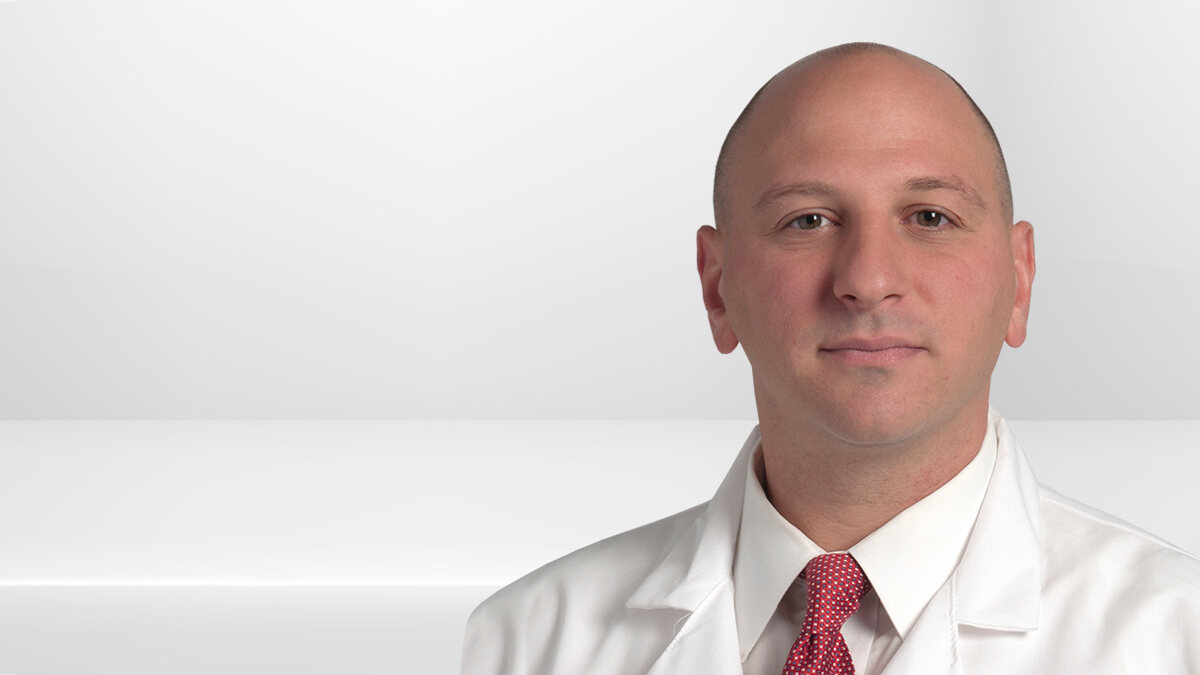
Dr. Michael Valente, colorectal surgeon at Cleveland Clinic, joins this episode of Butts & Guts to discuss advances in rectal cancer care. He explores the key differences between rectal and colon cancer, why rectal cancer requires a unique clinical approach, and the current treatment options available for rectal cancer patients. Listen to learn why early screening and detection can make all the difference in rectal cancer outcomes.
Advertisement
Cleveland Clinic is a non-profit academic medical center. Advertising on our site helps support our mission. We do not endorse non-Cleveland Clinic products or services. Policy
Recent Episodes
Inguinal Hernias: From Groin Pain to Hernia Repair
In this episode of Butts & Guts, Dr. Kevin Wissinger, a general surgeon at Cleveland Clinic Florida, discusses inguinal hernias, including c…
Reducing Your Risk of Pancreatic Cancer
What can you do to reduce your risk of pancreatic cancer? Robert Simon, MD, general surgeon and hepatobiliary/pancreatic specialist at Cleve…
Constipation: What's Normal and When Should You Be Concerned?
Constipation is common, but when is it more than just an occasional problem? In this episode of Butts & Guts, Cleveland Clinic Florida gastr…
Video content: This video is available to watch online.
View video online (https://cdnapisec.kaltura.com/p/2207941/sp/220794100/playManifest/entryId/1_cxl1fkji/flavorId/1_5f3sgelj/format/url/protocol/https/a.mp4)
Transcript
Dr. Scott Steele:
Butts & Guts, a Cleveland Clinic podcast exploring your digestive and surgical health from end to end. Hi again everyone, and welcome to another episode of Butts & Guts. I'm your host, Scott Steele, president of main campus and colorectal surgeon here at the Cleveland Clinic in beautiful Cleveland, Ohio. And today I am super pleased to have one of our own colorectal surgeon, Dr. Michael Valente, who is a colorectal surgeon in the Digestive Disease Institute at Cleveland Clinic. Mike is also an associate professor of surgery at Cleveland Clinic Lerner College of Medicine, and he also serves as our longstanding program director for our number one fellowship in the world, Cleveland Clinic's Fellowship in Colorectal Surgery. Mike, thanks for joining us once again in Butts & Guts.
Advertisement
Cleveland Clinic is a non-profit academic medical center. Advertising on our site helps support our mission. We do not endorse non-Cleveland Clinic products or services. Policy
Dr. Michael Valente:
Thank you, Scott. Absolute pleasure to be here again in one of my favorite podcasts, actually my favorite podcast I want to repeat.
Dr. Scott Steele:
So we were just talking a little bit off air about how many times you've been on, and this is either four or five.
Dr. Michael Valente:
Yeah.
Dr. Scott Steele:
So for those who haven't listened to your background, give us a little bit about yourself.
Dr. Michael Valente:
Sure. I've been here at the Cleveland Clinic for about 15 years now in the Colorectal Surgery Department, as you mentioned. Born and raised in Cleveland, Ohio. I don't plan on leaving anytime soon. I got three wonderful children and my wife, Stephanie, is also a breast oncology surgeon here at the Cleveland Clinic. So it's our second home.
Dr. Scott Steele:
Yeah, it's great. And it's great to have the whole Valente family here. And so today we are going to be talking about updates in care of the patient with rectal cancer. So people oftentimes hear the term colorectal cancer. So can you clarify a little bit, what is exactly is rectal cancer and how's that different than colon cancer?
Dr. Michael Valente:
Sure. And you're right, colorectal cancer, we say, but the colon and the rectum are officially one continuous organ. However, the rectum is completely different. It's a whole different ballgame. And because of where it's located down in the pelvis, the anatomy around the rectum was what makes it different than colon cancer. And because of that, they are treated differently before surgery. They're treated with multiple different types of modalities and we'll get into those today.
Advertisement
Dr. Scott Steele:
Mike, we talk a whole lot about the different types of cancer. And I always tell my patients, we don't talk a whole lot about colorectal cancer. We don't talk about our bowel movements, things that we talk about here on Butts & Guts. And what are the warning signs or symptoms of rectal cancer that people should be watching out for?
Dr. Michael Valente:
One of the most common ones is going to be blood in the stool or bloody bowel movements. It could be a change in your bowel habits. If you were a normal once a day kind of guy or girl and now you're having diarrhea or new onset constipation, those are some warning signs. And sometimes, of course, there's no signs or symptoms whatsoever.
Dr. Scott Steele:
Mike, those aren't ones that we commonly talk about, but can you talk a little bit about those? Can those also be associated with, if I'm a listener out there and I'm like, "Oh my God, I've had blood in my stool or I've had changes in my bowel movement," does that necessarily mean it's cancer?
Dr. Michael Valente:
Absolutely not. There are warning signs for a lot of different diseases, both cancerous and many non-cancerous things. What we don't want to hear or see as a colorectal surgeon or a specialist is chalking everything up to hemorrhoids. Now, obviously hemorrhoids are prevalent in society and they do cause rectal bleeding, the most common cause of rectal bleeding, but I just want to stress not everything is a hemorrhoid. And if you are having symptoms, you need to see a provider.
Dr. Scott Steele:
Absolutely. And so Mike, who is the most at risk for rectal cancer? And a little bit further, what age should people start to get screened?
Dr. Michael Valente:
Sure. I like to answer this question in different ways, but who is at risk for rectal cancer and colon cancer, colorectal cancer? Anyone who has a colon or rectum is at risk. And the screening guidelines have changed over the last several years. It used to be age 50, but now we're recommending everyone at the age of 45 as a baseline to get their first colonoscopy. That has changed, as I said. However, if you do have a strong family history of colorectal cancer, that will change your colonoscopy schedule as well.
Dr. Scott Steele:
So Mike, we often ask, in addition to just the age or the family history, maybe some other for colorectal cancer, specifically rectal cancer, some other things that maybe if you are at risk, some modifiable disease factors.
Dr. Michael Valente:
Sure.
Dr. Scott Steele:
Can you talk about those?
Dr. Michael Valente:
Sure. So rectal cancer, there are modifiable risk factors, meaning things that we can do or put in our bodies that can help decrease the chance of rectal cancer and a healthy diet, lifestyle modification, so no smoking. If you're obese, lose some weight, get active. Sedentary lifestyle is one of the risk factors. Excessive alcohol intake. And really we're talking, we want you to have a high fiber, low fat type of diet. So there are certain things that we can do to decrease the risk of getting colorectal cancer. But as you mentioned, some things are non-modifiable like genetics and family history.
Advertisement
Dr. Scott Steele:
Mike, you mentioned this just a little bit earlier about how the screening guidelines have changed, gone from 50 down to 45. And we've also had some other more specific podcasts that have talked about changes within a trend for younger people being diagnosed with both colon and rectal cancer earlier than age 50 that led to that change. So can you talk a little bit about, do we know yet why this trend is happening?
Dr. Michael Valente:
Yeah, absolutely right, Scott. It's an alarming trend we've been seeing for the last 10 years or so. And our department has published papers and done some research on it as well. And younger people, younger, younger people are getting rectal cancer, colorectal cancer, but they have a high propensity for rectal cancer as well, they're left-sided tumors. Why is that happening? We don't know for sure. A lot of theories out there. And some of the big ones are lifestyle, as we talked about, some lifestyle factors and the things we're putting inside our body. So some of the foods that we're eating, the chemicals, the dyes, who knows. All those things coupled together and you have to be the patient maybe with the right genetic or the wrong genetic makeup and maybe some sort of environmental factor can cause it. There's a lot of theories out there.
Advertisement
We talk about this thing called the microbiome, the bacteria and the organisms that live inside the colon and rectum. And there's some dysregulation with those chemicals and things that are accelerating the growth of cancer. It's very strange, very odd. When you and I were in training not too long ago, it was very, very rare to see a 25 or 30 year old with a rectal cancer. Now it's unfortunately, I may see one patient or more a week that in their 20s or 30s with rectal or advanced colon cancer. And unfortunately, some of these patients have advanced disease, as I said, by the time they present. So it's a real problem and we don't quite know the answer quite yet.
Dr. Scott Steele:
Yeah, absolutely. And it just speaks to the advice that you gave earlier. If you're having some of these symptoms, please go check it out, whereas most often it is benign, but it's important to make sure that there's not something more serious. So now the hard part, for many people, what does rectal cancer screening involve? Are there different screening options that are out there? Are they painful? Are they uncomfortable? I mean, I always say to the trainees who think about colorectal surgery, it's a very private area of your body. It's areas that you may not tell your significant other that you've been with for decades about what's going on back there. And all of a sudden now you meet a doctor for the first time. And what does it all involve?
Advertisement
Dr. Michael Valente:
Great points. And it's true, Scott. There's a lot of awkwardness, anxiety or embarrassment about the colorectum and having anal-rectal problems, et cetera. But I assure you that our team here is well versed and compassionate and we'll keep everything modest. So what do we do for screening? Going back to the colonoscopy, I mean, that is the tried and true method of looking at the rectum and the colon all at the same time. That is, if we had to pick one test that we had to do, that would be it. However, there are other abbreviated examinations like what we call a flexible sigmoidoscopy to look just at that rectum and left side.
There are some other tests out there. You may have heard them. There's some tests like Cologuard is one of the names where you could do a sample of your stool and/or blood depending on the test and see if there's any potential positive markers that may indicate that there could be something going on inside the colon and rectum. And then you would still have to have a colonoscopy afterwards if it's positive. So from our standpoint, from the colorectal and gastroenterologists and other surgeons, the colonoscopy is the gold standard to do the examination.
Dr. Scott Steele:
Mike, just to drive home this point, if you are over the age of 45, but you do not have any symptom, you are asymptomatic or sign that you mentioned earlier in this podcast, do you still need to have a screening?
Dr. Michael Valente:
100%. Absolutely, yes.
Dr. Scott Steele:
Why is that the case?
Dr. Michael Valente:
Wow. As I said, many patients who have advanced polyps, advanced polyps or cancer may have no symptoms whatsoever. And the best way to help get rid of, dare I say, cure an early cancer is to treat it while it's early and easy to take care of. So many of these polyps and/or early cancers can be treated with the colonoscope, with the colonoscopy. So early detection is the key. Patients who find their cancers early do better.
Dr. Scott Steele:
So we mentioned a little bit of the modifiable risk factors out there, and this kind of dovetails into that question. What can our listeners do to reduce their risk of rectal cancer?
Dr. Michael Valente:
Number one, live a healthy lifestyle. So things that you could control, diet, exercise, external factors like smoking and alcohol, try to minimize those. There's a lot of push nowadays. We're looking at some of the foods that we're ingesting and how we're making things and some of the dyes and chemicals. So take a look at those aspects of what you're putting in your body. It only makes sense to me that what you're putting in is going to affect what's coming out and what's going inside your bowels. So those are some of the biggest ones I could think of off the top of my head.
Dr. Scott Steele:
One of the common questions people get that unfortunately get rectal cancer or colon cancer is, "Doc, can you tell me what stage it's at?" Mike, can you briefly review just overall, not the finer stages, but the overall stage one, two, three, four. What is that?
Dr. Michael Valente:
Yeah. So colorectal cancers and rectal cancer specifically are stage I, II, III, and IV. I'll start with the worst, stage IV, that means that the cancer has left the rectum and metastasized, meaning spread to other body parts, meaning the liver, the lung, or to the peritoneal cavity. So that is stage IV. Now, when you work backwards, stage III would mean that you have lymph node positivity. And stage I and II are the earlier stages that are usually quite well treated with surgical means.
Dr. Scott Steele:
And so what treatment options are available for rectal cancers? And how do you decide which one is best?
Dr. Michael Valente:
That's a great question. And it's loaded question, Scott, because when I have a patient in my office with a rectal cancer, the conversation automatically becomes a little bit more complicated in terms of options. Not in a bad way complicated, but there's many, many different ways to treat rectal cancer in 2025. I tell the patients, "If you had a colon cancer, for the most part, we could be in the operating room next week and take this thing out and be done, for the most part." However, with rectal cancer, because of those anatomical confines that I was speaking of, it's in the pelvis. There's the bones, the nerves, the arteries, other organs like the vagina or the prostate in a male and the female.
So it all depends on local staging. And what I mean by that is when you have a rectal cancer, we need to get an MRI and some CAT scans and we need to see where this thing really truly is. And depending on its location and depending upon the size of it may dictate different treatment options. And some of those treatment options may be we go right to surgery, we may do it alternatively through an endoscope or a colonoscope, or that patient may benefit from chemotherapy and radiation first. And we could talk about more about that moving forward here.
Dr. Scott Steele:
Yeah. So you mentioned some of these treatment options. Are there any advancements on the horizon when it comes to rectal cancer research or treatment, like you mentioned?
Dr. Michael Valente:
Absolutely. And this is kind of all over the world that we've been discussing and working on and doing research on this for the last 10, 15 years is about, first and foremost, rectal cancer in our opinion should be treated by specialists who deal with rectal cancer on a daily basis. This is not something that you just want to maybe go see someone who sees one or two rectal cancers a year. This is something that is critically important. And when we talk about rectal cancer, we have one really good chance to cure the patient and we want to make that chance the best we can. So what are some of the new things out there? Some of the hot topics that we'll talk about are called watch and wait. It's a type of algorithm that we may go down if a patient requires chemotherapy and radiation.
In the old days, meaning 10, 15 years ago, patient would receive chemotherapy radiation, have surgery, and then get more chemotherapy. In 2025, the paradigm or our world has shifted, and what we would do now is give chemotherapy radiation and then take the patient to surgery. However, in our experience, at least 30% of patients, one-third of patients, 25 to 30% of patients, they will have what we call a complete response, meaning that the chemotherapy and the radiation melted the tumor away and no surgery will be needed. Those patients go into a very aggressive surveillance where we do CAT scans, MRIs, and scopes to make sure that the tumor has been completely eradicated or melted away.
Dr. Scott Steele:
So Mike, in terms of you mentioned about taking out some of the tumors with the scope. Are there specific type of tumors though that you would also be able to do with that, or is that with every type of tumor you'd be able to get through the scope?
Dr. Michael Valente:
Yeah, that's a great question. We get that one from almost every patient. "Can you take this out, Doc, with the scope?" And yes and no. So early tumors, so those younger or the ones that are not growing very deep and the ones that have very good features that we look at under the microscope, those types of cancers, those early cancers, those can be safely treated with a scope in the right hands, in the right situation. But once again, as I get back to, you should see someone who has expertise in all of these facets of rectal cancer care to help decide what the best treatment for each individual patient. Rectal cancer really is becoming an individualized cancer treatment algorithm we have now.
Dr. Scott Steele:
That's fantastic stuff, Mike. And now it's time for our quick hitters, a chance to get to know you just a little bit better. So first of all, salt or sweet?
Dr. Michael Valente:
Sweet.
Dr. Scott Steele:
What was your first car?
Dr. Michael Valente:
It was a 1989 Pontiac Grand Am, two door, beautiful car.
Dr. Scott Steele:
What color was it, Mike?
Dr. Michael Valente:
Baby blue.
Dr. Scott Steele:
Nice, nice, nice. Yeah. As we mentioned earlier, you are an Ohio University Bobcat.
Dr. Michael Valente:
I am.
Dr. Scott Steele:
Many people may not know about you that you were actually a kicker for the University of North Carolina prior to that. And so if you did not transfer to OU from UNC, where were you going to go?
Dr. Michael Valente:
Upstate New York, the Cornell University.
Dr. Scott Steele:
Fantastic.
Dr. Michael Valente:
But that didn't happen.
Dr. Scott Steele:
And finally, if you could have one superhero power, what would that be?
Dr. Michael Valente:
Time travel.
Dr. Scott Steele:
Fantastic. We haven't had that one yet. Okay. Give us a final take home message about updates for rectal cancer treatment.
Dr. Michael Valente:
See someone who practices and treats rectal cancer on a daily basis. Try to be open-minded with the different approaches that are out there going forward in 2025. Get your colon and rectum screened. That is the single most important thing that the listeners can do on this podcast is get a colonoscopy to prevent this entire thing from happening in the first place.
Dr. Scott Steele:
Absolutely. And so for more information on the Digestive Disease Institute, DDI, here at the Cleveland Clinic, please call 216.444.7000. That's 216.444.7000. You can also visit clevelandclinic.org/digestive for more information to include updates in rectal cancer. That's clevelandclinic.org/digestive. Mike, thanks so much for joining us on Butts & Guts.
Dr. Michael Valente:
My pleasure as always.
Dr. Scott Steele:
That wraps things up here at Cleveland Clinic. Until next time, thanks for listening to Butts & Guts.
Recent Episodes
Inguinal Hernias: From Groin Pain to Hernia Repair
In this episode of Butts & Guts, Dr. Kevin Wissinger, a general surgeon at Cleveland Clinic Florida, discusses inguinal hernias, including c…
Reducing Your Risk of Pancreatic Cancer
What can you do to reduce your risk of pancreatic cancer? Robert Simon, MD, general surgeon and hepatobiliary/pancreatic specialist at Cleve…
Constipation: What's Normal and When Should You Be Concerned?
Constipation is common, but when is it more than just an occasional problem? In this episode of Butts & Guts, Cleveland Clinic Florida gastr…
Never miss a moment - subscribe now.
Listen to the Health Essentials Podcast on your favorite streaming platform.
Other Podcasts You May Love
Beyond Leadership
Hosts Jim Pae and Elizabeth Pugel escort you through a network of thought leaders, sharing world-cla…

Beyond the Pages: CCJM Podcast
Beyond the Pages: CCJM Podcast takes the listener more in-depth into Cleveland Clinic Journal of Med…
Cancer Advances
A Cleveland Clinic podcast for medical professionals exploring the latest innovative research and cl…
Cardiac Consult
A Cleveland Clinic podcast exploring heart, vascular and thoracic topics of interest to healthcare p…