



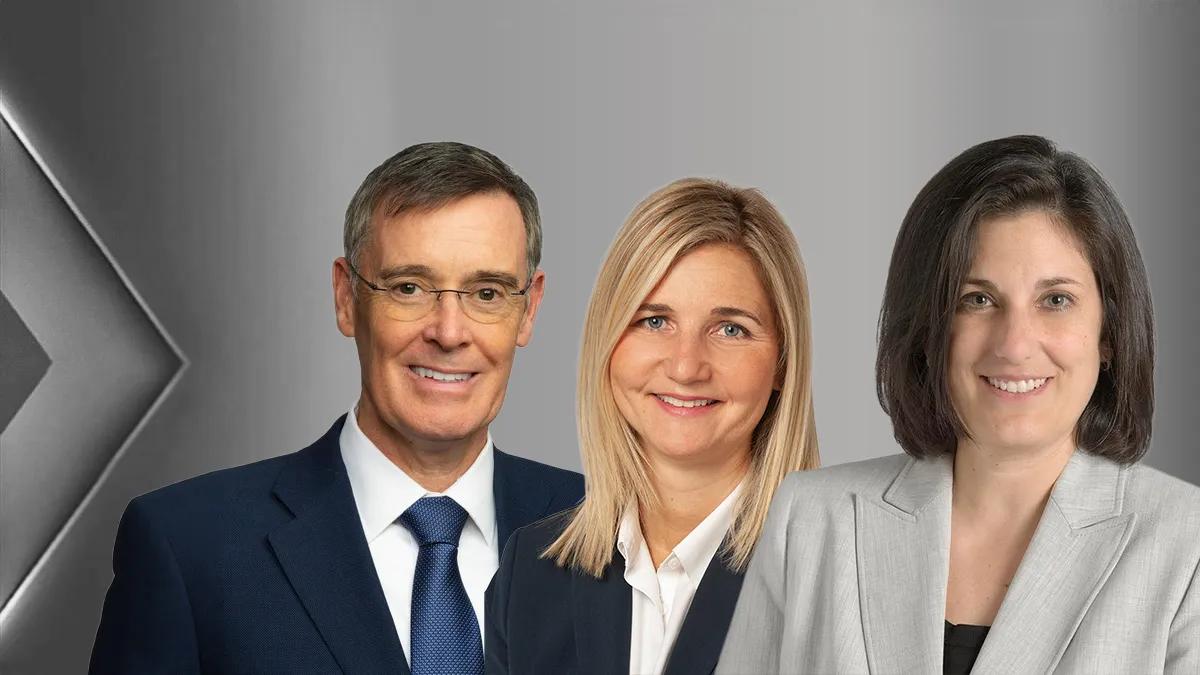
Bridging the Gap by Reconnecting Disconnected Workforces
This episode will focus on approaches to fostering culture, connection, and involvement in hybrid and remote work environments. They focus on team integration, goal alignment, and building trust through consistent and transparent communication across distance.
Advertisement
Cleveland Clinic is a non-profit academic medical center. Advertising on our site helps support our mission. We do not endorse non-Cleveland Clinic products or services. Policy
Recent Episodes
New Leadership Skills: AI and Beyond
This episode explores how artificial intelligence (AI) is reshaping healthcare. The panel examines the practical AI applications across clin…
Empowering Leadership Voice
This episode will explore how leaders can strengthen their voice, balance advocacy with active listening, and build psychological safety. Th…
Rethinking Lean: Delivering Value with Purpose
In the episode, Dr. Lisa Yerian, Dr. James Gutierrez, and Dr. Jeffrey Chapman explore how Lean goes beyond cost-cutting to become a purpose-…
Video content: This video is available to watch online.
View video online (https://cdnapisec.kaltura.com/p/2207941/sp/220794100/playManifest/entryId/1_u1q72vl5/flavorId/1_5f3sgelj/format/url/protocol/https/a.mp4)
Transcript
Beyond Leadership Podcast Series
Advertisement
Cleveland Clinic is a non-profit academic medical center. Advertising on our site helps support our mission. We do not endorse non-Cleveland Clinic products or services. Policy
Release Date: September 24, 2026
Expiration Date: September 23, 2029
Estimated Time of Completion: 30 minutes
Bridging the Gap by Reconnecting Disconnected Workforces
Conor Delaney, MD, MCh, PhD
Iris Kristensen, MBA
Rita Pappas, MD
Description
Welcome to L.E.A.D., a special series by Beyond Leadership. L.E.A.D. is an innovative, action-oriented framework built on four human-centered behaviors: Listening, Empathizing, Adapting, and Developing. In this series, we explore how top leaders apply these behaviors to build trust, foster collaboration, promote growth, and connect authentically every day.
This episode will focus on approaches to fostering culture, connection, and involvement in hybrid and remote work environments. They focus on team integration, goal alignment, and building trust through consistent and transparent communication across distance.
Learning Objectives
- Describe strategies leaders can use to intentionally build and communicate organizational culture in hybrid and remote work environments.
- Explain day-to-day practices leaders can use to foster equal opportunity, connection, and engagement across geographically dispersed teams through everyday practices and meeting design.
- Identify approaches for aligning hybrid and remote teams around shared goals, mission, and values.
Advertisement
Target Audience
This program is designed for healthcare professionals interested in advancing their leadership skills.
Accreditation
In support of improving patient care, Cleveland Clinic Center for Continuing Education is jointly accredited by the Accreditation Council for Continuing Medical Education (ACCME), the Accreditation Council for Pharmacy Education (ACPE), the American Nurses Credentialing Center (ANCC), and Interprofessional Continuing Education (IPCE) Credit to provide continuing education for the healthcare team.
Credit Designation
- American Medical Association (AMA)
Cleveland Clinic Center for Continuing Education designates this internet enduring material for a maximum of 0.5 AMA PRA Category 1 Credits™. Physicians should claim only the credit commensurate with the extent of their participation in the activity.
Participants claiming CME credit from this activity may submit the credit hours to the American Osteopathic Association for Category 2 credit.
- American Nurses Credentialing Center (ANCC)
Cleveland Clinic Center for Continuing Education designates this internet enduring material for a maximum of 0.5 ANCC contact hours.
- American Academy of PAs (AAPA)
Cleveland Clinic Center for Continuing Education has been authorized by the American Academy of PAs (AAPA) to award AAPA Category 1 CME credit for activities planned in accordance with AAPA CME Criteria. This activity is designated for 0.5 AAPA Category 1 CME credits. PAs should only claim credit commensurate with the extent of their participation.
- Accreditation Council of Pharmacy Education (ACPE)
Cleveland Clinic Center for Continuing Education designates this knowledge-based activity for a maximum of 0.5 hours. Credit will be provided to NABP CPE Monitor within 60 days after the activity completion. Universal Activity Number List:
- Pharmacist UAN: JA0000192-0000-26-043-H99-P
- Interprofessional Continuing Education (IPCE) Credit
This activity was planned by and for the healthcare team, and learners will receive 0.5 Interprofessional Continuing Education (IPCE) credit for learning and change.
- Certificate of Participation
A certificate of participation will be provided to other health care professionals for requesting credits in accordance with their professional boards and/or associations.
Cleveland Clinic Planning Committee
James Stoller, MD, MS
Co-Activity Director
Chair, Education
Cecile Foshee, PhD
Co-Activity Director
Director, Office of Interprofessional Learning
Sawsan Abdel Razig, MD
Chief Academic Officer, Cleveland Clinic Abu Dhabi
Lindsey Amerine, PharmD
Sr. VP, Chief Pharmacy Officer
Lisa Baszynski, DNP
Executive Director, Associate Chief Nursing Officer
Colleen Carroll, MS
Sr. Director of Leadership and Learning
Matthew Donnelly, MBBS (Hons)
VP, Professional Staff Affairs
Advertisement
Mark Hamilton, MD
Cleveland Clinic London
Jospeh Iannotti, MD
Chief of Staff, Cleveland Clinic Florida
Debra Kangisser, PA-C
Office of Interprofessional Learning
Aanchal Kapoor, MD, MEd
Founder and Director of the Medical Intensive Liver Unit
Suchetha Kshettry, MD
Enterprise & Ohio Women’s Professional Staff Association President, (2025-2026)
Christopher Nagel, BA, MA
VP, Leadership and Learning
Silvia Perez Protto, MD
Immediate Women’s Professional Staff Association Past President, (2025)
Ronna Romano, MBA
Office of Interprofessional Learning
Stormy Sweitzer, PhD
Office of Interprofessional Learning
Faculty
Conor Delaney, MD, MCh, PhD
President of the Florida Market
Cleveland Clinic
Iris Kristensen, MBA
Senior Director, Finance Administration
Cleveland Clinic
Rita Pappas, MD
Interim Chief, Children’s Institute, Obstetrics & Gynecology Institute
Cleveland Clinic
Host
Elizabeth Pugel
Global Leadership and Learning Institute
Disclosures
The Cleveland Clinic Center for Continuing Education has implemented a policy to comply with the Accreditation Council for Continuing Medical Education Standards for Integrity and Independence. This activity includes non-clinical content only. In accordance with the Standards for Integrity and Independence, identification, mitigation and disclosure of financial relationships does not apply.
Advertisement
CME Disclaimer
The information in this educational activity is provided for general medical education purposes only and is not meant to substitute for the independent medical judgment of a physician relative to diagnostic and treatment options of a specific patient's medical condition. The viewpoints expressed in this CME activity are those of the authors/faculty. They do not represent an endorsement by The Cleveland Clinic Foundation. In no event will The Cleveland Clinic Foundation be liable for any decision made or action taken in reliance upon the information provided through this CME activity.
HOW TO OBTAIN AMA PRA Category 1 Credits™, ANCC, AAPA, ACPE, IPCE Contact Hours, OR CERTIFICATE OF PARTICIPATION:
Go to:
http://cce.ccf.org/ccecme/process?site_code=main&activity_session_code=EKCE02708
to log into myCME and begin the activity evaluation and print your certificate. If you need assistance, contact the CME office at myCME@ccf.org
Copyright © 2026 The Cleveland Clinic Foundation. All Rights Reserved.
Podcast Transcript
Kelly Hancock, DNP, RN, NE-BC, FAAN:
Hello and welcome to Beyond Leadership, a Cleveland Clinic podcast where we explore the many dimensions of leadership. I'm Kelly Hancock, Executive Vice President, Chief Caregiver and Administrative Officer here at Cleveland Clinic, and I'm thrilled to have you join us. In this podcast series, we'll feature conversations with remarkable thinkers and uncover how their insights and experiences are shaping the future of leadership in healthcare. Now, let's turn it over to our host who will guide us through today's enlightening conversation.
Advertisement
Elizabeth Pugel:
Hello, everyone, and welcome to today's episode. I am your host, Elizabeth Pugel, and this is Beyond Leadership. Every organization has its own unique way of doing things. Some of it is written down. Some of it is just how we do things around here. When you are not in the office, those unspoken rules are less clear. So, let's take a few minutes and explore what leaders can do to help people truly integrate into culture when they aren't physically together. I am joined today by Dr. Rita Pappas, Interim Chief, Obstetrics and Gynecology Institute, Interim Chief, Children's Institute.
Rita M. Pappas, MD, FAAP, FHM:
Good afternoon. Thanks for having me.
Elizabeth Pugel:
Iris Christensen, Senior Director, Finance Administration.
Iris Kristensen:
Thanks for having me, Elizabeth. I look forward to the discussion.
Elizabeth Pugel:
And Dr. Conor Delaney, President, Cleveland Clinic Florida Market, Executive Vice President, Cleveland Clinic.
Conor Delaney, MD, PhD, MCh:
Good afternoon, Elizabeth. Pleasure to join the team and looking forward to the conversation.
Elizabeth Pugel:
Dr. Pappas, let's start the conversation with you. What strategies help remote, or hybrid employees learn and adapt to organizational culture?
Rita M. Pappas, MD, FAAP, FHM:
Well, that's a great question. One of the things that I try to do when working with our team is really ground them in our care priorities. And so, as Dr. Mihaljevic has stated in the past, we frame our meeting agendas around our patients, our caregivers, our community and our organization. And just having that standard agenda, including research and education as well, if it's appropriate. Those are our standing agenda items. And so, continuing to see those care priorities helps bring everyone on board, speaking the same language and really emphasizing our mission, patients first.
Elizabeth Pugel:
That sounds great. Thanks for kicking us off with that. Dr. Delaney, can you give us an example of how those unwritten rules create a barrier for a hybrid team?
Conor Delaney, MD, PhD, MCh:
I think it's particularly difficult for hybrid teams, particularly starting at an organization, and particularly until they've spent some time in the organization. So, I think one of the things that helps us, and Rita said this, about the care priorities or our clear mission, vision, and values, so that gives us a structure to found what we do on. But if people only come for an introductory day or that's virtual, they don't have that support and they don't realize what's really going on. And so, it can be a challenge. I think it comes down to how you message it and how you live it. And, I think that's often how the meetings are held. It's the content and priorities within the meeting. And then it's also what happens outside the meetings. And I think often those meetings outside the meeting are really very important for setting culture and tone.
The phone call afterwards or a phone call at different time. And it's something in Florida, honestly, because of the geographic spread of the different hospitals and the different counties. We end up having to do quite a lot. And so I think the happenings outside of the formal hybrid part of the job become very important in how you set the culture and people, as they see how meetings happen and see how people are to each other, it makes it easier for them to get up to speed and realize the culture that we have as an organization founded initially on structure.
Elizabeth Pugel:
And to continue this conversation, Dr. Delaney, what is the role of leaders in making those norms explicit, so everyone feels included?
Conor Delaney, MD, PhD, MCh:
Well, I think I alluded it to it a little bit earlier, but to call it out more specifically, I think it's how you lead the team. It's the tone you set. It's the way you interact with people, both in and out of formal settings and sharing of the priorities of what we're working towards as an organization, the care priorities, the OKRs, the mission. And I think it's the leader's responsibility to first share it and act it and live it. And secondly, then if you see people or groups that aren't acting that culture, to take them aside and coach them. And that's a very important leading then is to coach others to what the expectations are. And so, they'd be the things that jumped to mind initially.
Elizabeth Pugel:
And Iris, as a senior director in our finance division, how can leaders make sure the organizational culture feels equally accessible and welcoming for both in-person and remote staff?
Iris Kristensen:
Well, in finance, Elizabeth, if you don't mind, I'd just like to share with our listeners, we are 3,200 caregivers strong, so we have a big division, and I'd just like to quickly think back of pre-COVID when we all were in person at a big campus at the Business Operation Center in Independence, and from one day to the other, we were asked to go home, just pack your stuff, go home for a couple weeks, and come back. Well, we never came back. And since then, we have over 3,000 caregivers working remotely. Five years later, when we look at our engagement scores, we have been consistently in the 90th percentile, and I'm really proud of all our leaders and caregivers to achieve those amazing results. And with that, I think we have grown a lot as a division, and we are really strong as it relates to our culture.
And the organization is doing a phenomenal job sharing the vision, mission, care priorities, as Rita mentioned. We have so many venues, the State of the Clinic, CEO Connections, CEO town halls, where we are all exposed to, to all those great messages in our culture. The one thing I'd like to highlight one of our leaders, noticed is that just cascading the messages is not good enough, whether you do it via email or text or so forth. But we noticed that our caregivers are hesitant to watch the videos in their productive time. So, they don't want to miss their productivity, especially working remotely. I think caregivers have been very sensitive to that with their KPIs meeting the organization's goals. So what she has done is she reserved time on her calendar and the team's calendar, and then they watch the Connections or town halls together, whether it's virtually or they are coming in for that one day to attend a town hall and then they all reflect together on the culture, the message, and how it relates to the team and how they contribute to that culture.
Elizabeth Pugel:
So, understanding culture is the foundation, but culture alone isn't enough. Leaders must actively encourage relationships to help teams feel connected and unified. When we are working in hybrid or remote settings, integration is really the key to building strong relationships. Without it, even the most talented teams can start to feel siloed or disconnected. So, the question is, what does it take to build genuine connection across distance? Rita?
Rita M. Pappas, MD, FAAP, FHM:
That's a great question. I was thinking a lot about this. One thing, and it sounds very silly, but when we're working in the virtual setting, I'm insistent that everybody has their camera on. And seeing people's faces, seeing their body language, that tells a lot about what's happening and whether or not people are connecting with you. The other piece is just as I think Conor was saying, like the meeting before the meeting, I really try to log on a minute before and if there's someone on, that's when I do like the waterside cooler chat, like have, we're right around the holidays now. So, how's everything going? Have you done your shopping? Oh, do you have your tree up? Just having those little conversations, building relationships. It's not as easy, but you can still do it right before the meeting starts or if someone wants to stay on a little bit afterwards too, there's the opportunity there.
Elizabeth Pugel:
I think it's fantastic to have some of those virtual water cooler chats. Yes. ... so important with building relationships. So, Conor, what are some effective ways to foster a sense of togetherness and team cohesion, integration in hybrid or remote settings?
Conor Delaney, MD, PhD, MCh:
So often it is hybrid and often there will be a meeting where there are several people in person and then there's several people who are individuals joining the call. Actually, I'm here at Indian River today. And so, we had the Florida executive team meeting and there are group of people in the room, a group of individuals at some of the sites and a couple of people at some of the hospitals. And I think it's inclusion, so trying to bring people in for comments and conversation. It's often mixing up the presentation. Often some of the presentations won't be from the people in the room, so the people online are included. Rita mentioned having cameras on. I think that's very helpful. And then at the end, when there's a conversation, making sure that you're aware of people online, aware of hands up, and asking them to comment and get involved.
I think that creates the right tone in the meeting, as well as the pre and post meeting things that we talked about. But in those hybrid situations like a meeting, there are things that you can do that really help for people to get involved.
Elizabeth Pugel:
Awareness and presence are so important, especially when we're in a hybrid setting. Iris, do you have a story about a team building activity that truly made a difference?
Iris Kristensen:
When I think of team building activities, I would say it's the small things that make a difference. Maybe, not a specific team building activity, but what I have seen with our leaders, they incorporate icebreakers when they start their staff meetings or team huddles and they have different small activities baked into their team meetings. One is they always celebrate each other's birthdays or big events, whether somebody got married or became a grandma and really bringing out the human piece of ... We are all humans. We sometimes we get so busy, we could potentially treat each other as objects, but we're all humans and we have lives outside of work. And I think our leaders try to really bring that back to the meetings and they start out their meetings for the first 10 minutes with some celebrations and shout outs where caregivers can recognize each other for a job well done.
Elizabeth Pugel:
That's fantastic. And Rita also mentioned the water cooler chat at the beginning. So, I want to ask Rita and Conor, what are some small but impactful day-to-day practices leaders can use in addition to the ones that Iris has reviewed with us now?
Rita M. Pappas, MD, FAAP, FHM:
One of the things that, I'm just thinking in terms of our Obstetrics and Gynecology Institute, actually Dr. Beri Ridgeway started this during COVID and that meeting has stuck at 12:30 and what's nice about it is an update for the entire institute and people come forward and bring their own updates. It's a half an hour, we provide some CME. The first part is Ingrid's team does also is we do a lot of celebrations and it's really fulfilling to see people use the clapping on the audience emoji to come across. And so, you can tell that we're up to at least now 300 people attending just a half hour during lunch and it helps a lot with engagement. Sometimes there are very important agenda items that we need to make sure that people understand. And so, we'll cover those agenda items too, but a lot of it is like practice changes or letting people know about Epic changes.
We have a moment of engagement. We have really great work that's being done by our Center for Infant and Maternal Health, but then more and more people are coming forward. And now it's booking out, which actually is showing me that there is some sort of soft success metric there.
Elizabeth Pugel:
And Conor, do you have any additional small but impactful day-to-day practices that leaders can use to build connections?
Conor Delaney, MD, PhD, MCh:
So, I think Rita and Beri's idea is great, obviously very effective connecting with a lot of people. Two other ideas. So, Scott Ross at Weston Hospital started a number of months ago, it must be almost a year interviewing different caregivers across the organization, and the hospital at Weston about once a month and he does, an interview with them about their lives outside work. And it's been an introduction to different areas of the hospital and that certainly got a lot of traction on just helping introduce different parts of the team to other parts of the team. And then I think one of the other things is, we talked about presence earlier is going to other sites. And so, I think that's important. So, leaders of a group can rotate meetings around different sites. And so in that way, you're including everyone, and it might work Iris and finance if everybody's individual at home per se, but, certainly when there are groups at different sites by moving to different sites, you can include that site and show them that they're just as important because you're having whatever percent of your X leadership meeting at that site, as somewhere else.
And I think that's a very good way of including people across geography as well.
Rita M. Pappas, MD, FAAP, FHM:
That's great, Conor. thank you for highlighting that. We do the same physically going to Fairview, Hillcrest, Akron, the Children's Rehab Hospital and hosting town halls at each of those sites in person and then having a virtual option too.
Elizabeth Pugel:
As we've seen, integration builds engagement-.. but it also needs to be reinforced by shared goals. Let's take a few minutes and talk about how leaders cultivate alignment and purpose across a disconnected workforce. Integration builds engagement, but it needs a purpose. When workers feel disconnected, shared goals can provide a sense of direction and unity. Let's discuss how leaders can align their hybrid and remote teams around a common purpose and a shared vision. What are the best practices to ensure that every team member feels connected to the organization's mission?
Iris Kristensen:
Again, I mentioned that in the beginning, I truly believe that our organization is extremely transparent and connects with our caregivers in different ways, whether it's through our intranet, videos, town halls. And in, in those settings, I would say that Dr. Mihaljevic sets the tone with his OKRs. He shares openly every year what is the organization's objectives and key results. And then from that point on, we as a team in finance, for example, we come together as a leadership and how can we support the organization's objectives and key results, and we create our own OKRs. And then that trickles down to our departments who also create their OKRs. And then we use the town halls department meetings to review our OKRs every month to reinforce the alignment, remind our caregivers what are our key priorities, what matters most, and are we on target and if we are not on target, why are we not on target and what can we do to get back on track?
Elizabeth Pugel:
And speaking of getting back on track, Rita, question for you. Do you have, an example where clarifying shared goals helped a team that was feeling adrift?
Rita M. Pappas, MD, FAAP, FHM:
That's a really good question. One of the things that I'm thinking of our Florida team and Ohio team within obstetrics and gynecology. We have a standing meeting, and we needed to change and pivot where we practiced in one area, which really could have been devastating to the team. The shared goal was supporting each other through that, and Dr. Mike Sprague did a wonderful job in Florida. We actually did send Dr. Chen down from Ohio, but just working together, accomplishing what needed to be accomplished, Conor can even weigh in on this because it was involving the Florida region, but really the team banned together in a rapid way and were able to handle a patient care delivery issue. My interpretation was it went seamless. They really, through everyone in Florida and everyone in Ohio working together to make sure that our patients were cared for.
Elizabeth Pugel:
So how do you know when hybrid teams are truly aligned versus just going through the motions?
Rita M. Pappas, MD, FAAP, FHM:
One of the key pieces you'll see is the productivity. You'll see the productivity measures maybe drop off, number one. Number two though, I think it's like those small soft signs, like less interactions in the chats, less questions. Whenever there's less questions, that's always worrisome. So those are two ways, to see if teams aren't involved.
Conor Delaney, MD, PhD, MCh:
I might add to that. First, just thinking of the shared goals. So, it really gave a super example and it was a great enterprise team effort for a program that was going through changes and it really worked out well and couldn't have been done as quickly without that great leadership here, but also the great involvement from enterprise. And so, I think that's something where it's one of the great benefits of our organization. We have those levels of support in different places and best practices in different places that we can bring to other places, and we can put it on that foundation of the shared mission, vision, values, OKRs. And I think you can then see that alignment in the conversations that happen. When you go by to observe, you hear the tone, and then you see the progress in the metrics.
So, Ithink by supporting each other, we can certainly drive change and improvement, and bring support to areas that need help and it works well.
Elizabeth Pugel:
So, to continue this topic, Conor, how do you keep shared goals visible and relevant when people are working in different locations?
Conor Delaney, MD, PhD, MCh:
So, I think that's one of the benefits of going to virtual and hybrid. We've all become very facile with that, and I think it's become a wonderful tool in keeping everybody up to speed at the same time. So, we've always done town halls, but before that, they were primarily at one location and there've always been videos, but this just general awareness and appreciation and ease for people having virtual meetings is a fantastic tool. So, we have the metrics, we have the structure, and this gives us a very good tool to share in real time or as frequently as we need to keep teams up to date.
Elizabeth Pugel:
Shared goals provide clarity, but leaders also need to communicate consistently and transparently to sustain trust. Let's move to that piece of the puzzle. Shared goals gives us clarity, but without consistent, transparent communication, trust can quickly erode and isolation can take root. Let's talk about what effective communication looks like in a hybrid environment. Iris, what strategies do you use to keep communication clear and consistent across remote and in-person teams?
Iris Kristensen:
That's a good question, Elizabeth. Although most of our folks are remote, we do have some hybrid teams, and I'd love to give the example of the investment office under Stefan Strein. I really believe he's doing a wonderful job keeping his team engaged. They have the option to be onsite five days but are required to be in the office three days a week. And what he does on a regular basis, every Monday, he has his staff meeting with all his team members, and he holds that staff meeting, whether you are in person or remote, virtually. So, he has all his team members participate virtually, and then he has a certain cadence to the meetings. For example, the first Monday of the month, they discuss all administrative items. The second Monday of the month, they discuss investments. So, there is a cadence, predictability, consistency to his approach, and in this fast-paced environment, and with all the changes that we are experiencing, it gives caregivers some level of confidence.
They know what to expect in that staff meeting. And, he's also the one I mentioned that earlier, who has always an icebreaker. He always starts with an icebreaker, shout-outs, and then he gets into the business side of the meeting.
Elizabeth Pugel:
That's a great example of ensuring remote workers feel included and not excluded from day-to-day operations, especially if you can't be in person. Conor, can you share an example of how transparency builds trust in a hybrid setting?
Conor Delaney, MD, PhD, MCh:
I think the example is a big and complicated one, but I think it's probably the integration of the Martin hospitals and Indian River to Weston and to Enterprise over the last few years. and that's what it's been about the whole time. It's been everything from sharing mission, vision and values through a time when there was a lot of turnover and a labor crisis, which was, complicated. The transparency of where we were on that journey, whether it was to the board, whether it was to the community and whether it was to the team or caregivers has really helped it, and has been a substantial part of us making the progress that's happened and I'm incredibly proud of what the team has done over those years because I think we're really pretty close to being fully integrated.
It's quite remarkable. And I think it harps back to the strategies that Iris was talking about clear, consistent communication. Part of that is the foundation of structure and structure of the Clinic, structure of the meetings. And then I think one other thing to think about when we think about keeping communication clear and consistent is not just messaging what the goal is, but it's re-messaging. Because I think as you see teams then going and doing their thing, they're all well-intentioned, disseminates down different levels of the organization and there's always some drift. People think this way; people think that way. So, I think the concept of re-messaging it becomes very important because, and again, whether it's at a town hall or whether it's at an exec team or whatever else. You're reminding people of, "You may be interpreting this way, but this is the way we're trying to see it as we move forward." And so, I think transparency, structure, and then messaging and re-messaging.
Elizabeth Pugel:
And we are certainly in a world with so many different communication channels today. Rita, I'm curious of your perspective for leaders and how do they sustain a positive culture when everything feels so fragmented?
Rita M. Pappas, MD, FAAP, FHM:
One of the things doing our leadership rounds, I asked because we can assume that we understand what our caregivers are interested in. We communicate in a lot of different ways to, just as Conor and Iris have mentioned, but the town halls, the emails, we send a newsletter, we also transcribe and send out meeting minutes, and still there is, I think Conor said, like a communication drift that occurs despite your best tendencies to reach people. I even joked about making a TikTok. Would that make a difference? If I made a TikTok, would you watch that? People want to hear information in different ways, so I don't think that there's one set way to deliver information in a clear and concise way that fits everyone's needs. So unfortunately, you have to, I feel like you have to do it all.
Elizabeth Pugel:
And let's all forget about the world of podcasts, right?
Rita M. Pappas, MD, FAAP, FHM:
Oh, true. The world of podcasts. Yes, of course.
Elizabeth Pugel:
So, all of the information being shared in really people's preferred way of receiving that information. I think this panel would support Dr. Rita Pappa's TikTok channel though. So we'll talk offline about that.
So, we've explored culture, integration, shared goals, and transparent communication. Let's close out today with your reflections on what leaders can do right now to reconnect a disconnected workforce. Today, we've explored strategies for bridging the gap in a disconnected workforce, understanding culture, fostering integration, cultivating shared goals, and maintaining transparent communication. Conor, what is the most important first step a leader can take to reconnect a fragmented team?
Conor Delaney, MD, PhD, MCh:
I think it's bringing them together, whether in person or virtually, and having, a conversation that may be less structured just to get feedback because if it's become fragmented, again, it's a little bit like the drift we talked about. It's usually not through any bad intention of anyone. It's just because people are trying to do things through slightly different ways, but I think it's getting people back together. If you can do it or if the fragmentation is severe or there's some, more significant problem within the team, then I think in person becomes particularly important and sometimes having a conversation with some of the key people in that group before that in- person or virtual meeting are important because it helps how it goes, but ultimately it comes back to getting people together.
Elizabeth Pugel:
Iris, what is one small change that makes the biggest impact in hybrid or remote team feeling included?
Iris Kristensen:
That's a very good question and my answer, I would say it's the same for people in person, hybrid or remote. People want to feel valued; people need clarity about their job roles, people need clarity how they contribute to the larger organization's goals. And when caregivers have that clarity from their manager and hear and get the feedback they need to improve, I think you have a very valuable, engaged caregiver.
Elizabeth Pugel:
And our final thought from Rita today, what is one small change that makes the biggest impact?
Rita M. Pappas, MD, FAAP, FHM:
I think being available, having an open-door policy so that people understand that if things aren't working well or if they have a concern, they can always reach out to you. Really staying true to that, I think is very important.
Conor Delaney, MD, PhD, MCh:
I think the availability is really important and I think approachability, being both available and approachable and that I think often comes down to creating the right tone in a conversation, but I think the approachability is a very important part of it so people don't feel that they can't approach somebody who may think they're available.
Iris Kristensen:
As I looked back at, at this topic, right, reconnecting disconnected workforces. I actually feel like we are more connected than ever because since COVID and since we are using technology and we are virtual, hybrid, in person, we have town halls where 3000 caregivers can connect with each other, showing the emojis, the hearts go up, the clapping. I can be part of one of Conor's town halls at Martin. I'm just a click away. I don't think we are disconnected. I think we are more connected than ever.
Elizabeth Pugel:
Thank you to all of you. These have been wonderful insights.
Rita M. Pappas, MD, FAAP, FHM:
Thank you.
Iris Kristensen:
Thank you, Elizabeth.
Conor Delaney, MD, PhD, MCh:
Thanks, Elizabeth, and everybody.
Elizabeth Pugel:
This concludes another episode of Beyond Leadership. You can find additional podcast episodes on our website, clevelandclinic.org/beyondleadership, or subscribe to the podcast on iTunes, Google Play, Spotify, or wherever you get your podcasts.
Recent Episodes
New Leadership Skills: AI and Beyond
This episode explores how artificial intelligence (AI) is reshaping healthcare. The panel examines the practical AI applications across clin…
Empowering Leadership Voice
This episode will explore how leaders can strengthen their voice, balance advocacy with active listening, and build psychological safety. Th…
Rethinking Lean: Delivering Value with Purpose
In the episode, Dr. Lisa Yerian, Dr. James Gutierrez, and Dr. Jeffrey Chapman explore how Lean goes beyond cost-cutting to become a purpose-…
Never miss a moment - subscribe now.
Listen to the Health Essentials Podcast on your favorite streaming platform.
Other Podcasts You May Love
Beyond the Pages: CCJM Podcast
Beyond the Pages: CCJM Podcast takes the listener more in-depth into Cleveland Clinic Journal of Med…
Butts & Guts
A Cleveland Clinic podcast exploring your digestive and surgical health from end to end. You’ll lear…
Cancer Advances
A Cleveland Clinic podcast for medical professionals exploring the latest innovative research and cl…
Cardiac Consult
A Cleveland Clinic podcast exploring heart, vascular and thoracic topics of interest to healthcare p…