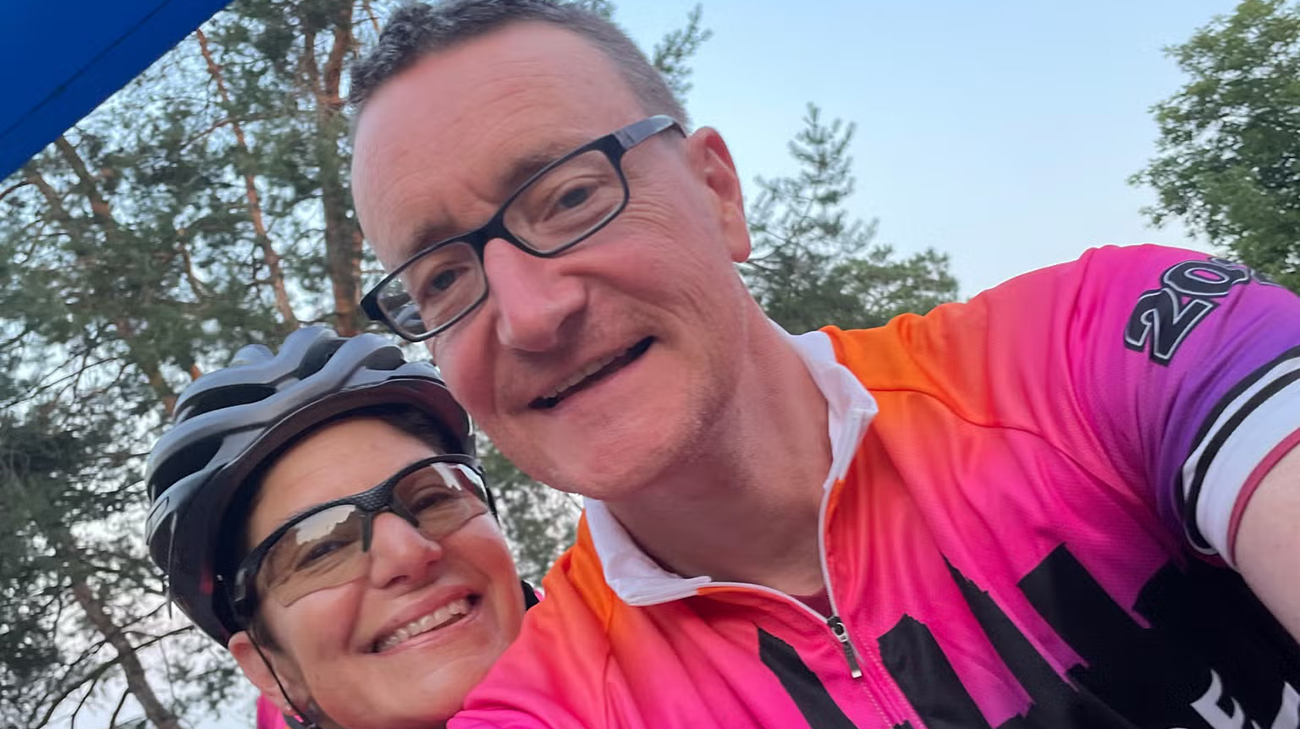
As soon as she read about Cleveland Clinic's Brain Study on social media, Margaret Wetzler knew she wanted to participate. The long-term research study aims to help identify, prevent and treat neurodegenerative diseases before symptoms appear.
She also encouraged her brother, Robert Wetzler, a 53-year-old professional photographer, to enroll.
For decades, Robert had regularly donated platelets and plasma through the American Red Cross and took pride in helping others through those contributions. Participating in the Brain Study felt like a natural extension of that commitment.
"Once Margaret had done her first part of the study, she said they were asking for more people and to tell friends and family. I thought, 'Sure. Why not?' If they need more people, I can spare a day a year to help," explains Robert, a racing fan who lives in Lakewood, Ohio. "I didn't really think about doing it for my sake."
As part of the study, Robert underwent a series of baseline evaluations, including a brain magnetic resonance imaging (MRI) scan. Not long afterward, he received a call from a member of the research team.
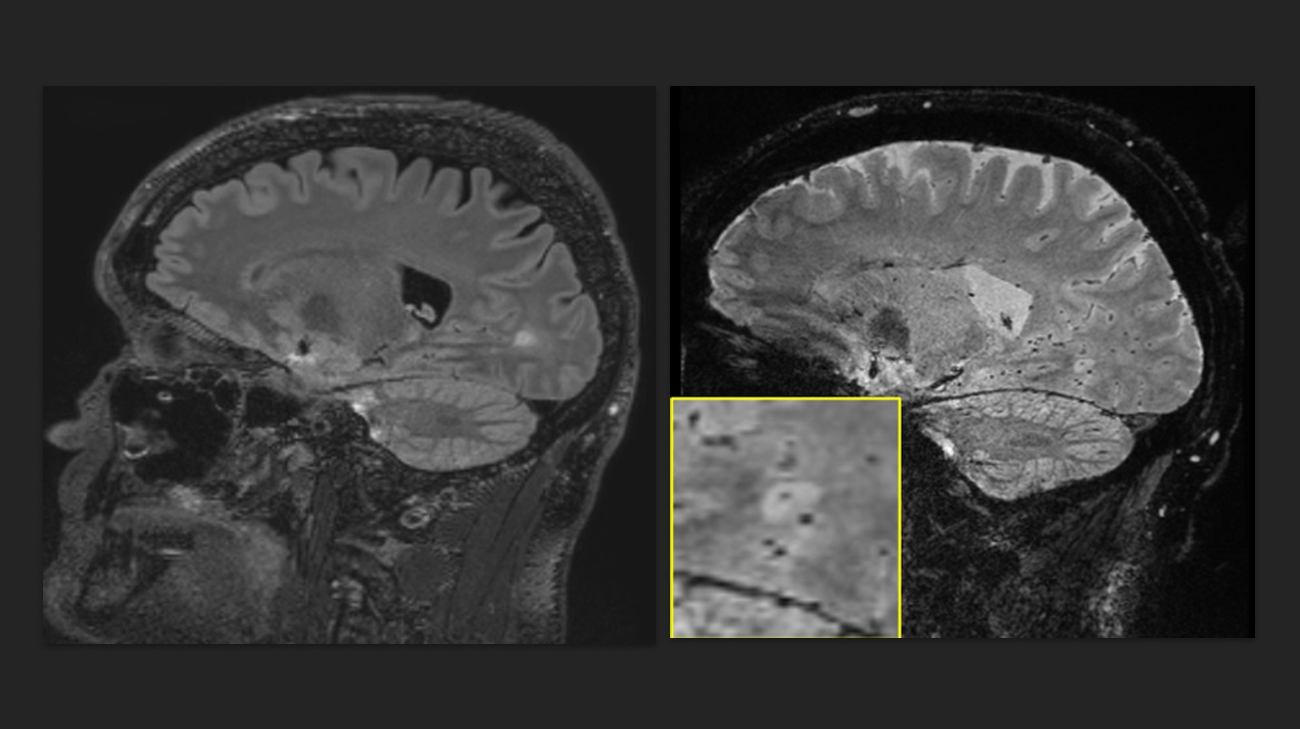
As part of his participation in the Brain Study, Robert underwent MRI scans that captured imaging biomarkers, including the central vein sign, which can now be used to confirm a diagnosis of MS in people without symptoms. (Courtesy: Cleveland Clinic)
As part of his participation in the Brain Study, Robert underwent MRI scans that revealed imaging biomarkers, including the central vein sign, which can help doctors confirm a diagnosis of MS in people without symptoms.
Robert was surprised by the news, but grateful it had been identified early. Because he had no clinical symptoms, doctors told him the condition might not otherwise have been detected for another seven to 10 years.
"I wasn't expecting them to find anything," he says. "And if I hadn't been in the study, I wouldn't have gotten an MRI because you don't usually get one unless there is a reason to order it based on your symptoms."
According to Imad Najm, MD, an epilepsy neurologist and director of Cleveland Clinic's Epilepsy Center who leads the study, Robert's experience highlights one of its key goals.
"We have a crisis with respect to brain disease," says Dr. Najm.
"Brain diseases in general, and particularly neurodegenerative diseases, express themselves clinically when it is usually far too late to do anything about it. Our hope is we'll be able to discover disease before the typical clinical diagnosis is made, as occurred with Mr. Wetzler. We also hope that by gathering data from thousands of volunteers, we will learn more about these diseases and ultimately find better ways to treat and prevent them,” Dr. Najm adds.
Supported by philanthropic funding, the Cleveland Clinic Brain Study enrolled its first volunteer in January 2022 and is approaching 5,000 participants. Researchers hope to eventually enroll 20,000 volunteers.
Adults age 50 and older with no known neurological disorder, as well as neurologically healthy adults age 20 and older who have a parent or sibling diagnosed with multiple sclerosis, are eligible to participate.
Participants undergo a series of assessments over one or two days each year to help researchers better understand the factors that contribute to neurodegenerative diseases such as Alzheimer's disease, Parkinson's disease, MS, stroke and epilepsy before symptoms develop.
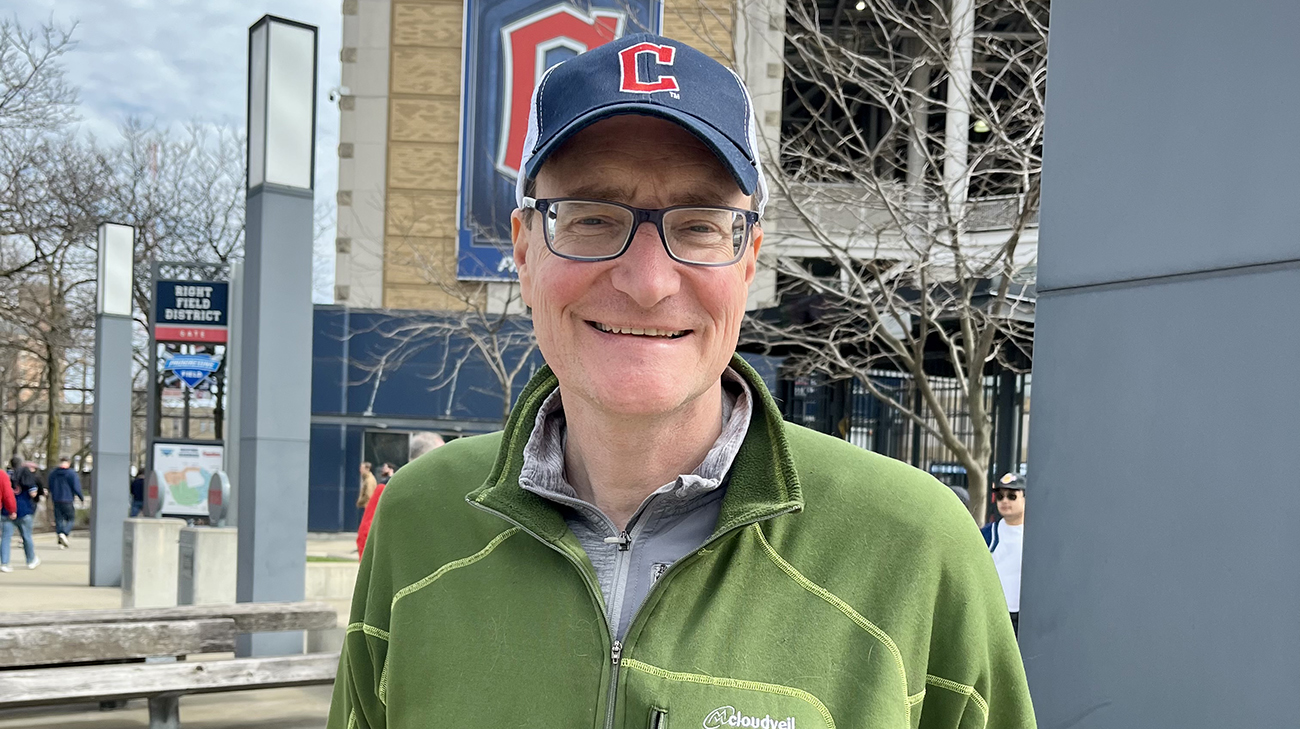
An early MS diagnosis gave Robert answers and the opportunity to begin treatment sooner, helping him take steps to manage his health for the future. (Courtesy: Robert Wetzler)
The tests are divided between even- and odd-numbered years and repeated every other year for as long as participants remain in the study. They include neuropsychological testing, quality-of-life questionnaires, blood and stool sampling, echocardiograms, electroencephalograms (EEGs), electrocardiograms (EKGs), brain MRI scans, optical coherence tomography (OCT) eye exams and sleep studies.
Dr. Najm says philanthropic support has been essential to making the study possible and helping researchers gather the extensive data needed to better understand brain disease. Participants have traveled from 49 states and Canada to take part.
After receiving his diagnosis, Robert chose to receive care at Cleveland Clinic's Mellen Center for Multiple Sclerosis, though study participants are free to pursue treatment wherever they choose. In March 2026, he began ocrelizumab infusions, which are administered every six months, and takes daily oral medication.
“Diagnosing multiple sclerosis before clinical onset may be the best opportunity to initiate disease modifying medication and prevent long-term effects of multiple sclerosis,” says Daniel Ontaneda, MD, PhD, neurologist at the Mellen Center for Multiple Sclerosis.
While Robert appreciates having answers and the opportunity to begin treatment early, he says learning he has MS has been bittersweet. Knowing he has a neurological disease with no cure has been difficult to process, but the early diagnosis has given him more time to manage his health and make lifestyle changes he hopes will support his long-term well-being.
Looking back, Robert wonders whether he may have experienced subtle signs of the disease years earlier, including unusual fatigue, occasional difficulty finding words and tingling in his left forearm that briefly occurred while he was in college.
"I think my body may have managed to fight off MS for 30 years or more," Robert says.
Dr. Najm notes the brain has built-in mechanisms that can compensate for disease for years, but those reserves may eventually diminish, allowing symptoms to emerge.
Today, Robert encourages others to consider taking part in the study.
"Just do it. You could be helping yourself and others," he says. "And something in your data may help researchers find a path to a cure, a little way of doing something good for people."
Related Institutes: Neurological InstitutePatient Stories
Routine Health Assessment Reveals Abnormal Heart Rhythm Hidden for Years
Sep 23, 2026
After Early Ovarian Cancer Diagnosis, Woman Finds Relief From Chemotherapy-Related Nerve Pain
Sep 18, 2026