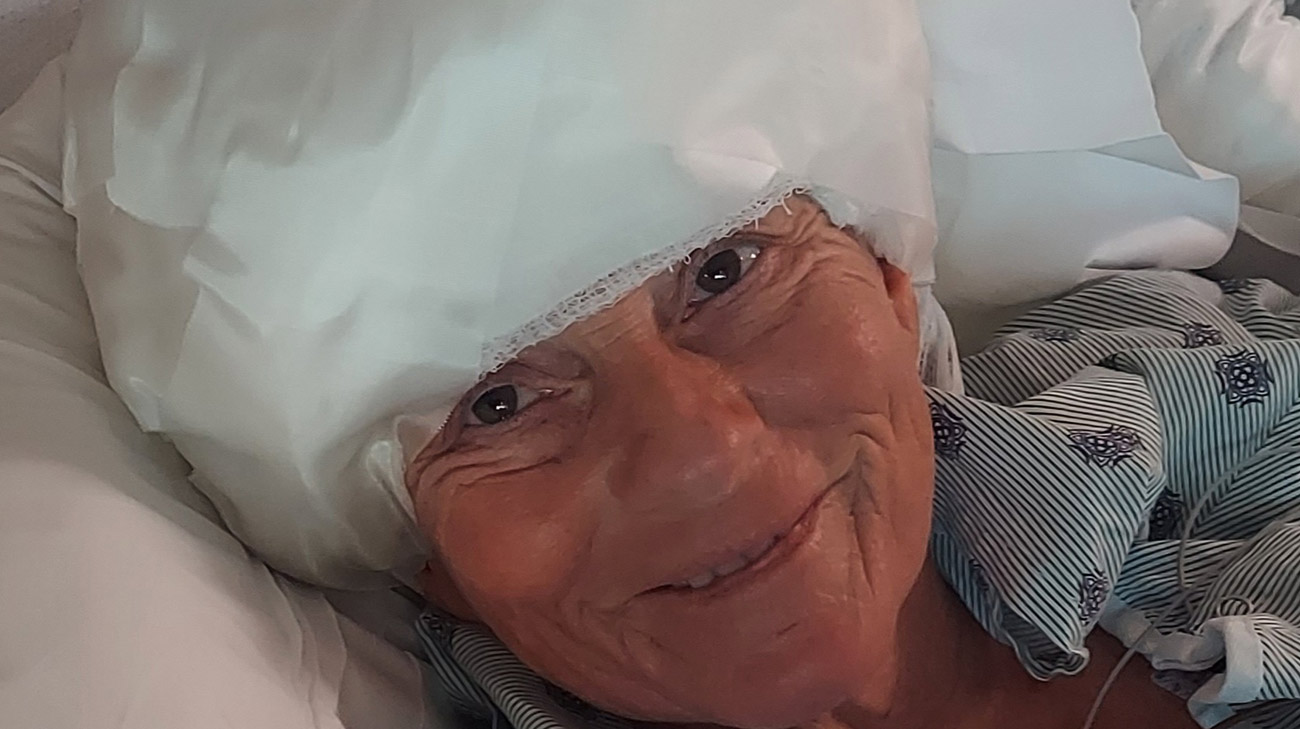
Rhonda Hardy just turned 60 years old, and she feels the best she has in a while. The Palmetto, Fla., resident is enjoying relief from epileptic seizures for the first time in years, thanks to an innovative procedure at Cleveland Clinic Weston Hospital.
Rhonda, who is originally from Ohio, was first diagnosed with epilepsy when she was 27 years old. After exhausting all other treatment options, she underwent a procedure at Cleveland Clinic in Cleveland to remove part of her left temporal lobe and stop the seizures originating in that part of her brain.
The procedure “worked out great,” Rhonda says. But shortly after she and her husband, Tom, moved to Florida 12 years ago, Rhonda began having seizures again. Because of their previous positive experience at Cleveland Clinic, Tom sought treatment for Rhonda at Cleveland Clinic Weston Hospital, which is designated by the National Association of Epilepsy Centers as a Level IV Epilepsy Center, the highest level of recognition awarded. Caregivers there also collaborate with the larger Cleveland Clinic Epilepsy Program in Cleveland, one of the nation’s largest epilepsy programs.
Tom and Rhonda traveled 3.5 hours to Cleveland Clinic Weston Hospital to meet with epileptologist Claudia Vallin, DO. Testing determined that the seizures were coming from the right side of Rhonda’s brain; her previous seizures had come from the left side.
Dr. Vallin prescribed medication to control Rhonda’s seizures. Over the next few years, she monitored Rhonda and adjusted the medication as necessary. As the medication became less effective, additional testing indicated that Rhonda would be a good candidate for responsive neurostimulation (RNS). An RNS device is surgically implanted in the brain to treat seizures. When it detects abnormal electrical activity, it quickly delivers a series of electrical pulses to the affected area. Over time, this electrical stimulation decreases the brain’s ability to generate seizures.
“I had been on and off so many medications, and I was tired of it,” Rhonda says. She decided to proceed with RNS. Badih Adada, MD, a neurosurgeon and vice chief of the Neurological Institute for Cleveland Clinic in Florida, performed the procedure on May 15, 2025.
In the nearly 18 months since the RNS device was implanted, Rhonda has had far fewer seizures. She remains on some medication.
Rhonda says the RNS procedure has “definitely improved” her condition, and she will have the device for the rest of her life. She has follow-up visits with Dr. Vallin every few months and says she doesn’t mind the long drive.
“Cleveland Clinic is fantastic,” Rhonda says. “Dr. Vallin is great and she takes good care of me.”
Related Institutes: Neurological InstitutePatient Stories

Two Triplet Sisters Share Rare Heart Condition Detected Soon After Birth
Nov 5, 2026

When Seizures Returned, Rhonda Found a New Option: Responsive Neurostimulation
Nov 4, 2026