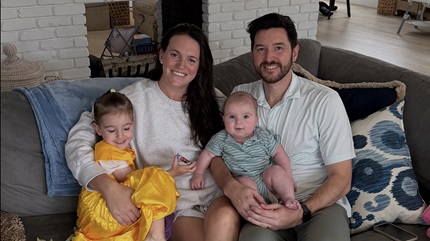
The 12-year-old Campbell triplets of Avon, Ohio, share a birthday, but each has a personality all her own.
“They look nothing alike,” says their mom, Alyson Campbell, of Olivia, Avery and Alexandra. “Alex does dance and enjoys arts and crafts and reading. Avery and Olivia are more active and sports-minded; they’re the rough-and-tumble ones.”
Olivia plays volleyball, Avery plays flag football, and both enjoy basketball and softball. But the two sisters share more than a love of sports. They were also born with a rare genetic condition Alex does not have.
Olivia and Avery were born with long QT syndrome (LQTS), a problem with the heart’s electrical system that delays the interval between heartbeats. While it can typically be managed with regular electrocardiogram (ECG or EKG) monitoring and medication, untreated LQTS can sometimes lead to dangerous heart rhythms and other serious complications.
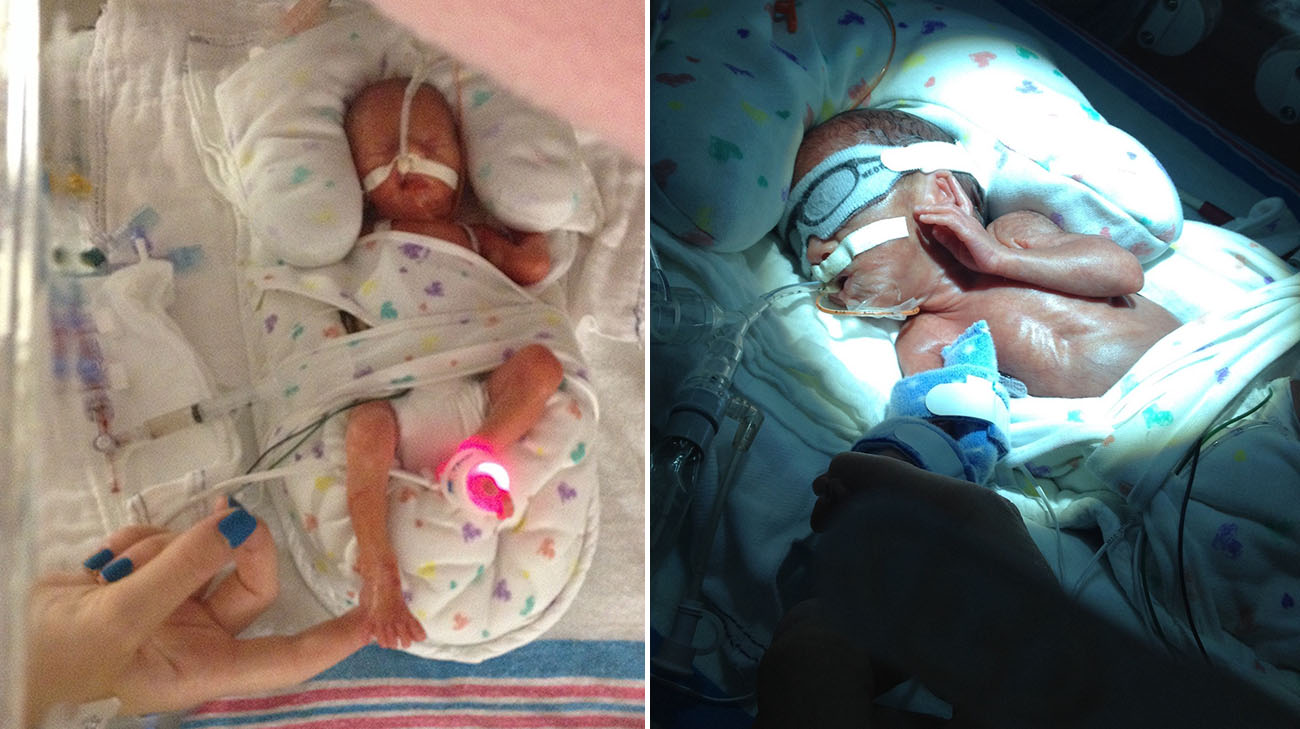
Near the end of their stay in the NICU, doctors diagnosed Olivia and Avery with long QT syndrome. (Courtesy: Alyson Campbell)
The girls’ conditions were detected during a routine ECG near the end of their four-month stay in the Cleveland Clinic Fairview Hospital neonatal intensive care unit (NICU). The triplets had been born prematurely, at about 26 weeks, in July 2014.
According to Peter Aziz, MD, a Cleveland Clinic Children’s pediatric electrophysiologist who specializes in LQTS, diagnosing the condition early can make an important difference in managing it over a patient’s lifetime.
“When we diagnose kids at a young age, as we did with Olivia and Avery, we’re in a good position to manage the condition with medication and regular monitoring,” says Dr. Aziz, who has treated the girls since their diagnosis. “But with some patients, we don’t know they have long QT syndrome until they experience a serious cardiac event.”
Their diagnosis also had implications for Alyson, who is now treated by Dr. Aziz as well.
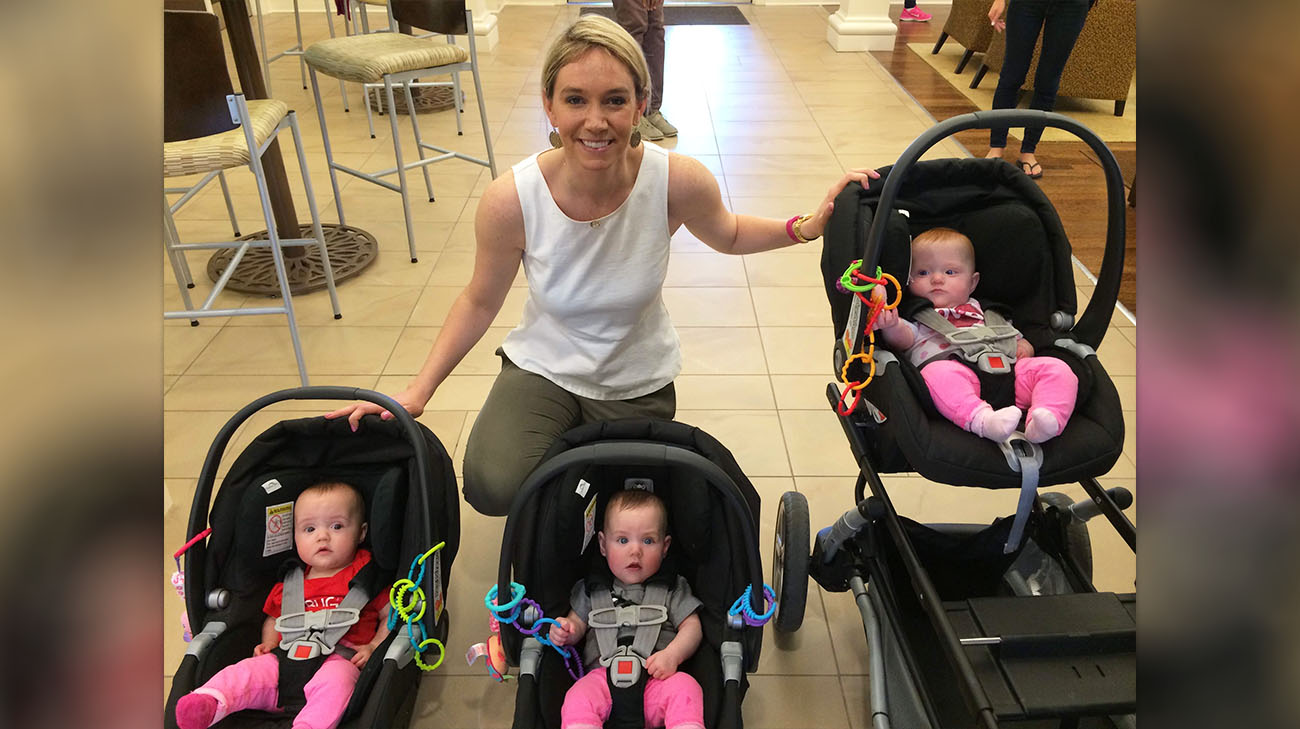
Alyson with Olivia, Avery and Alexandra. (Courtesy: Alyson Campbell)
After Olivia and Avery were diagnosed, Alyson, and the girls’ father, Devon Campbell, underwent genetic testing for LQTS. Because Devon had been diagnosed with a heart murmur as an infant, Alyson assumed the condition might have come from his side of the family.
Instead, testing revealed Alyson also had LQTS. A lifelong athlete and former college basketball player who has run several half marathons, she had never experienced an arrhythmic episode.
“It was a surprise because I’ve always been so healthy,” says Alyson. “I’m really fortunate I never had a heart-related incident.”
“The way the heart contracts and relaxes again is a very tightly regulated process, mostly mediated by tiny ion channels that are basically little pores of the heart’s cell membrane,” explains Dr. Aziz. “If the ion channels are disturbed, as in long QT syndrome, it can cause a delay in the amount of time it takes the heart to recharge after contracting.”
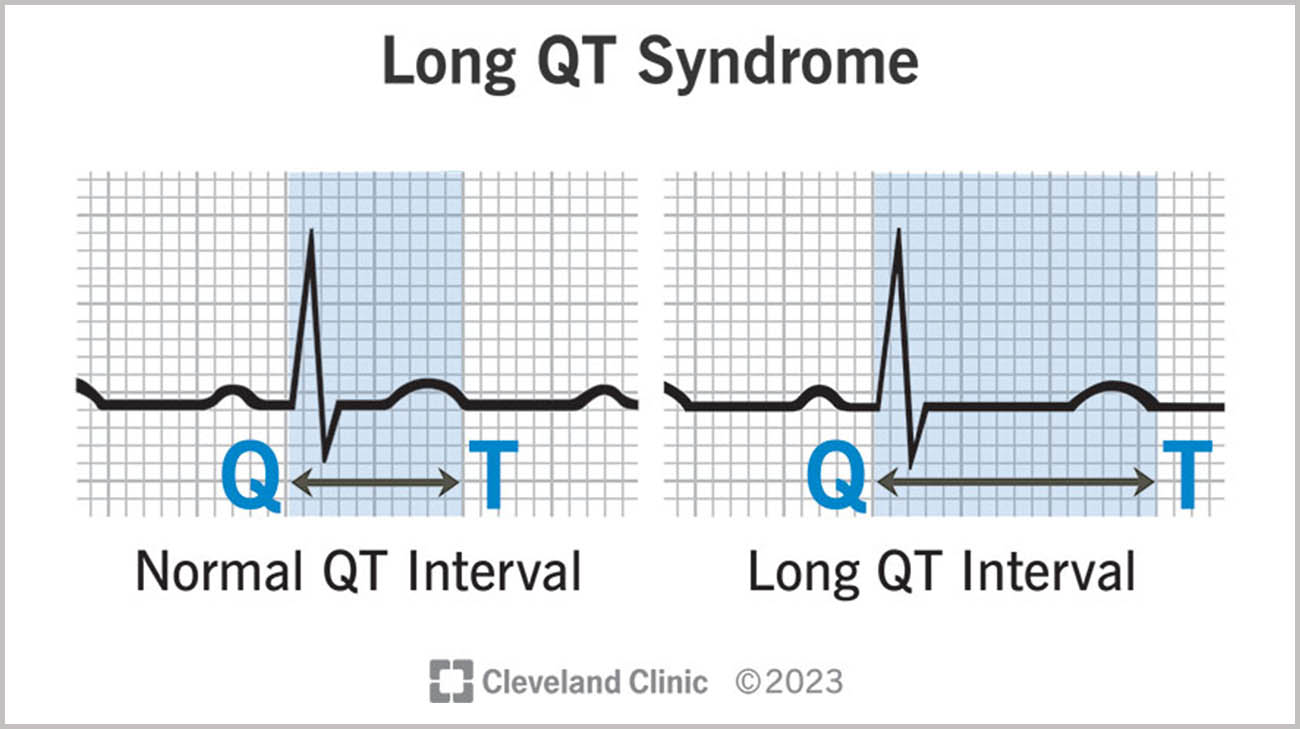
People with long QT syndrome have a QT interval that’s longer than normal on an EKG. (Courtesy: Cleveland Clinic)
The girls’ initial ECGs showed slow heart rates, with one showing a prolonged QT interval that was “too much to ignore,” says Dr. Aziz. Testing ultimately confirmed LQTS in both girls.
Since then, Olivia and Avery have taken a daily beta blocker, currently nadolol, and continue to see Dr. Aziz for monitoring. Their follow-up ECGs, initially performed every three months, are now done annually. Alyson follows a similar treatment and monitoring plan.
Neither Alyson nor her daughters have experienced symptoms or medication side effects. But because LQTS often isn’t something patients can feel, Dr. Aziz emphasizes the importance of staying consistent with treatment and monitoring.

With their condition managed through medication and regular monitoring, Olivia and Avery can continue enjoying the active lives they love. (Courtesy: Alyson Campbell)
“For most patients, this is not a disease where you feel its effects every day. It’s under the surface; there’s not a constant reminder it’s there,” Dr. Aziz says. “When some kids get into their teenage years or become young adults, they can become non-compliant, and that makes our job a little bit harder.”
It’s a message Alyson reinforces with her daughters as they get older.
“My advice to anyone with LQTS is to trust your care team and be consistent with the treatment protocol,” she says. “I’m very trusting the medicine is working and the doctors have our best interests in mind. And that’s why we can let our kids be kids.”
Related Institutes: Heart, Vascular & Thoracic Institute (Miller Family), Cleveland Clinic Children'sPatient Stories

Two Triplet Sisters Share Rare Heart Condition Detected Soon After Birth
Nov 5, 2026

When Seizures Returned, Rhonda Found a New Option: Responsive Neurostimulation
Nov 4, 2026