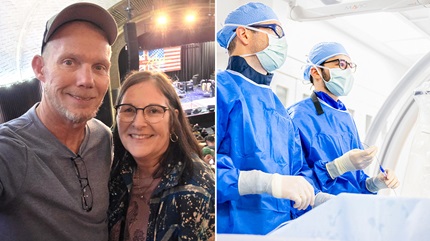
When Amanda Shannon had her stroke, she was only 33 years old. It happened as the busy mom of two was catching up with friends at dinner before she returned to work from her maternity leave.
“All of a sudden, it was like the right side of my body wasn’t mine anymore,” says Amanda of Strongsville, Ohio. “It’s hard to describe, but I knew something wasn’t right.” Her friend took notice and asked if she was OK. Amanda said, “No, call 911.”
Doctors discovered she had an ischemic stroke, which happens when a clot blocks blood flow to the brain. She was ultimately flown by helicopter to Cleveland Clinic main campus, in Cleveland, Ohio, where she underwent emergency surgery.
“We just had our son three months before this, and we were very afraid of losing Amanda. This all came as a complete shock. She has no family history of stroke,” says Amanda’s husband, Chris.
The surgery saved her life and addressed the clot. But because the stroke was so severe, it was unclear whether she’d be able to walk again, and her speech was limited.
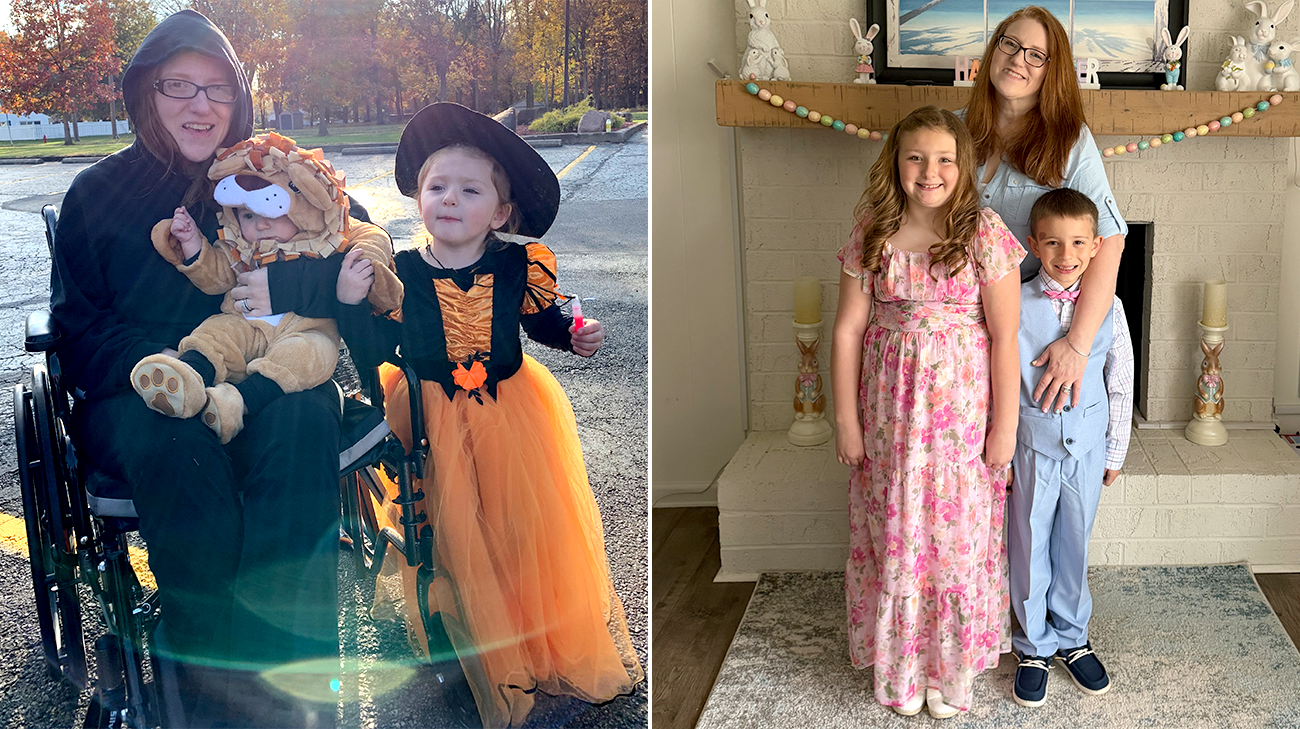
After multiple therapy sessions following her stroke, Amanda went from needing a wheelchair to walking again. (Courtesy: Amanda Shannon)
“Thank you, and I love you – that's all I could say after my stroke,” recalls Amanda. “I was the general manager of a restaurant at the time, and my life had been so fast paced. Everything just came to a halt after my stroke.”
She spent eight weeks in the hospital and then began physical, occupational and speech therapy. Progress came slowly – wheelchair to walker, walker to cane. She eventually started getting around on her own two feet again. However, she still couldn’t do something that impacted her independence as a young mom: drive.
“Since I couldn’t feel my right side as much, it was hard for me to hit the gas and brake,” says Amanda.
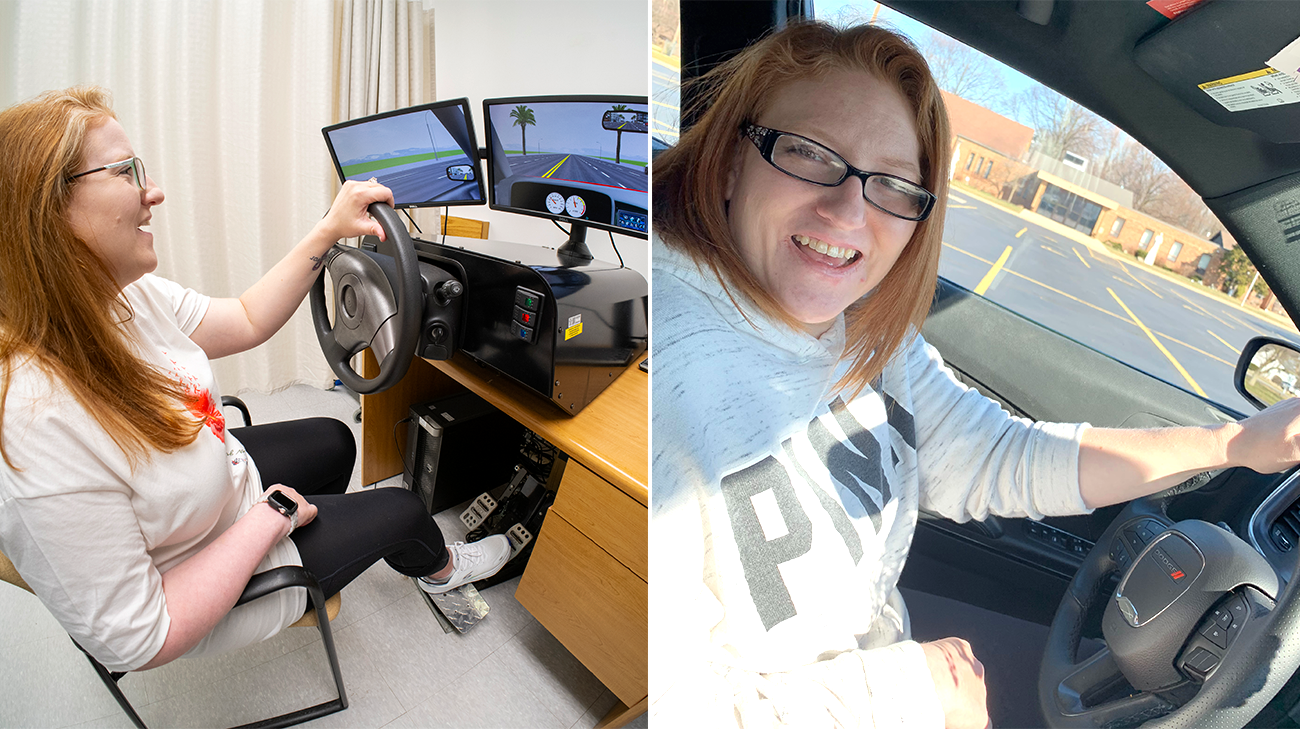
Wanting that independence back, she enrolled in Cleveland Clinic’s Driver Evaluation and Rehabilitation Program. The program provides a clinical and on-the-road assessment of driving skills for adults who’ve experienced a neurological, physical, visual or cognitive change that’s impacted their driving. The goal is to help people drive independently again as long as it’s safe to do so, and one of the tools to help accomplish this is a driving simulator.
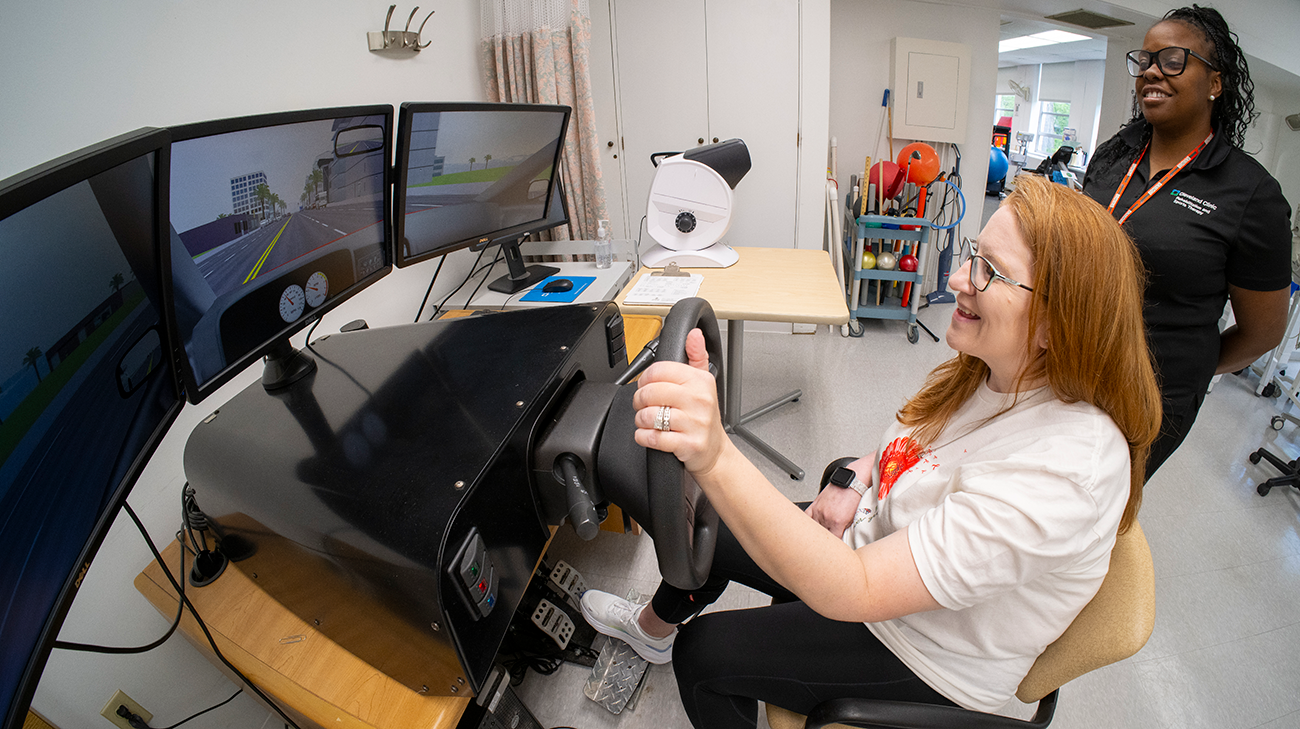
Amanda using the driving simulator with occupational therapist Christina Duncan. (Courtesy: Cleveland Clinic)
“The simulator has everything you’d see in a car – a steering wheel, turn signal as well as gas and brake pedals. It has multiple screens to simulate different driving scenarios, like nighttime or highway driving. It’s a way for patients to get behind the wheel in a safe, controlled environment and build up their confidence before they’re ready to drive an actual car,” says Cleveland Clinic occupational therapist Christina Duncan.
Christina explains the driving simulator helps therapists identify what patients need to work on. They then work closely with patients using the simulator until they’re ready for an on-the-road assessment, where a vehicle adapted for driving evaluations is used.
“I was learning how to drive all over. It felt like I was 16 again,” says Amanda.
After months of working with Christina, Amanda got to the point where she could drive on her own. From baseball and basketball to softball and dance, she’s now able to get her kids – and herself – where they need to go.
“I’m free again. I love being able to just get in the car and go,” says Amanda.
“Driving is something we often take for granted. When a person loses that ability, they can’t get around like they used to and have to rely on others. Helping someone return to driving when it’s possible is so important because it gives them a piece of their independence back,” says Christina, who adds adaptations can be made to a vehicle as well to get certain patients driving again.
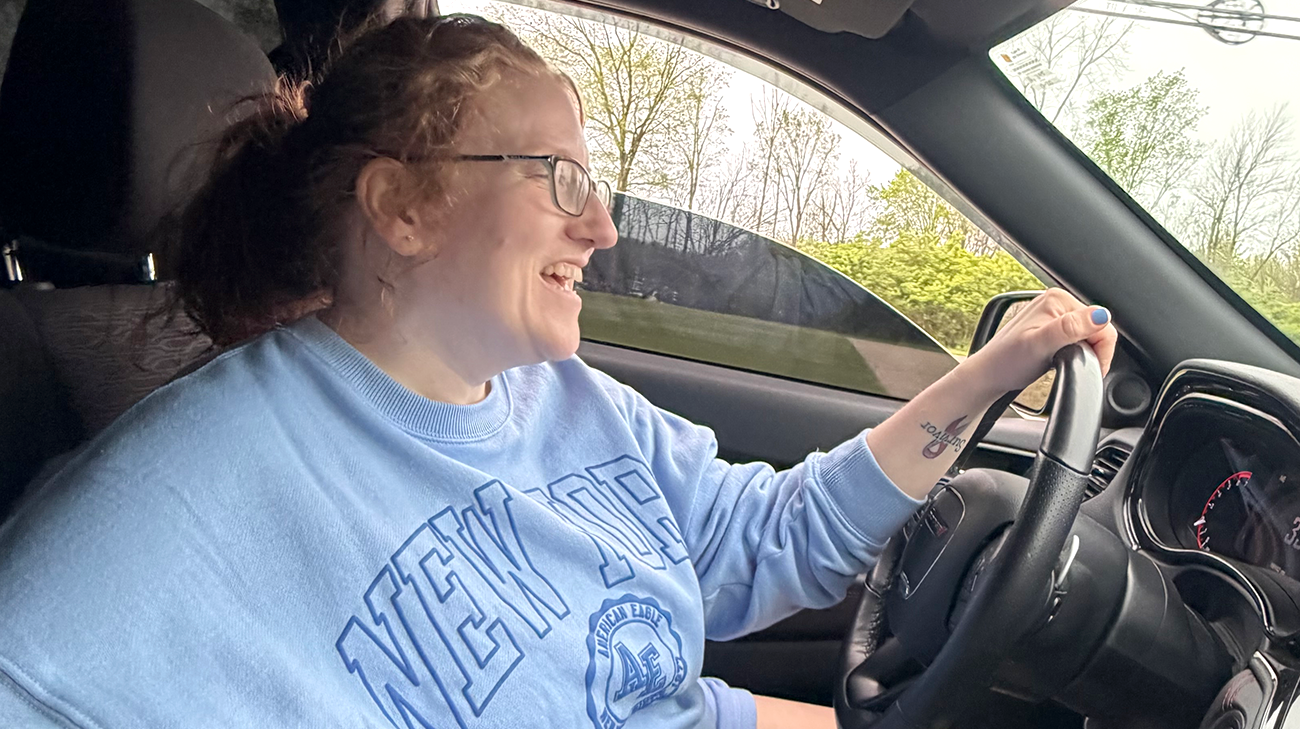
After using the driving simulator, Amanda moved on to a real car – practicing in parking lots until she was ready for the road again. (Courtesy: Amanda Shannon)
Even after getting back behind the wheel, Amanda still struggled to use her right hand for certain tasks. Being right-handed, this was especially challenging. So, in August 2025, she moved forward with vagus nerve stimulation (VNS). This involves placing an implantable device under the skin to send electrical signals to the brain through a nerve in the neck called the vagus nerve. Also used to treat epilepsy and depression, VNS is approved as an add-on to rehabilitation therapy for people who have moderate to severe loss of arm and hand function from an ischemic stroke.
“We believe stimulating the vagus nerve generates some plasticity in the brain, allowing it to form new connections in areas that control motor function. When paired with stroke rehabilitation therapy, patients with this device have seen improvements in their hand and arm function,” says Cleveland Clinic neurosurgeon Mark Bain, MD, who implanted Amanda’s VNS device.
Although the process takes time and the effectiveness of the stimulation varies from patient to patient, Amanda is seeing improvements as she continues working with her rehabilitation team.
“I want to get to the point where I can write with my right hand and do my daughter’s hair again. With the progress I’ve already seen, I’m hopeful I’ll get there,” says Amanda, who also sees positive strides through ongoing speech therapy.
Now 40 years old, Amanda says she’s come a long way since her stroke. Once unsure if she’d ever walk again and limited to a handful of words after her stroke, she can communicate more effectively, walk on her own and drive.
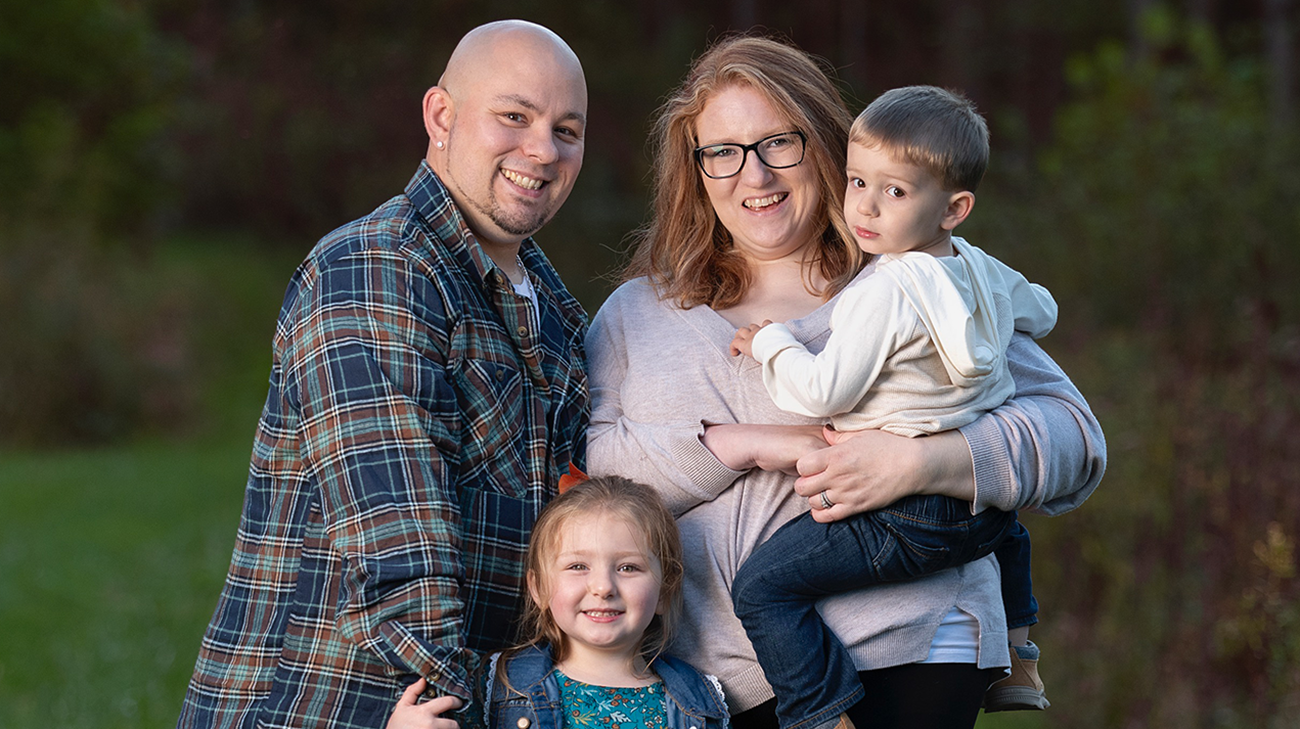
While grateful for the recovery she’s made after her stroke, Amanda is even more thankful to have her loving family by her side through it all. (Courtesy: Brittany McCarthy)
“In the years since her stroke, Amanda has regained much of her independence and continues to make progress. Know the recovery you can see from a stroke does not just stop at year one,” says Christina.
“Remember to always fight and never give up. I’m walking, I’m driving and I’m still making improvements each day,” says Amanda.
Related Institutes: Heart, Vascular & Thoracic Institute (Miller Family), Neurological InstitutePatient Stories
Exercise Medicine Program Helps Man Prepare for Surgery and Reclaim an Active Life
Oct 9, 2026

‘Cornstarch Keeps My Son Alive’: Boy Eats Raw Cornstarch Daily To Manage Rare Metabolic Disorder
Oct 8, 2026