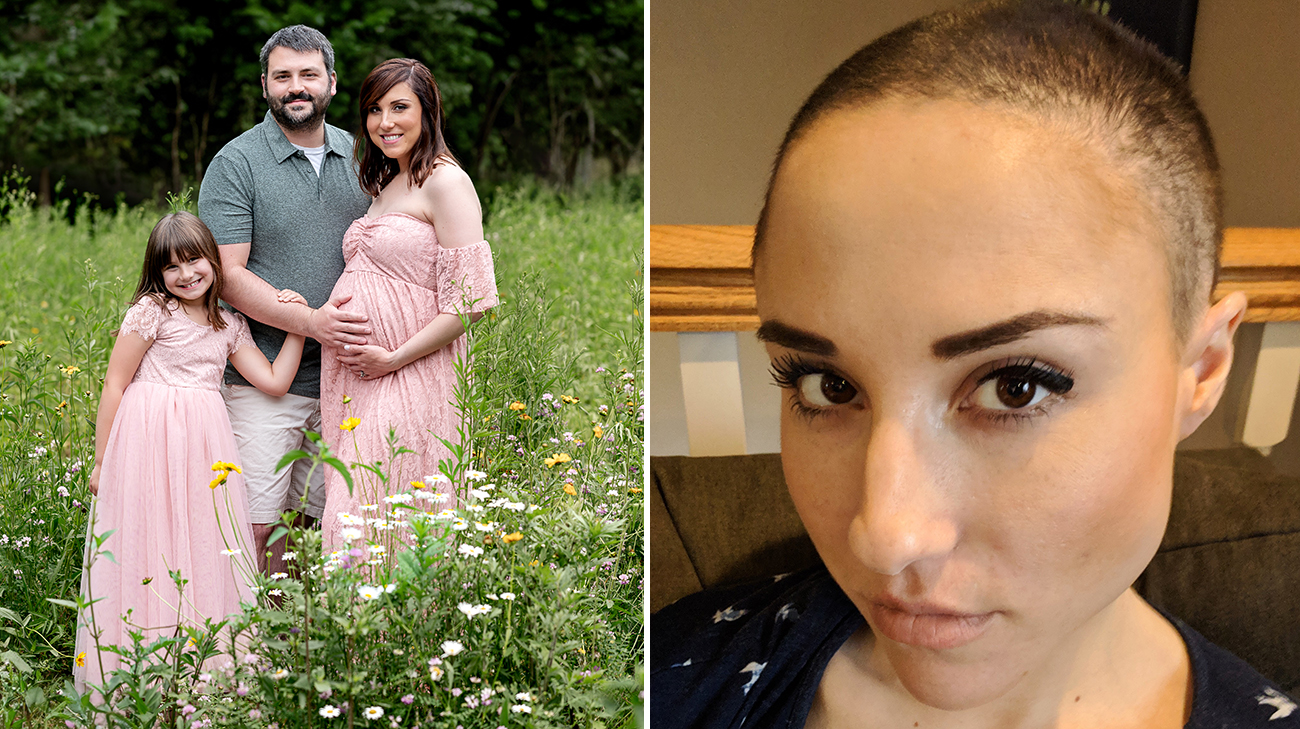
Seven years ago, Maralee Lellio was thinking about the family she hoped to build. After becoming a mother to her first daughter, she pictured one day welcoming another child. That future began to feel uncertain after an unexpected cancer diagnosis. It marked the beginning of a years‑long medical journey — one that would prompt her to reassess her health, her plans and what motherhood might still allow.
In 2018, Maralee noticed a lump in her breast. She made an appointment with a doctor close to home right away but was reassured it wasn’t cancer. At 28, she was told she was too young for that diagnosis. Instead, the lump was identified as a benign fibroadenoma.
“The doctor said everybody gets them and not to worry,” recalls Maralee. “I was thrilled.”
Over the next several months, the lump grew and became painful. Maralee returned to her doctor, this time undergoing a mammogram followed by a biopsy. Tests revealed stage 2 breast cancer.
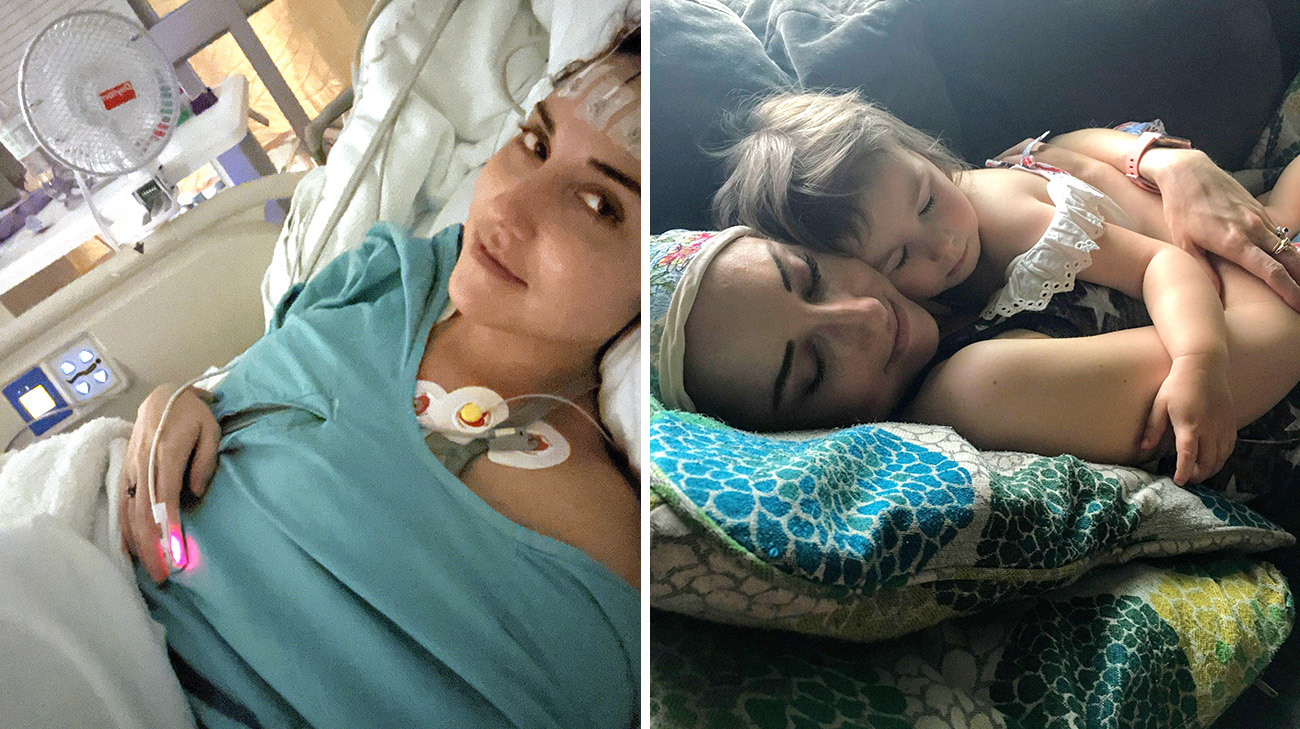
Maralee during treatment for breast cancer. (Courtesy: Maralee Lellio)
Maralee began an aggressive course of chemotherapy and underwent a bilateral mastectomy. For a time, she was doing well. Then she started experiencing severe headaches and dizziness. A test ordered by her oncologist showed no signs of cancer in her brain, and the symptoms were attributed to depression, with a recommendation to exercise more.
Reassured by those results, Maralee and her husband, Andrew Lellio, decided to try for their second child, using embryos that had been frozen before she began chemotherapy. As the headaches continued, Maralee assumed they were related to the hormones required for the in vitro fertilization (IVF) process.
When she did not become pregnant and the headaches worsened, Andrew brought her to a local emergency department. Imaging revealed a brain tumor, and further testing showed her breast cancer had progressed to stage IV. Doctors near her home surgically removed the tumor and referred her for further care at Cleveland Clinic.
“My doctor told me Cleveland Clinic had technology they didn’t,” Maralee says. “I’m so grateful they did.”
At Cleveland Clinic, doctors determined Maralee’s tumor was growing back faster than expected and recommended five rounds of partial‑brain radiation to stop its progression. The tumor responded well.
She then started on a PARP inhibitor, an oral cancer therapy designed to slow or stop the growth of cancer cells. The treatment is particularly effective in people with BRCA mutations, which Maralee has, says her Cleveland Clinic breast medical oncologist, Halle Moore, MD.
“Since starting the PARP, I have had no evidence of active disease,” Maralee says. “There is a general medical consensus that once breast cancer spreads in your body, you can never be fully cured. But for me, it’s about how I choose to live and what I believe. Dr. Moore encourages me to make decisions about my life with that perspective.”
Later, Maralee began to consider whether to try again for a second child. After two years on a PARP inhibitor, Maralee stopped the medication. Dr. Moore says she had concerns but agreed to support the decision once Maralee had been off the drug for at least a year without any recurrence in her brain.
“She was feeling great and felt strongly about pursuing a pregnancy,” Dr. Moore says. “She understood the high risk for complications and chose to move forward.”
The pregnancy progressed smoothly, and Maralee gave birth to her second daughter, Rosa. She did not need to use IVF to conceive. Today, she is the mother of two cherished daughters — Ayla, 9, and Rosa, 22 months.
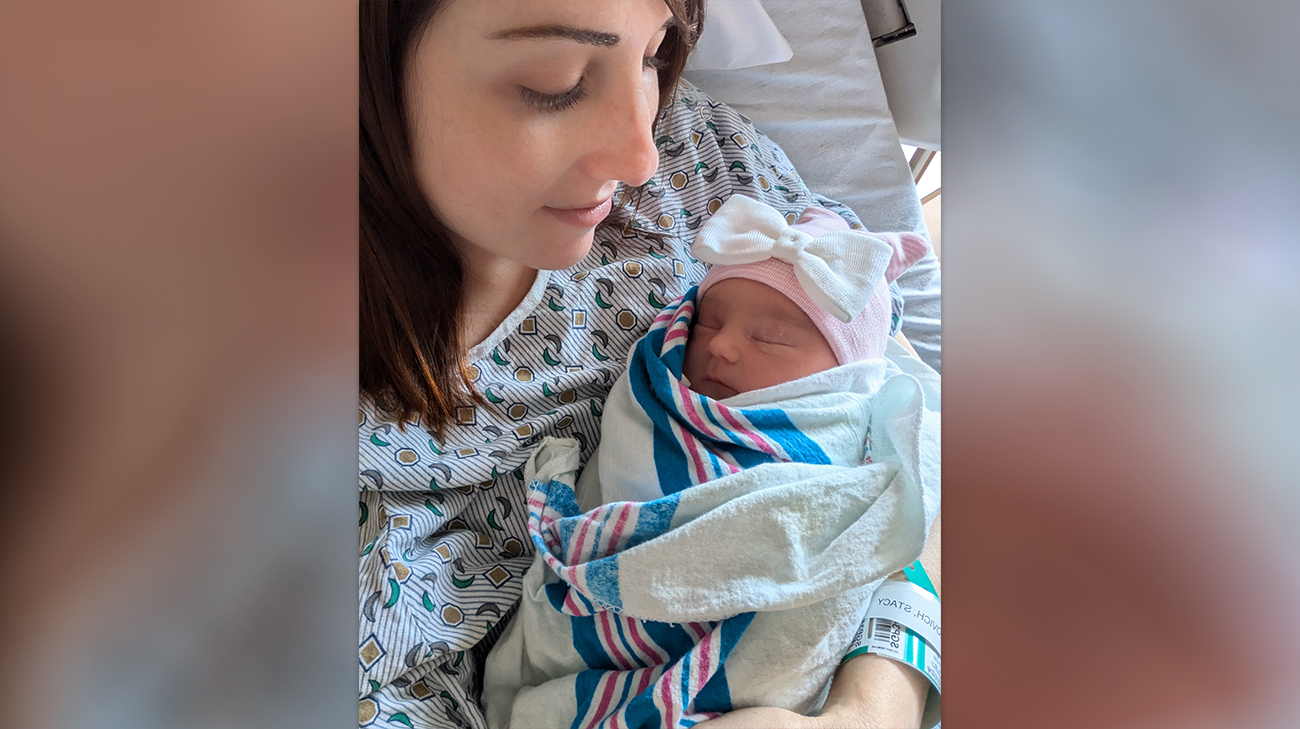
Maralee with newborn baby Rosa. (Courtesy: Maralee Lellio)
“My life with these kids is messy and perfect, and I love it,” she says.
Dr. Moore says ongoing advances in cancer treatment are reshaping long‑term expectations for some patients, creating more opportunities for extended survival and fuller lives.
“I can only imagine how hard it’s been to live with so much uncertainty, while still wanting a sense of normalcy,” Dr. Moore says. “I’m grateful she’s been able to find that. Difficult things happen, but when people keep moving forward, sometimes the outcomes can be very positive and meaningful.”
Drawing from her experience early on, Maralee urges others to trust their instincts, advocate for themselves and not lose hope, even when the path ahead feels unclear.
“Make sure you have a doctor you trust,” she says. “Having a doctor who gives you the facts while still respecting your autonomy has been critical for me.”
Maralee’s husband, Andrew, played a central role in helping her push forward after her diagnosis.
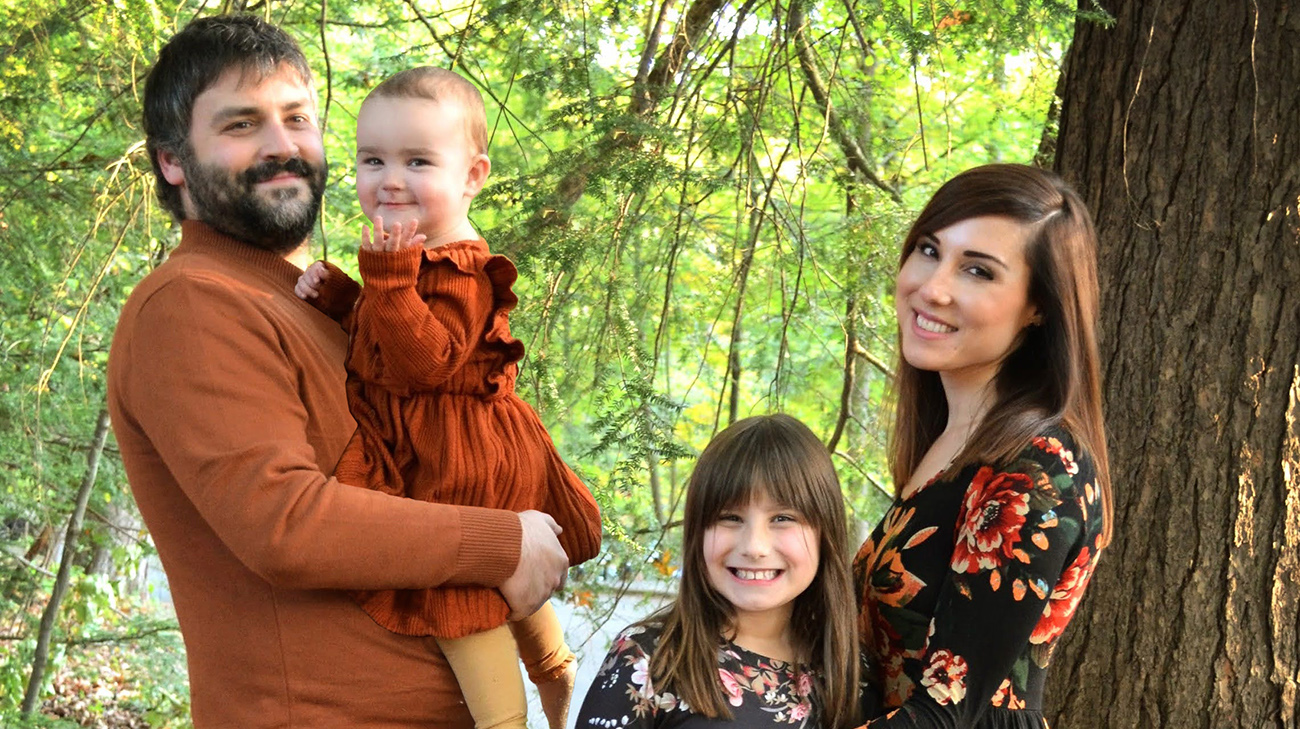
Andrew, Rosa, Ayla and Maralee (left to right). (Courtesy: Kate Ross )
“For a couple of months after the stage IV diagnosis, I really gave in to it,” Maralee says. “I thought it wasn’t a matter of whether I was dying — it was a matter of how long death could be delayed.”
One day, while talking with a friend on the phone, she heard herself say she would try to make the most of the few years she believed were left. When the call ended, Andrew looked at her.
“He said, ‘It really makes me sad to hear you talk like that,’” she recalls. “‘I think you can make it.’”
The moment changed her mindset.
“It was like a light switch turned on,” Maralee says. “I decided I was going to live. I was going to have another baby, because completing my family was part of what living meant to me. I was going to keep teaching, keep being a mom and a wife, and keep showing up for the life I had.”
Maralee hopes her story offers encouragement to others facing serious illness.
“I want people going through something similar to see one more person and think, ‘She’s doing it. Maybe I can, too,’” she says. “I’m not special. If I can do this, anyone can. Don’t ever think you can’t be the miracle.”
Related Institutes: Cleveland Clinic Cancer CenterPatient Stories
Woman's Debilitating Headaches Traced to Rare Spinal Fluid Leak
Oct 6, 2026
Young Girl Overcomes Rare Cancer That Spread to Her Lungs and Spine
Sep 30, 2026