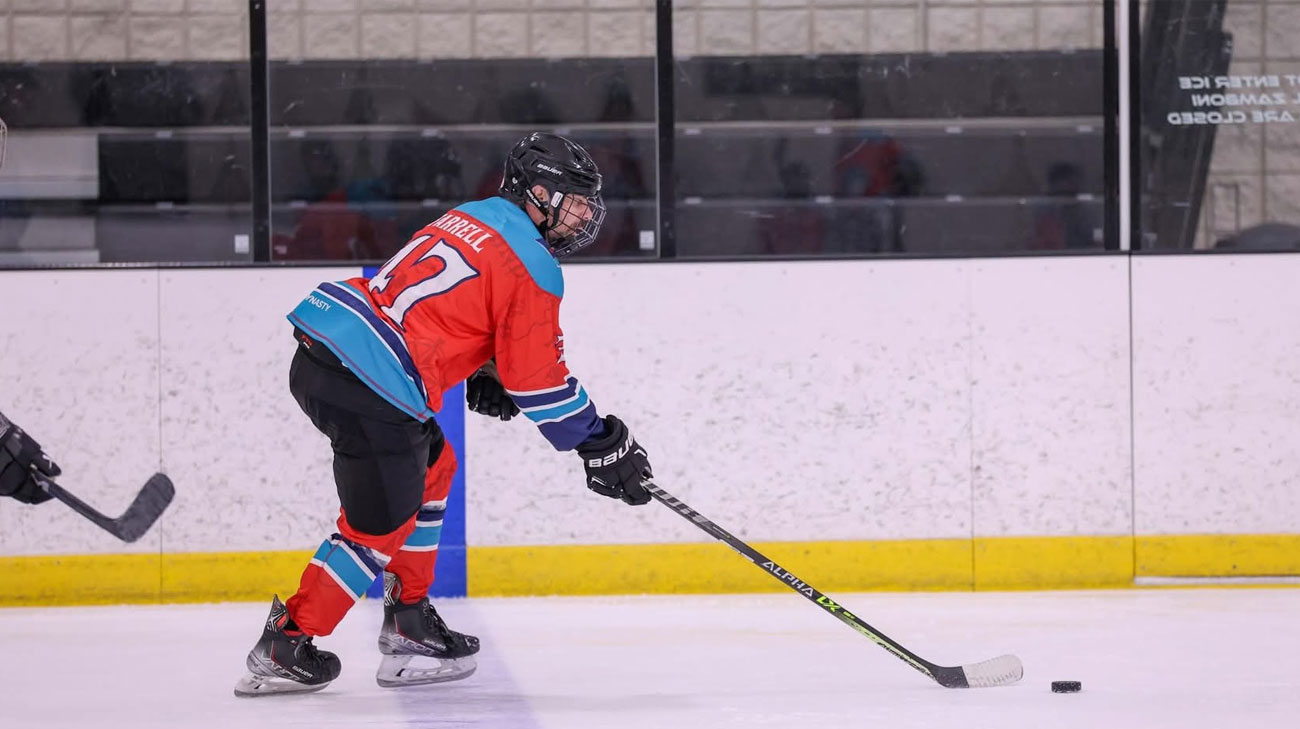
Although they are both recreational ice hockey players, husband and wife Brant and Dawn Farrell faced one of their toughest challenges off the ice this past year when Brant suffered a stroke.
On a Monday morning in April 2024, Brant, who was 40 years old then, woke up with neck and jaw pain. He had played in a recreational league hockey game at the Florida Panthers Ice Den in Coral Springs the day before and had collided with someone on the ice but did not think anything of it. Despite the pain, he and Dawn, who both work in the aerospace/defense industry, went ahead with their plans to leave that day for a work trip to Colorado.
As the week went on Brant’s neck and jaw pain got worse. By Thursday of that week, it got so bad he couldn’t get out of bed, Dawn says. They returned home to Weston, Florida, that Friday.
“On Saturday morning he still wasn’t feeling good,” Dawn says. “I was doing laundry, and he just collapsed on me. His face just went completely blank. He didn’t say anything, just seemed to be in another world.”
When he snapped out of it, he couldn’t speak. Dawn realized then that Brant needed medical care quickly, so she drove him to the emergency room at Cleveland Clinic Weston Hospital.
Brant was taken to the Intensive Care Unit (ICU) because he was exhibiting signs of a stroke. He underwent testing that revealed he had a tear (dissection) in his carotid artery (a blood vessel in the neck that supplies blood to the neck, face and brain). The dissection had caused a transient ischemic attack (TIA), or a temporary loss of blood flow to part of the brain, according to Mubashir Pervez, MD, FACP, FAHA, a neuro-endovascular surgeon and neurocritical care specialist at Weston Hospital.
Although a TIA is similar to a stroke, it resolves on its own, usually within a day. However, it is an indicator that a stroke could occur in the near future.
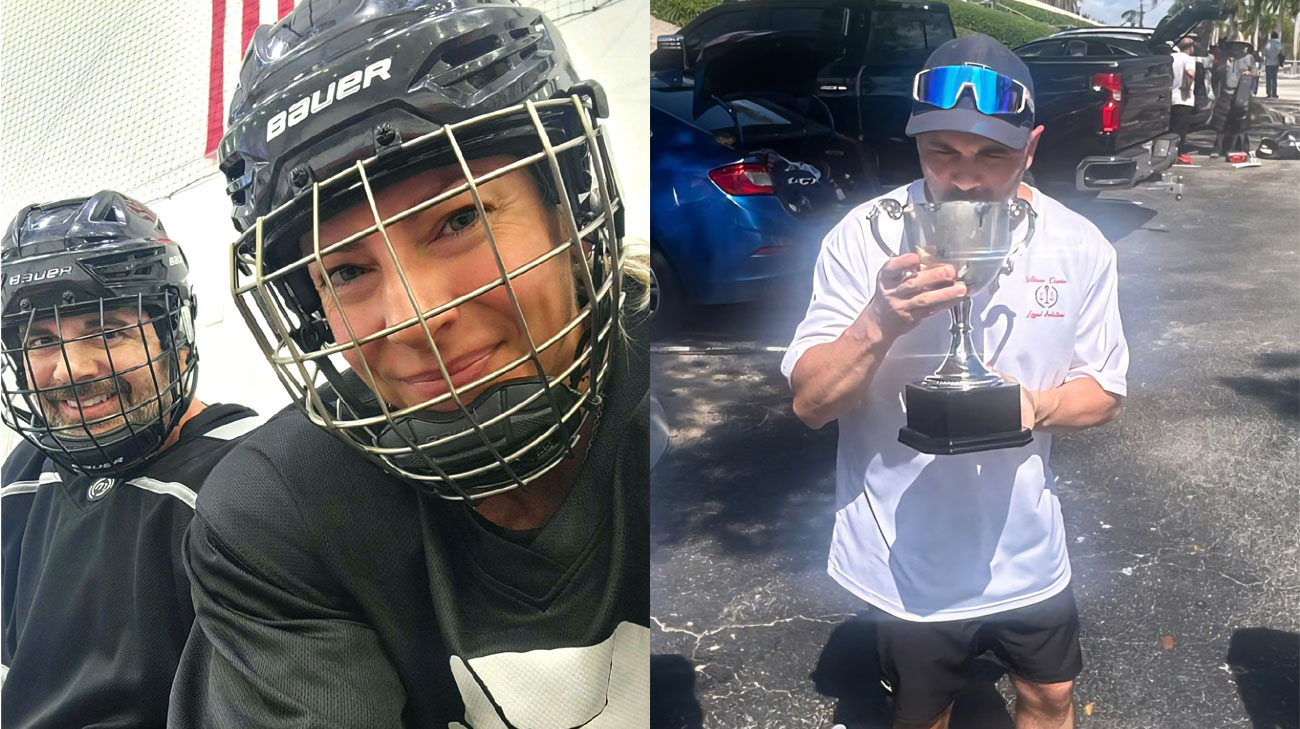
Back on the ice, Brant celebrates his recovery journey.
Brant was put on blood thinners and kept in the hospital for observation for a few days. Early in the morning on the day he was scheduled to go home, Brant had a stroke. His carotid artery had closed completely, causing a blood clot to go to his brain. Dr. Pervez immediately performed a procedure to remove the clot, followed by surgery to reconstruct Brant’s carotid artery and open it up with stents. Brant’s recovery was complicated by bleeding in the area of the brain that was affected by the stroke (hemorrhagic transformation of stroke). Hamid Borghei-Razavi, MD, a neurosurgeon at Weston Hospital, performed the operation on Brant’s brain to remove the hemorrhage, which involved removing a large part of his skull. That piece has since been replaced with a 3D-printed prosthetic.
Brant spent several days in an induced coma. Doctors weren’t sure if Brant would be able to breathe, eat, walk or talk on his own. They prepared Dawn by giving her the worst-case scenario options.
“I didn’t believe it because I know how strong he is,” Dawn says.
And she was right. After about three weeks in the hospital, Brant was released to a rehabilitation facility to work with physical, occupational and speech therapists for a week.
He returned home, finally, able to walk, eat and breathe on his own.
“Speech has been his biggest challenge,” Dawn says, along with his ability to read and write. Brant’s stroke caused aphasia, which is an impaired ability to speak and understand language. He continues to work with speech therapists at Weston Hospital, and his speech has been improving along with his reading and writing capabilities.
The hemorrhagic stroke also caused a vitreous hemorrhage in his left eye and some vision loss. But that is resolving as well, Dawn says.
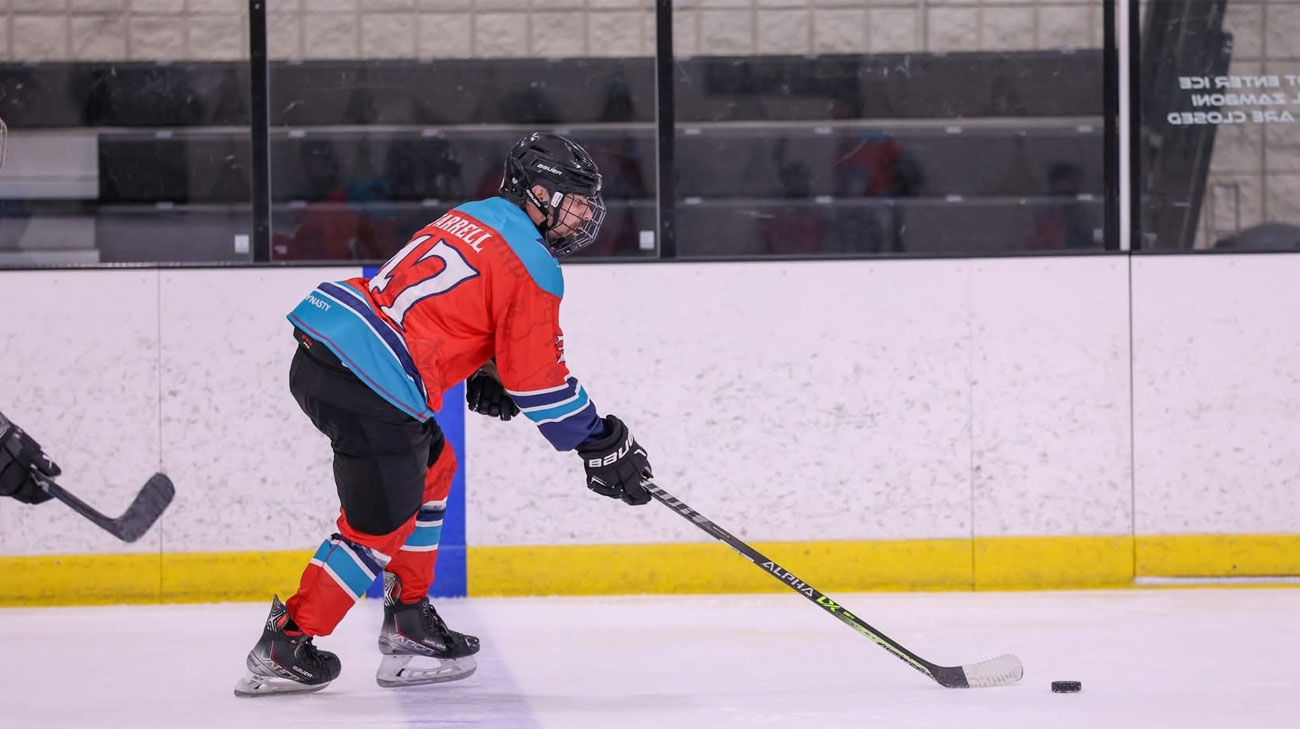
Brant’s journey from stroke to skating shows the power of perseverance.
Life is back to almost 100 percent normal, she says, with Brant back to work and even slowly getting back to hockey.
“You never think something like this could happen,” she says. “Brant was incredibly healthy and active.”
It is unclear what caused the dissection in Brant’s carotid artery. However, Dr. Pervez says, stroke from this cause is more common in young people.
Dr. Pervez says that Brant’s recovery has been amazing.
“The exceptional effort his wife and the rehab team here have put together to keep him motivated and uplift his morale is just what he needed to recover,” Dr. Pervez says.
“Dr. Pervez is absolutely incredible,” Dawn says. “I can’t say enough about him and the speech therapy department. And Cleveland Clinic is phenomenal. They’ve always been wonderful, and I recommend them to everyone I talk to.”
Related Institutes: Neurological InstitutePatient Stories
Cleveland Clinic Team Helps Florida Patient Breathe Easier After Complex Lung Surgery
Oct 21, 2026
Teen Athlete Returns to Sports After Two Head Injuries Trigger Yearlong Headache
Oct 19, 2026