


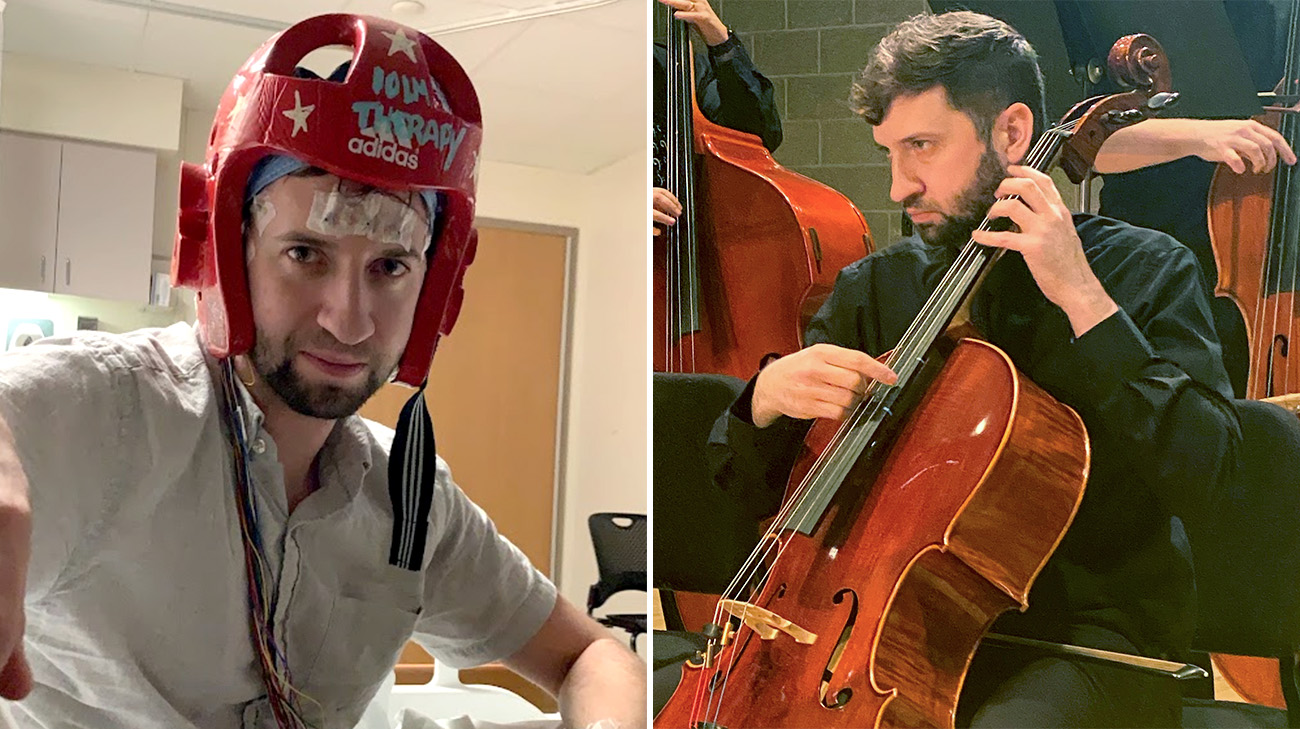
When Andrew Kusters was diagnosed with epilepsy at 27 years old, he was blindsided. He had no family history of the disease, and early brain imaging failed to reveal a cause. But the one thing that quickly became apparent is epilepsy's impact on his life following his diagnosis.
"I didn't have the energy to do anything besides work and sleep. When my seizures were at their worst, I was probably sleeping about 15 hours a day," says Andy, a biomedical engineer from Milwaukee, Wisconsin.
Andy's epilepsy diagnosis came in 2017 after he experienced a seizure while sleeping one night. Follow-up testing showed he had right temporal lobe epilepsy, a type of epilepsy where seizures start in the right temporal lobe of the brain. With temporal lobe epilepsy, seizures often do not cause full-body shaking. Instead, they can affect memory, emotions and sometimes cause unusual sensations, such as déjà vu, strange smells or tastes and feelings of fear. Some people also lose awareness for a short time or make repetitive motions, as in Andy's case.
"During a seizure, I would often feel a weird sensation, make a moaning sound and pick at my shirt. I could tell that I was having a seizure but was not aware of what I was doing during the seizure," says Andy.
Andy tried several medications and even underwent a laser ablation surgery that targeted the area of his brain believed to be triggering the episodes. But the seizures persisted, and their frequency forced him to stop driving and give up longtime hobbies.
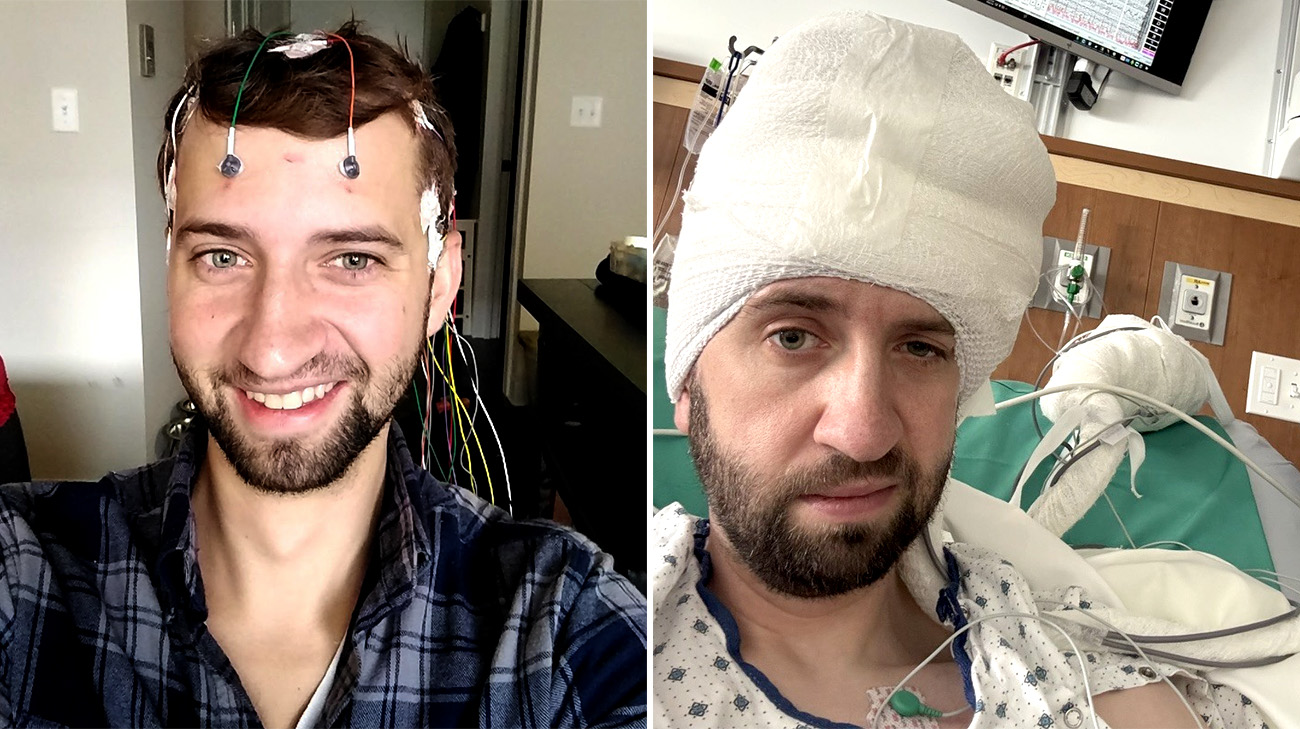
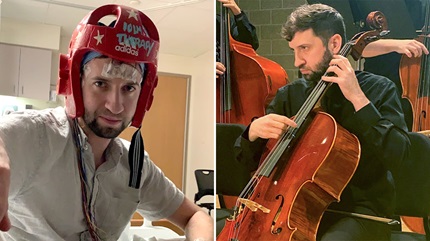
Leading up to and following Andy’s diagnosis of epilepsy, he underwent multiple tests to determine what area of the brain his seizures were coming from. (Courtesy: Andy Kusters)
"I was exhausted from seizures and always worried about having one, so I quit playing cello in my community orchestra. I didn't even have the energy to hang out with friends," says Andy.
Eventually, one of his local neurologists recommended he come to Cleveland Clinic for a second opinion. That's when he met neurologist Imad Najm, MD, and neurosurgeon Demitre Serletis, MD, PhD.
“Looking at all patients with epilepsy, about two-thirds will respond to their first or second antiseizure medication. The remaining one-third are considered refractory, meaning their seizures may not respond to further medication attempts. That's when we look at surgical options," says Dr. Serletis.
Andy underwent several additional tests, including a stereoelectroencephalography procedure by Dr. Serletis, where delicate electrode probes were carefully inserted into the brain to map the origins of Andy’s seizures. Results from this evaluation suggested that surgical resection of the right temporal lobe would be the best treatment strategy.
Andy says, "It was a little scary because they would be taking out brain tissue, but I wanted my quality of life back, and I was confident in my care team."
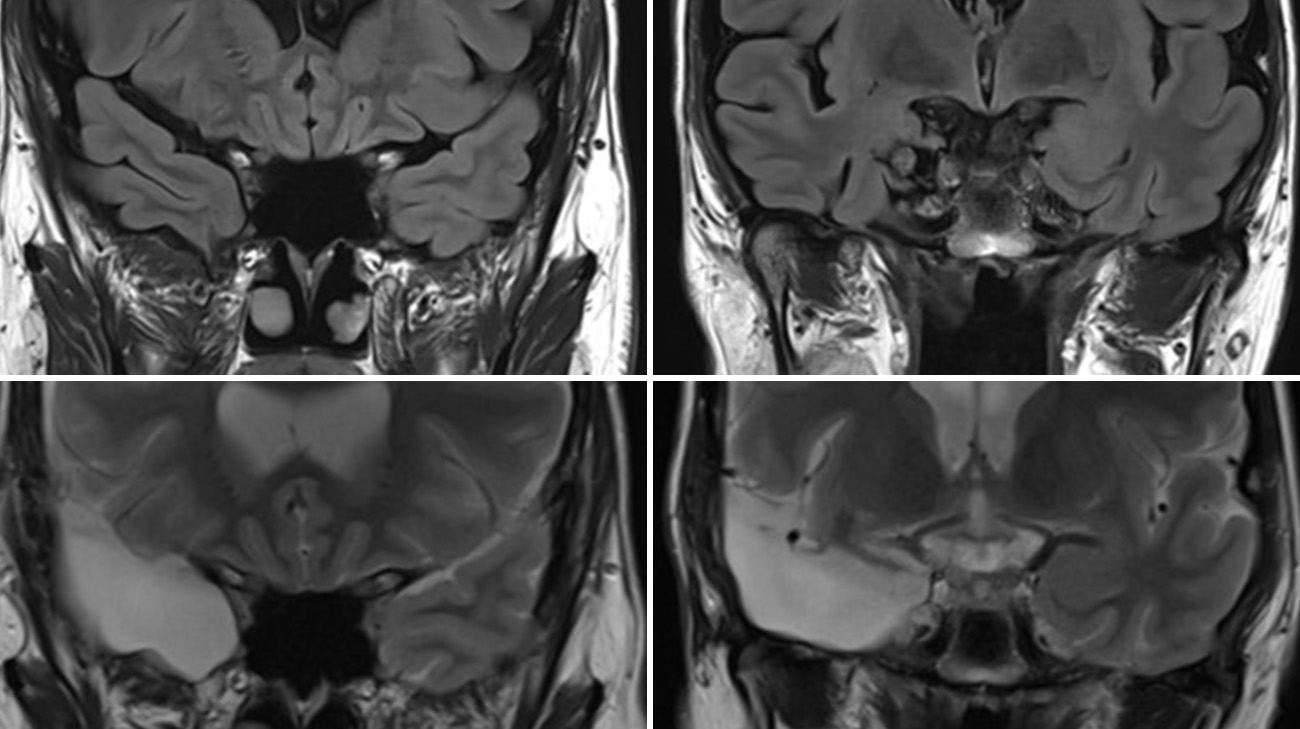
Andy’s brain scans before and after surgery – top scans show before, bottom scans show after. (Courtesy: Cleveland Clinic)
During the procedure, Dr. Serletis carefully removed the anterior portion of Andy's right temporal lobe, including the amygdala and hippocampus (residing in the depths of the temporal lobe). By removing this tissue, the team aimed to stop the epileptic seizures at their source. And because the procedure was performed on the non-dominant side of Andy's brain, the risk of significant problems with language, memory and other cognitive functions was low.
"We localized the seizure focus and were able to remove this targeted region without complication. Andy did not experience any deficits in communication or cognition after the procedure, and he made a full recovery," says Dr. Serletis.
During surgery, Dr. Serletis found a small encephalocele, a piece of brain tissue trapped in the skull bone, which wasn’t visible on imaging. This abnormality may have irritated Andy’s temporal lobe and contributed to his seizure condition.
"It's always nice to have an explanation – it helped answer that question as to why these seizures were possibly happening," says Andy.
He underwent the surgery in November 2024 and hasn't experienced a seizure since. No longer dealing with frequent seizures, Andy's energy levels are back, and he's driving and playing in the orchestra again.
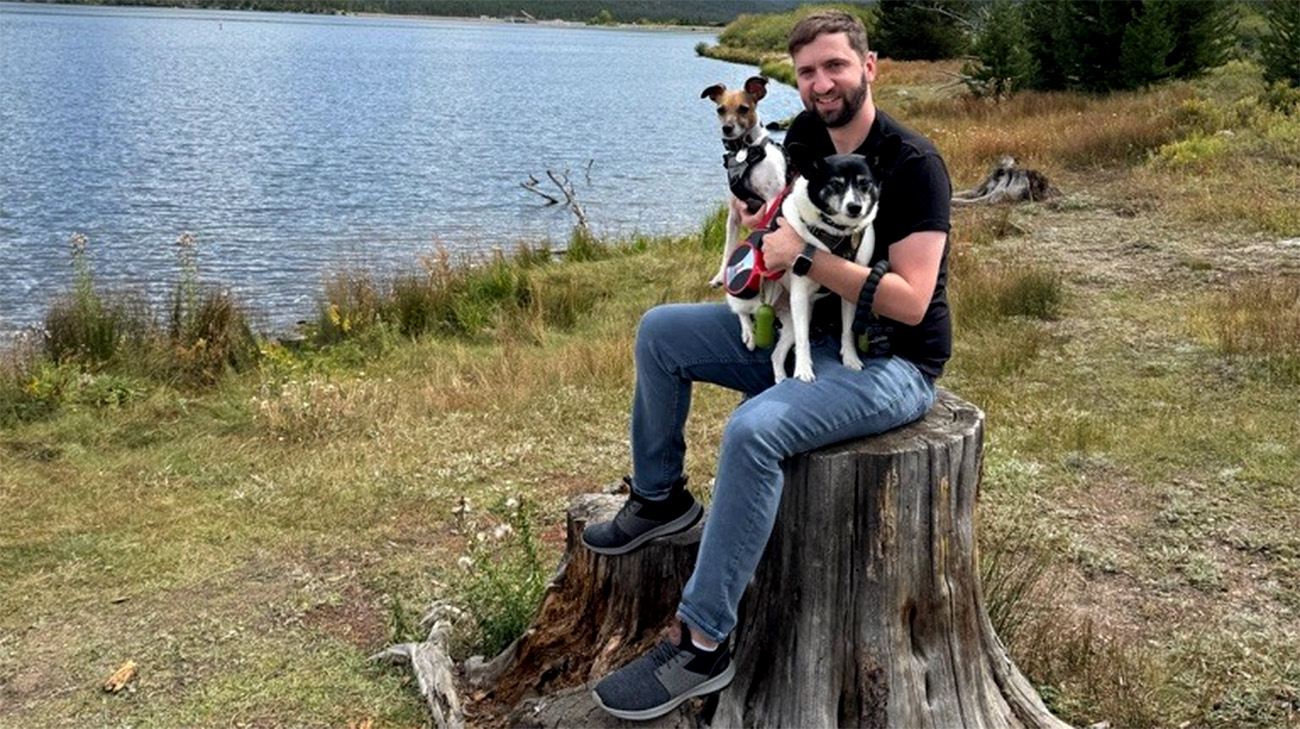
After his surgery at Cleveland Clinic, Andy is happy to have his independence back. (Courtesy: Andy Kusters)
"This surgery has given me my life back. 'It feels like a miracle,' I tell my friends and family. If I had any regret, it would be I didn't do this sooner," he says.
Andy's care team will continue monitoring him with the goal of keeping him seizure-free.
"I know firsthand how scary and uncertain it can feel dealing with seizures. My advice is to advocate for yourself and seek expert care to find out treatment options. Because with the right treatment, there’s hope for a better life on the other side of epilepsy," says Andy.
Related Institutes: Neurological InstitutePatient Stories
Brain Surgery Restores Man’s Independence After Years of Epileptic Seizures
Nov 24, 2026
After Unexpected Stroke, Woman Hopeful New Drug Can Lower Future Stroke Risk
Nov 12, 2026

