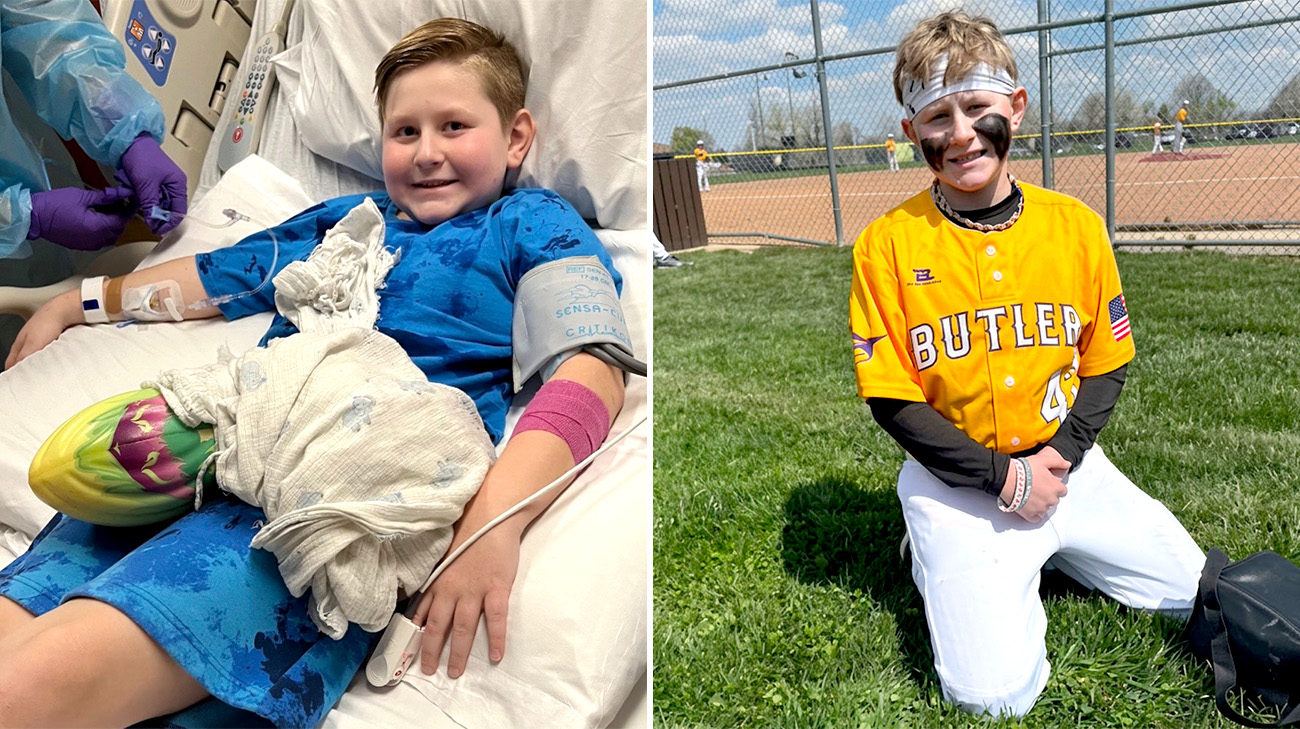
Every few hours, Trey McGowan needs a dose of cornstarch to stay alive. Born with a rare disease that causes his blood sugar to dip dangerously low, Trey relies on this treatment to maintain stable blood sugar levels.
"When he was first diagnosed with this condition, I thought it just meant he wasn't going to have cake on his first birthday, but we soon realized it was much more serious than that," says Trey's mom, Jen McGowan.
After experiencing drops in his blood sugar, doctors diagnosed Trey with glycogen storage disease (GSD) type Ia, a rare condition that occurs in approximately 1 in 100,000 births. Glycogen storage diseases are a group of inherited metabolic disorders where the body can’t properly store or use glycogen. This can cause several issues, including frequent symptomatic low blood sugar (hypoglycemia).
“With this disorder, glycogen essentially becomes a one-way street – it enters the liver but can't be broken down. As glycogen accumulates, it can lead to liver and kidney complications, poor growth, elevated triglycerides, with risk of pancreatitis and other issues,” says Cleveland Clinic Children's pediatric gastroenterologist Kadakkal Radhakrishnan, MD.
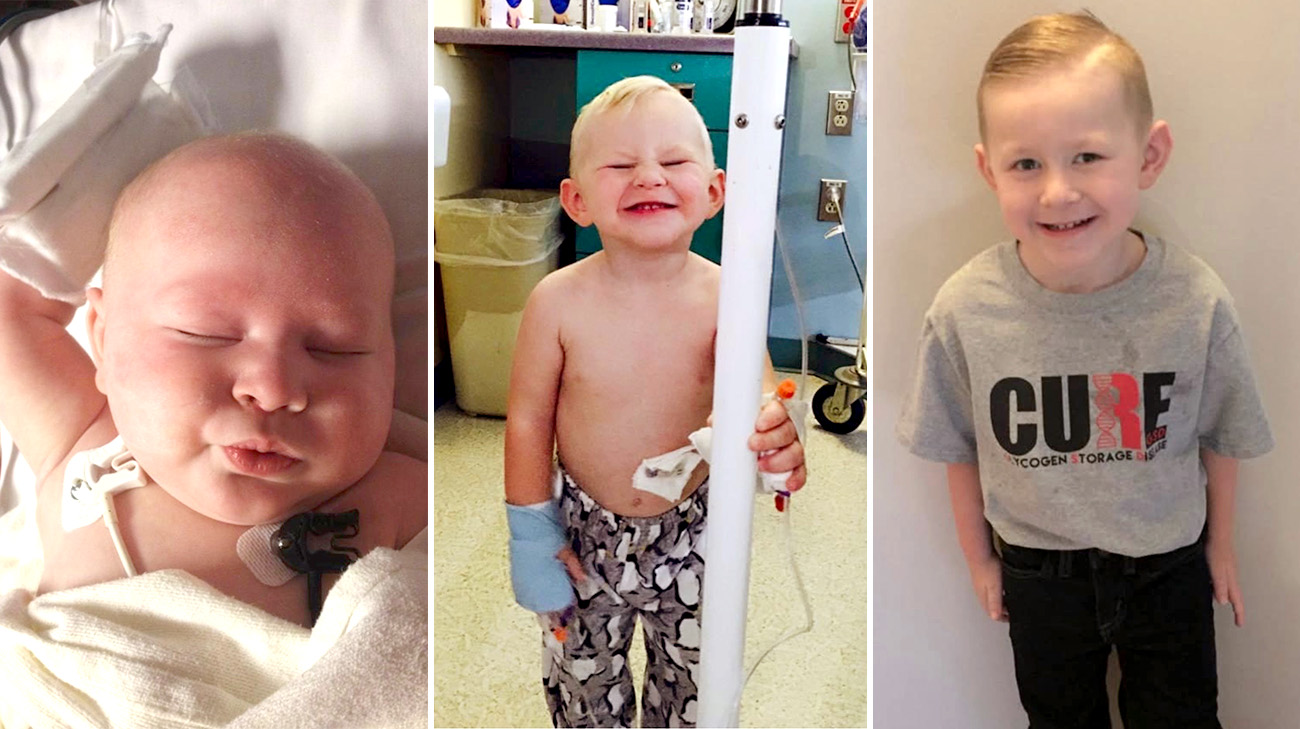
After Trey was diagnosed with glycogen storage disease at around 6 months old, he and his family had to adjust to a new reality of strict dietary requirements and constant blood sugar monitoring. (Courtesy: Jen McGowan)
Managing the condition requires a strict diet that includes consuming regular doses of uncooked cornstarch.
“Raw cornstarch is structurally similar to glycogen and acts as a slow-release source of glucose into the bloodstream when consumed. This helps those with glycogen storage disease maintain stable blood sugar levels," says Dr. Radhakrishnan.
"People will ask me what medicine I give him, and I say, 'Cornstarch. Cornstarch keeps my son alive,'" explains Jen.
Some patients take the cornstarch by mouth. Others, like Trey, use a feeding tube. Either way, it means consuming uncooked cornstarch multiple times throughout the day and night.
"At his highest dose, he was getting cornstarch eight times a day – at 12 a.m., 3 a.m., 6 a.m., 9 a.m., noon, 3 p.m., 6 p.m. and 9 p.m. I always say I have a forever newborn – there were nights that were just sleepless," says Jen, who administered the cornstarch mixture through Trey’s feeding tube each time.
In addition to cornstarch, Trey's diet focuses on eating optimal amounts of protein and complex carbohydrates as advised by his GSD dietitian. He must avoid or limit foods that contain fructose, sucrose, lactose and galactose – which are found in things like fruit, table sugar, dairy products as well as many processed foods.
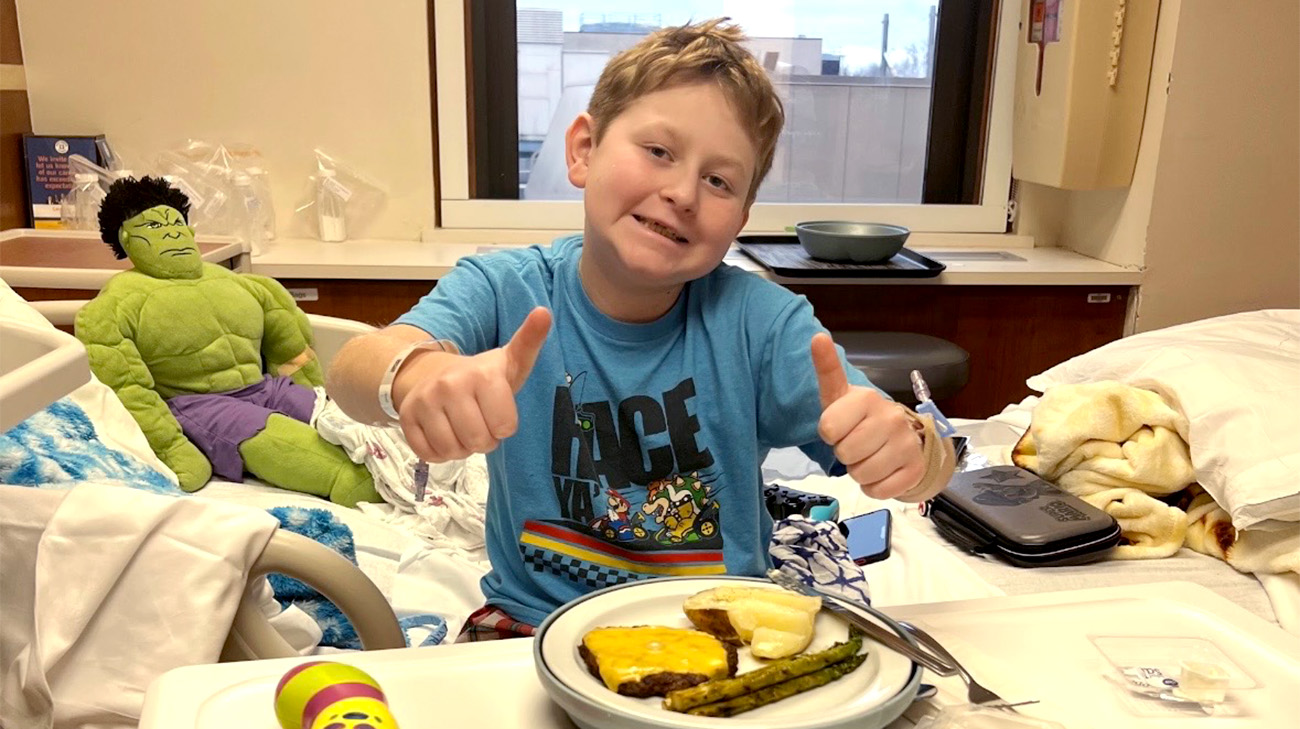
Even during hospital stays, Trey maintained a positive attitude, always looking forward to getting back to the things he loves, from baseball to video games. (Courtesy: Jen McGowan)
"Along with keeping tabs on his diet, we’re constantly monitoring his blood sugar levels. If they drop too low, I give him an emergency dose of dextrose (a fast-acting form of glucose) to quickly raise his blood sugar and prevent complications like seizures," says Jen.
As Trey got older, his daily cornstarch doses decreased to seven, but managing the frequent feeds remained challenging for both him and his mom.
"It took a lot of time out of our day and sometimes I felt like it was holding me back from doing everything I wanted," says Trey, who during the school year has to leave class throughout the day to get doses of cornstarch.
Hoping to rely less on cornstarch, Trey took part in a clinical trial for a gene therapy the FDA has since approved called GENGLYCOS (pariglasgene brecaparvovec-opnr). People with glycogen storage disease can’t properly store or use glycogen because they’re missing an enzyme the liver needs to release glucose into the bloodstream to maintain stable blood sugar levels. GENGLYCOS is a one-time gene therapy for people with glycogen storage disease type Ia that gives liver cells a working copy of the gene for making that enzyme. This can help patients depend less on cornstarch to keep their blood sugar stable.
“The treatment is given as a single infusion through an IV. Afterward, we monitor patients very closely through frequent blood draws and regular clinic visits to check how their blood sugar responds and ensure their body is adjusting safely to the new therapy,” says Dr. Radhakrishnan.
Compared to the placebo group, patients, including Trey, who underwent the gene therapy, were able to cut out one cornstarch feed per day or more.
"He’s gone from seven feeds down to six, reducing his daily cornstarch intake by over 1,000 calories. That's a really big deal when it comes to a disease with no cure," says Jen. "For me, there's now a sense of security knowing that something else aside from the cornstarch is helping him."

After receiving gene therapy, Trey and his family say they feel more at ease managing his glycogen storage disease. (Courtesy: Jen McGowan)
With his last feed now at midnight, Trey no longer has to wake up overnight to take cornstarch doses – helping the 13 year old of Dayton, Ohio, stick to a more typical schedule. He’s also gaining independence, now starting to administer his own doses while keeping up with school, playing baseball and spending time with friends.
"He's able to go off and play with a friend for a couple of hours without worrying about his blood sugar as much or me having to be right there with him," says Jen.
From here, Trey's care team will closely monitor him as they look to see how well the therapy continues to work and whether it will need to be readministered in the future. Trey and Jen hope sharing his story will help other families navigate glycogen storage disease and raise awareness about this new treatment option.
"I originally joined the trial to not only help myself, but to also hopefully help other people with the same condition as me," says Trey.
"After he was diagnosed, we wanted to become advocates and raise awareness about this rare disease and ways to manage it. Trey didn't hesitate to join the trial, and while this gene therapy treatment isn’t a cure, it has truly improved his quality of life," says Jen.
Related Institutes: Endocrinology & Metabolism Institute, Cleveland Clinic Children'sPatient Stories

‘Cornstarch Keeps My Son Alive’: Boy Eats Raw Cornstarch Daily To Manage Rare Metabolic Disorder
Oct 8, 2026
Woman's Debilitating Headaches Traced to Rare Spinal Fluid Leak
Oct 6, 2026