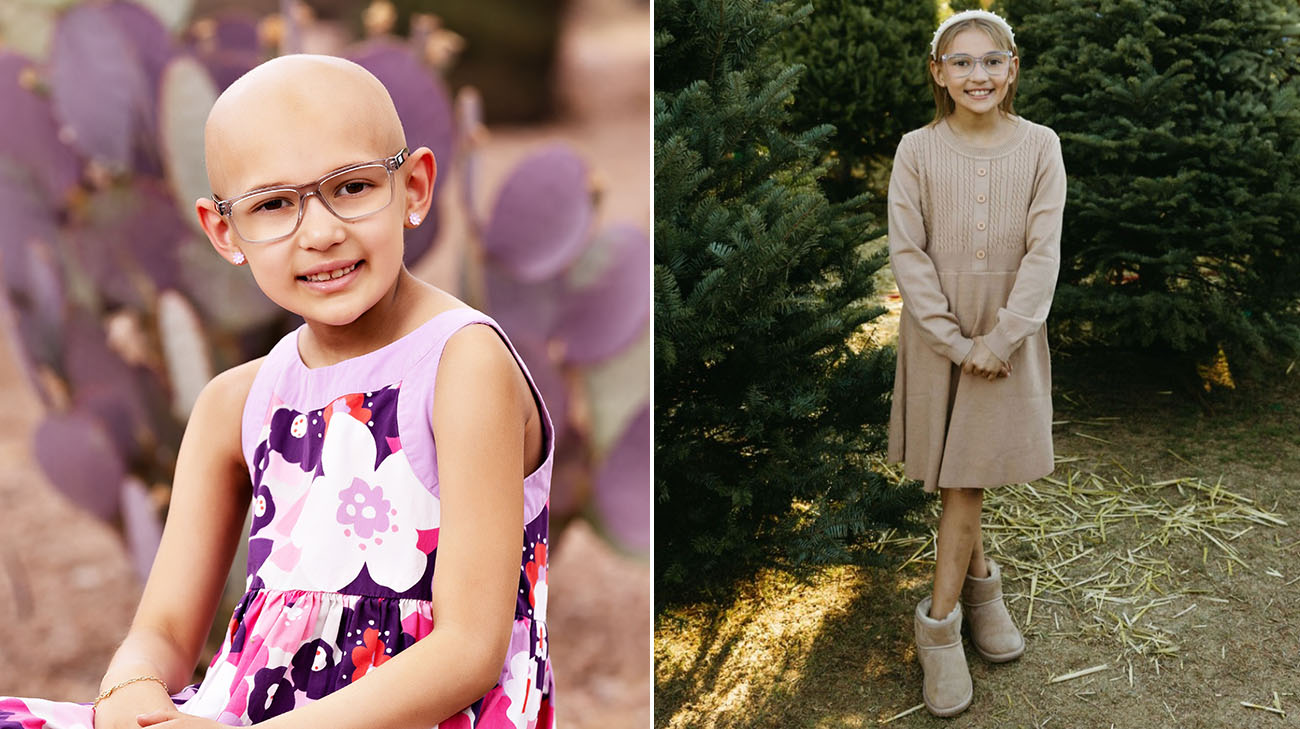
In late 2022, 6-year-old Ariella Campos began experiencing recurring stomach pain. Thinking certain foods might be contributing to the problem, her mother tried eliminating items including sugar from Ariella's diet, but the symptoms persisted.
A few months later, Ariella came down with a cold that left her with a lingering cough she couldn't shake. Then, during her routine 7-year-old well visit in February 2023, Ariella mentioned something she hadn't previously told her mother: a lump was protruding from the side of her abdomen.
Her pediatrician, near the family's home in Arizona, examined the lump and noted additional concerns. Ariella's lungs sounded raspy, and she had gained only one pound over the previous year. The doctor ordered an X-ray, but when the results failed to provide clear answers, she requested a CT scan. With the next available appointment still two weeks away, the pediatrician took a more urgent approach, arranging for Ariella to be admitted to a local hospital's oncology unit for a comprehensive evaluation.
“That's when we knew this was serious,” her mom Chelsy Campos recalls.
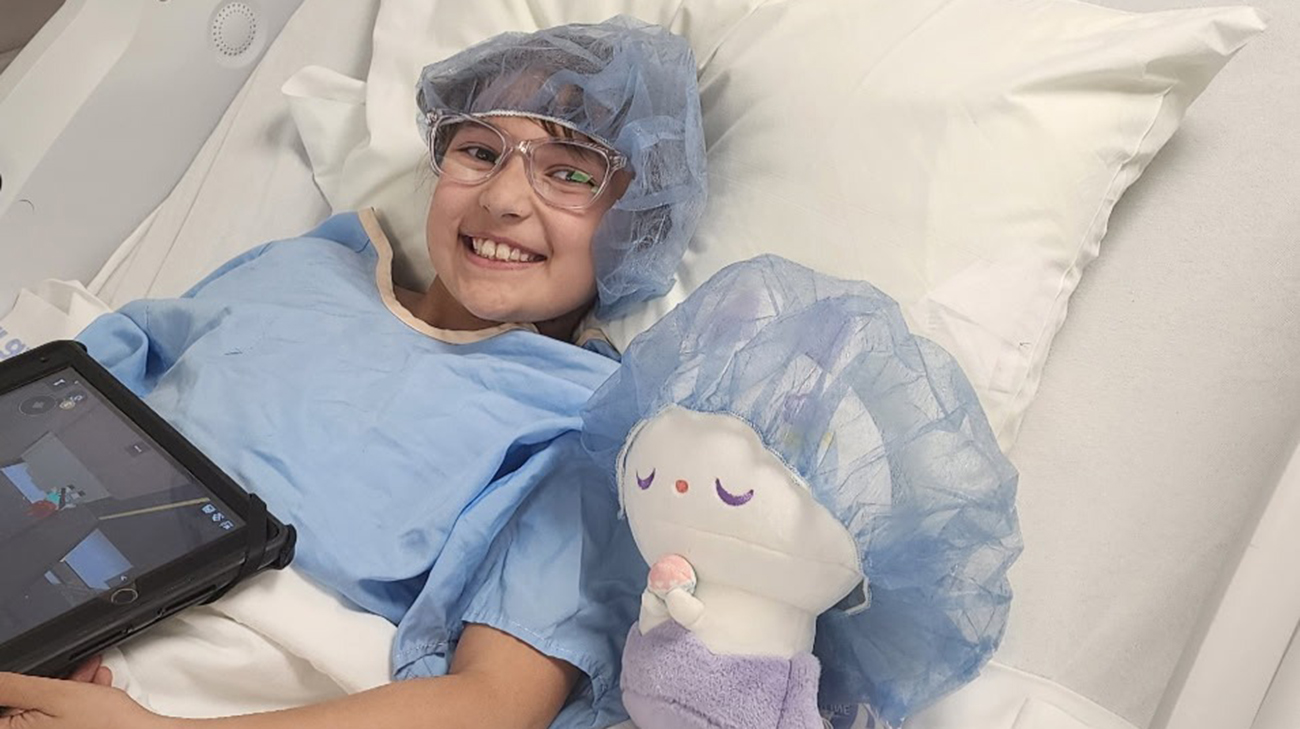
Ariella prepares for one of the procedures she underwent during treatment for her rare cancer. (Courtesy: Chelsy Campos)
Initially, Ariella's care team suspected she might have a condition similar to ovarian cancer. However, after performing a biopsy, a surgeon delivered unexpected news: a small-cell cancer was present throughout her abdomen, spine and lungs.
“They said the only other places it could have gone were her blood or her brain,” Chelsy recalls.
While waiting for the biopsy results to return, the family searched for answers on their own. As they learned more, they began to suspect she had desmoplastic small round cell tumor (DSRCT), a rare and aggressive soft-tissue sarcoma that typically forms multiple tumors in the abdomen and pelvis. Their fears were ultimately confirmed when the final pathology results came back.
“No one in our family has ever had cancer so this was all new to us,” Chelsy recalls.
During that wait, the family also began researching specialists across the country with experience treating DSRCT. Their search led them to Cleveland Clinic Children’s pediatric hematologist-oncologist Peter Anderson, MD, PhD.
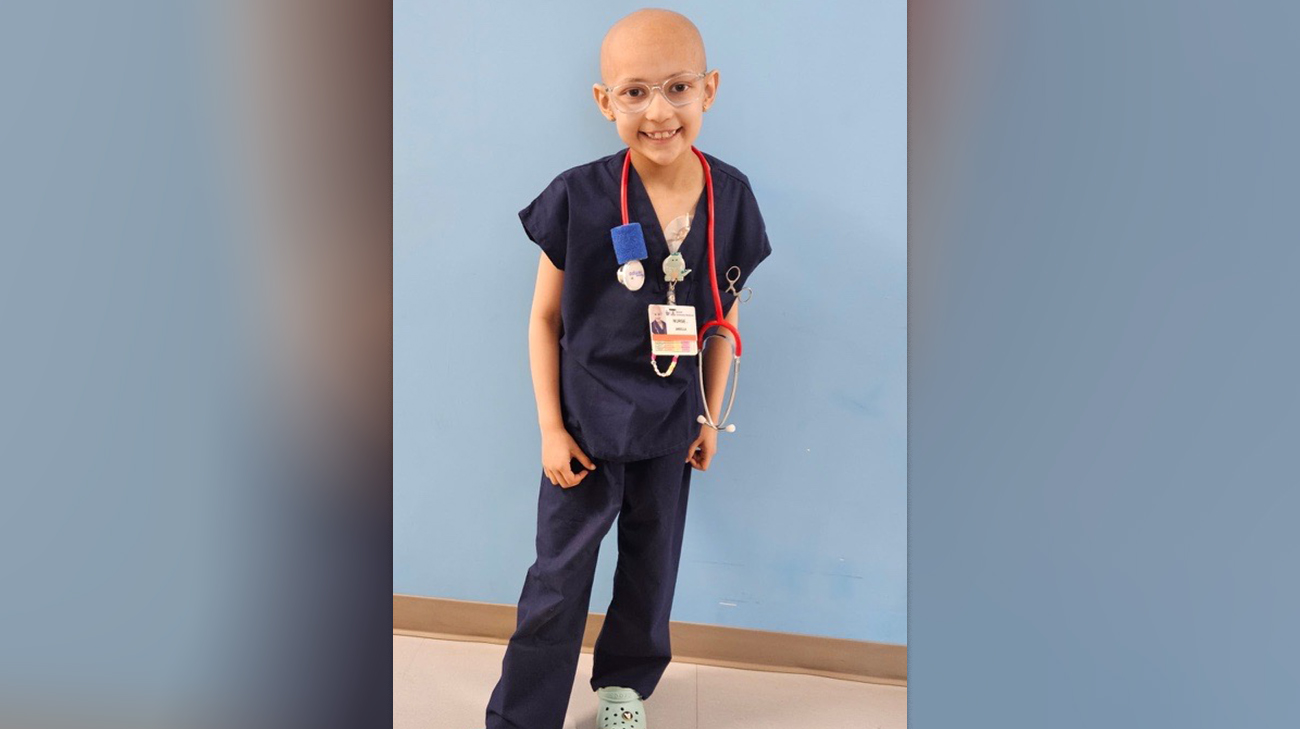
During treatment, Ariella brought creativity and imagination to even the most challenging days. (Courtesy: Chelsy Campos)
After an initial virtual consultation with Dr. Anderson, the family made the trip from Arizona to Cleveland, Ohio, for the first of many visits. Since then, Ariella has undergone two surgeries at Cleveland Clinic Children’s, including a procedure to remove part of her lung, as well as chemotherapy and radiation treatment.
Thanks to the expertise and coordinated care of Dr. Anderson and the team, Ariella is doing well today. She has been free of DSRCT for more than a year, and for the first time since her diagnosis, she has started gaining weight again. To help reduce the risk of recurrence, she continues to receive chemotherapy in Arizona approximately every five weeks, through guidance from Dr. Anderson.
“What stood out about Ariella’s case was not only how rare this diagnosis is in a young girl, but also how advanced the cancer was at the time of diagnosis,” says Dr. Anderson. “It took a combination of imaging, pathology and molecular testing to confirm exactly what we were dealing with. She’s the kind of patient who reminds us why we do this work, because her outcomes have been better than expected and continue to give us reasons to smile.”
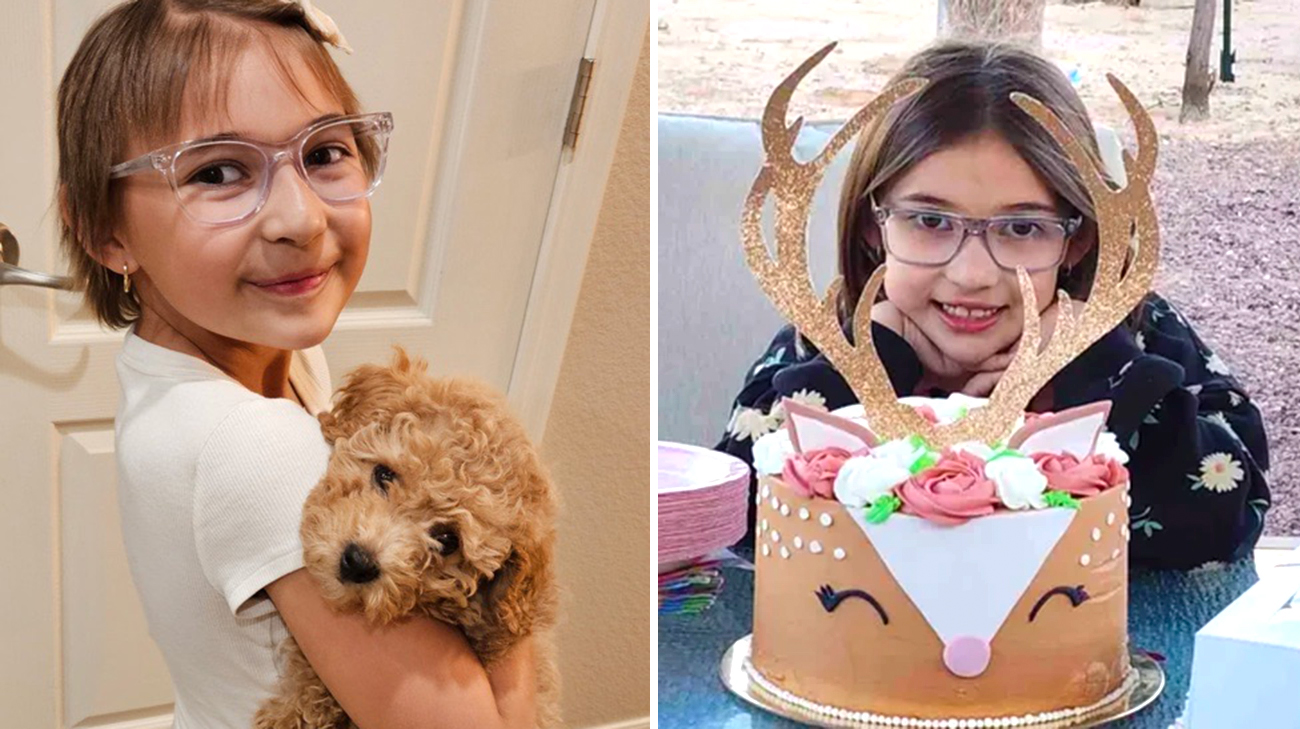
After years of treatment, Ariella is back in school and returning to the activities she loves. (Courtesy: Chelsy Campos)
Fortunately, Ariella hasn't experienced significant nausea during chemotherapy and is excited to be back in school full time. After missing much of first and second grade during treatment, the fifth grader now refuses to miss school unless absolutely necessary.
“She loves going to school and will even tell her doctor she can't come to an appointment unless it's after school,” Chelsy says with a laugh. “This somewhat mystifies her older sisters, who are 13 and 15, but all she wants is that normalcy.”
Art is one of Ariella's favorite subjects, and it became a creative outlet when she began losing her hair during chemotherapy. She turned the experience into a family-inspired art project, creating a collection of rock-like creatures that reflected each member of her family.
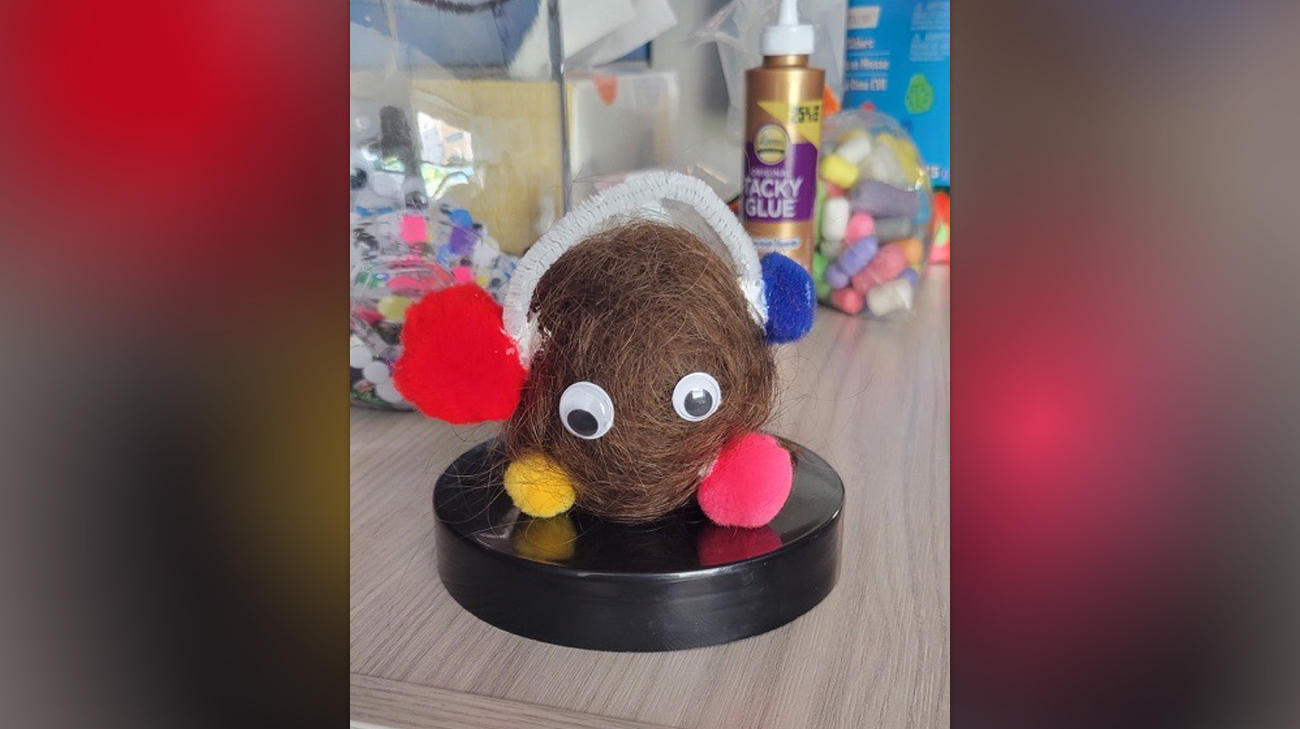
One of Ariella's hair creations, made from strands of hair she saved during chemotherapy. Art became a creative outlet throughout her treatment.(Courtesy: Chelsy Campos)
“She kept every little strand she could and made these hair balls, including putting googly eyes on them. One of them even has headphones,” Chelsy says. “I still keep them in a shoebox in my closet.”
Beyond the classroom, Ariella is getting back to activities she missed during treatment. She plays volleyball for her school, wearing a protective cover over her chemotherapy port, and is considering running track this spring. She also loves dance and recently started taking hip-hop lessons.
The family is hopeful Ariella may one day be eligible for a DSRCT vaccine Dr. Anderson is working to develop. For now, however, they remain focused on the present.
“Before Ariella's diagnosis, we were always thinking about what was next,” Chelsy says. “That experience taught us worrying while waiting for scan results or the next update doesn't change the outcome. We don't know what life will bring, but we trust God won't give us more than we can handle. Now, we try to focus on today.”
Related Institutes: Cleveland Clinic Children'sPatient Stories
Young Girl Overcomes Rare Cancer That Spread to Her Lungs and Spine
Sep 30, 2026
Boy Thriving After Complex Surgery for Rare Criss-Cross Heart Condition
Sep 29, 2026