



Radiation therapy for breast cancer uses powerful X-rays to kill cancer cells in tumors. Most people who have breast cancer surgery need radiation afterward to get rid of cancer cells that may remain. This reduces the risk of cancer coming back. Although it’s effective, radiotherapy can cause side effects that your provider will help you manage.
Advertisement
Cleveland Clinic is a non-profit academic medical center. Advertising on our site helps support our mission. We do not endorse non-Cleveland Clinic products or services. Policy
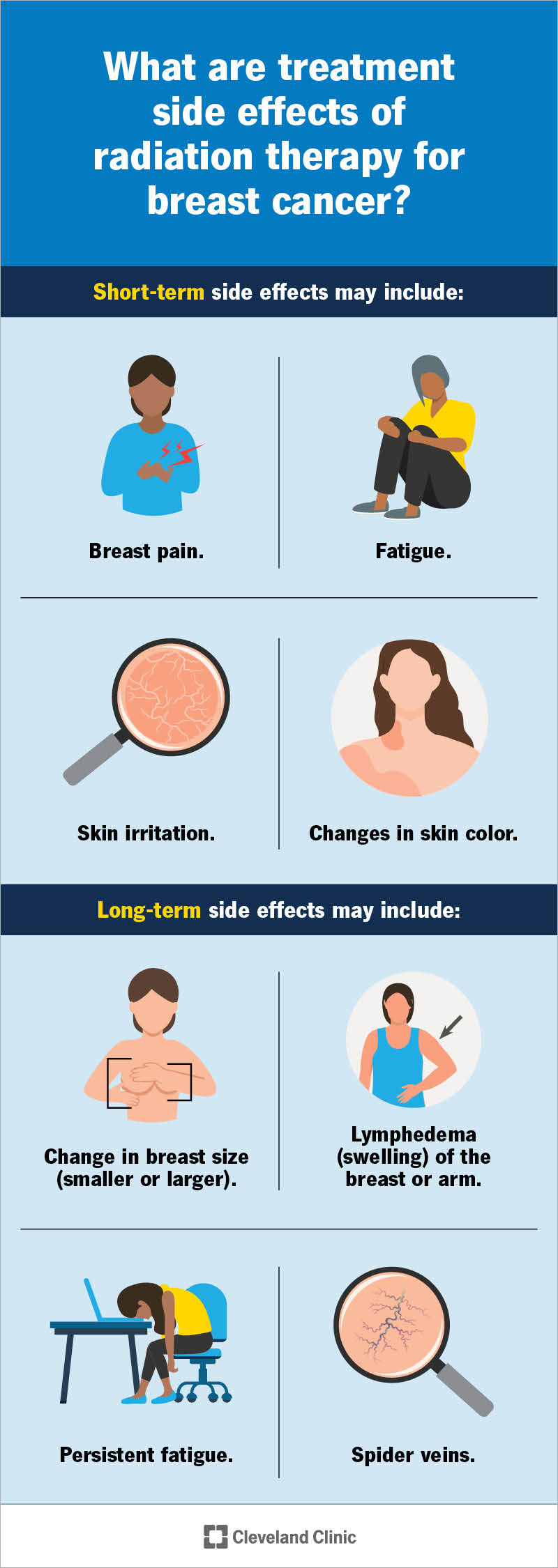
Image content: This image is available to view online.
View image online (https://my.clevelandclinic.org/-/scassets/Images/org/health/articles/9191-radiation-therapy-breast-cancer)
Radiation therapy for breast cancer uses high-powered X-rays to kill or damage cancer cells in your breast. It often happens after breast cancer surgery to remove a tumor. After the tumor is gone, radiation oncologists use radiation to get rid of any remaining cancer cells. With advanced breast cancers, radiotherapy can stop or slow tumor growth. This can help manage symptoms.
Advertisement
Cleveland Clinic is a non-profit academic medical center. Advertising on our site helps support our mission. We do not endorse non-Cleveland Clinic products or services. Policy
There are different ways to receive treatment. Types of radiation therapy for breast cancer include:
For most people, treatment benefits greatly outweigh the risks. Radiation therapy has been a standard breast cancer treatment for over 100 years. This is because it can destroy cancer cells with minimal damage to healthy tissue. It reduces the chance of cancer coming back after surgery. And it helps people live longer.
But with any treatment, there are also downsides. Although this treatment limits radiation exposure to areas that aren’t cancer, it can still impact some healthy tissue. This can lead to side effects.
Short-term side effects of radiation therapy for breast cancer include:
Advertisement
Long-term radiation therapy side effects include:
Sometimes, radiation therapy to your chest can cause more serious issues. For example, it may increase your chance of developing a second cancer. It can sometimes lead to issues with your heart and lungs. These complications are very rare.
Your cancer care team will go to great lengths to keep you safe during treatment to prevent issues like these. Still, they’ll review the risks with you before treatment and address any concerns you may have.
With external beam radiation therapy, your first appointment is a planning session called a simulation (“sim”). During sim, your radiation oncology team will do a CT scan to map out the treatment area on your breast. This helps them design the radiation beams. They’ll tailor the shape and strength of the beams to you.
A team member will walk you through exactly what’ll happen during treatment. They’ll:
Sim may take an hour or more.
The specifics depend on your treatment plan, including the type of radiation therapy. Usually, radiation takes place over many days as an outpatient procedure. This means you can go home after each session.
When you arrive, a team member will give you a hospital gown to wear and escort you to the treatment room. The next steps will be a lot like sim. Your care team will:
A session lasts about 30 minutes. The actual treatment takes place in two-to-three-minute increments during a 15-minute period. Most people get treatment for five days a week for one to six weeks.
Advertisement
It’s extremely successful. Over the years, several studies have shown that radiation therapy after breast surgery greatly reduces the risk of a tumor coming back. Related, radiation after breast surgery reduces a person’s long-term risk of dying from breast cancer.
If breast cancer is too advanced to cure, radiation therapy can relieve symptoms like pain, bleeding and ulcers. It can improve your quality of life.
Side effects often don’t show up until closer to the end of treatment or shortly after. The most common ones are fatigue and skin changes. This is because the effects of radiation therapy build up over each session. Once you stop treatment, both your body and skin get a break from the radiation. This helps with healing.
Radiation therapy can make your skin feel tender, itchy and painful. It may affect your appetite and leave you feeling tired. Here are some tips to help you push through:
Advertisement
Generally, yes, but it depends on your situation. You’ll probably feel OK when you first start treatment. As treatment continues, you may start to notice you have less energy.
Talk with your cancer care team to see how much work (and what kinds) may be doable at different stages of treatment. You may need to switch from full-time to part-time for a while. You may need to take time off during treatment or for the first few months after.
Let your provider know anytime you have side effects that are more severe than you expected. They can suggest treatments to help.
Your radiation oncologist will talk you through what you should and shouldn’t do during treatment. It’s important to follow their guidance.
For example, it’s important that you don’t move during treatment. Try to lie perfectly still. You should also take deep breaths when they tell you to in order to protect your heart and lungs from radiation exposure.
Make sure that you’re doing everything you should leading up to treatment, too. This may include:
Radiation therapy is a common and effective breast cancer treatment. Depending on your situation, it may keep breast cancer from coming back after surgery. If the cancer is too advanced to cure, radiation therapy may help you live longer and with fewer symptoms.
Advertisement
Ask your cancer care team about the benefits and risks, including the side effects. They’ll make sure you know what to expect, so that you know for sure whether radiation therapy is right for you.



Sign up for our Health Essentials emails for expert guidance on nutrition, fitness, sleep, skin care and more.
Learn more about the Health Library and our editorial process.
Cleveland Clinic’s health articles are based on evidence-backed information and review by medical professionals to ensure accuracy, reliability and up-to-date clinical standards.
Cleveland Clinic’s health articles are based on evidence-backed information and review by medical professionals to ensure accuracy, reliability and up-to-date clinical standards.
Cleveland Clinic offers expert radiation therapy with advanced technology, personalized care and virtual visits to support you every step of the way.
