



Hepatitis B is a viral infection that damages your liver. You can get it if you’re exposed to infected bodily fluids. The acute form of the virus often goes away without treatment. But chronic hepatitis B is an incurable illness. Treatment is medication to reduce the risk that the virus will spread or cause complications.
Advertisement
Cleveland Clinic is a non-profit academic medical center. Advertising on our site helps support our mission. We do not endorse non-Cleveland Clinic products or services. Policy
Hepatitis B is a viral infection that causes inflammation in your liver. It’s the most common liver infection in the world. You may have symptoms like belly pain or fever, but some people don’t get symptoms at all. You may also develop symptoms of liver disease.
Advertisement
Cleveland Clinic is a non-profit academic medical center. Advertising on our site helps support our mission. We do not endorse non-Cleveland Clinic products or services. Policy
Hepatitis B spreads through contact with the bodily fluids of someone infected with the virus. For instance, it can be sexually transmitted or by sharing needles with someone who has it. Hepatitis B is a serious infection because it can lead to complications like liver failure.
There’s no cure for hepatitis B. But you can manage the condition with medications that make the virus inactive. Hepatitis B vaccination can help prevent the infection.
There are two main types:
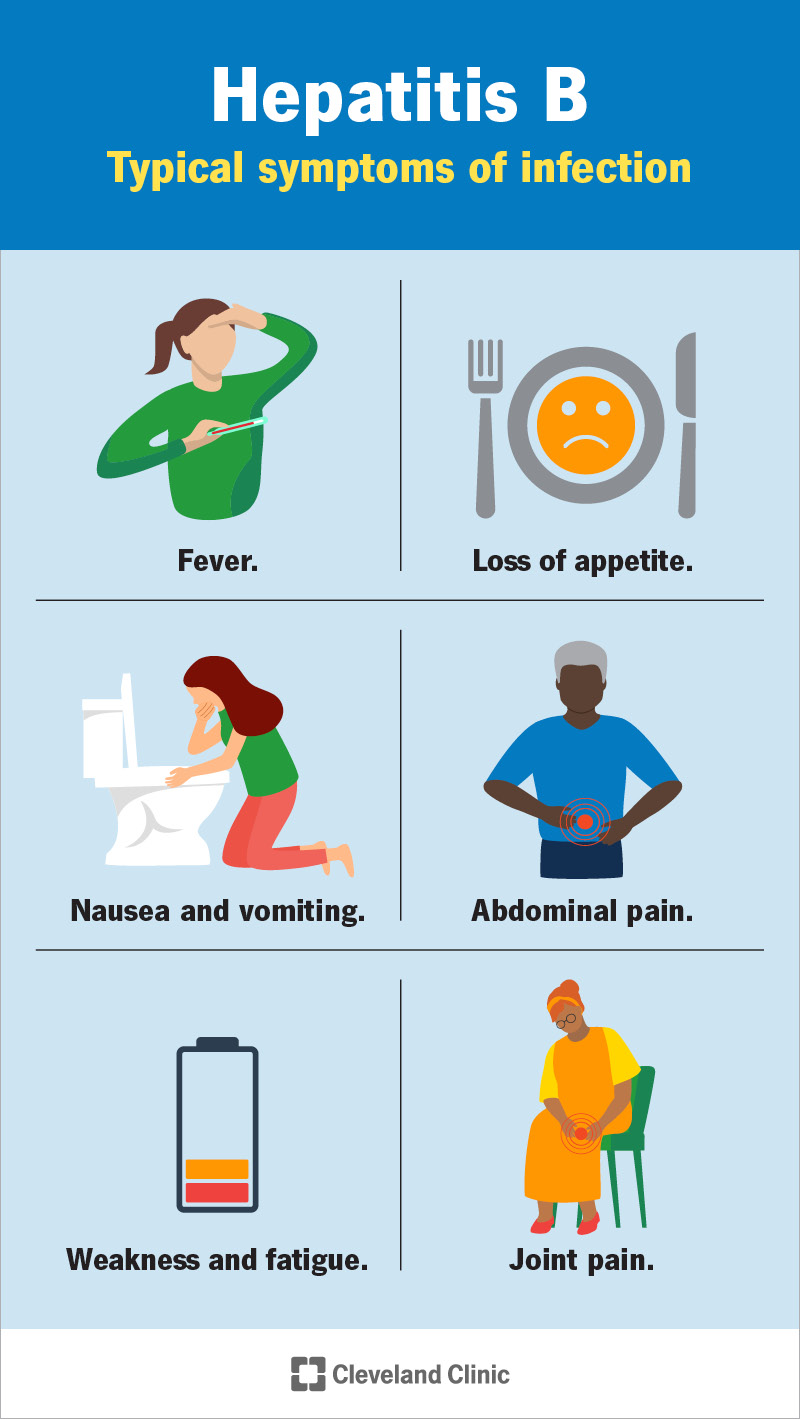
Image content: This image is available to view online.
View image online (https://my.clevelandclinic.org/-/scassets/Images/org/health/articles/4246-hepatitis-b)
You may not have symptoms or signs of hepatitis B. If they do appear, they may include:
You may also have symptoms of liver disease. These can include:
Hepatitis B transmission occurs when you’re exposed to the bodily fluids of someone who has the virus. These include:
Advertisement
Hepatitis B is mainly transmitted through:
Yes, you’re contagious as long as the virus is active in your body. For example, acute hepatitis B can last for up to six months. You can spread the virus that entire time.
If you have active chronic hepatitis B, you’ll be contagious for the rest of your life. If you have inactive chronic hepatitis B, the risk is lower. Your healthcare provider can do blood tests to find out if you have an active or inactive virus.
Anyone can get hepatitis B. But you may have increased risk if you:
Yes, and getting vaccinated is the most effective way to prevent an infection. It takes three doses of the vaccine before you’re completely protected. You’ll receive a series of shots over six months. In the meantime, to reduce your risk, you can:
Acute and chronic hepatitis B can lead to complications like:
A healthcare provider will ask you about your symptoms and do a physical exam. They’ll ask if you have a biological family history of liver disease. They may also ask if:
You may feel hesitant about answering these very personal questions. Your provider understands they may be hard questions. But they’re only asking them to understand your situation so they can help you.
Advertisement
Your healthcare provider may do:
Hepatitis B doesn’t have a cure. But certain medications can make the virus inactive. Inactive hepatitis B means you have the virus, but it can’t spread.
Treatment for hepatitis B depends on your condition.
Prophylactic treatment is when your healthcare provider gives you medication to prevent a disease. Your provider may prescribe it if you were exposed to the virus within the past 24 hours. Medications include:
There’s no specific treatment for acute hepatitis B. Your provider may give you IV fluids to prevent dehydration. Dehydration is when you lose so much bodily fluid that your body can’t work as it should.
Chronic hepatitis B treatment varies depending on your symptoms and overall health. Treatment options are:
Advertisement
Chronic hepatitis B symptoms can change over time. One way you can take care of yourself is to stay connected with your healthcare team. You can also:
Hepatitis B, like most hepatitis viruses, can sneak up on you. You can have it without knowing it. You may have a short-term form of the virus. But often, hepatitis B is a chronic illness for which there’s no cure.
If tests show you have hepatitis B, you may wonder how the disease will change your life. You may worry about spreading the virus to others. The good news is that there are medications that can keep chronic hepatitis B from spreading. And there are steps you can take to protect your overall health.
Advertisement
Your healthcare provider will help you plan for living with hepatitis B. And there are support groups that create a safe place for you to share your story. You’re not alone.



Sign up for our Health Essentials emails for expert guidance on nutrition, fitness, sleep, skin care and more.
Learn more about the Health Library and our editorial process.
Cleveland Clinic’s health articles are based on evidence-backed information and review by medical professionals to ensure accuracy, reliability and up-to-date clinical standards.
Cleveland Clinic’s health articles are based on evidence-backed information and review by medical professionals to ensure accuracy, reliability and up-to-date clinical standards.
Untreated hepatitis can cause liver damage or failure. Cleveland Clinic’s expert providers offer you the latest treatments and caring support.
