Staph infections happen when Staphylococcus bacteria get into your skin or other parts of your body. They can cause blisters, sores and boils on your skin. They can also infect your blood, heart, lungs, digestive tract, breasts or bones. Staph infections can be easily treatable or life-threatening. Providers treat them with antibiotics.
Advertisement
Cleveland Clinic is a non-profit academic medical center. Advertising on our site helps support our mission. We do not endorse non-Cleveland Clinic products or services. Policy
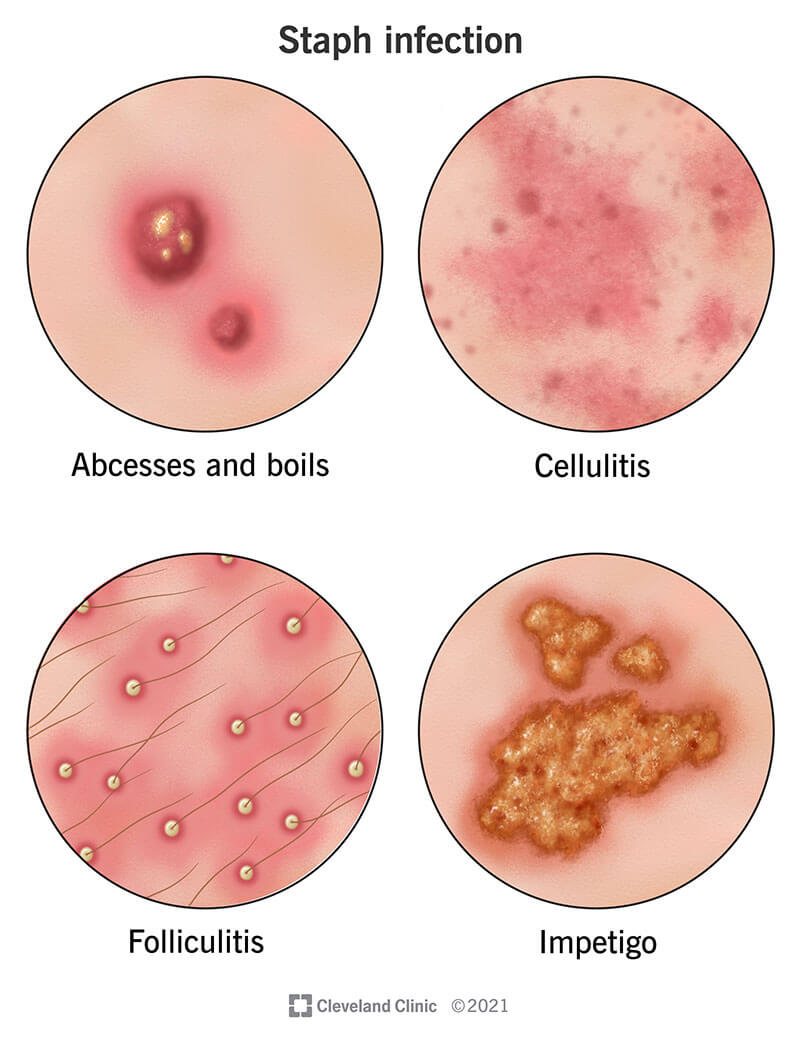
Image content: This image is available to view online.
View image online (https://my.clevelandclinic.org/-/scassets/images/org/health/articles/21165-staph-infection)
Staph infections happen when Staphylococcus bacteria get into your body. They most commonly affect your skin. They can cause boils, blisters and sores. Common skin conditions from staph include impetigo, cellulitis and folliculitis.
Advertisement
Cleveland Clinic is a non-profit academic medical center. Advertising on our site helps support our mission. We do not endorse non-Cleveland Clinic products or services. Policy
Staph can also cause infections in your:
Infections in your bloodstream or deeper in your body, like in your heart, can be life-threatening.
Symptoms depend on where the infection is. If you have a staph infection on your skin, you might have sores, boils or pimple-like blisters. Affected areas of your skin might be:
Symptoms of staph infections in other parts of your body include one or more of the following:
Staphylococcus bacteria cause staph infections. The most common type that causes infections is Staphylococcus aureus. It can live on your skin or in your nose without causing any issues. It can also contaminate objects and surfaces. If it gets into a wound in your skin or deeper in your body, it can cause an infection.
The bacteria can get into your body:
Advertisement
You’re at a higher risk for staph infections if you:
Staph infections can sometimes cause serious complications, especially if the infection is in your bloodstream. They include:
A healthcare provider may suspect a staph infection on your skin just by its appearance. They may also test a sample of tissue to determine the type of bacteria causing the infection, usually with a bacteria culture. If you have symptoms of a staph infection somewhere else in your body, they may test your:
They may also recommend other testing, like a CT scan or echocardiogram.
Healthcare providers treat staph infections with antibiotics. They may prescribe a cream to apply to a skin infection or a pill or liquid to take by mouth. Your provider may also drain boils or abscesses on your skin. For a serious infection, you may need to get antibiotics through an IV in the hospital.
MRSA (methicillin-resistant Staphylococcus aureus) and other antibiotic-resistant strains of staph cause some staph infections. These are harder to treat because certain antibiotics don’t work on them. If you have a MRSA infection, you may need to take a combination of antibiotics to get rid of it.
A staph infection can become serious very quickly. See a provider right away if you have signs of an infection.
Some staph infections are easily treatable and get better quickly. Others — especially infections in your blood or deep in your body — are more serious. Antibiotic-resistant infections are harder to treat. Ask your provider what to expect.
You can reduce your risk of a staph infection by:
Some staph infections are minor, and some are life-threatening. See a provider if you have any signs of an infection, especially if you’ve recently been in the hospital or had surgery. They can recommend the best course of treatment to help you feel better again.
Advertisement



Sign up for our Health Essentials emails for expert guidance on nutrition, fitness, sleep, skin care and more.
Learn more about the Health Library and our editorial process.
Cleveland Clinic’s health articles are based on evidence-backed information and review by medical professionals to ensure accuracy, reliability and up-to-date clinical standards.
Cleveland Clinic’s health articles are based on evidence-backed information and review by medical professionals to ensure accuracy, reliability and up-to-date clinical standards.
Need care fast? Cleveland Clinic’s Express Care and Urgent Care locations treat everything from sprains to sinus infections — no appointment needed.