


Educational Philosophy & Learning Model
EMS Education at Cleveland Clinic is grounded in a clear, structured model that blends adult learning principles with evidence-based simulation practices. Our approach focuses on practical application, reflective thinking, and competency development. The model guides every course, scenario, and learning experience we deliver across our EMS education programs.
Purpose and audience
This model guides all education delivered to EMS providers across our system, including new learners, experienced clinicians, and agency leadership seeking structured, competency-based training.
Our learning framework
Our philosophy is organized around four core elements used throughout all Cleveland Clinic EMS education programs.
- Adult learning principles: We design training that respects the experience and autonomy of adult learners. Key principles include:
- Self-direction: Learners understand what they need and benefit from choices in how they engage with material.
- Relevance: Education focuses on real clinical challenges rather than abstract concepts.
- Problem-centered learning: Activities are structured around practical scenarios instead of passive lectures.
- Experience as a resource: Providers bring valuable knowledge; our programs build on it rather than replace it.
- Experiential learning: We use structured cycles of experience, reflection, and refinement. This includes:
- Realistic scenarios that mirror common and high-risk events.
- Opportunities to practice decisions and communication, not just procedures.
- Immediate feedback that reinforces accurate clinical reasoning.
- Reflective practice: Learners develop awareness of how they think and perform. We incorporate:
- Guided reflection to evaluate decisions made during scenarios.
- Faculty-led discussion to examine clinical judgment, team communication, and scene strategy.
- Application planning so providers leave with clear steps for improving future performance.
- Simulation science: Simulation is a structured educational tool, not just technology. Our model emphasizes:
- Psychological safety: Learners perform without fear of embarrassment or punitive evaluation.
- Deliberate practice: Focused repetition of skills and decisions.
- Progressive complexity: Scenarios become more challenging as competency grows.
- Debriefing with good judgment: A structured debrief that improves insight and performance.
- Team-based performance: Emphasis on communication, shared mental models, and role clarity.
How the model shapes our education
We use this framework throughout all of our outreach to ensure training is:
- Consistent: Providers receive clear, structured education no matter the location.
- Evidence-informed: Curriculum updates reflect current state scope, regulatory changes, and emerging research.
- Practical: Every activity prepares learners for situations they will encounter in the field.
- Competency-focused: Learners develop measurable skills, not just knowledge.
This model helps EMS providers build confidence, improve decision-making, and strengthen team coordination during time-critical situations.
Simulation-Based Training
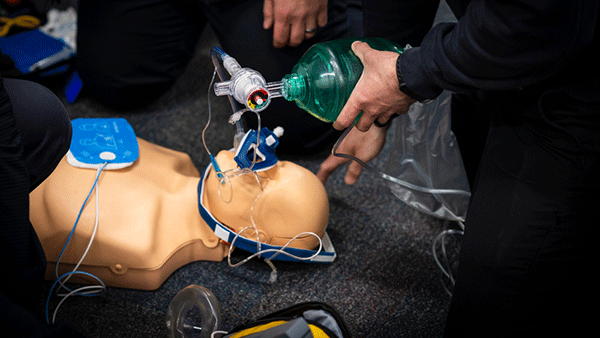
Simulation is a central component of Cleveland Clinic’s EMS education model. It provides a structured way for providers to practice clinical decisions, technical skills, and team communication in a controlled environment. Each scenario reflects the conditions EMS professionals encounter in the field while maintaining a safe space for learning and reflection.
Purpose and audience
This program supports EMS providers at all levels of experience. Simulation is used for initial education, competency development, and ongoing skill refinement across partner agencies.
Our simulation framework
We organize simulation training around six pillars that guide how scenarios are designed, delivered, and debriefed.
- Foundational skills: Learners begin with essential skills through focused, hands-on practice. These sessions emphasize accuracy, consistency, and proper technique before advancing to complex calls or decision-making activities.
- Team-based scenarios: Providers participate in structured scenarios that mirror daily EMS operations. These activities strengthen communication, role clarity, shared decision-making, and scene coordination during high-demand situations.
- High-acuity/low-frequency events: Training includes time-critical conditions that require rapid recognition and coordinated action. These scenarios prepare providers for uncommon but high-risk events where performance has a significant impact on patient outcomes.
- Standardized system-wide scenarios: All participating EMS agencies train using the same scenario themes during each cycle. This consistency supports shared expectations, reinforces clinical standards, and contributes to coordinated system-level quality improvement.
- Real-time data feedback: Objective performance indicators are incorporated into scenarios when appropriate. This information helps learners understand how specific decisions, timings, or actions influence patient care. Data is used to support learning—not for evaluation or comparison.
- Structured debriefing: Every simulation concludes with a guided debrief led by trained facilitators. Debriefing focuses on clinical reasoning, communication, and teamwork. The approach is grounded in psychological safety and encourages honest reflection and practical improvement.
Education cycle
Simulation is part of a broader, year-round education model designed to support consistent development.
- Preparatory didactic lecture: Prior to each simulation cycle, EMS providers receive a one-hour recorded didactic session taught by a Cleveland Clinic physician. This provides foundational clinical context and ensures all participants begin each cycle with a shared understanding of the scenario’s core themes.
- Recurring simulation cycles: Simulation occurs several times per year and follows standardized themes across the system. These cycles emphasize deliberate practice, progressive complexity, and team-based performance.
- Non-simulation months: During periods between simulation cycles, education focuses on procedural skills, tabletop case discussions, run reviews, and small-group learning activities. These sessions reinforce clinical reasoning, maintain technical proficiency, and prepare providers for upcoming simulation work.
Our educational approach
Simulation at Cleveland Clinic is built on established principles of effective instructional design:
- Psychological safety
- Deliberate practice
- Progressive scenario complexity
- Competency development
- Development of non-technical skills such as communication and situational awareness
This approach allows EMS providers to apply protocols, test decisions, and strengthen teamwork within a controlled environment, supporting readiness for real-world clinical demands.
Guest Lecture Series
The Guest Lecture Series offers EMS providers access to current, relevant education presented by clinical and operational experts from across Cleveland Clinic and the region. Sessions are held several times each year in multiple locations to ensure providers can participate regardless of where they work.
Each event focuses on practical topics that support field performance. Lectures may include discussions on airway management, trauma, cardiac care, neurologic emergencies, behavioral health, and other areas important to prehospital practice. Presenters use case examples, current evidence, and clear takeaways that providers can apply on their next shift.
The series is designed for engagement. Sessions include opportunities for questions and discussion, allowing providers to learn from faculty and from one another. Continuing education credit is available for all offerings.
The EMS Education team collaborates with fire departments, EMS agencies, and healthcare partners to identify topics that reflect current needs in the field. This approach ensures the series remains useful, accessible, and aligned with the realities of prehospital care.
Cardiac Arrest Data Review & Performance Feedback
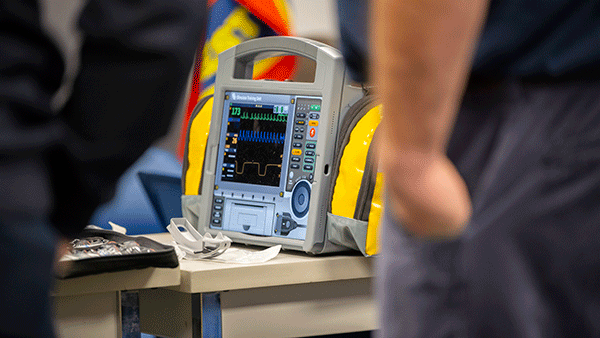
Cleveland Clinic supports EMS agencies by providing structured feedback on resuscitation performance following cardiac arrest events. This process uses data captured from EMS cardiac monitors and mechanical CPR devices to help identify opportunities for improvement and reinforce high-quality care.
Our team reviews objective metrics such as compression fraction, rate and depth, ventilation frequency, and peri-shock pauses. These data points inform targeted education, support post-event debriefing, and guide training priorities for EMS providers and medical directors.
After a cardiac arrest event, monitor data are transmitted securely to our EMS quality team. Reports are generated and shared with the appropriate medical direction groups to support agency-level quality assurance and improvement efforts. This approach allows EMS providers to review performance trends over time and focus on the interventions that have the greatest effect on patient outcomes.
Using structured feedback and performance-focused debriefing is consistent with national resuscitation guidelines and strengthens our shared commitment to continuous improvement in cardiac arrest care.
Cadaver Procedure Lab
The Cadaver Procedure Lab provides EMS providers and other healthcare professionals the opportunity to practice critical procedures in a controlled, supervised environment. Sessions are led by faculty from emergency medicine and are designed to support skill development for high-acuity, low-frequency interventions.
The lab uses human cadaver specimens to give learners a realistic understanding of anatomy and procedural technique. Participants receive guided instruction in essential airway, respiratory, and circulatory procedures commonly encountered in emergency and prehospital settings. Content may include airway management, chest procedures, vascular access, and other time-sensitive interventions.
Each session is limited in size to ensure adequate hands-on time and individualized coaching. The program includes a combination of demonstration, deliberate practice, and structured feedback consistent with current simulation and adult-learning principles. Continuing education credit is available for EMS providers who complete the course.
The lab is offered several times each year and is open to EMS providers, residents, nurses, and other clinicians based on course availability. Advance registration is required due to limited space. Learners receive course information, preparation materials, and logistical details before attending.
