



Heart failure (congestive heart failure) is a long-term condition in which your heart can’t pump blood well enough to give your body a normal supply. Blood and fluids collect in your lungs and legs over time. Medications and other treatments help manage symptoms, like swelling. This condition is life-limiting for many who have it.
Advertisement
Cleveland Clinic is a non-profit academic medical center. Advertising on our site helps support our mission. We do not endorse non-Cleveland Clinic products or services. Policy
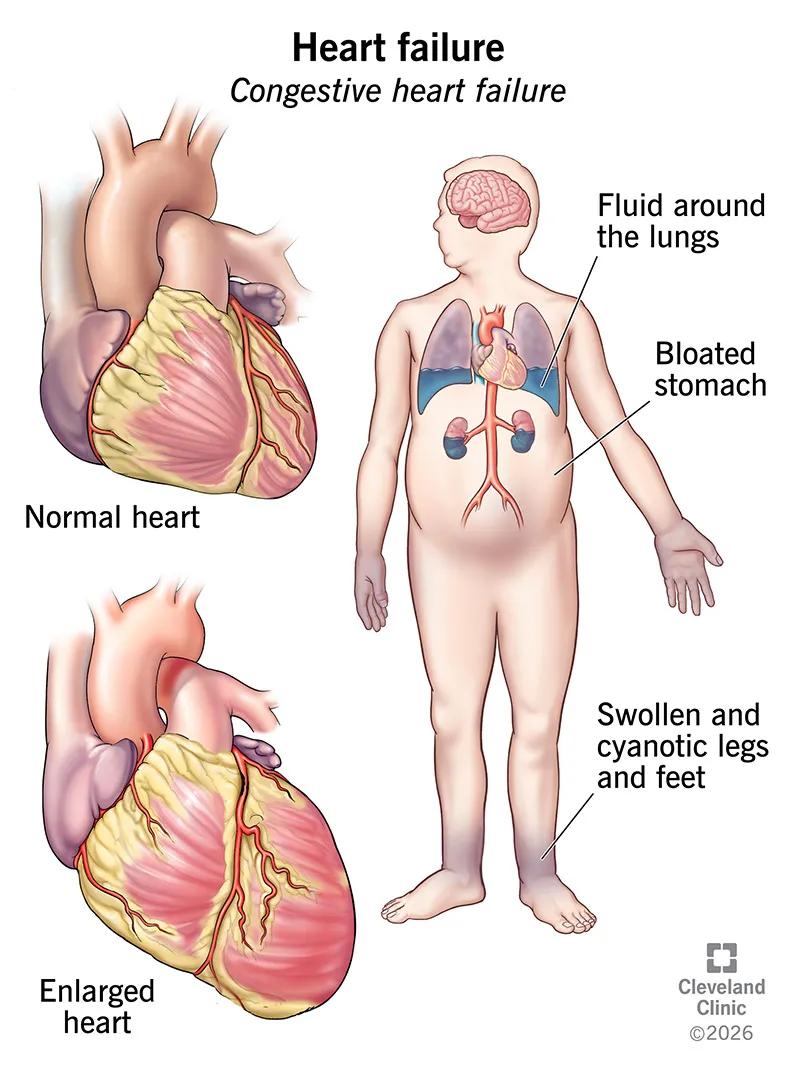
Image content: This image is available to view online.
View image online (https://assets.clevelandclinic.org/transform/ea6f4cd8-3423-48d4-b36b-6802f956f9d8/heart-failure-illustration-26-HVI)
Heart failure (congestive heart failure) is a common, chronic (long-term) condition in which your heart can’t pump blood well enough to meet your body’s needs. Your heart is still working. But because it can’t handle the amount of blood it should, fluid builds up in other parts of your body. Most of the time, it collects in your lungs, legs and feet.
Advertisement
Cleveland Clinic is a non-profit academic medical center. Advertising on our site helps support our mission. We do not endorse non-Cleveland Clinic products or services. Policy
Think of it like a shipping department where the staff can’t keep up with all the packages moving on a conveyer belt. The packages start to back up instead of getting where they need to go, leading to issues.
Heart failure usually begins with the lower left heart chamber, called the left ventricle. This is the heart’s main pumping chamber. But heart failure also can affect the right side. The lower right heart chamber is called the right ventricle. Sometimes, heart failure affects both sides of the heart.
Types of congestive heart failure include:
Symptoms and signs of heart failure can range from mild to severe. Sometimes, you may not have symptoms, or they may come and go. Heart failure usually gets worse over time. As it worsens, you may have more signs or symptoms — or different ones.
Advertisement
Heart failure symptoms include:
Heart failure can develop when your heart becomes damaged, weak or stiff. Common causes include:
Other conditions and factors can also cause heart failure, including certain infections, medications and long-term health conditions.
Some factors can increase your risk of developing heart failure, including:
You can’t change all of these risk factors, but healthy habits can help lower your risk of heart disease and heart failure.
Heart failure can affect more than your heart. When your heart can’t pump enough blood to meet your body’s needs, fluid can build up and your organs may not get enough blood. The complications you develop depend on how severe your heart failure is and what other health conditions you have.
Complications may affect:
Your healthcare provider will perform a physical exam. They’ll look for signs of congestive heart failure and diseases that may have made your heart muscle weak or stiff. They’ll ask you about your symptoms, your medical history, other health conditions you have and any medicines you take.
Advertisement
Tests can help diagnose heart failure and determine its stage, cause and severity. For example, a blood test can measure B-type natriuretic peptide (BNP), a substance your heart makes when it’s working harder than usual. BNP levels that are higher than normal can be a sign of heart failure.
Tests may include:
There are four congestive heart failure stages (A, B, C and D). They range from being at risk for heart failure to having an advanced case.
Healthcare providers may also use the New York Heart Association (NYHA) classification to describe how much your heart failure symptoms affect your daily activities. There are four classes:
Advertisement
Treatment can alter the course of this disease. Heart failure can get worse over time, making it harder for your heart to pump enough blood to your organs. Treatment aims to slow this progression, manage your symptoms and help you feel your best.
Your treatment will depend on the type of heart failure you have and, in part, what caused it. Medications and changes to daily habits are part of every treatment plan for this condition. Your healthcare provider will talk with you about the best plan for your needs.
These include:
Heart failure medicines may include:
Advertisement
Procedures may include:
If you have advanced heart failure, your care plan may also focus on relieving symptoms and improving your quality of life. Palliative care can help manage symptoms and provide emotional and practical support. You can receive it at any stage of a serious illness, not just at the end of life.
If your heart failure continues to get worse despite treatment, your healthcare provider may also talk with you and your family about your goals and wishes for future care.
Let your provider know if you have new or worsening symptoms, like:
Call 911 (or your local emergency services number) or go to the emergency room if:
These symptoms have several possible causes. So, you’ll need immediate medical care to find out what’s happening and get treatment.
Your prognosis (outlook) will depend on your symptoms, your heart muscle function and how well your body responds to treatment.
Heart failure may limit your activities. But you can care for yourself by tracking and reporting new or worsening symptoms to your healthcare provider and going to regular follow-up visits.
Heart failure can get worse over time. So, it’s a good idea to share your wishes for medical care with your provider and family. You can complete advance directives, including a living will, to let everyone involved in your care know what you want. These documents detail the treatments you want or don’t want to prolong your life. If possible, prepare these directives while you’re well in case you aren’t able to make such decisions later.
A heart failure diagnosis might leave you feeling powerless. But there’s a lot you can do to help manage this condition. Taking your medications, eating low-salt foods and staying active all can help. If you have questions or concerns about your medications or any other part of your treatment plan, talk with your healthcare provider.



Sign up for our Health Essentials emails for expert guidance on nutrition, fitness, sleep, skin care and more.
Learn more about the Health Library and our editorial process.
Cleveland Clinic’s health articles are based on evidence-backed information and review by medical professionals to ensure accuracy, reliability and up-to-date clinical standards.
Cleveland Clinic’s health articles are based on evidence-backed information and review by medical professionals to ensure accuracy, reliability and up-to-date clinical standards.
Cleveland Clinic can diagnose and treat heart failure of any kind, at any stage, with advanced therapies and compassionate care.
