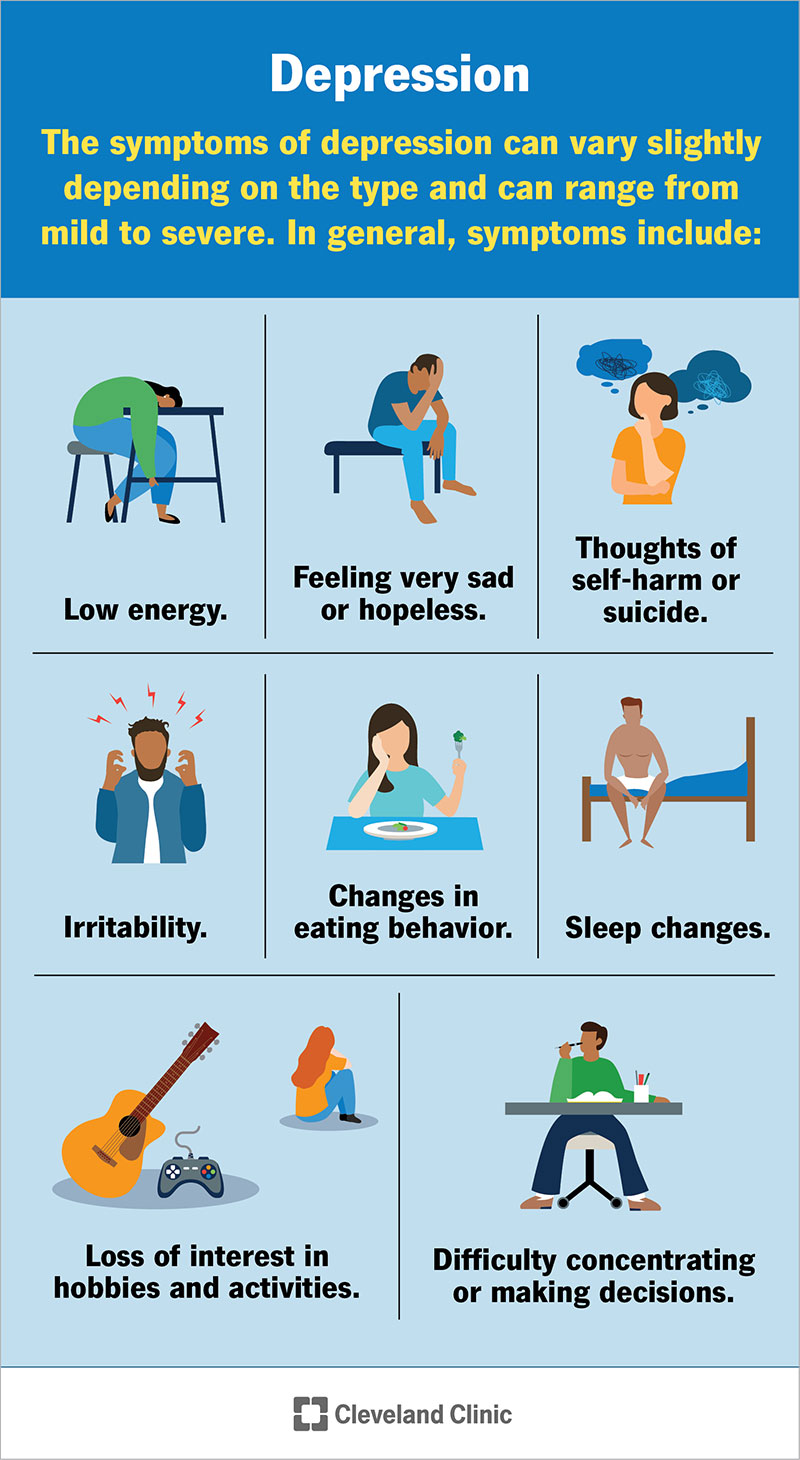
Depression can either trigger or be triggered by a variety of other behavioral disorders, including anxiety disorders, schizophrenia, eating disorders, attention deficit disorder, and substance abuse. Together, these conditions affect millions of Americans each year. Fortunately, there are effective treatments allowing those affected to lead normal and productive lives.
Anxiety disorders
Anxiety disorders produce intense, often unrealistic, and excessive apprehension and fear. They can occur during a given situation or in anticipation of a particular situation. When anxiety strikes, blood pressure may rise, the heart races, and breathing becomes more rapid. Nausea, agitation, discomfort, and even pain can occur. The causes of anxiety are as individual as the people affected, and symptoms, patterns, and intensity vary widely.
Anxiety disorders affect close to 25 million people at some time in their lives, with women affected twice as often as men. Some of the most common anxiety disorders include panic disorder, social phobia, agoraphobia, post-traumatic stress disorder, obsessive-compulsive disorder, and generalized anxiety disorder.
Panic disorder
Among the most common anxiety disorders, panic disorder commonly occurs along with depression, but may occur alone and affects nearly 2.5 million Americans every year, most often young adults. Panic disorder involves periodic attacks of anxiety, apprehension, or terror, often occurring unexpectedly and without reason. Attacks typically last 15 to 30 minutes, tend to occur in public places such as restaurants, auditoriums, or shopping malls, and occur with varying frequency, sometimes daily for weeks at a time or as infrequently as once every month or two. Some attacks seem to be triggered while others occur spontaneously with no warning (“out of the blue”). Because of this, the fear of having another one is common. This can lead to significant worry about having another attack (“anticipatory anxiety”) and to avoidance of circumstances the individual associates with or that seemed to trigger an anxiety attack. For example, an individual may avoid going to shopping malls if an attack occurred in a shopping mall. Such avoidance is called phobic avoidance or agoraphobia (see below).
The cardinal feature of panic disorder is the panic attack. A full-blown panic attack has four or more of the following symptoms:
- Fast heartbeat
- Extreme sweating
- Shortness of breath
- Shakiness
- A choking sensation
- Dizziness
- Nausea
- Numbness
- Hot flashes/chills
- Chest pain
- Fear of dying
- Feeling of losing control
The diagnosis of panic disorder requires four or more panic attacks within a four-week period accompanied either by concern about having other attacks, worry over the implications of the attack (like fear of having a heart attack), or avoidance behavior (phobic avoidance, or agoraphobia). Nearly 10 percent of the U.S. general population will have a panic attack at some time in their lives. Only 1-2 percent, however, will have a sufficient number of attacks and associated changes in thinking and behavior to qualify for a diagnosis of panic disorder.
Social phobia
Also known as social anxiety disorder, social phobia is associated with excessive and sometimes disabling self-consciousness in social situations. Circumstances typically associated with social anxiety include public speaking, signing one’s name in front of another person (e.g., signing a check or a credit card receipt), or eating in a restaurant. These and other situations can trigger fear of public humiliation, of being watched, judged harshly, or criticized. Understandably, the individual with social phobia avoids the situations that trigger these reactions, often with unfortunately negative impact on personal and professional development.
Social phobia is a common disorder, affecting more than 5 million people in a given year. It often begins in childhood and rarely develops after age 25. People with social phobia are aware that their fears are irrational but are unable to overcome them.
The symptoms of social phobia are much the same as those of other anxiety disorders and include trembling or shaking, intense sweating, nausea, difficulty talking, dry mouth, and a racing heart, or palpitations. As in other anxiety disorders, symptom intensity ranges from mild and tolerable to severe and socially debilitating.
Agoraphobia
Agoraphobia, the Greek term that means “fear of the market place,” is the diagnostic label for irrational fear and avoidance of public places. People who suffer from agoraphobia develop intense anxiety, and sometimes panic attacks, when exposed to a variety of situations. Some of the more common circumstances or locations include bridges, tall buildings, tunnels, elevators, driving on highways or even shopping malls (“the market place”). In response to their fears, the person with agoraphobia will endure them with discomfort or avoid them altogether. They might insist on driving along a particular route to work, visiting the homes of select relatives or friends, or restricting their travel to a short distance from home. In the most extreme cases, agoraphobia can cause a person to become “homebound,” which means that the person is unable to leave his or her own home.
Agoraphobia can occur with or without panic attacks. That is, although agoraphobia is associated with intense anxiety, it does not necessarily occur as attacks of anxiety; if they do occur, it is only during exposure to the feared situation, but never “out of the blue,” (that is, without provocation). Some people with agoraphobia do not experience anxious symptoms as long as somebody is with them; however, this creates other fears such as that of being alone and losing control in public. Agoraphobia most often begins in people in their mid-20s.
Post-traumatic Stress Disorder
Affecting more than 5 million Americans each year, post-traumatic stress disorder (PTSD) occurs as the result of exposure to situations and events where severe physical harm either occurred or was threatened. This may include experiencing or witnessing war situations, natural disasters, rape, mugging, physical abuse, and sexual abuse. Symptoms of PTSD often are triggered by an object or event (sometimes just a sound) that reminds the person of the trauma. The person may then re-experience the ordeal in the form of flashback (the individual feels like he or she is actually re-experiencing the traumatic event), nightmares, or terrorizing thoughts. These, in turn, can produce symptoms such as emotional numbness, sleep disturbances, social withdrawal, irritability, feelings of intense guilt, or an excessive startle response. The diagnosis of PTSD is made when symptoms have lasted more than one month.
PTSD can begin at any age and generally begins to show up usually within three months after the traumatic event. Like other anxiety disorders, severity and duration of the symptoms vary with each individual, and other disorders may occur along with PTSD. For example, almost 50 percent of people with PTSD also experience depression. Substance abuse, headache, stomach and immune system problems, chest pain, and dizziness also are common, co-occurring conditions.
Treatment of Anxiety Disorders
Effective treatments are available for all anxiety disorders. Anti-anxiety medications, including many antidepressant medicines and benzodiazepine tranquilizers, and/or cognitive behavioral therapy are most commonly used. Cognitive behavioral therapy teaches the person to identify thinking patterns that trigger anxiety attacks. Since many of these thinking patterns are deeply ingrained, regular practice is needed, first to recognize, and then to change them. This form of therapy also teaches patients how to calm themselves during an attack and to “desensitize” themselves to feelings of unease or terror. Exposure and desensitization to feared circumstances is another type of therapy that is very effective for agoraphobia and social phobia.
These therapies are commonly provided on an individual basis, but group formats are also used and very effective. Individuals often have a preference for either medication therapy or cognitive-behavioral therapy. The combination of these therapies, however, is often more effective than either modality alone.
Obsessive-compulsive disorder
Obsessive-compulsive disorder (OCD) is an anxiety disorder characterized by intense, recurrent, unwanted thoughts and rituals that are beyond the person’s control. Typical rituals include hand washing, counting, checking, hoarding, repeating, cleaning, and the endless rearranging of objects in order to ensure they are in precise alignment. The affected person generally recognizes that his or her thinking and behaviors are illogical and meaningless, but cannot stop them from occurring. Intense anxiety follows any attempt to stop or avoid the obsessive thoughts or compulsive behaviors.
Although other anxiety disorders generally affect women more often than men, OCD affects both genders equally. The degree to which OCD affects each person can vary from mild and not warranting medical intervention to severe and disabling. For some, it is mild; but for others, it can control their lives if left untreated. This disorder is typically first seen in adolescence or early childhood. OCD is sometimes accompanied not only by depression, but also by eating disorders, substance abuse, attention deficit disorder (ADD), and other anxiety disorders. Other illnesses that might be linked to OCD include hypochondria, Tourette’s syndrome, trichotillomania, and body dysmorphic disorder. OCD affects more than 3 million Americans in any given year.
Treating OCD
Some patients benefit from medicines alone, while others only respond to behavior therapy. For patients with OCD, however, traditional therapy that seeks to offer insight into a patient’s problem is not effective. A different approach called exposure and response prevention has been shown to help many patients with OCD. In this form of therapy, a patient deliberately and voluntarily confronts the object or idea that prompts obsessive-compulsive behavior. This can be done directly or through the patient’s imagination. Once exposed, a therapist will then offer support and structure as the patient confronts the object or thought. An example of this might involve a compulsive hand washer being encouraged to touch an object and then urged to avoid washing for several hours. This sort of encouragement is then increased in a step-by-step manner until the patient is able to control the anxiety and rituals. In extreme cases where disabling OCD has failed to respond to all conventional treatments, a new therapy known as deep brain stimulation (DBS) has proven to be very effective. This treatment involves a neurosurgical procedure and at this time is only available on an experimental basis in some tertiary, academic medical centers in the U.S. and Europe.
Schizophrenia
Schizophrenia is a type of psychotic illness. A psychotic illness prevents people from being able to distinguish the real world from one that is imaginary. A person with schizophrenia experiences jumbled thoughts, images, and sounds that come and go, often suddenly and to an overwhelming degree. Because the severity of schizophrenic episodes varies, some people can understand reality and function at work and at home, while others may be unable to function at all. Examples of schizophrenic symptoms include the following:
- Hallucinations – seeing, hearing, smelling, or feeling things that aren't really there
- Delusions – false beliefs from that the person is unwilling to give up
- Inability to make sense out of the world
- Emotions, thoughts, or moods that do not correspond to real events. (Panic attacks often meet this definition and lead suffers to the erroneous and unfortunate belief that they are “crazy” or have schizophrenia.)
- Hyperactivity
- Catatonia – a set of symptoms that can vary from near motionlessness to abnormal, purposeless movements
- Speaking in sentences that do not make sense
- Depression
- Isolation from the outside world, including family and friends
- Mood swings
- Inability to function in school, work, or other activities
- Failure to wash, groom, and dress appropriately
In order for schizophrenia to be diagnosed, these symptoms must last at least six months. There is no one cause of schizophrenia. Both environment and genes are believed to play important roles by adversely affecting brain chemistry and structure. Schizophrenia tends to run in families. Stress can aggravate the symptoms of schizophrenia, but by itself does not cause schizophrenia; the same can be said of poor parenting or a bad upbringing.
Schizophrenia affects men and women equally, although it tends to affect men earlier (late teens to early 20s) than women (20s to early 30s). More than 2 million Americans are affected by schizophrenia in a given year.
Treating schizophrenia
Effective antipsychotic medication is an essential component of successful treatment of schizophrenia. Supportive and educational psychotherapy for the patient and the family can help reinforce and maintain improvement achieved with antipsychotic medication. Psychotherapy alone, however, is unlikely to be effective. Antipsychotic medicines can lessen or stop hallucinations, help patients distinguish between reality and the imaginary, and lessen feelings of confusion. Once use of the medicine stops, the symptoms often return.
Eating disorders
Eating disorders are poorly understood. Typified by harmful eating habits, they are most common among teenage girls and young adult women and frequently occur along with other psychiatric disorders such as depression and anxiety disorders. Like other behavioral disorders, eating disorders often get worse the longer they go untreated. The lack of nutrition associated with eating disorders can harm the body’s organs and, in severe cases, lead to death. The two most common types of eating disorders are anorexia nervosa and bulimia nervosa.
People with anorexia purposefully starve themselves, despite being hungry. They tend to be very good in sports, school, and work—often seeking perfection. Some people with anorexia stop eating in order to gain a feeling of control over their lives, while others may do so to rebel against parents and other loved ones. The diagnosis of anorexia nervosa requires that a person has lost at least 15 percent or more of their ideal body weight (IBW). The IBW for women can be calculated by adding to 100 pounds 5 pounds for every inch over five feet. For example, the IBW for a woman of 5 feet, 3 inches is 100 + (3 x 5) = 115 pounds. Correspondingly, for a 5-foot, 3-inch woman, a weight less than 98.75 pounds (115 – (0.15 x 115)) would be consistent with a diagnosis of anorexia nervosa. Symptoms associated with this illness include:
- Rapid weight loss over several weeks or months
- Dieting even though weight is already very low
- Having an intense fear of gaining weight or getting fat
- Believing that the body is fat when in reality it is not
- Watching every bite of food
- Eating in secret
- Having an unusual interest in food
- Exercising very often
- Becoming very depressed or anxious
- Infrequent or absent menstrual periods
- Wearing loose clothing to hide weight loss
- Wanting to be perfect or being highly self-critical
Individuals with anorexia nervosa commonly purge, or empty themselves, through vomiting and/or abuse of laxatives, enemas, and diuretics. Some physical signs of anorexia nervosa include a low tolerance to cold weather, brittle hair and nails, dry or yellowing skin, anemia, constipation, swollen joints, and poor dental hygiene (e.g., erosion of enamel on the inside surface of teeth due to frequent vomiting.
Like other mental and emotional illnesses, the degree to which people suffer from anorexia varies. Some may recover fully after a single episode, while others spend years battling the illness. It is estimated that up to 3.7 percent of females will suffer from anorexia at some time during their lives.
For people suffering with bulimia nervosa, large amounts of food are eaten all at once and then vomited. The vomiting is triggered by a fear of weight gain or stomach pain. People with bulimia also use laxatives, diuretics, and vigorous exercise to purge themselves. In order for bulimia to be diagnosed, this behavior must occur at least twice a week for three months in a row. Although people with bulimia often are underweight, they also may appear to have a normal body weight. Common symptoms of bulimia include:
- Fasting
- Secrecy about eating behaviors
- Frequent bathroom use after eating
- Depression and mood swings
- Chewing and spitting out foods
- Preoccupation with food and weight
- Irregular menstrual periods
- Drug or alcohol abuse
- Feelings of anxiousness
- Intense feelings of guilt or shame
Because of frequent vomiting, people with bulimia expose their upper gastrointestinal tract to higher than average amounts of stomach acid, which over time can lead to physical problems. These may include a sore or bleeding throat, stomach problems, heartburn, bloating, swollen glands in the cheeks and face, and tooth decay. Although no one cause exists for bulimia, it often is a reaction to stress and anxiety. It is estimated that bulimia will affect up to 4.2 percent of females at some point in their lives.
Treating eating disorders
For patients with eating disorders, counseling often is an effective treatment. Counseling teaches patients how to free themselves from destructive patterns of thinking and behaving, as well as to re-evaluate their relationship with food. Medicines, such as antidepressants, also may be prescribed.
Attention Deficit-Hyperactivity Disorder (ADHD)
Many associate this diagnosis exclusively with school-age children and adolescents. A surprising number of adults, however, continue to suffer from the symptoms and behaviors of attention deficit-hyperactivity disorder (ADHD) that began during their childhood. Whereas seven to 10 percent of children suffer from clinically significant ADHD, at least four percent of adults continue to be affected. Hyperactivity, the most visible and obvious sign of ADHD during childhood, is less evident in adults who suffer from the disabling effects of inattention, procrastination, impulsivity, and mood disturbance that typify ADHD. Affected individuals often present for treatment of anxiety or depression because of poor job performance, interpersonal problems, or marital discord. The clinician must have a high index of suspicion for underlying ADHD since most adults do not think of themselves as having this problem. Substance abuse is also commonly associated with ADHD and can further mask this underlying problem. Some adults with ADHD first recognize it in themselves only after their child has received the diagnosis. In fact, if one or more siblings suffer from ADHD, there is a 50 percent to 60 percent chance that one of the parents does, as well.
Treatment of ADHD
Medication is the mainstay of treatment for ADHD in both children and adults. Cognitive-behavioral psychotherapy and techniques that promote better organization (writing oneself memos, keeping a personal schedule) can be very helpful, but appropriate medication is essential to complete success. The most widely prescribed and effective medications for ADHD are known as central nervous system stimulants: methylphenidate (Ritalin®) and amphetamine salts (Adderall®) are common examples. These medications come in short- and long-lasting forms: Ritalin LA® and Concerta® and Adderall XR®, and Vyvanse®, respectively. Dexmethylphenidate (Focalin®, Focalin XR® is a newer, purer form of methylphenidate. A non-stimulant drug that is also effective for ADHD and is not considered a “controlled substance” by the Food and Drug Administration (FDA) is atomoxetine (Strattera®.)
The stimulant drugs are controlled by the FDA, which practically means that only a one- month supply can be dispensed and each prescription renewal requires a newly issued prescription by the prescribing physician. That is, renewal requests cannot be telephoned to the pharmacy. These same restrictions do not apply to atomoxetine.
Substance abuse
Substance abuse is the use of drugs or alcohol to the point of social, occupational, or physical harm. More than 11 million people abuse drugs or alcohol for a variety of reasons—including as a way to cope with stress and anxiety or due to biological factors, such as a genetic tendency. Commonly associated with depression, substance abuse is diagnosed if any three of the following symptoms are found:
- The need to increase the amounts of a substance in order to become intoxicated, or a diminished effect from continued use of the same amount.
- Withdrawal symptoms such as nausea, shaking, insomnia, agitation, and sweating following a reduction in the amount of a substance taken.
- The need to increase the amounts of a substance in order to ease withdrawal symptoms.
- Despite a person’s efforts, discontinuing use of the substance is not possible.
- Large amounts of time and effort are spent trying to get the substance or recover from its use.
- The amount of a substance is increased over time, beyond any amount originally intended.
- The substance is still used despite the knowledge of its harmful effects on a person’s physical and mental condition.
- Social, recreational, and work-related activities are given up or reduced because of substance use.
Treating substance abuse
To be successful, substance abuse treatment must be individualized, although research and clinical experience suggest some elements are important to all patients. Other underlying psychiatric problems (like depression, anxiety, and bipolar disorder) must be assessed and, if present, can be treated. Treatment with medication is available from physicians specially credentialed in substance abuse assessment and treatment. Medications may be used to treat either the primary addiction or an underlying anxiety or mood disorder, or some combination. Group therapy, 12-step support groups, relaxation therapy, and occupational therapy are key tools that help patients recognize and master the thoughts, feelings, and behaviors that may lead to relapse. After a patient has established the basics of a program of recovery, ongoing weekly group and/or individual therapy is available to address more advanced issues of personal development.
© Copyright 1995-2009 The Cleveland Clinic Foundation. All rights reserved.
Can't find the health information you’re looking for?
This information is provided by the Cleveland Clinic and is not intended to replace the medical advice of your doctor or health care provider. Please consult your health care provider for advice about a specific medical condition. This document was last reviewed on: 3/10/2008…#9283