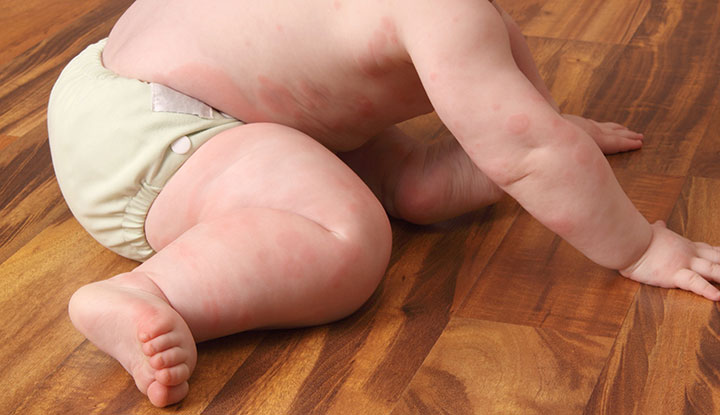
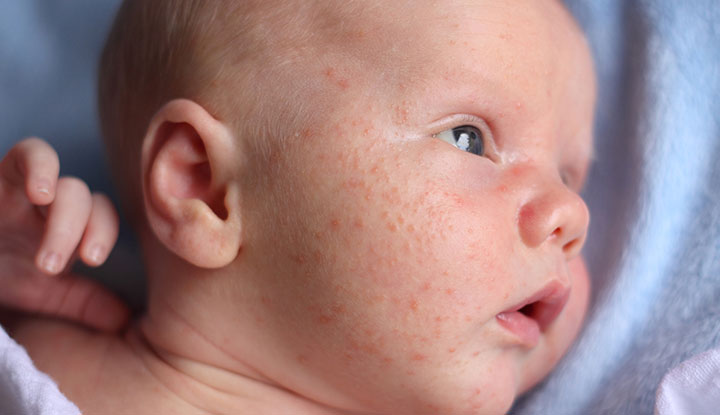
Children's skin problems span nearly two decades from
birth through adolescence. Several common pediatric skin conditions will be
discussed including: diaper dermatitis, atopic dermatitis, warts and acne.
What is diaper dermatitis?
Diaper dermatitis, or diaper rash as it is more
commonly known, is not a diagnosis but rather a category of skin conditions
affecting the diaper area. There are four types of diaper dermatitis, including:
- Irritant contact dermatitis
- Overgrowth of yeast (Candida albicans)
- Allergic contact dermatitis
- Inflammatory skin conditions such as seborrheic dermatitis
The most common type of diaper dermatitis is irritant
contact dermatitis, associated with skin exposure to either urine or feces (or
both) for a long period of time. Irritant contact dermatitis usually appears as
bright red, sometimes slightly swollen, or even blister-like patches in the
diaper area. Prolonged irritant contact dermatitis can increase the risk of
infection in the affected area.
The primary treatment and prevention of irritant
contact dermatitis includes barrier creams and ointments, most commonly
containing zinc oxide. A mild topical steroid ointment or cream can also be very
helpful in more quickly reducing the inflammation.
The next most common type of diaper dermatitis is the
overgrowth of yeast, most commonly Candida albicans. The warm, moist, and
often irritated environment of the diaper makes the skin more prone to an
overgrowth of yeast. This condition generally develops on top of irritant
contact dermatitis.
Usually, it appears as bright red bumps, patches, and
sometimes pus-bumps that are found on the skin and in its folds. The condition
can be treated with an over-the-counter topical antifungal cream such as
clotrimazole (Mycelex), mycostatin (Nystatin), or with a prescription
medication. A barrier cream, often containing zinc oxide, is also recommended to
treat and prevent this skin condition. If irritant contact dermatitis is also
present, sometimes an additional mild topical steroid is prescribed. If this
condition is only treated with topical steroids, the yeast will spread.
Rarely, allergic contact dermatitis will occur. This
condition is usually associated with a component of the diaper itself. Symptoms
include redness and swelling with itchiness that continues to recur in the same
area such as the near the diaper’s adhesive tape, or around the leg where there
is elastic in the diaper.
Treatment of allergic contact dermatitis is very
similar to the treatment of irritant contact dermatitis: barrier creams and
ointments, most commonly containing zinc oxide, or mild topical steroid ointment
if necessary.
To prevent allergic contact dermatitis, you need to
identify the material that is causing the problem and avoid it.
Seborrheic dermatitis, commonly known as cradle cap in
infants and dandruff in older children and adults, can also be the cause of
diaper dermatitis. This condition also affects other areas of the body such as
the scalp, eyebrows, around the nose, and sometimes the chest area. Treatment
includes the careful use of mild topical steroid and antifungal creams.
Topical steroids require very careful use, especially
in the diaper area to prevent potential side effects such as thinning of the
skin and stretch marks. These effects can be prevented by using low potency
topical steroids, such as hydrocortisone 1 to 2 percent, and applying topical
steroids sparingly to the affected areas only twice daily as needed for no
longer than two weeks at a time.
What is atopic dermatitis?
Atopic dermatitis, or eczema, is a skin condition that
can occur at any time in life. It often starts early in childhood and may not
diminish until early adulthood. Over half of the infants with atopic dermatitis
grow out of the condition by age 2, though flare-ups can occur throughout life.
Atopic dermatitis is a chronic condition, which means
that it cannot be cured but it can be treated and controlled with proper
guidance from a physician.
The condition is most common among families who have a
history of allergies. Although food allergies may cause flare-ups, removing
suspected foods (such as eggs, milk, fish, wheat and peanuts) from your child’s
diet is not likely to cure the problem. If you suspect that a food is worsening
the rash, discuss this with your health care provider.
Atopic dermatitis can also get worse when the skin comes into contact with irritating
substances such as harsh soaps and scratchy, tight fitting clothing. Scratching can also promote
infections that require treatment.
What are the symptoms of atopic dermatitis?
In infants:
- Red, very itchy dry patches of skin
- Rash on the cheeks that often begins at 2 to 6 months of age
- Rash oozes when scratched
Symptoms can become worse if the child scratches the rash.
In adolescence and early adulthood:
- Red scaly rash on creases of hands, elbows, wrists and knees and
sometimes on the feet, ankles and neck
- Thickened skin markings
- Skin rash may bleed and crust after scratching
How is atopic dermatitis treated?
Treatment is aimed at reducing extreme itching and dry
skin symptoms. It includes topical steroid creams and oral antihistamines.
Treatment will depend on the age of the child and the severity of the symptoms.
Follow your health care provider’s instructions for using the medications.
To help your child, you can also:
- Avoid long, hot baths, which can dry the skin. Instead use lukewarm
water and give your child sponge baths.
- Apply moisturizing cream or lotion right after bathing or showering.
This step will help trap moisture in the skin.
- Keep the room temperature as regular as possible. Changes in room
temperature and humidity can dry the skin.
- Keep your child dressed in cotton. Wool, silk and man-made fabrics such
as polyester can irritate the skin.
- Use mild laundry soap and make sure that clothes are well rinsed.
- Watch for skin infections, which are more likely with eczema. Contact
your health care provider if you notice an infection.
- Avoid rubbing or scratching the rash.
- Use moisturizers often.
If atopic dermatitis is severe, systemic medications
may need to be used. If open wounds result from excessive itching, a topical
antibiotic (Bactroban) may be used. Occasionally, a systemic antibiotic is
necessary to treat infection. If these treatment methods are not effective,
alternative therapy such as phototherapy (light therapy) may be recommended for
older children.
Warts
Warts result from an infection with a virus, and are
common in children of all ages.
Warts commonly present as hard bumps on fingers, hands and feet.
Molluscum contagiosum is similar type of infection caused by a different virus. It looks
like skin colored or white bumps that can appear anywhere on the body.
What causes warts?
Common and flat warts are caused by the human
papilloma virus (HPV), while molluscum contagiosum warts are caused by a pox
virus. Warts usually spread through direct contact. It is also possible to pick
up the virus in moist environments such as showers and locker rooms.
How are warts treated?
Unfortunately there are no antiviral treatments that
actually target the virus itself. Instead, the treatment available is targeted
against the skin in which the virus is living.
Over-the-counter treatments include liquid and film
medications containing salicylic acid, which softens the abnormal skin cells and
dissolves them. The film types of wart medications tend to work better because
they have a higher percentage of salicylic acid (40 percent).
Over-the-counter wart treatments should be used as
directed. First, soak the wart in warm water to help the medication penetrate
the skin. Then gently rub off dead skin with a washcloth or pumice stone. Apply
the medicine and cover with a bandage (replace the bandage if it gets wet). The
medication stays on for 48 to 72 hours.
Repeat the treatment as necessary to remove the wart. This may take many weeks.
In the dermatologist's office, wart treatment will depend on the age of the child, the number
and location of the warts, and the patient's and parent's decision. Wart treatment options by the
doctor include:
- Freezing the wart with liquid nitrogen (cryotherapy)
- Destroying the wart with chemicals (trichloroacetic acid or cantharidin
preparations)
- Burning the wart off with electricity or a laser (such as a flash lamp
or CO2 lasers)
- Injecting the wart with yeast preparations
- Oral cimetidine (Tagamet®) may be prescribed along with one
of the methods above. It has been shown to boost the immune system to better
mount an immune response to the wart virus infection. Cimetidine is usually
used for a trial two to three months.
- Imiquimod (Aldara®) is a cream that may be prescribed to help
your body’s immune system fight warts.
Molluscum contagiosum treatment methods by the doctor include:
- Topical tretinoin (Retin-A®)
- Destroying the wart with chemicals (trichloroacetic acid or cantharidin
preparations)
- Freezing the wart with liquid nitrogen (cryotherapy)
- Scraping the wart off (curettage)
It is important to mention that these wart treatments
often need to be repeated every three to four weeks until the wart is gone.
Individual molluscum lesions can usually be cured in fewer treatments.
All of these treatment methods may cause scarring
and/or blisters so it is important to practice good wound care throughout the
healing process.
How can warts be prevented?
Certain precautions can be taken to reduce the chance of getting warts, including:
- Wearing rubber sandals or shoes in public shower areas or swimming pools
- Avoiding direct physical contact with those who have visible warts
- Practicing good hygiene
What is acne?
Acne is one of the most common skin problems. Acne is
most common in adolescence and is associated with a hormonal surge. Adolescent
acne usually benefits from treatment. Acne also affects 20 percent of adults.
What causes acne?
Poor hygiene, poor diet and stress can aggravate acne but do not cause it.
Acne starts when tiny hair follicles or pores become
plugged with oily secretions (sebum) from the skin’s sebaceous glands as well as
keratin (a skin protein). This blockage is known as a black head or a white
head. These plugged follicles can develop into swollen, red, tender pus bumps,
or larger cysts or nodules that can cause temporary or permanent scarring.
What products should be avoided to reduce acne?
If the acne is predominantly around the hairline, it
may be associated with hair products such as conditioner, hair gels, hair
mousse, oils, and grease. This type of acne can be improved by limiting hair
products and pulling the hair away from the face.
Comedogenic (pore-blocking) moisturizer or cosmetics should be avoided. Try switching to a
water based non-comedogenic moisturizer and/or cosmetics.
Although diet has not been shown to influence acne, if you think certain foods cause your acne
to flare up, then avoid them.
How can acne be treated?
Acne treatment can start with over-the-counter
cleansers containing either benzoyl peroxide or a low percentage of salicylic
acid. If the use of these products does not improve the acne within 6 to 8
weeks, it may be necessary to see a dermatologist. It is important not to wait
too long before seeking treatment to avoid any unnecessary scarring.
Prescribed acne treatments will depend on the age of the patient, skin type, and most importantly,
the severity of the acne. The topical regimen almost always includes an acne wash, either an
over-the-counter or prescription benzoyl peroxide wash. This can be replaced or alternated with
non-soap cleansers if the other prescribed acne treatments are causing excessive dryness or mild irritation. The topical medication retinoid (Retin-A, Differin) is a mainstay of treatment.
Depending upon the patient's age and the type of acne,
an oral antibiotic (tetracycline, minocycline, doxycycline or erythromycin) may
be beneficial. A topical antibiotic ((erythromycin or clindamycin), instead of
an oral antibiotic, can be very helpful.
It is important for the patient to follow the
prescribed treatment for at least 6 to 8 weeks before considering changing
therapy. During a follow-up visit with the dermatologist, a re-evaluation can
determine whether or not the treatment plan needs to be modified.
Other medications that have been helpful are oral
birth control pills for females, especially when they report acne flare-ups
around the menstrual period. If an individual has severe scarring acne, or if
aggressive standard therapy does not improve their acne, an oral retinoid
(Accutane®) may be necessary. If this is dosed and monitored
appropriately it can be a safe option, only if necessary.
© Copyright 1995-2010 The Cleveland Clinic Foundation. All rights reserved.
Can't find the health information you’re looking for?
This information is provided by the Cleveland Clinic and is not intended to replace the medical advice of your doctor or health care provider. Please consult your health care provider for advice about a specific medical condition. This document was last reviewed on: 11/6/2009...#6951