



The breast anatomy of males and females is slightly different. Female breasts have milk ducts and glandular tissue that aid breastfeeding. Male and female breast nipples have many nerves that enhance sexual arousal. All sexes can get breast cancer. Females are more prone to benign (noncancerous) breast disease.
Advertisement
Cleveland Clinic is a non-profit academic medical center. Advertising on our site helps support our mission. We do not endorse non-Cleveland Clinic products or services. Policy
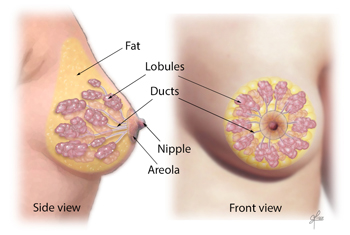
Image content: This image is available to view online.
View image online (https://my.clevelandclinic.org/-/scassets/images/org/health/articles/8325-breast-anatomy.ashx)
Breasts are part of the female and male sexual anatomy. For females, breasts are both functional (for breastfeeding) and sexual (bringing pleasure). For males, there isn’t a physiological function. However, their breasts can still provide sexual pleasure.
Advertisement
Cleveland Clinic is a non-profit academic medical center. Advertising on our site helps support our mission. We do not endorse non-Cleveland Clinic products or services. Policy
The visible parts of your breast anatomy include your nipples and areolas. Most people are born with two breasts.
Several kinds of tissue form the female breasts. Muscles connect your breasts to your ribs. The three different types of breast tissue include:
Males have gynecomastia glandular tissue and fatty tissue. Their glandular tissue contains underdeveloped milk ducts.
There are many different parts to female breast anatomy, including:
Advertisement
Males have breasts, too. During puberty, the hormone testosterone usually stops breasts from developing. On the outside, there are nipples and areolae. Internally, they have undeveloped milk ducts and no glandular tissue. Male breast problems can include gynecomastia, a benign condition that causes the breasts to enlarge, and very rarely, breast cancer.
Female hormones — namely, estrogen, progesterone and prolactin — play a key role in breast development and function. The main role of the breasts is to produce breast milk.
Breast cancer is the number one threat to breast health. Approximately 1 in 13 females will receive a breast cancer diagnosis in their lifetime. Other conditions that affect breast health include:
Your mammogram report may note that you have dense breasts. Dense breasts have more glandular and fibrous tissue and less fatty tissue. Dense breast tissue and tumors both look white on mammograms, making it more difficult to detect breast cancer. Up to half of females between the ages of 40 and 74 have dense breasts. The condition isn’t related to breast size, look or feel. If you have very dense breasts, you have a slightly higher risk of breast cancer. Talk to your healthcare provider about your risk for breast cancer based on your breast density.
As breast cancer is a top concern, talk to a healthcare provider about when and how often to get mammograms. Recommendations vary depending on risk factors, such as family or personal health history. Breast self-exams can help you get familiar with how your breasts look and feel so you’re more likely to notice changes in your breasts.
Your nipples contain hundreds of nerve endings. Generally, a female breast is more sensitive to stimulation due to hormones. However, males can also experience pleasure from the nerve endings in their nipples.
You should call a healthcare provider if you experience:
Advertisement
If anyone in your biological family has received a breast cancer or ovarian cancer diagnosis before age 50, talk to a healthcare provider about genetic testing or earlier mammogram screenings.
Female breasts can produce milk for breastfeeding and serve as an erogenous (pleasure) zone. Males also have breasts, but they don’t serve the same purpose. The tissues in your breasts can become cancerous. Regular mammograms, or breast screenings, can help detect cancer early when it’s most treatable. Call your healthcare provider anytime you notice a change in the way your breasts look or feel.
Advertisement



Sign up for our Health Essentials emails for expert guidance on nutrition, fitness, sleep, skin care and more.
Learn more about the Health Library and our editorial process.
Cleveland Clinic’s health articles are based on evidence-backed information and review by medical professionals to ensure accuracy, reliability and up-to-date clinical standards.
Cleveland Clinic’s health articles are based on evidence-backed information and review by medical professionals to ensure accuracy, reliability and up-to-date clinical standards.
From routine pelvic exams to high-risk pregnancies, Cleveland Clinic’s Ob/Gyns are here for you at any point in life.
