



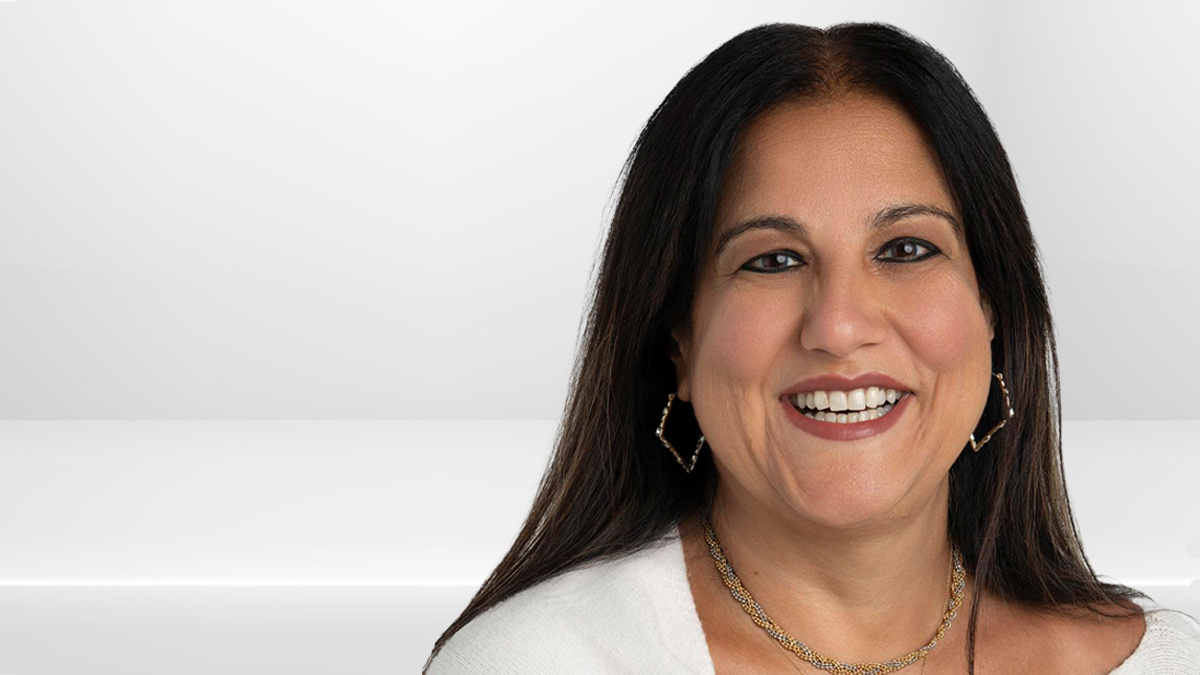
Advancing Bronchoscopy with the AABIP: Innovations, Advocacy and Patient Care
In this episode of the Respiratory Exchange Podcast, Dr. Dan Culver, Chair of Pulmonary Medicine, hosts an engaging conversation with Dr. Sonali Sethi, president-elect of the American Association of Bronchoscopy and Interventional Pulmonology (AABIP), who shares insights into cutting-edge technologies, the global impact of the AABIP and the future of advanced diagnostic bronchoscopy. Discover how the field is advancing patient care, fostering collaboration, and driving innovation worldwide. Whether you're a healthcare provider or simply curious about respiratory medicine, this episode is packed with valuable information and inspiration.
Advertisement
Cleveland Clinic is a non-profit academic medical center. Advertising on our site helps support our mission. We do not endorse non-Cleveland Clinic products or services. Policy
Recent Episodes
Recognizing and Managing Telomere Biology Disorders
Telomere biology disorders are increasingly recognized as drivers of pulmonary fibrosis, bone marrow failure, liver disease, and other age-r…
Highlights from the 2026 ATS Conference
Host Daniel Culver, DO, is joined by Cleveland Clinic pulmonologists Rachel Scheraga, MD, and Vickram Tejwani, MD, for a recap of the 2026 A…
Hypercapnic Respiratory Failure from the Hospitalist Perspective: Recognition, Risk, and Perioperative Insights
In this episode of Respiratory Exchange, Dr. Dan Culver speaks with hospitalist and anesthesia outcomes researcher Dr. Roop Kaw about the pr…
Video content: This video is available to watch online.
View video online (https://cdnapisec.kaltura.com/p/2207941/sp/220794100/playManifest/entryId/1_ny27ps6x/flavorId/1_5f3sgelj/format/url/protocol/https/a.mp4)
Transcript
Raed Dweik, MD
Advertisement
Cleveland Clinic is a non-profit academic medical center. Advertising on our site helps support our mission. We do not endorse non-Cleveland Clinic products or services. Policy
Hello and welcome to the Respiratory Exchange Podcast. I'm Raed Dweik, Chief of the Integrated Hospital Care Institute at Cleveland Clinic. This podcast series of short, digestible episodes is intended for healthcare providers and covers topics related to respiratory health and disease in the areas of lung health, critical illness, sleep, infectious disease, and related disciplines. We will share with you information that will help you take better care of your patients. I hope you enjoy today's episode.
Dr. Daniel Culver, DO
Hello everybody. Thank you for joining another episode of Respiratory Exchange. I'm Dr. Daniel Culver. I'm Chair of Pulmonary Medicine at Cleveland Clinic. I have with me today, Dr. Sonali Sethi, one of our interventional pulmonary faculty members. She directs our IP fellowship, and she's the president-elect of the American Association of Bronchoscopy and Interventional Pulmonology. Hello Sonali.
Dr. Sonali Sethi, MD
Hi, Dr. Culver. Thank you for having me.
Dr. Daniel Culver, DO
So, when I started off in my training, bronchoscopy was fairly simple. It was also pretty ubiquitous, and it was done by everybody. And since I've been in this career, it's gotten more complex, and the number of technologies and the number of devices has proliferated quite a bit. And now we have an organization that's entirely dedicated to this branch of our field, and that's the AABIP. And of course you've been, uh, instrumentally involved in that over the years. So, I thought with your role now stepping in as president-elect of the AABIP and everything that's changing now, I thought it would be a great time to have a conversation about that.
Advertisement
Dr. Sonali Sethi, MD
Sounds good.
Dr. Daniel Culver, DO
So, tell me a little bit about the AABIP. What is it, why does it exist? What's kind of the geographic scope, more about the organization?
Dr. Sonali Sethi, MD
Sure. The true north of the AABIP is our patients. It always has been our patients. It always will be our patients at the forefront of anything and everything we do. We do actually have a mission and a vision. The mission is to make a positive difference in the care of patients with thoracic diseases, utilizing innovative technologies, minimally invasive procedures, through education and through research. Our vision is to advance the field of bronchoscopy in interventional pulmonary using the AABIP as the premier leader in minimally invasive diagnostic and therapeutic interventions through education, research and advocacy. And I think over the past 20 or so years since this organization started, we've made a lot of progress and hopefully we'll continue to do so moving forward in the future.
Because it's the AABIP, of course, the word America is in there <laugh>. So very much this is for everybody in the US. But we recently have started reaching out into foreign countries. In fact, at our, conference that we have coming up, our scientific conference that's coming up this August in Austin, Texas, I'm happy to say we have 17 international countries that will be participating in the conference as well. So, we are becoming internationally known as well, amongst everybody.
Dr. Daniel Culver, DO
That's great. Are there other such organizations in Europe or Asia or elsewhere around the world?
Dr. Sonali Sethi, MD
There are. The biggest one out there is the WABIP. That's the World Association of Bronchoscopy and Interventional Pulmonary. We, in fact, work very closely with them as well. Currently, the president of that is Dr. Ping Lee. She is also you, well known from... to the Cleveland Clinic and spent some time here with us and taking over from her will be Dr. Ali Masani. So, we work very closely with the WABIP, and then in Europe, they have the EABIP as well. So, there's a European version of this as well. Now, in South Asia, there is a society as well, the South Asian Bronchoscopy Interventional Pulmonary Society in India; they've got their own society. So, this is becoming very well known internationally and picking up quite a bit around the world.
Dr. Daniel Culver, DO
Do the groups work together very much?
Dr. Sonali Sethi, MD
Very well together. In fact, we have seats on each other's boards for some of the organizations. A lot of us are speakers and internationally known faculty that attend each other's conferences as well. And so, I think we play very well in the sandbox together.
Advertisement
Dr. Daniel Culver, DO
That's great to hear. So, I wonder a little bit, I mean is this puck is moving so fast and you're trying to skate to where the puck is to quote the old aphorism. Maybe first just tell me a little bit about what are the main priorities for the AABIP right now and then how do you see those evolving over the next few years?
Dr. Sonali Sethi, MD
Yeah, so the biggest thing I'd like to point out is, what's amazing to me is the AABIP is a voluntary organization. So, all the work that's being done is by a group of volunteers and this is their own time, their weekend time, their evening times, that is a society that we're all working together. A lot of the things currently under our current presidency that will continue to evolve and get worked on and some of the big initiatives right now going on are yearly guidelines and consensus statements, which are being worked on. We just updated guidelines in lung nodule management moving forward. There is a movement towards ABIM certification. So, we did start certification back in 2014 for the field of IP and then eventually moved on to advanced diagnostic bronchoscopy with the CAQ.
However, we are an organization that probably shouldn't be in the business of certifying our own members. And so, therefore we have put in an application very well received by the ABIM and are anticipating that in the next couple of years we will be moving towards that certification and being recognized as a field in internal medicine. And then we're expanding educational products. We have a lot going on right now. We've got webinars, we have podcasts, we have training courses, board review products, and procedural videos that people can watch if they need to update their training. We've got our national scientific conference, um, that happens, we, you know, had first started this out as like a two-day conference. The content is so immense now. It is now up to a three-day conference that we're having. We've incorporated simulation into that conference as well. And we started an advocacy conference because we realized there was a huge gap in advocacy in our field as well. And so that's new as well. In addition, we've got mentorship sponsorship programs going on as well. So, there's a lot currently going on.
Advertisement
What do I think is going to happen in the next five years? I think that, you know, we want to become a home for all advanced diagnostic bronchoscopists, not just interventional pulmonologists. We want them to realize we are huge advocates for them and, and this is their house as well. We want to include not just physicians, but we also want to include our colleagues in allied health. So, we want to become a place that is very much the home for APPs, RTs, surgical techs, nurses as well, maybe help them in certification processes that they're lacking, um, in their own organizations.
We've initiatives underway to increase the number of women in our field as well. And then we recently expanded into Central and South America at discounted rates to account for disparities in wage. Uh, this actually was spearheaded by one of our former IP fellows. I don't know if you remember Carlos Aravena and uh, Dr. Joseph Senya, who's in charge of membership, has started this initiative. And then we want to expand to more international countries.
We've started expanding into the pediatric field as well. That was a big undertaking for us this past year as well, so that they feel like they have a place to go in ongoing initiatives and their own training. And then again, ABIM certification we are expecting will happen in the next couple of years.
Advertisement
Dr. Daniel Culver, DO
So just a couple of things going on.
Dr. Sonali Sethi, MD
Just a couple. It's a lot <laugh>,
Dr. Daniel Culver, DO
You know, I want to circle back a little bit. You mentioned the CAQ, which I think stands for the Certificate of Added Qualification, and that's a pathway for somebody who hasn't done interventional pulmonary to get, uh, additional, uh, validation for their knowledge and their technical skills, if I'm correct. Is that right?
Dr. Sonali Sethi, MD
Yes, that is correct. So, in fact, it's a certification we put in place for non-fellowship trained physicians. It's actually the certification of added qualification in advanced diagnostic bronchoscopy. So, we knew that pulmonologists with a particular interest in advanced diagnostic bronchoscopy provide a specific expertise and they have an added value to patient care and they need to be recognized for that unique skill set. And so the certificate starts with a knowledge assessment test that's called the KAT, where people come in, they take a test very similar to those of us who do the IP certification, take a test, and then it gets followed by a procedure assessment test, which is the PAT, to gain certification.
Our hope is that these skills will formally get recognized by their employers and referring physicians and help them in contract negotiations in the future. And so, we wanted to give them this as a pathway to help them in the field as well.
Dr. Daniel Culver, DO
So, the CAT and the PAT, those are the two tests... [The CAT and the PAT, yes.] you have to pass. Very aptly named <laugh>.
I wonder if I could ask you to look in your crystal ball for a minute and I'd like to hear a little bit about what do you think should be the mandatory prerequisite or the minimum prerequisite I should say, for somebody to do advanced diagnostic bronchoscopy five years from now? It feels like with the technology moving and the complexity that you and uh, and your colleagues have shared with me around some of the cases that you want people who are doing it on a fairly regular basis and have a certain skill level. If they were doing it on your own relative, you would certainly want that. So how, how do we move as a field from kind of a broad group of people doing it to a narrower group of people doing it without disenfranchising people who are quite good?
Dr. Sonali Sethi, MD
Right. So that's at the core of what we're trying to do with the competencies that we're putting out there with the CAQ. So, there are a lot of fellowships out there, I think, that are quite good at training physicians in being able to go out and do diagnostic staging, EBUS, as well as robotics. The field is, is emerging quickly towards diagnostic bronchoscopy. And I think that's just because that's where technology is going, and as the robotic procedures are coming out, we're being able to stage shift patients, diagnose them a lot earlier, in terms of the lung nodules and lung cancer that you know that's out there. And as we know, there's a lot more lung nodules that are out there than there are quite honestly therapeutic procedures that are out there. And so, I see the field moving towards that is at the forefront of what this field is in terms of what we're doing.
I think anybody who has been trained appropriately during their fellowship and being able to stage appropriately or to do advanced diagnostic bronchoscopy appropriately should go out there and be able to do it. I do think in order to justify them being able to do it or to show their hospital they could do it, they should go through the certification process that we've validated to be, quite honestly, we validated all the various robots that are out there and ebus as well to come in and do the testing to show that they are credentialed and able to do this going out there. I do think people who want to do more than that should look at going into interventional pulmonary fellowships, which is an additional one year. And I think as the next five years go on; we're going to start to see advanced diagnostic fellowships starting to come up.
I know BI Deaconess has already started this, in fact, where they have a three-month fellowship that people can go and do in addition to after their fellowship to make sure they have that necessary skillset to go out there to be able to do this when they're out there, wherever they may be in the country. It also is encouraged for them that after they do that fellowship that again that they go to the AABIP and get that CAQ certification that's out there. So, I do think that we need a lot more physicians out there in the advanced diagnostic field. We need to help people out there. Not every hospital or program can have an interventional pulmonary program. And so, we have to have people out there that are skilled in being able to do this, uh, diagnose, manage patients and do it systematically the same way. It doesn't matter where you are, as every other institution.
Dr. Daniel Culver, DO
Yeah, it seems like with expanded lung cancer screening guidelines and really changing patient expectations about how nodules are managed, there's quite a large need for people who are quite skilled with the diagnostic. I wanted to ask you to reflect, maybe a minute, on some recent data that have come out around comparing robotic sampling of nodules versus TTNA, and just to get your thoughts, I'm sure none of us have a crystal ball, but what do you think will happen with TTNA here over the next few years?
Dr. Sonali Sethi, MD
TTNA will never go away. There's always going to be a role for it. There's always that high risk patient to general anesthesia that you need to get a diagnosis and you know, it's a stage four and you're going to utilize whatever the easiest and safest technique is for that patient or that lesion that is up against the pleura that they just have a much better shot at being able to get a diagnosis than we do. The point of the study was to show actually that we are equivalent to TTNA.
We've known in the past that the literature has always shown that they're superior in what they do to us bronchoscopically. And the whole reason for that, to be quite honest, was because they always had imaging, and we didn't quite have imaging platforms that would give us that tool in lesion confirmation where they would put a needle in a lesion, they would've imaging, they would actually see that they were in the lesion. Whereas we would be using things like radial probe and then not have imaging when we were doing it. And it was to show that when we also were given imaging that we could be quite equivalent to them.
I do think the shift is going to go more towards robotic bronchoscopy and towards the field of advanced diagnostics and, and interventional pulmonary only because we, we have the added benefit of doing a two-in-one procedure, meaning we can stage at the same time as doing the procedure because as everyone knows, it's not good enough to just say that someone has a lung cancer anymore. We have to make sure we have enough tissue for moleculars. And then the stage is what determines what the next steps in management are. And we can do that all-in-one sitting. And I think that's why specifically we're going to see a shift. However, they will always have a role in the field moving forward with what we do.
Dr. Daniel Culver, DO
It's amazing how often people miss the importance of staging, uh, rather than just making the diagnosis. And so, I was really pleased to see the results and to see that it validates taking a bronchoscopic approach first for most patients really before you decide how you're going to manage them. Because that staging is, is so critical to all of the downstream decisions and to the expectations for the patient.
Dr. Sonali Sethi, MD
Absolutely. I think it's a huge disservice to a patient if you do not stage them appropriately upfront and offer them appropriate treatments based on what that stage is.
Dr. Daniel Culver, DO
Circling back to the AABIP and some of the, some of the roles that it has. You know, one of the things that occurs to me is that there's so much technological change and many different platforms coming and people are talking about there are different therapeutic modalities right at the time of bronchoscopy. And an organization like the AABIP may be positioned perhaps working with some of the other international ones to really help define how to prioritize assessment of technologies. Even definitions I think have been challenging and, and also, uh, as clinical trials come along, which ones to tackle in what order. And I wonder if the AABIP getting involved in that sort of a role, is that part of your mandate?
Dr. Sonali Sethi, MD
It is something that's a new initiative for us and specifically is the reason that we started an advocacy summit conference. To be honest, uh, the US is very different than the rest of the world because we're more dictated about what the FDA will allow us to do and not do. For instance, therapeutics for instance, right now, microwave ablation, ablative therapies, things like that. Europe and Asia are much more advanced than we are right now just because of regulatory requirements that we have here in the US. So, we're a lot slower in terms of coming to the forefront with being able to advance therapeutics in the field.
However, we also are the ones who are more advanced in the diagnostic technologies and robotics, meaning robotic bronchoscopy is very expensive and it's very limited by healthcare in Asia and in Europe based on their reimbursements. And so, there's this give and take almost in like, they're more advanced in therapeutics, but they're having a hard time being able to get the platforms that they need to be able to do it because of cost issues. Here in the US, we have more money, to be quite honest, in healthcare and can afford more of these technologies, but are more limited by re-regulation in terms of what we can do, uh, therapeutics.
And so, I think advocacy is a big thing that needs to take place, I think across the world. And so, it's a new initiative. We just started our second year this past year. We're working very closely with industry, bringing in healthcare advocates as well to try to understand more what the gaps are and, and where we can help with regards to that. I know with regards to some of the reimbursement issues we've had, I know the AABIP, we've written letters to various healthcare companies for reimbursement when these advanced diagnostic procedures are being done and, and we're trying to do more and more initiatives with regards to that moving forward.
Dr. Daniel Culver, DO
There's a lot of advocacy work here, it seems like...
Dr. Sonali Sethi, MD
A lot <laugh>.
Dr. Daniel Culver, DO
...uh, with the, uh, ABIM, with the FDA, with industry, with societies and also payers. So, thank you for taking all that on. That's, that's a lot to take on all at once.
Dr. Sonali Sethi, MD
It keeps me up at night <laugh>.
Dr. Daniel Culver, DO
I'm sure it does. I'm sure it does, among other things. Yeah. One other aspect of advocacy, I wonder if you want to comment on, is a relative underpayment in the current CMS structure for bronchoscopy procedures. We've talked about this a little bit before, but the RVU credits for these procedures lag behind a lot of other similar procedures and certainly behind a lot of other things that physicians can do. Do you want to talk about where that is and whether the AABIP is working on that particular issue?
Dr. Sonali Sethi, MD
We have. It's something that's new to all of us because we're all physicians, and at our core, it's about taking care of patients, and we don't really think about the reimbursements that are there. And so, it's something that we're learning firsthand to be quite honest. So, we've involved ourselves very closely with Scott Manaker trying to learn a lot of this. How can we go back and get reimbursed more for a lot of the procedures and the work that we're doing? I know this is going to get re-looked at through the RUC, uh, with new surveys coming out. And I think the biggest thing is that as interventional pulmonologists, advanced diagnostic bronchoscopy, anyone interested in bronchoscopy, we as physicians need to take the time to fill out those surveys. They can be brutal. They're very time-consuming. And I think historically we haven't spent the time necessary for CMS to fully understand what it actually takes to do these procedures. So, we're hoping that in this next round that comes around and through advocacy, people will spend the time to fill those surveys out appropriately. Show the amount of time...
Dr. Daniel Culver, DO
Do you mean this takes longer than a BAL in a couple of Brushings?
Dr. Sonali Sethi, MD
<laugh> It does take longer than a BAL in the bronch suite, sorry, in the ICU that's, you know, quite honestly a very quick procedure. But we also know that there is a pie and money has to get split up between the various things that we do. And I think we just need to spend more time and be mindful of the amount of time that it takes to actually do a robotic procedure versus staging EBUS versus, you know, a BAL bronchoscopy. And so, I think that will all get re-looked at higher levels with involvement tri society with ATS CHEST and us all working together.
And so, for right now, we do have a paper out there to try to help institutions understand what RBU structures should look like for our field, what downstream revenue looks like. We actually are going to be redoing that paper this year, and we're going to be resurveying the community out there so we can get more data. I think people are starting to realize the importance of this, and we're going to have a lot more involvement, which I think will be very eye-opening to everybody.
Dr. Daniel Culver, DO
Yeah, good. Good luck with that. I, I certainly think that the value added for this service line is really quite substantial. One of the things that, you know, uh, better than me is that there's been a stage shift in lung cancer over the last few years. Much fewer stage four cancers, many more stage one cancers diagnosed. Of course, lung cancer screening is certainly carrying a lot of the weight on that. But it also occurs to me that the ability to successfully sample smaller lesions, especially suspicious looking smaller lesions and get an answer and get definitive management is probably a part of it. And it, that's probably something that you guys are centrally positioned to do.
Dr. Sonali Sethi, MD
Absolutely. In fact, when we look at our guidelines, they're quite outdated now <laugh> and we're hoping that, you know, CHEST will come out with new lung nodule management guidelines. The field is emerging and evolving so quickly in front of us that I think we're having a hard time keeping up with it. And I think we actually did not understand how much the field was going to change with the emergence of robotics. And more than that, it's the imaging, I think, that has really changed everything that we do. And the stage shifting is quite important. We're, we're doing, we're getting to nodules that we just quite honestly could not biopsy before.
And so therefore the things we're being asked to do now sometimes surprise us because I'll look at it and I'm like, are you kidding me? You want me to go after that nodule? But we still have to be thoughtful because there are still risks associated with these procedures and there's always this risk-benefit thing. And so, we do have to look at - is this stage shifting, really changing management, you know, moving forward is it really truly making a difference? I think there's a lot that needs to be looked at. We need to be very thoughtful still about what we're doing. We shouldn't just be doing things because we can do them. They actually need to make a difference in a patient's life. And I think that that's what we're going to learn in the next couple of years.
Dr. Daniel Culver, DO
Yeah, as you said, the pie is not getting any bigger. [No.] So we have to be responsible stewards of what we do, that's for sure. But you're still a year away from your presidency of AABIP and quite involved with, uh, many of the initiatives. Is there any particular PET initiative or project that's the Dr. Sethi legacy for AABIP that you intend to focus on more than others, perhaps?
Dr. Sonali Sethi, MD
How so <laugh>? So, my list is long. Obviously, I'm going to continue on all the work that has been going on. In fact, it's funny because two years for a presidency seems like a long time. And then I'm, as I'm watching and having gone through the executive committee myself, seeing how long it takes for initiatives to get through two years actually seems kind of short, which is why I understand now why our presidency for the US is four years, but I can't possibly do four years. But some of the things that I want to make sure move forward during my presidency are big on, uh, moving forward quality initiatives. I know as you're aware, I, I feel like here at the Cleveland Clinic we've kind of been at the forefront with regards to quality initiatives and how we've been looking at our own EBUS data, diagnostic yields, how we evaluate nodes, making sure that as a group we are all within a standard deviation of each other.
And I do think that that is where the field is headed and that's kind of what we need to do for the field as well. I know thoracic surgery has done this with their STS database, so it is something that I really want to focus on for the country as a whole. This will help us with reimbursements, it will help us with negotiating and billing and, and recognition and hospitals as well moving forward. So that is one aspect that I definitely want to focus on.
Another thing is a certification for allied health professionals. So, APPs, nurses, RTs have all been coming to us. They are part of our field. They live in the bronch suite with us. How do we know that they are certified? How do we help other bronch suites that are starting up get certified and being able to do this? And I know we've done a really great job of this at the Cleveland Clinic with our own nurses, and we have initiatives in place for certification as well.
I want to try to open that up for the country and have processes in place for everybody out there in the field that wants to be involved in this. I also want to support education in foreign countries. So, we've been really good about our own IP fellowships here and becoming ACGME certified in this past year. But what's happening now is there's fellowships all over the world and they're actually coming forward now and asking us for help. How can we help them get certification for their own fellowships and to make sure that their curriculums are in place. And we can't do this through the AABIP, but we could help them through the process and what, in terms of what we've learned going through the process ourselves with the ACGME, help them with their curriculums, maybe, you know, do international conferences with their fellows where we do joint educational series with them and whatnot. So, everyone's getting trained at the same level.
And then just advocacy and patient education, um, having multilingual videos, we've started working on that. I want to, I want to expand on that government and healthcare policy. And then research is another big area that I think we need to step up now in the field. There's a lot of research that's been going on, working very closely with industry. We have aligned ourselves recently with the Alliance organization where our members can bring forward studies. They want to do take it to Alliance for funding and work on joint ventures like that to get NIH branding and funding as well.
Dr. Daniel Culver, DO
Wow, that's a lot.
Dr. Sonali Sethi, MD
I, and it's not going to happen in all of my two years. I get that. But if I started then the president after me can continue and, and that's what, you know, the ball just keeps continuing. And so that's the hope that these projects get started and they keep continuing through.
Dr. Daniel Culver, DO
So, I think I know how your nights and weekends are going to be spent coming up here, <laugh>. Well, that was a really great conversation and it's such an exciting time. The bronchoscopy suite and what happens there has changed so much since I was, uh, a fellow in training and it's hard to even imagine what it will look like 20 more years down the road. So, I'm glad the AABIP and, and you particularly are here to help move that in a, in a thoughtful way that focuses on patient care. I wonder just to close here, if you have a fun fact about bronchoscopy you would like to share with us.
Dr. Sonali Sethi, MD
I have two fun facts. I don't know if this will get you as excited as it gets me. However, we recently learned that we have a 9% annual growth rate worldwide in our field, and we are estimated to be a $7 billion industry in 2030. So, you just said what's about to happen in the next 20 years? So that, to me, is very exciting. It means everyone wants a piece of us right now. So, everyone is extremely excited about the field. Industry is extremely excited about the field. We are at a point where we are just, we're blowing up to be quite honest. And so, we're very excited about that.
And then the second thing is for two years in a row, we have been the most competitive fellowship to obtain in the field of internal medicine. And so more so than interventional cardiology, which we all know has been the hardest field to get interventional pulmonary has been the most competitive fellowship to be able to get a spot in. So that to me is very exciting. I don't know if you find that as fun as I do, but to me, I, it's just fascinating to be a part of this right now. And, and I'm just so glad I get to be a part of it.
Dr. Daniel Culver, DO
I knew this would happen with cardiology. <laugh>. Congratulations, <laugh>. No, seriously, these are exhilarating times. I'm, I'm really, uh, grateful that you're involved and, and the way the organization is helping drive things on all of those fronts. It's very important. And, and as you said, at the end of the day, it's all about the best possible care for patients.
Dr. Sonali Sethi, MD
It's our true north.
Dr. Daniel Culver, DO
Well, thank you again for joining me today. It was a pleasure talking to you.
Dr. Sonali Sethi, MD
Thank you for having me, Dr. Culver.
Dr. Daniel Culver, DO
Thank you, everybody, for joining us today for Respiratory Exchange. We look forward to seeing you at the next episode.
Raed Dweik, MD
Thank you for listening to this episode of the Respiratory Exchange Podcast. You can find additional podcast episodes on our website, clevelandclinic.org/podcasts or wherever you get your podcasts.
Recent Episodes
Recognizing and Managing Telomere Biology Disorders
Telomere biology disorders are increasingly recognized as drivers of pulmonary fibrosis, bone marrow failure, liver disease, and other age-r…
Highlights from the 2026 ATS Conference
Host Daniel Culver, DO, is joined by Cleveland Clinic pulmonologists Rachel Scheraga, MD, and Vickram Tejwani, MD, for a recap of the 2026 A…
Hypercapnic Respiratory Failure from the Hospitalist Perspective: Recognition, Risk, and Perioperative Insights
In this episode of Respiratory Exchange, Dr. Dan Culver speaks with hospitalist and anesthesia outcomes researcher Dr. Roop Kaw about the pr…
Never miss a moment - subscribe now.
Listen to the Health Essentials Podcast on your favorite streaming platform.
Other Podcasts You May Love
Beyond Leadership
Hosts Jim Pae and Elizabeth Pugel escort you through a network of thought leaders, sharing world-cla…
Beyond the Pages: CCJM Podcast
Beyond the Pages: CCJM Podcast takes the listener more in-depth into Cleveland Clinic Journal of Med…
Butts & Guts
A Cleveland Clinic podcast exploring your digestive and surgical health from end to end. You’ll lear…
Cancer Advances
A Cleveland Clinic podcast for medical professionals exploring the latest innovative research and cl…